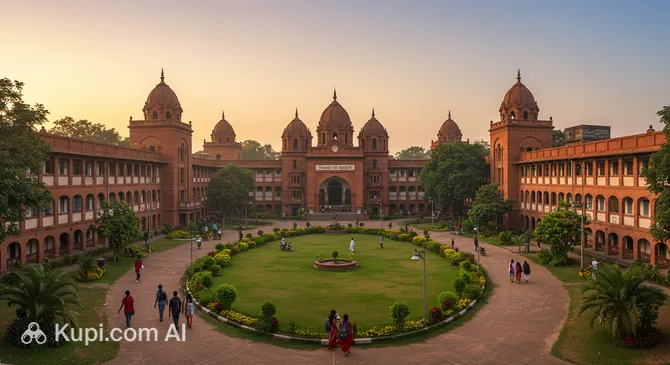
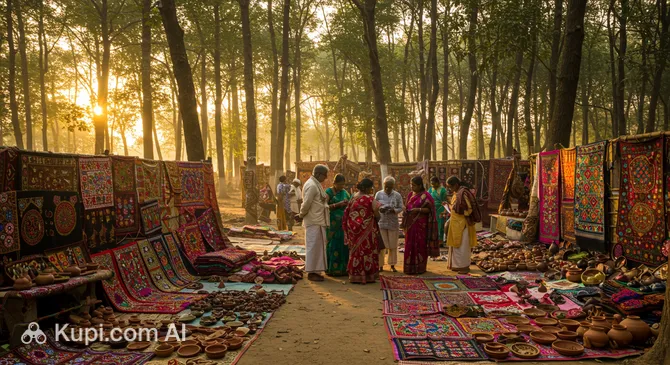
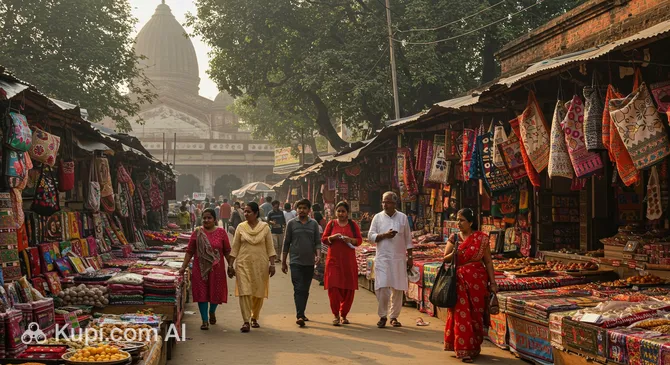
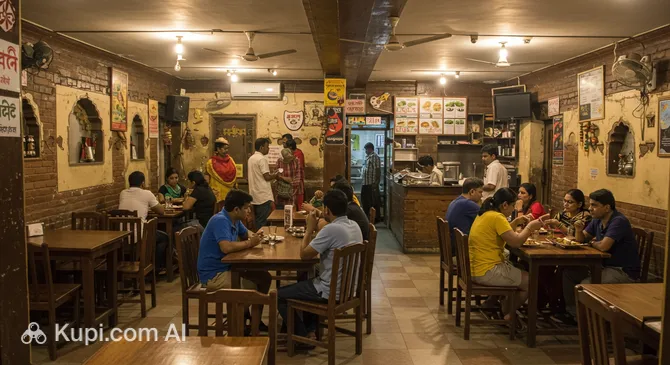
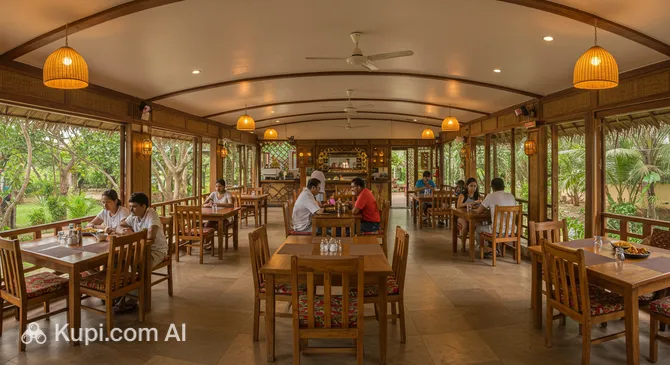
Bolpur is a picturesque town cozily situated in the state of West Bengal in eastern India, approximately 150 kilometers from Kolkata. Surrounded by green fields and forests, this town is famous for its unique blend of nature, art, and deep traditions, making it a true gem of the Birbhum region.
Bolpur. Illustration.
Source: Kupi.com AI
With a population of about 80,000 people, Bolpur retains the charm and tranquility of a small town while playing a significant role in the cultural life of the state. It is home to the world-renowned Visva-Bharati University, founded by Rabindranath Tagore—a Nobel laureate and one of the country's greatest poets. Thanks to this legacy, Bolpur has become a magnet for creative individuals: artists, musicians, and art lovers from all over the world.
The atmosphere of Bolpur is a wonderful mix of traditional Bengali lifestyle and creative avant-garde. The city streets are often filled with the sounds of music, hosting art exhibitions, craft fairs, and colorful festivals. Visitors feel how harmoniously the past and present intertwine: ancient temples stand alongside modern galleries, and folk dances give way to open-air theatrical performances.
Bolpur is the ideal place for those seeking inspiration, wishing to touch authentic Indian culture, and enjoy a leisurely, hospitable atmosphere. Come to Bolpur to rest your soul and discover new, enchanting facets of the East!
The weather in Bolpur is characterized by noticeable seasonal variations. You can expect a hot and humid summer, especially from June to September, when average monthly temperatures stay around 29-31°C and the number of rainy days reaches its peak. Winters, from December to February, are warm and predominantly dry, with average temperatures around 18-21°C and minimal precipitation. The spring (March-May) and autumn (October-November) months are transitional, with a gradual increase and decrease in temperature and humidity, respectively.
To get a more detailed view of the climate conditions, including monthly data and forecasts, you can check the full information on the weather in Bolpur page.
Average monthly temperature
Average monthly precipitation
Interesting Facts
In addition to its famous landmarks, Bolpur holds many surprising stories and features that make it truly unique. Here are just a few:
Shantiniketan. Illustration.
Source: Kupi.com AI
Traveler photos:
Bolpur is inextricably linked with the name of the great Bengali poet and thinker Rabindranath Tagore. It was he who founded the unique Visva-Bharati University in Santiniketan here in 1921. This is not just an educational institution, but a true cultural hub where traditions of free education, art, and harmony with nature are still honored. The famous Poush Mela festival is held here annually, attracting artists, musicians, and craftspeople from across India.
In the vicinity of Bolpur lies the Kankalitala Temple—one of the 51 sacred sites of Shaktism known as Shakti Peethas. According to ancient legend, a part of the goddess Sati's body (Shiva's consort) fell here while Shiva carried her body, driven mad by grief. This makes the temple an important pilgrimage center and a place shrouded in mystical lore.
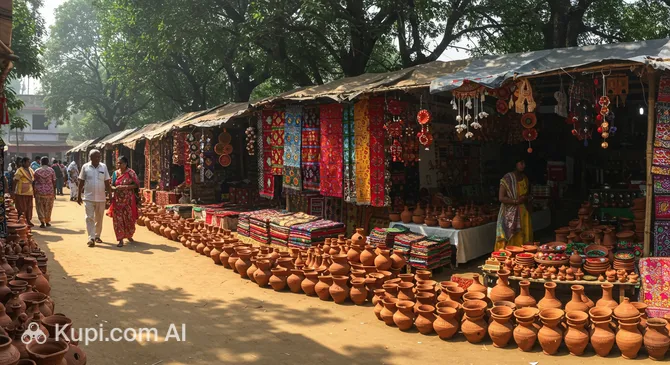
The town is famous for its rich craft heritage, especially developed in Santiniketan. Local artisans create unique leather products (painted bags and sandals are particularly famous), textiles (including the famous batik – a fabric dyeing technique), and woodwork. You can discover this art and purchase authentic souvenirs at Srijani Shilpagram, a cultural village showcasing the crafts of Eastern India.
Bolpur is often called the "City of Eternal Spring" due to its mild climate and the explosion of colors practically at any time of year. It is especially beautiful in the spring when numerous trees bloom, the air fills with their fragrances, and the streets come alive with colorful festivals.
How to Get There
Reaching the city of Bolpur in India can be done in several ways; however, for many tourists, the most convenient option is to fly to one of the nearby airports followed by a ground transfer. Bolpur itself does not have its own airport.
The nearest airport to Bolpur is Kazi Nazrul Islam (IATA: RDP), located in the city of Durgapur, about 46 km away. This is a small regional airport from which you can reach Bolpur by taxi or rented car in approximately 1-1.5 hours. Kazi Nazrul Islam Airport is convenient for those looking for the shortest ground transfer.
The main international transport hub serving this region of India is Netaji Subhash Chandra Bose International Airport (IATA: CCU) in Kolkata. The distance from this major international airport to Bolpur is about 137 km. The journey by car or taxi usually takes between 3.5 to 4.5 hours, depending on road conditions. Due to the high number of international and domestic flights, Kolkata Airport is often the preferred choice for foreign tourists.
Another option is Deoghar Airport (IATA: DGH), located in the city of Deoghar, about 132 km from Bolpur. Although it is significantly smaller than Kolkata Airport, it may be convenient depending on your itinerary. After arriving at any of the airports, Bolpur can be reached by taxi, by booking a transfer, or by using local bus lines. It is also worth noting that Bolpur is well-connected by rail to major Indian cities, making a train journey another popular way to reach the town.
For clarity, here is a summary of the main airports from which you can reach Bolpur:
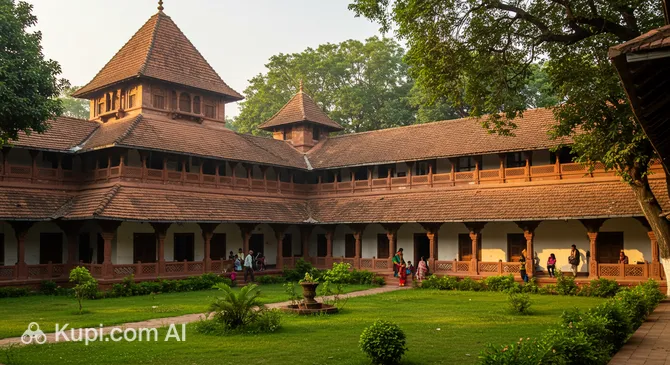
Bolpur invites you to dive into a unique atmosphere where art, philosophy, and nature intertwine, reflecting the legacy of the great Rabindranath Tagore. The key attraction here is undoubtedly Santiniketan – the "Abode of Peace." This unique educational and cultural center, founded by Tagore, offers visitors a chance to immerse themselves in a world of creativity and harmony, envisioned as a place for free learning and spiritual development.
Shantiniketan. Illustration.
Source: Kupi.com AI
Traveler photos:
In the heart of Santiniketan lies the Rabindra Museum in Santiniketan, also known as Rabindra Bhavan. It houses the poet's personal belongings, manuscripts, paintings, photographs, and numerous awards, including the Nobel Prize. Visiting the museum allows for a deeper understanding of the life and work of this outstanding figure, as well as the history of Santiniketan itself.
Rabindra Museum, Shantiniketan. Illustration.
Source: Kupi.com AI
Traveler photos:
Not far from the museum is the Uttarayan Complex, consisting of five houses where Rabindranath Tagore lived and worked during different periods of his life. Each building possesses its own unique architecture and history, reflecting various stages of the poet's creative journey. Walking through this complex is an opportunity to touch Tagore's daily life and feel the spirit of his time.
Uttarayan Complex. Illustration.
Source: Kupi.com AI
Traveler photos:
For those seeking solitude and natural beauty, the Sonajhuri Forest is a must-visit. This picturesque woodland, also known as Khoai, enchants with its pristine beauty, especially during the blooming of the Sonajhuri trees, when their yellow flowers cover the ground in a golden carpet. Here, you can stroll along winding paths, enjoy the birdsong, and visit the weekly Khoai Mela folk craft fair, where local artisans present their work.
Sonajhuri Forest. Illustration.
Source: Kupi.com AI
Traveler photos:
It is also worth noting Chhatimtala – a historical site under two old Chhatim trees where Rabindranath’s father, Maharshi Debendranath Tagore, used to meditate. This place is considered one of the sacred corners of Santiniketan, symbolizing the spiritual origins of this unique settlement. Visiting these and other attractions in Bolpur will leave an unforgettable impression on anyone interested in Indian culture, history, and philosophy.
Chhatimtala. Illustration.
Source: Kupi.com AI
Traveler photos:
Local Cuisine
The cuisine of Bolpur is a true immersion into the gastronomic traditions of Bengal, capable of surprising and delighting any gourmet. The town offers authentic flavors based on fresh local products and aromatic spices, creating a vibrant and memorable culinary scene.
Among the dishes you must try in Bolpur, Shorshe Ilish stands out – tender fish cooked in a piquant mustard sauce, which is a signature dish of the regional cuisine. Various rice and lentil dishes are equally popular, such as aromatic Dal (a thick legume soup) and hearty Khichdi (a dish made of rice and lentils with vegetables and spices). To finish your meal, try the famous Bengali dessert – Mishti Doi. This sweet curd delicacy, served chilled in traditional clay pots, has a uniquely delicate taste.
Street food in Bolpur is a separate chapter of the gastronomic journey. In the busy streets and markets, you will find appetizing Samosas (fried pastries with spicy filling), hearty Kati Rolls with vegetables or meat, and the famous Phuchka (or Pani Puri) – crispy hollow spheres filled with spicy potato stuffing and tamarind water. This is an excellent way to have a quick and tasty snack while experiencing the authentic spirit of the town.
As for drinks in Bolpur, like in all of India, aromatic Masala Chai and refreshing Lassi – a yogurt-based drink that can be either sweet or salty – are popular. Restaurants and cafes also offer a wide selection of other non-alcoholic beverages, while alcoholic drinks are available in licensed establishments.
Dining culture in Bolpur is diverse. Locals and tourists can enjoy a meal in cozy restaurants offering traditional Bengali dishes or from numerous street vendors. Special attention should be given to the farmers' markets, where fresh vegetables, fruits, and spices are sold, as well as natural honey and homemade sauces that give the dishes their unique flavor. In Santiniketan, the cultural heart of the region, food fairs are often held where you can try homemade dishes and learn the secrets of local cooking. One place to get acquainted with the local cuisine is Ram Shyam Restaurant.
Ram Shyam Restaurant. Illustration.
Source: Kupi.com AI
Traveler photos:
Bolpur is also famous for its culinary festivals, which often coincide with major holidays. This is a wonderful opportunity not only to taste local delicacies but also to observe the cooking process, talk with the chefs, and dive deeper into the gastronomic traditions of West Bengal. The town's food scene attracts visitors with its authenticity, abundance of flavors, and the opportunity to experience real Bengali cuisine.
Travel Tips
Welcome to Bolpur! To ensure your journey to this unique corner of India, famous for Santiniketan, is as comfortable and memorable as possible, we have prepared some practical tips.
Clothing and Essentials:Bolpur has a tropical climate, so choose light, breathable clothing made of cotton or linen, especially in the hot summer months (March to June). The monsoon season lasts from July to September, so a light raincoat or umbrella will be handy. Winters (November to February) are mild and pleasant, but a light sweater or shawl may be needed in the evening. Be sure to bring comfortable shoes for walking around the extensive Visva-Bharati University campus and surroundings. When visiting ashrams and temples, choose modest clothing that covers shoulders and knees. Don't forget sunscreen, a hat, and insect repellent. A universal adapter for Indian sockets (Type D and M) will also be useful.
Getting Around Town: The primary means of transport in Bolpur and Santiniketan are cycle-rickshaws and auto-rickshaws (tuk-tuks) – a convenient and authentic way to reach most places. Agree on the price in advance. Local buses are also available for longer trips but can be crowded. Taxis can be ordered through hotels but are less common for short city trips. Car rental is usually not necessary if you plan to stay within Bolpur.
Finance: The local currency is the Indian Rupee (INR). It is recommended to exchange money at banks or authorized exchange bureaus; avoid street money changers. Credit and debit cards are accepted in some hotels and large shops, but for markets, rickshaws, and small cafes, it's always better to have cash on hand. ATMs are fairly common. A daily budget can vary, but Bolpur is considered a relatively affordable destination. Tipping is not always mandatory but is appreciated in restaurants (usually 5-10% of the bill if service is not included) and for small services.
Health and Safety: There are pharmacies in the city where you can buy basic medications, but not all of them operate 24/7. It's recommended to carry a basic first-aid kit. For serious medical assistance, tourists should head to private clinics or hospitals in Bolpur or, if necessary, Kolkata. Bolpur is generally considered a safe city, but follow usual precautions: watch your belongings and avoid walking alone in poorly lit areas late at night. Drink only bottled or boiled water.
Communication: The main language in Bolpur is Bengali. English is quite common in tourist areas, hotels, and among the educated population, so communication problems usually do not arise. Learning a few simple phrases in Bengali (e.g., "Nomoshkar" – Hello, "Dhonnobad" – Thank you) will be warmly received by locals. A local SIM card can be purchased with your passport and visa. Wi-Fi is available in many hotels and some cafes.
Local Etiquette: It is customary to greet people with the word "Nomoshkar" (the Bengali version of "Namaste") with palms joined at the chest. Show respect for local traditions and customs. Always ask permission before photographing people. It is customary to remove shoes before entering someone's home or a temple. Public displays of affection (e.g., hugging or kissing) are not common.
What to Avoid: Try not to point at people or sacred objects with your finger (it's better to use an open palm or your chin). Do not give or receive items with your left hand, as it is traditionally considered "unclean." Be cautious with street food if you have a sensitive stomach; choose busy, established places.
Special Tip – The Spirit of Santiniketan:Bolpur is inseparable from Visva-Bharati University and the legacy of Rabindranath Tagore. Be sure to set aside time for leisurely walks around the campus, and visit the museums and art galleries. If your trip coincides with a local festival, such as Poush Mela (December) or Basanta Utsav (Spring Festival, Holi), you will have an unforgettable experience of the cultural diversity and traditions of this place.
We hope these tips help you better prepare for your trip and enjoy every moment of your stay in amazing Bolpur. Have a great journey!
Entertainment & Nightlife
Bolpur, known for its cultural heritage and the peaceful atmosphere of Santiniketan, offers calm and soul-stirring options for evening leisure rather than a loud club scene. Evenings here invite leisurely strolls, conversation, and immersion into local culture, rather than the search for ultra-modern nightclubs.
The main focus of evening entertainment in Bolpur is centered around cozy restaurants and cafes where you can enjoy traditional Bengali cuisine or simply have a pleasant time. Many establishments offer a relaxed setting, perfect for dinner after a busy day. Notable places include the Ram Shyam Village Resort or Ram Shyam Restaurant, where you can sample local delicacies. The atmosphere in such places is usually family-oriented and welcoming, with a casual dress code. Restaurants are generally open until late evening, but it's better to check operating hours in advance.
Ram Shyam Village Resort. Illustration.
Source: Kupi.com AI
Traveler photos:
Instead of lively nightlife districts, Bolpur offers evening cultural programs, especially in the Santiniketan area. Musical or dance performances reflecting the rich legacy of Rabindranath Tagore are sometimes organized here. Some hotels may also have small bars or lounge areas for a quiet drink. There are no night markets or specialized club streets in the city; evening life is concentrated around the main roads and market squares, where you can find eateries open late.
Regarding practical matters, you can use auto- or cycle-rickshaws for getting around in the evening and at night; taxi services are also available and are best booked in advance through your hotel or known local agencies. Bolpur is generally considered a safe city, but standard precautions, especially after dark, are always advisable. Walking along the well-lit main streets is usually comfortable.
During the day, Bolpur offers a rich selection of cultural and natural attractions. Be sure to visit the Rabindra Museum in Santiniketan, explore the Uttarayan Complex, or walk through the picturesque Sonajhuri Forest. For outdoor relaxation, the Shyor Bithi Park or the Ballavpur Wildlife Sanctuary are excellent choices. These daytime experiences perfectly complement the quiet evenings in this unique corner of India.
Parks & Museums
Bolpur, inextricably linked with the name of Rabindranath Tagore and his creation – Visva-Bharati University in Santiniketan, offers its guests a unique blend of cultural enrichment and natural beauty. The city and its surroundings are places where you can immerse yourself in history and art while enjoying the tranquility of picturesque parks and gardens.
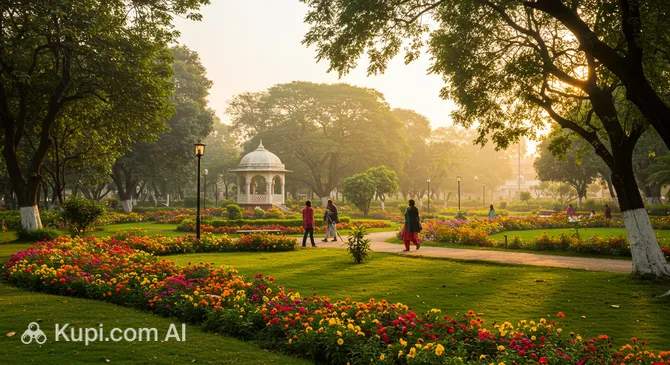
For those seeking seclusion in nature, Bolpur offers several attractive options. The Ballavpur Wildlife Sanctuary, also known as the Deer Park, is home to spotted deer, blackbucks, and many bird species, offering visitors quiet trails for walking and wildlife observation. It is a wonderful place for family outings and picnics. Equally appealing is the Sonajhuri Forest, which comes alive on Saturdays thanks to the famous "Khoai Mela" craft market. Thick groves of Sal trees create a special, peaceful atmosphere here. For a more traditional park experience, you can visit Shyor Bithi Park, which features well-maintained lawns and spaces for relaxation.
Shyor Bithi Park. Illustration.
Source: Kupi.com AI
Traveler photos:
The cultural heart of Bolpur is undoubtedly its museums and galleries, concentrated mainly in Santiniketan. The primary site is the Rabindra Museum (Rabindra Bhavana), where manuscripts, letters, paintings, and personal belongings of Rabindranath Tagore are preserved. The museum's exhibition provides deep insight into the life and multifaceted work of the great poet, thinker, and artist. Another important cultural center is Srijani Shilpagram – an ethnographic complex representing the art, crafts, and lifestyle of various regions of India. Here you can see traditional dwellings, observe artisans at work, and purchase authentic souvenirs.
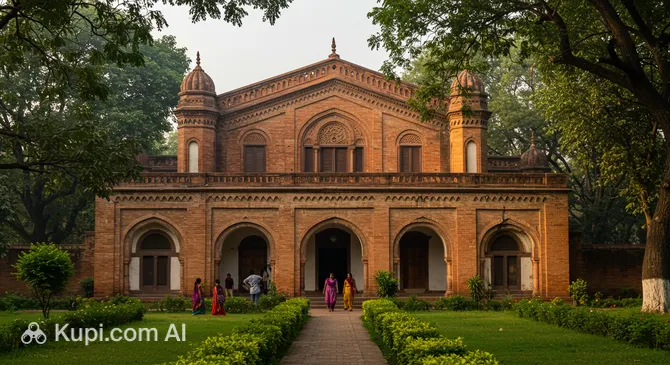
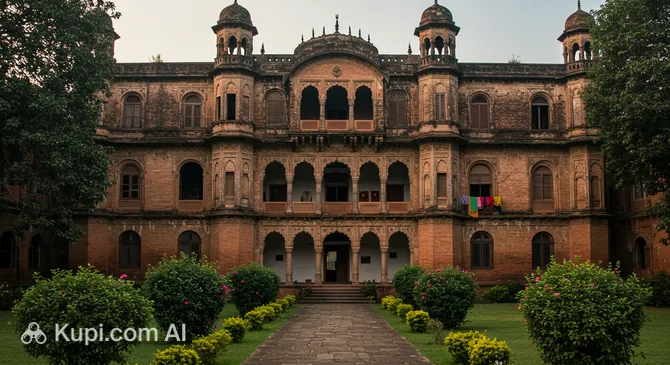
Bolpur and Santiniketan are rich in historical and architectural landmarks. A special place among them is occupied by the Uttarayan Complex, consisting of five houses where Rabindranath Tagore lived and worked. Each building is unique in its architecture and bears the imprint of the poet's personality. A symbolic site is Chhatimtala – a platform under two ancient Chhatim trees where Rabindranath’s father, Maharshi Debendranath Tagore, meditated and where the idea of creating Santiniketan was born. Outside the university campus, the Surul Rajbari, an old residence of local Zamindars (landowners), and the impressive Surul Sarkarbari Terracotta Temple Complex, decorated with intricate terracotta carvings, are of great interest.
Surul Rajbari. Illustration.
Source: Kupi.com AI
Traveler photos:
To fully experience Bolpur, we recommend walking through the Visva-Bharati University campus early in the morning, when classes are often held outdoors, creating a unique atmosphere. Do not miss the opportunity to visit the weekly Saturday "Khoai Haat" market in Sonajhuri Forest, where you can not only buy local handicrafts but also hear the enchanting melodies of Bauls – wandering Bengali singers.
Getting Around
Getting around Bolpur is quite simple, given its relatively small size. The core of public transport here consists of motor-rickshaws (auto-rickshaws) and cycle-rickshaws, which are convenient ways for short trips around the city and to major attractions such as Visva-Bharati University.
Auto-rickshaws are the most common and fastest way to move around Bolpur. They can operate either on fixed routes (often in a shared ride mode with other passengers) or for individual hire. Cycle-rickshaws offer a slower but more authentic experience, ideal for leisurely exploring the city and its surroundings. Local buses also run in and around the city, which can be useful for longer distances, though their routes and schedules may not always be obvious to a tourist.
The payment system in Bolpur is primarily cash-based. For trips on auto-rickshaws and cycle-rickshaws, payment is made directly to the driver. It is highly recommended to agree on the fare in advance, before boarding, especially if you are hiring a rickshaw individually. In some cases, fixed rates might exist for popular auto-rickshaw routes, but it's still worth confirming. There are generally no specialized travel cards or mobile apps for public transport payments in Bolpur.
Finding a rickshaw is usually easy, especially in busy areas: near the railway station, bus stops, markets, and tourist sites. Transport starts running from early morning and is available until late evening, though the frequency may decrease during the night. Tickets for local buses, if you choose to use them, are usually purchased from the conductor on board.
As an alternative to public transport, you can use taxis in Bolpur, which are more convenient for long-distance trips or when carrying a lot of luggage. These are best ordered in advance or found at designated taxi stands. For independent exploration of the city and university campus, many tourists prefer to rent a bicycle – an inexpensive and pleasant way to get to know the atmosphere of Santiniketan.
Accommodation
In Bolpur, travelers will find a variety of accommodation options to suit different preferences and budgets. You can stay in modest guesthouses and budget hotels, more comfortable mid-range hotels, and even full-service resorts. Apartment rentals or room bookings are also available, which can be convenient for long stays or family trips.
Most tourists prefer to stay in the immediate vicinity of Santiniketan, as this is where the main attractions are concentrated, including the Rabindra Museum and the Uttarayan Complex. Areas near the Bolpur (Santiniketan) railway station can also be convenient for those arriving or planning further travel by train.
Hotel Aayes & Resort. Illustration.
Source: Kupi.com AI
Traveler photos:
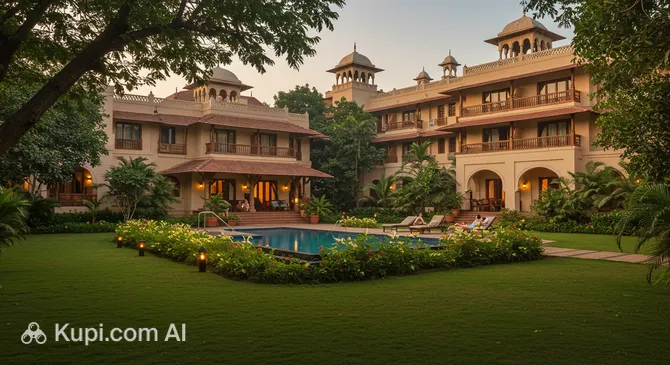
Among the accommodation options in the city, one might note the Hotel Ayes and Resort, which offers a comfortable stay. The choice of a specific place depends on your preferences and travel plans. Overall, in Bolpur, you can find housing for every taste – from simple guesthouses to hotels with restaurants and other amenities.
Booking Tip: Bolpur, especially the Santiniketan area, is very popular with tourists, particularly during festivals such as Poush Mela (December) and Basanta Utsav (Spring Festival, Holi). During these periods, it is recommended to book accommodation in advance to secure the best option in terms of location and price.
The price range for housing in Bolpur varies from budget to mid-range and higher, depending on the level of comfort and services provided. You can book accommodation through popular online platforms and travel aggregators, or directly by contacting the hotel or guesthouse administration. Some smaller establishments may not have an online presence, and information about them can be found upon arrival.
Nearby Cities
For those who want to explore the surrounding area, Bolpur serves as an excellent starting point for day trips to several interesting nearby locations:
City
Population
Distance
Guskara
35 388
21 km
Mangalkot
11 537
27 km
Sainthia
44 601
31 km
Siuri
67 864
32 km
Dubrajpur
38 041
35 km
Each of these cities offers its own unique attractions and can be a great option for a day trip from Bolpur:
Durgapur: This major industrial center, known for its steel plants, also offers modern parks for visitors, such as Deeshari Park, and several temples. A trip here allows you to see the modern industrial side of West Bengal.
Katwa: The city has significant historical and religious importance, especially due to its connection with the life of Sri Chaitanya Mahaprabhu. Katwa attracts pilgrims and those interested in India's religious history with its temples and ashrams.
Suri: As the administrative center of the Birbhum district, Suri offers a look at local culture, a visit to the Tilpara Dam on the Mayurakshi River (a popular leisure spot), and tours of old temples.
Kandi: This small town with a rich history may interest history buffs with its ancient temples and possible remains of Raj residences reflecting the region's past.
Sainthia: The main attraction of Sainthia is the famous Nandikeshwari Temple, one of the Shakti Peethas, making the town an important pilgrimage center for followers of Hinduism.
These nearby destinations allow for a deeper immersion into the diverse culture, history, and nature of the region, complementing the experience of visiting Bolpur.
Shopping & Souvenirs
Bolpur and its famous neighbor Santiniketan offer unique shopping opportunities, especially if you value handmade items and authentic local products. The town is not known for large shopping malls in the conventional sense, but you can find many interesting things here reflecting the region's rich cultural heritage.
Main shopping areas in Bolpur are concentrated around the central streets of the city and in the Santiniketan district. Here you will find small shops, stalls, and workshops offering various products from local artisans. The atmosphere here encourages leisurely selection rather than hurried shopping.
As mentioned, there are no large modern shopping centers in Bolpur. Shopping here is primarily an immersion into local culture through crafts and traditional markets, rather than a hunt for global brands.
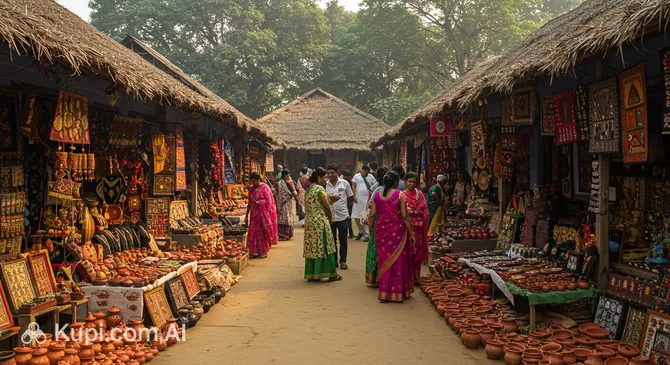
Special attention should be paid to the local markets. The famous Shonibarer Haat (Sonajhuri Haat or Khoai Mela), which usually operates on Saturdays, is a true kaleidoscope of local crafts, textiles, jewelry, and traditional snacks. It’s a great place to feel the local flavor and purchase unique souvenirs. It's also worth visiting Srijani Shilpagram – a cultural complex and craft village where you can not only see the creation process but also buy directly from the artisans. Various traditional crafts of West Bengal are presented here.
Srijani Shilpagram. Illustration.
Source: Kupi.com AI
Traveler photos:
From Bolpur, you should bring back handmade items. Popular choices include:
Textiles with Kantha embroidery: Saris, shawls, bedspreads, and clothing decorated with traditional Bengali embroidery.
Batik items: Clothing, panels, and accessories with characteristic patterns.
Terracotta products: Figurines, dishware, and decorative elements.
Dokra: Metal products made using an ancient casting technique.
Books and souvenirs related to Rabindranath Tagore and Visva-Bharati University.
Jute products: Bags, rugs, and other items.
Most shops and stalls in Bolpur operate roughly from 10:00-11:00 AM until 7:00-8:00 PM; some may close for a lunch break. Markets, especially weekly ones, have their own schedules. Cash is preferred in small shops and at markets, although some larger retail outlets and souvenir shops may accept bank cards. The UPI mobile payment system is also widely used in India.
Tax Free services for tourists on local purchases in Bolpur, as in most small towns in India, are generally not provided or are not a common practice for goods purchased at markets and small shops.