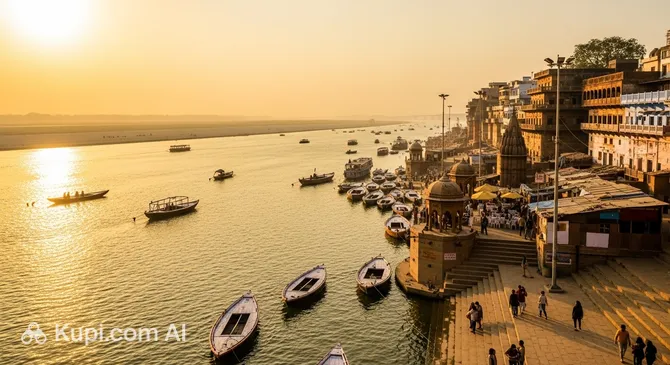
Chhapra is an authentic city located in the state of Bihar in eastern India. Occupying a strategic position on the left bank of the great Ganges, near its confluence with the Ghaghara River, the city has served as an important trade and administrative hub for the region for centuries. Today, it is a bustling center with a population of about 567,123 people, where daily life is filled with the color of traditional Indian markets and the bustle of the river port.
Chapra. Illustration.
Source: Kupi.com AI
Travelers can explore the city's rich history, which dates back to ancient times. Chhapra is known for its Neolithic archaeological sites and traces of the colonial era when the city was a thriving center for the saltpeter trade. Although the city is not a typical tourist resort, it attracts visitors with its authenticity and the opportunity to see the real, unvarnished life of Bihar state.
The city's atmosphere is shaped by its role as a transport hub and trading crossroads. Here you can see how ancient traditions coexist with the modern rhythm of life. We invite you to visit Chhapra to experience the energy of this river city, walk through its bustling bazaars, and touch the cultural heritage of one of the country's oldest regions.
Weather Overview
The climate in Chhapra is characterized as typically subtropical, which defines a pronounced seasonality. Summer arrives in March and lasts until June, bringing intense heat with temperatures that can reach 40–45°C. During this period, the air becomes dry and dusty, which should be taken into account when planning long walks.
From June to October, monsoons dominate the region, bringing heavy rainfall. July and August are the wettest months, with up to 360 mm of precipitation, and humidity increases significantly due to the proximity of the Ganges. Seasonal flooding is possible during this time, affecting road conditions. It is worth studying the weather in Chhapra in detail just before your trip to prepare for any surprises from nature.
The most favorable time to visit the city is considered to be the winter period—from November to February. During this time, the weather is mild and pleasant: the average January temperature is about 15.8°C, and during the day the air warms up to a comfortable 21–25°C. Winters here are dry and sunny, which is ideal for sightseeing and trips to the surrounding areas.
Average monthly temperature
Average monthly precipitation
Interesting Facts
Archaeological finds in Chirand, located just 11 km from the city, prove that the region was inhabited as far back as the Neolithic era.
In the 18th century, the city was a world center for saltpeter production, attracting Dutch, French, and British traders.
According to local legends, the sage Gautama lived in these parts with his wife Ahilya, whose story is described in ancient Indian epics.
Chhapra officially received municipality status as early as 1864, confirming its long-standing administrative significance.
The city historically flourished as a key river port thanks to its proximity to the confluence of two powerful water arteries—the Ganges and the Ghaghara.
How to Get There
Chhapra is an important transport hub in the state of Bihar, providing connections between various parts of eastern India. Despite lacking its own airport, the city is easily accessible thanks to a developed network of railways and roads. You can learn more about logistics and plan your route on the page dedicated to how to get to the city.
The nearest major air hub is Jay Prakash Narayan International Airport (IATA: PAT), located in Patna, approximately 60–70 kilometers from Chhapra. From Patna, you can reach the city by taxi or bus; however, keep in mind that due to the congestion on the NH-19 highway, the journey can take from 2 to 4 hours.
Rail transport is the most convenient and reliable way to travel. Chhapra Junction station receives trains from major Indian cities: Delhi (the journey takes 12–15 hours), Kolkata, and Patna. Regular service makes the railway the preferred choice for most tourists.
Chhapra is also connected by bus routes to neighboring cities in the state. Government and private buses run regularly, though comfort levels can vary. For regional travel, private taxis are also frequently used and can be ordered through popular apps or from local carriers.
Main Attractions
Although Chhapra is primarily an administrative and commercial center, there are several landmark sites reflecting the region's cultural and spiritual identity. One of the most revered shrines is the Ambika Bhavani Satipeeth Temple, which attracts many pilgrims. It is also worth visiting the Gautami Rishi Ashram—a place deeply connected to ancient legends and Indian mythology.
History buffs will be interested in seeing the Dutch Cemetery, which preserves the memory of the time when European trading companies established their offices here. This quiet spot serves as a reminder of the city's importance in 18th-century international trade. Another natural attraction is Amanur Pond (Amanur Talab), which locals often choose for peaceful walks.
For those seeking a larger-scale experience, Chhapra serves as a starting point for a trip to the confluence of the Ganges and Ghaghara rivers. The Ganges embankments in this area are an ideal place to observe traditional lifestyles and religious rites. Additionally, just a few kilometers away are the Chirand archaeological excavations, revealing the secrets of the Neolithic era.
Local Cuisine
A gastronomic journey to Chhapra is impossible without exploring the traditional cuisine of Bihar. The region's main highlight is Litti Chokha—baked wheat dough balls stuffed with roasted chickpea flour (sattu), served with a vegetable mash of eggplant or potato. This hearty and flavorful dish can be found in small cafes and from street vendors alike.
Special attention should be paid to sattu-based products—a kind of local "superfood" used to prepare both savory snacks and refreshing drinks. On the streets of Chhapra, be sure to try freshly made samosas with spicy chutney and sweets such as jalebi or halwa. The proximity of the Ganges also ensures that fresh river fish, prepared with mustard oil and local spices, is on the menu.
Among drinks, the most popular is fragrant masala chai, which is enjoyed here at any time of the day. On hot days, lassi—a traditional yogurt drink—is also very refreshing. The food culture in the city centers around bustling markets and the train station, where you can find honest prices and the authentic taste of home-cooked meals characteristic of eastern India.
Travel Tips
To ensure your trip to Chhapra is comfortable and leaves only pleasant impressions, we have prepared a few practical tips.
Clothing and Dress Code: Choose lightweight clothing made from natural fabrics, as it can be very hot in the region. When visiting temples and religious sites, be sure to cover your shoulders and knees; women are recommended to carry a light scarf.
Getting Around: The most convenient way to travel within the city is by auto-rickshaw. Always agree on the price before the start of the trip, as meters are rarely used here.
Finances: The main currency is the Indian Rupee. There are many ATMs in the city, but for markets and small shops, always carry a sufficient supply of cash.
Health: Drink only bottled water and avoid ice in drinks at street cafes. In the dry season, it can be very dusty, so those with allergies should bring protective masks.
Safety: Observe general precautions: avoid walking alone after dark in remote areas and keep an eye on your valuables in crowded markets.
Communication: The main languages are Hindi and Bhojpuri. English is understood in hotels and at the railway station, but learning a few basic phrases in Hindi will greatly help in communicating with locals.
Local Etiquette: Always remove your shoes when entering a private home or a temple. Use the traditional "Namaste" gesture (palms pressed together) for greetings.
What to Avoid: Avoid planning your trip during the height of the monsoon season (July-August), as flooding from the Ganges is possible and can paralyze traffic in some parts of the city.
By following these simple recommendations, you will be able to immerse yourself more deeply in the local culture and make your visit to Chhapra as productive and safe as possible.
Entertainment & Nightlife
In Chhapra, as a traditional and fairly conservative city in Bihar, classic nightlife in the Western sense is practically non-existent. You won't find bustling nightclubs or bars here. The main centers of evening activity are local markets and riverbanks, where life hums until late evening, and families gather for walks and socializing.
Major entertainment in the city is closely linked to religious holidays and festivals, such as Navratri or the famous Sonepur Mela fair. During these periods, the streets are transformed with cultural programs, folk group performances, and vibrant street shows, creating a unique festive atmosphere. Daytime leisure for locals often includes visiting cinemas to see the latest Bollywood releases.
For those looking for a more active evening program with restaurants and modern entertainment centers, a trip to neighboring Patna is recommended. In Chhapra itself, it's worth taking time for quiet relaxation: walking along the Ganges at sunset or visiting local fairs to experience the true spirit of the Indian province.
Parks & Museums
Green spaces and cultural institutions in Chhapra reflect the typical appearance of an Indian industrial and trading city. Although there are no large state museums, the region's historical heritage can be felt by visiting ancient temples and archaeological sites. For those interested in history, nearby Chirand is a must-visit, where artifacts dating back thousands of years were found.
Among the city's recreational areas, Amanur Pond (Amanur Talab) stands out. It is one of the few places in the city where residents can escape the noise of the streets. Despite the dense buildings, the banks of the pond serve as a popular spot for leisurely evening walks and meetings.
Nature lovers should look into the nearby Saran Bird Sanctuary. During migration season, many species of birds can be seen here, making it attractive for photographers and birdwatchers. Although park infrastructure in Chhapra itself is not very developed, the proximity of great rivers compensates for this with picturesque views along the banks of the Ganges.
Getting Around
The transport system in Chhapra is represented by modes traditional for small Indian cities, allowing for easy movement between commercial areas and the outskirts. The main means of transportation within the city are auto-rickshaws and cycle-rickshaws. This is the fastest and most affordable way to navigate narrow streets, especially in heavy traffic.
For longer trips within the district, buses are used, though their schedules are not always regular. The city's main transport hub is the railway station, with trains departing for various parts of the country. For tourists, rickshaws remain the most practical option: the cost of a short trip is usually between 5 and 20 rupees, but the price should always be agreed upon in advance.
When planning your movements around the city, keep in mind that during peak hours—morning and evening—the streets become extremely congested, and travel time can increase significantly due to traffic jams and dust. Alternatively, you can use taxi services via mobile apps like Uber or Ola if you are planning a trip to Patna or neighboring districts. Bicycle rental is practically non-existent in the city, as traffic is chaotic and takes some getting used to.
Accommodation
Accommodation options in Chhapra are primarily geared towards transit travelers and business visitors. The city is dominated by budget hotels and guesthouses, most of which are concentrated around the railway station and central markets. This is a convenient option for those who need to transfer or stay in the city for a short period.
The price range for accommodation is usually from 500 to 2,000 Indian Rupees per night. Hotels offer a basic set of services: clean bedding, a fan or air conditioner, and internet access. There are no luxury five-star hotels or resorts in the city itself, so tourists accustomed to a high level of service should consider accommodation options in Patna.
When planning your trip, it is recommended to book accommodation in advance, especially during major festivals like Sonepur Mela, when demand for rooms spikes. Booking methods include international online services, although some local guesthouses only accept cash upon arrival.
Nearby Cities
Chhapra is an excellent starting point for exploring the surroundings and experiencing the culture of Bihar. The city's geographical location allows for several fascinating day trips to neighboring settlements, each with its own unique character.
Nearby are small towns such as Dahiyawan and Mahamada, where you can see the traditional rural way of life. It is also worth visiting the town of Revelganj, located just 8 kilometers away, which is historically linked to river trade and pilgrimage routes.
City
Population
Distance
Dahiawan
11 213
2 km
Mahamda
8 970
5 km
Revelganj
39 039
8 km
Kotwapatti Rampur
12 484
9 km
Barahra
9 877
11 km
The most popular destination for a full-day trip remains the state capital, Patna, which offers a rich selection of museums and historical monuments. We recommend not limiting yourself to city walks but exploring the nearby regions to fully experience the diversity of this part of the country.
Shopping & Souvenirs
Shopping in Chhapra is, above all, an immersion into the atmosphere of traditional Indian bazaars. Most trading is concentrated on the central streets near the railway station and the river port. You won't find huge, glitzy shopping malls here, but there are endless rows of stalls offering everything from fresh spices and agricultural products to vibrant fabrics and household items.
If you are looking for something special, look for copper and brass items, as well as traditional clothing. Chhapra's markets are famous for their selection of quality cotton and linen products. As a souvenir, you can bring back local sweets or small figurines of deities made by local craftsmen. Don't forget to check out the spice rows—the aroma of fresh chili, turmeric, and coriander here is simply amazing.
Shops and markets usually open around 10 AM and stay open until late evening. Payment at most outlets is in cash (Indian Rupees), although larger shops are beginning to accept electronic payments. Walking through the city's markets is not just a chance to shop, but also a great opportunity to practice the art of bargaining and feel the true rhythm of Bihar life.