Support

Dharmastala

About

Dharmasthala is not just a point on the map of Karnataka state, but the true heart of spiritual life in Southern India. The city is nestled in the picturesque foothills of the Western Ghats, on the banks of the Netravati River, amidst emerald forests and hills, which gives it a special atmosphere of peace and harmony with nature. A wonderful combination of privacy and hospitality reigns here: the town is small, with only about 12,220 inhabitants, but this is precisely what creates a sense of intimacy and special proximity to local traditions.
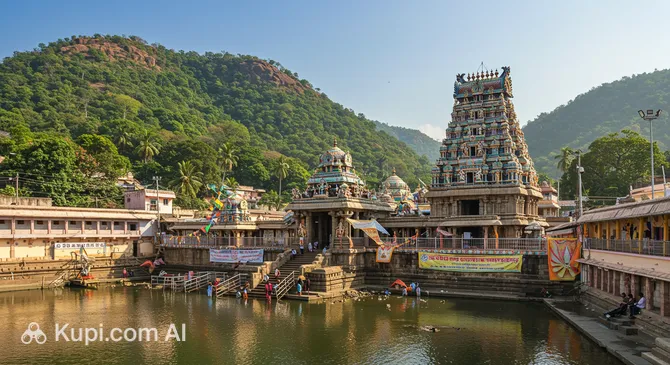
Dharmastala. Illustration.
Source: Kupi.com AI

Dharmasthala is known as one of the major centers of pilgrimage. Its administrative significance is not that great, but its religious and cultural influence cannot be overestimated. Every year, hundreds of thousands of people from all over the world come here to touch the spiritual heritage of this place, feel the power of centuries-old rituals, and enjoy the unique atmosphere of unity.

The city is literally saturated with the spirit of harmony, where Hindu and Jain traditions live side by side. It is in Dharmasthala that the famous Shri Manjunatha Temple is located, where pilgrims of all faiths flock. Surprisingly, here a Hindu temple is managed by a Jain family, and the rituals are performed by a Brahmin priest — this is a unique example of religious tolerance and friendship.

Dharmasthala is worth visiting for a unique experience: here you can not only get acquainted with ancient traditions but also enjoy nature, try local cuisine, and become part of a great celebration of life that does not stop for a single day.

You can find more interesting facts on the history of Dharmasthala page.
Weather Overview

The weather in Dharmasthala is characterized by a warm climate throughout the year. The hottest months are February, March, and April, when the average maximum temperature reaches 33-34°C. The coolest period is in July and August, with average maximum temperatures around 25-26°C. Expect a hot and mostly dry start to the year, followed by a pronounced monsoon season from June to August, when the highest amount of rainfall occurs and the number of rainy days is at its maximum. In autumn and early winter, the amount of precipitation gradually decreases.

For a more detailed forecast and monthly weather information, you can visit the Dharmasthala Climate page.

Average monthly temperature

Average monthly precipitation

Interesting Facts

In addition to its famous shrines and peaceful atmosphere, Dharmasthala holds many fascinating secrets and unique traditions. Here are just a few that can surprise even a seasoned traveler:

  • Dharmasthala is famous for its unique approach to religious life: traditions of Hinduism and Jainism are harmoniously combined in one temple complex. The Shri Manjunatha Temple is dedicated to the Hindu deity Shiva, but its trustees are representatives of the ancient Jain Hegde family, who have carefully preserved and developed this place for over 800 years.

  • Every year, Dharmasthala hosts the grand "Annadaana" festival — a free food distribution where thousands of pilgrims and guests are fed daily. It is estimated that more than 10 million people are treated here over the course of a year, making it one of the largest charity projects of its kind in India.

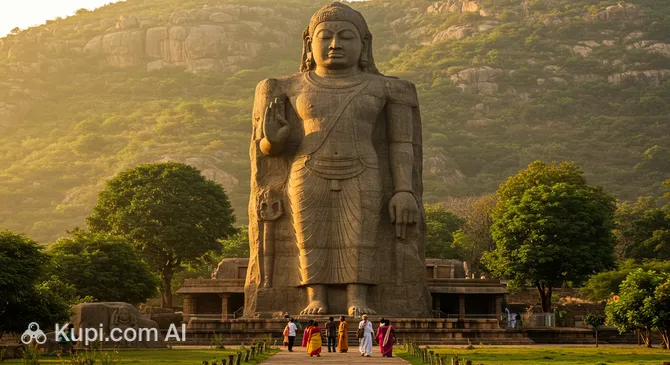
  • The impressive Monolithic Statue of Bahubali rises in the city — one of the largest monolithic statues in South India. It symbolizes the ideals of Jainism: non-violence, compassion, and inner harmony.

  • Many legends are associated with Dharmasthala. One of them says that a local chief once lived here who took in a wandering ascetic. For his hospitality, he received a blessing, and the place became sacred. Since then, the city has been considered a refuge for all those seeking spiritual enlightenment.

Bahubali Monolithic Statue. Illustration.
Source: Kupi.com AI

Traveler photos:

How to Get There

When planning a trip to the shrines of Karnataka state, it is important to think through the logistics in advance. You can explore all ways to get to the city to choose the optimal route that combines comfort and budget. Dharmasthala, located in the picturesque foothills, does not have its own airport or railway station, so the main route here lies through neighboring major transport hubs.

The most convenient option for most tourists is Mangalore International Airport (IXE). It is located in the city of Mangalore, approximately 53 km from Dharmasthala. This is the nearest air gateway, accepting both domestic and some international flights. A trip from the airport to the city by taxi or bus will take about 1 hour and 40 minutes. Due to its proximity, this route is chosen by most pilgrims.

For travelers arriving from far abroad or remote corners of India, Kempegowda International Airport (BLR) can become a key transit point. This major aviation hub is located in the city of Bengaluru, at a distance of about 254 km. Despite the distance, it offers a huge selection of flights. The journey from Bengaluru to Dharmasthala will take about 6–7 hours by taxi or bus, passing through the scenic but winding roads of the Western Ghats.

You can also consider flying through Kannur International Airport (CNN), located in the city of Kannur (about 116 km). The journey from there will take approximately 3 and a half hours.

For clarity, here is a summary of the main airports through which you can reach the region:

AirportPassenger trafficDistance
Mangalore Airport2.3 mln53 km
Shivamogga Airport161 000103 km
Kannur International Airport1.3 mln116 km
Calicut International Airport3.7 mln211 km
Kempegowda International Airport41.9 mln254 km

Regarding railway transport, there is no station in Dharmasthala itself. The nearest major railway station is in Mangalore, which has excellent connections to most of India's metropolises, including Mumbai, Chennai, and Delhi. State and private buses, as well as taxis, regularly run from Mangalore station to Dharmasthala. Another option is to take a train to Subramanya Road station, though a transfer to road transport will also be required from there.

Bus travel is perhaps the most common and budget-friendly way to reach the city. The KSRTC state transport corporation provides regular services from Bangalore, Mangalore, Mysore, and other cities in Karnataka. The roads in this region are picturesque, but can be tiring due to the mountain serpentines, so many tourists prefer comfortable Volvo or Sleeper class buses.

Main Attractions

Dharmasthala, a sacred city in the Indian state of Karnataka, is famous not only for its main temple but also for a number of other interesting places that attract both pilgrims and curious tourists. Each attraction here has its own unique history and atmosphere, immersing visitors in a world of spirituality and cultural heritage.

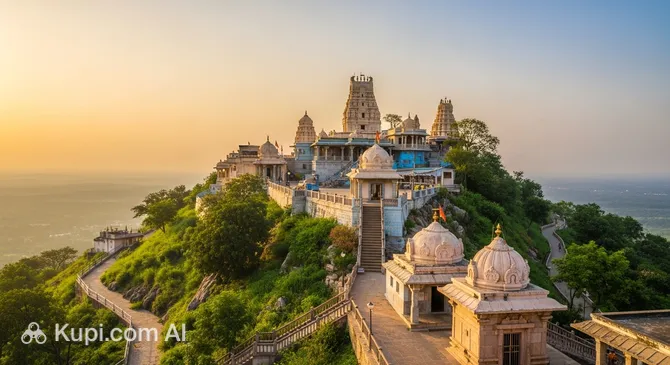
One of the most impressive attractions is the Monolithic Statue of Bahubali. This majestic 12-meter statue, carved from a single stone, depicts a revered figure of Jainism. Installed on Ratnagiri Hill in 1982, it symbolizes renunciation and self-control. Visitors climb to the statue via steps, which offer a panoramic view of the surroundings, making this place popular not only among believers but also among tourists who appreciate monumental art and beautiful landscapes.

Bahubali Monolithic Statue. Illustration.
Source: Kupi.com AI

Traveler photos:

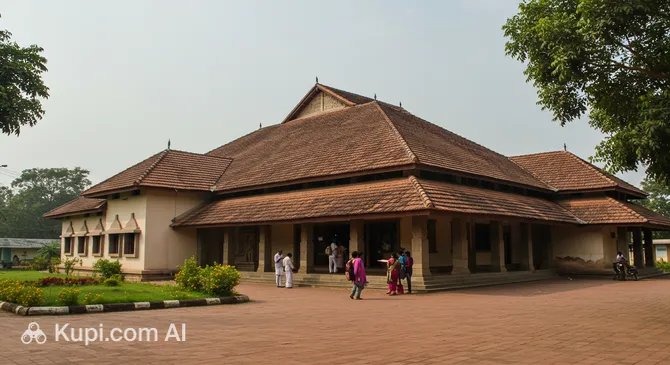
For lovers of history and art, the Manjusha Museum is a must-visit. This unique museum houses an extensive collection of ancient items, artifacts, classic cars, Indian stone and metal sculptures, paintings, and much more. The collection, assembled by Veerendra Heggade, offers a fascinating journey into the region's past and India's rich culture.

Manjusha Museum. Illustration.
Source: Kupi.com AI

Traveler photos:

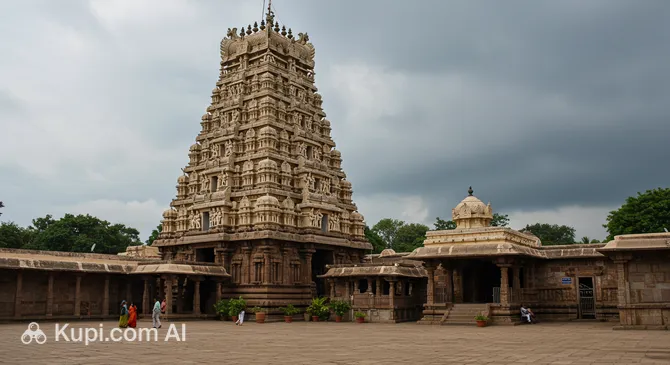
Not far from the main temple is Shri Rama Kshetra, a picturesque temple dedicated to Lord Rama. It is located on the banks of the Netravati River and built in a traditional architectural style. This place attracts pilgrims with its peaceful atmosphere and the opportunity to offer prayers in a calm setting, surrounded by beautiful nature.

Shree Rama Kshethra. Illustration.
Source: Kupi.com AI

Traveler photos:

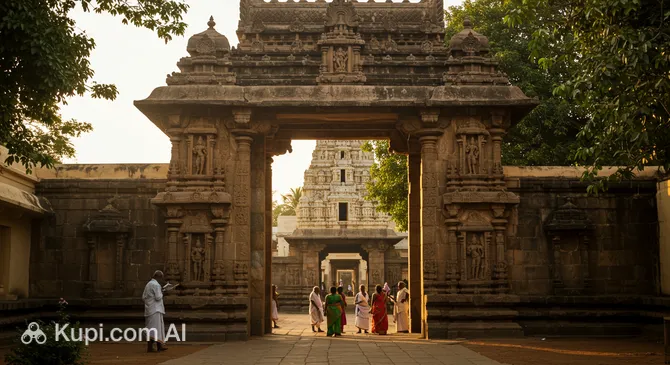
The Dharmasthala Gateway serves as a symbolic entrance to the holy city. These majestic gates, made in a traditional style, welcome all visitors arriving in Dharmasthala. They are a popular spot for photographs and mark the beginning of the pilgrimage path for many believers, serving as an important symbol of the city's hospitality and spiritual significance.

Gateway of Dharmasthala. Illustration.
Source: Kupi.com AI

Traveler photos:

Local Cuisine

The gastronomy of Dharmasthala is a unique immersion into the world of South Indian vegetarian cuisine, closely intertwined with the spiritual traditions of this holy city. Here, food is not just about satisfying hunger, but a part of a ritual and an expression of care. The main feature of the local culinary culture is annadaana — the tradition of free lunches offered daily to thousands of pilgrims and guests at the Manjunatha Temple. This is a simple but incredibly tasty and nutritious meal, prepared with love and in accordance with ancient customs.

The basis of Dharmasthala cuisine consists of dishes characteristic of the state of Karnataka. Be sure to try a traditional lunch, which includes rice, sabji (a vegetable stew made from seasonal vegetables), aromatic rasam (a spicy soup based on tamarind), thick sambar (lentil soup with vegetables), and freshly baked chapati flatbreads. For dessert, payasam is often served — a sweet milk pudding with vermicelli or rice. A feature of the local cuisine is the complete absence of onion and garlic in most dishes, which conforms to Jain traditions and makes the food particularly light and aromatic. It is also worth paying attention to local coconut sweets and spicy chutneys.

Street food in Dharmasthala offers its own little joys. At small stalls and markets, you can find fresh tropical fruits and crispy fried snacks such as pakora (vegetables in batter) and samosas (pastries with vegetable filling). Among the drinks, refreshing sugarcane juice and tender coconut water straight from the nut are particularly popular. Alcoholic beverages are not common in Dharmasthala, which corresponds to its status as a holy place.

The food culture in Dharmasthala is centered around the temple and small local eateries. In addition to the famous temple lunches, tourists can find many humble establishments offering authentic dishes. Gastronomic experiences are enhanced during numerous temple festivals, when special dishes are prepared according to old recipes, and every guest becomes a participant in a large communal feast, feeling the spirit of unity and hospitality of Dharmasthala.

Travel Tips

Welcome to Dharmasthala, a unique place of pilgrimage and spirituality in India! To make your trip as comfortable and memorable as possible, we have prepared some practical tips that will help you better orient yourself and enjoy your stay in this special city.

  1. Clothing and Essentials:

    Dharmasthala is primarily a religious center, so choose modest clothing that covers your shoulders and knees, especially when visiting temples. Given the warm and humid climate of the Karnataka region, light cotton or linen clothes are preferable. Be sure to bring comfortable shoes, as you will have to walk a lot, including barefoot within the temple complexes. Don't forget sunscreen, a hat, and perhaps a light raincoat during the monsoon season (roughly from June to September). A universal adapter for electronics may also be useful.

  2. Transport:

    Getting around Dharmasthala itself and its immediate surroundings is most convenient by auto-rickshaw or local buses. The town is small, so there is no public transport in the form of metro or trams here. Taxis are also available, but it's better to agree on the price in advance. Renting a car is unlikely to be necessary unless you plan long trips around the region.

  3. Finance:

    The local currency is the Indian Rupee (INR). You can exchange currency at banks or authorized exchange offices, but it's better to do this in larger cities before arriving in Dharmasthala, as the choice here may be limited. There are ATMs in the city, but just in case, have some cash on hand. Credit and debit cards are accepted in some hotels and large stores, but in small shops and for paying rickshaw services, you will need cash. International cards may not work everywhere. Tipping culture is not as widespread as in the West, but for good service in restaurants or hotels, you can leave a small amount (5-10%). An approximate daily budget (excluding accommodation) can range from 800 to 1500 rupees, depending on your needs.

  4. Health and Safety:

    There are pharmacies in Dharmasthala where you can purchase basic medications, but if you need specific medicines, it's better to bring a supply with you. For medical assistance, tourists can contact local clinics or hospitals; check with your hotel for the nearest facility. Dharmasthala is considered a relatively safe place, especially during the day and in pilgrimage areas. However, as everywhere, follow general precautions: watch your belongings, avoid displaying expensive jewelry, and do not leave valuables unattended. Drink only bottled or boiled water.

  5. Communication:

    The main language of communication in Dharmasthala is Kannada. In tourist areas and hotels, staff often speak English, but knowing a few phrases in Kannada (for example, "Namaskara" – Hello, "Dhanyavadagalu" – Thank you) will be received with gratitude. A SIM card with internet access can be purchased in larger cities on the way or possibly in Dharmasthala itself, but the choice of operators may be limited. Wi-Fi is available in most hotels and some cafes. There are no special local apps mandatory for tourists, but standard maps and translators will be useful.

  6. Local Etiquette:

    When visiting temples, be sure to remove your shoes before entering. Photographing inside some shrines may be prohibited – pay attention to signs. Show respect for local customs and traditions. When communicating with locals, be polite and smiling. In India, it is customary to eat with your right hand (especially if eating without cutlery); the left hand is considered "unclean."

  7. What to Avoid:

    Avoid public displays of affection, as this is not customary in Indian culture, especially in holy places. Also, you should not point at people or sacred objects with your index finger – it is better to use an open palm or a nod of the head.

  8. Additional Tip:

    Be sure to visit the Manjunatha Temple and, if possible, take part in "Annadaana" – the free distribution of sanctified food to all pilgrims. This is a unique experience reflecting the spirit of generosity and hospitality of Dharmasthala. Also, find out about the times of the pujas (religious ceremonies) to catch the most interesting moments.

We hope these tips help you plan an unforgettable trip to Dharmasthala. Enjoy every moment of your stay in this amazing corner of India!

Entertainment & Nightlife

Dharmasthala, being primarily an important pilgrimage center in India, offers an atmosphere of peace and spirituality, which also leaves its mark on the nature of local entertainment. You won't find noisy nightclubs or bars typical of large tourist cities here. Evening life in Dharmasthala is quiet and measured, conducive to relaxation and reflection.

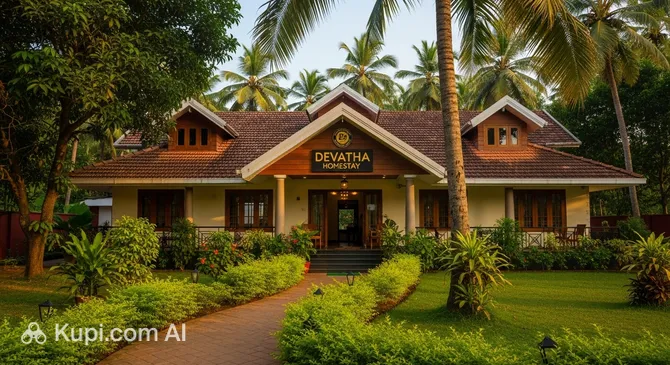
Instead of lively night districts, evening entertainment here is concentrated around more peaceful activities. You can enjoy dinner in restaurants at hotels or guesthouses that offer local and Indian cuisine. Some establishments, such as Devatha Homestay, can offer a comfortable setting for an evening meal. The atmosphere in such places is usually quiet and family-oriented. Most establishments close quite early, so you shouldn't plan for late outings.

Speaking of practical points, it is best to use auto-rickshaws for getting around in the evening, agreeing on the price in advance, or use the transport provided by your hotel. Dharmasthala is generally considered a safe place, especially in the areas around the temples, however, standard precautions, as in any trip, won't be out of place. There are no specialized night markets or concert venues with modern music here, as the city's focus is directed toward spiritual practices.

Daytime in Dharmasthala offers more opportunities to get acquainted with culture and history. It is definitely worth visiting the Manjusha Museum, which houses an impressive collection of ancient items, manuscripts, and artifacts. This place will allow you to deeper understand the rich heritage of the region.

Manjusha Museum. Illustration.
Source: Kupi.com AI

Traveler photos:

Another significant attraction is the majestic Monolithic Statue of Bahubali, which attracts pilgrims and tourists with its monumentality and spiritual significance. You can also explore other interesting places, such as Shri Rama Kshetra, or take a walk to the Netravati River Barrage to enjoy the natural views. These places offer a rich cultural and educational experience.

Bahubali Monolithic Statue. Illustration.
Source: Kupi.com AI

Traveler photos:

Thus, Dharmasthala is a place for those looking for tranquility and spiritual enrichment, rather than a vibrant nightlife. Evenings here invite peaceful rest, while days are filled with opportunities to explore unique cultural and religious attractions.

Parks & Museums

Dharmasthala, known primarily as a spiritual center, offers visitors not only pilgrimage routes but also the opportunity to touch cultural heritage and enjoy the tranquility of nature. The city and its surroundings hold interesting artifacts and picturesque corners that will make your trip more enriching.

For lovers of nature and peaceful walks, Annappa Hill (Annappa Betta) is worth paying attention to. Climbing it, you can enjoy beautiful views of the surrounding area and visit a small shrine. It is an excellent place for meditation and quiet contemplation. Another place where you can feel a connection with nature is the Netravati River Barrage. Here you can observe the flow of the sacred river, enjoy the fresh air, and take beautiful photos, especially at sunset or sunrise.

Annappa Hill. Illustration.
Source: Kupi.com AI

Traveler photos:

The main cultural site that should not be missed is the Manjusha Museum. This unique museum houses an impressive collection of antiquities, including vintage cars that belonged to the Dharmadhikari (head of the temple), ancient manuscripts, exquisite jewelry, temple chariots, and other rare artifacts. The museum's exhibition vividly illustrates the rich cultural and historical heritage of the region and will be interesting for both adults and children.

Manjusha Museum. Illustration.
Source: Kupi.com AI

Traveler photos:

Among other significant landmarks of Dharmasthala, the majestic Monolithic Statue of Bahubali stands out. This 39-foot (about 12 meters) statue, carved from a single stone, is a symbol of peace, self-sacrifice, and detachment. It attracts many pilgrims and tourists, especially followers of Jainism. Also, a landmark structure is the Dharmasthala Gateway, which serves as the formal entrance to this holy city and welcomes all who arrive.

Bahubali Monolithic Statue. Illustration.
Source: Kupi.com AI

Traveler photos:

Nearby is Shri Rama Kshetra, another important place of pilgrimage dedicated to Lord Rama. This temple complex, located on the river bank, offers a peaceful atmosphere for prayer and reflection.

Shree Rama Kshethra. Illustration.
Source: Kupi.com AI

Traveler photos:

For a deeper immersion into the atmosphere of Dharmasthala, try walking around the area early in the morning when the city is just waking up, or visit local markets to see everyday life. You can also find secluded trails around the hills where unexpected views open up and silence reigns.

Getting Around

Dharmasthala, being an important pilgrimage center, offers several options for getting around for tourists and pilgrims. Although there is no extensive metro or tram system as in major metropolises, it is quite possible to get to the necessary points and explore the surroundings.

The main mode of public transport connecting Dharmasthala with other cities in the state of Karnataka is the state-run KSRTC (Karnataka State Road Transport Corporation) buses. They offer regular services in various directions. For moving directly within the city and the immediate vicinity, auto-rickshaws are the most common. These are three-wheeled motorized carts that are a convenient and relatively inexpensive way to reach temples, places of stay, or other points of interest. Sometimes private buses serving local routes can also be found.

The payment system is simple. In KSRTC buses, tickets are purchased directly from the conductor on board, usually for cash. The cost depends on the distance. For trips on an auto-rickshaw, the price is usually negotiable. It is strongly recommended to agree on the cost of the trip with the driver before starting the journey to avoid misunderstandings. Specialized travel cards or mobile apps for paying fares on local transport in Dharmasthala are usually not provided.

KSRTC buses run according to a schedule that can be checked at the bus station or with local residents. Auto-rickshaws are available most of the day and evening, especially near the temple complex and the bus station. For short distances in the center of Dharmasthala, many prefer to move on foot, as the main shrines and infrastructure facilities are located compactly. Taxis in the traditional sense are less common than auto-rickshaws, but they can be found or ordered for longer trips or greater comfort.

There are no unique types of transport, such as historical trams or cable cars, in Dharmasthala. The transport system is oriented towards serving a large flow of pilgrims and tourists using accessible and traditional means of travel for the region.

Accommodation

In Dharmasthala, being an important pilgrimage center, a range of accommodation options are presented, catering to various needs and budgets of tourists. Travelers can find budget guesthouses and rooms at ashrams, as well as more comfortable mid-range hotels. Options for renting apartments or villas are less common, as the main focus is on accommodating pilgrims and temple visitors.

Most accommodation options are conveniently located in the immediate vicinity of the main Manjunatha Temple and other key shrines, making these areas the most popular among tourists. This provides easy walking access to the main attractions. Among the available options, for example, Devatha Homestay can be considered, which offers guests cozy accommodation.

Devatha Homestay. Illustration.
Source: Kupi.com AI

Traveler photos:

As for the price range, you can find housing in Dharmasthala for any budget – from very economical options to mid-range offers. It is highly recommended to book accommodation in advance, especially if your trip coincides with major religious holidays or weekends when the influx of pilgrims is at its maximum. You can book your stay through popular online aggregators and travel portals, or by contacting the chosen hotel or guesthouse directly.

Nearby Cities

For those who want to explore the surrounding area, Dharmasthala serves as an excellent starting point for day trips to several interesting nearby locations:

CityPopulationDistance
Ujire16 4657 km
Beltangadi9 64212 km
Laila9 60913 km
Koila8 59418 km
Uppinangadi9 46719 km

Among these towns, Puttur is worth noting, known for its ancient Mahalingeshwara Temple, which attracts pilgrims and those interested in history. A trip here will allow you to touch the spiritual culture of the region. Nearby is Bantwal, located on the picturesque banks of the Netravati River and offering opportunities for peaceful relaxation and visiting local shrines. Fans of architecture and history will be interested in Moodabidri, often called the "Jain Kashi" because of its many ancient Jain temples, including the famous Thousand Pillars Temple (Saavira Kambada Basadi).

These nearby destinations provide an insight into the diverse culture and landscapes of the region.

Shopping & Souvenirs

Shopping in Dharmasthala, being primarily a well-known pilgrimage center, has its own specifics. The city is not famous for large shopping centers or designer boutiques; however, here you can find authentic goods related to the culture and religion of the region. The main emphasis is on religious items, souvenirs, and traditional products.

The main shopping spots are concentrated mainly around the main temple complex. Numerous small shops and stalls are located here, offering a wide range of goods for pilgrims and tourists. These are usually the streets adjacent to the Manjunatha Temple, which are always bustling and where you can find everything needed for rituals or commemorative souvenirs.

In Dharmasthala, there are no large modern shopping centers in the usual sense. Shopping here is more traditional, oriented towards local needs and the requirements of visiting pilgrims. Instead of malls, you will find rows of small shops and street vendors.

There are few specialized large markets, such as food or flea markets, in Dharmasthala. However, near the temple area and on busy streets, you can always meet vendors offering fresh flowers, fruits, coconuts for offerings, as well as small souvenirs and handmade items. These small spontaneous markets add flavor to local trade.

As souvenirs from Dharmasthala, tourists most often bring religious attributes: small figurines of deities, images of the temple, prayer beads (japa-mala), incense sticks, and oils. Also popular are sandalwood items, copper and brass ritual accessories, traditional Indian fabrics, and clothing, such as sarees or dhotis. Sometimes you can find interesting local crafts and handmade jewelry.

Shops in Dharmasthala, especially those located near the temple, are usually open from early morning until late evening to serve the constant stream of pilgrims. In small shops, the preferred form of payment is cash. Credit cards may be accepted in larger stores or hotels, but it's better to have enough cash with you. There are ATMs in the city, but their number is limited.

The Tax Free system for tourists in Dharmasthala, as in most small towns in India focused on pilgrimage tourism, is generally not common and is not standard practice for most purchases made by tourists.

Nearby cities

Reached the end of the page?

That means the route is fully explored