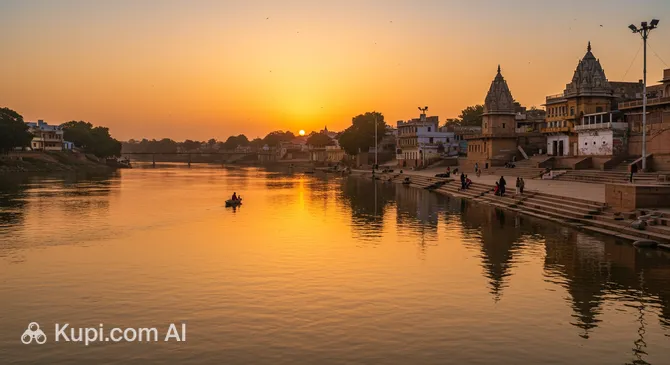
Etawah is a colorful city in the state of Uttar Pradesh, located in the heart of India. Stretching along the left bank of the Yamuna River, near its confluence with the majestic Chambal, the city possesses the distinct atmosphere of a serene Indian province. With a population of about 257,000, Etawah serves as an important administrative center that has preserved the features of the traditional way of life in northern India.
Geographically, the city is situated on the alluvial plain of the Ganges-Yamuna Doab, which historically determined its agricultural significance. Etawah is in strategic proximity to the country's major tourist magnets — just 100 km from the legendary city of Agra. Although the city is not a global tourist hub, its rich historical heritage and role in the events of the Indian Rebellion of 1857 make it an interesting stop for thoughtful travelers.
Etawah. Illustration.
Source: Kupi.com AI
Visitors to the city are attracted not only by ancient temples and traditional architecture but also by unique natural sites in the surrounding area. Here, you can feel the true rhythm of life in Uttar Pradesh, far from the tourist crowds. We invite you to learn about the history of Etawah and discover this authentic destination where modernity is closely intertwined with centuries-old traditions.
Weather Overview
Etawah is characterized by a typical subtropical monsoon climate with three distinct seasons. The hot and dry summer begins in March and peaks in May and June, when temperatures can rise to an extreme +45°C. During this period, the city is often shrouded in a dusty haze, and humidity remains low.
From July to September, monsoon rains arrive in the region, bringing long-awaited coolness but also significant humidity. July and August see the highest amount of rainfall (over 220 mm per month), which sometimes leads to the swelling of the Yamuna and Chambal rivers. Expect warm days with frequent downpours followed by sunny intervals. The detailed city's climate can be explored on our dedicated page.
The winter period from November to February is considered the most comfortable time for a visit. Daytime temperatures range pleasantly from +15°C to +25°C, while nights can be quite cool (down to +8°C). This time is ideal for walking and sightseeing as the weather remains dry and sunny.
Average monthly temperature
Average monthly precipitation
Interesting Facts
Confluence of two great rivers: Etawah is located at a unique geographical point where the Yamuna River meets the Chambal River, creating an important natural junction in the state of Uttar Pradesh.
Heroic past: The city played a significant strategic role during the famous Indian Rebellion of 1857, becoming one of the centers of resistance in the region.
Fertile lands: Etawah district lies on an alluvial plain and is actively irrigated by a complex system of Ganges canals, making it one of India's key agricultural areas.
Lion Safari: The local safari park is considered one of Asia's largest projects for breeding Asiatic lions in captivity, attracting biologists and nature enthusiasts.
How to Get There
Etawah enjoys good transport accessibility, serving as an important transit point between major Indian cities. The primary way of getting to Etawah is by rail, as the city is located on the busy Delhi–Kanpur main line. The nearest major airports are in Agra (about 100 km) and Kanpur (about 150 km), from where the city can be reached by taxi or bus in 2-3 hours.
Etawah Junction railway station is the city's key transport hub. Trains arrive here regularly from Delhi (travel time 5-6 hours), Kanpur (about 2 hours), and Agra (2-3 hours). Thanks to its status as a junction station, travelers can easily transfer here to trains heading to other regions of the country.
Station
Passenger traffic
Distance
Gwalior Junction railway station
7
105 km
Agra Fort railway station
9
110 km
Agra Cantt railway station
11
111 km
Kanpur Central railway station
14
137 km
Datia railway station
2
139 km
For those who prefer road travel, the NH19 national highway passes through the city. Intercity buses connect Etawah with Delhi, Agra, and Gwalior. It is worth noting that during peak hours and the monsoon season, traffic can be heavy, especially on the bridges over the Yamuna River.
Main Attractions
Although Etawah is not considered a major tourist center, there are several unique places here that deserve attention. One of the main gems of the region is the Etawah Safari Park. This is a large-scale project focused on preserving the population of Asiatic lions, where visitors can see these majestic predators and other wild animals in conditions as close as possible to their natural habitat.
History buffs should visit the Raja Sumer Singh Fort. This cultural heritage site is a reminder of the former greatness of local rulers and allows you to experience the architectural traditions of past centuries. No less interesting is the Numaysh Crossing (Numaysh Chauraha) — a bustling point in the city where daily life pulses and local cultural events are held.
The confluence of the Yamuna and Chambal rivers serves as a natural magnet for walks and nature contemplation. This is a picturesque spot where two powerful water streams meet, creating beautiful views, especially at sunset. The city's architecture is also represented by many ancient temples scattered throughout the winding streets of the central part, which preserve the spirit of old India.
Local Cuisine
The gastronomy of Etawah represents classic Uttar Pradesh cuisine with an emphasis on vegetarian dishes. The diet of local residents consists mainly of chapati flatbreads, hearty dal (lentil soup), various vegetable curries, and fragrant rice. Due to the proximity to the rivers, fish dishes can sometimes be found on the menu, though vegetarianism prevails here.
For breakfast, it is common to serve hot kachori (crispy filled pastries) or poha (flattened rice dish). Those with a sweet tooth should definitely try local sweets like jalebi, which are prepared right on the street in boiling oil. Among drinks, the most popular is fragrant masala tea with spices and milk, and on hot days, refreshing lassi.
You can get acquainted with the local cuisine at the city's popular establishments. For example, Tropical Cafe & Restaurant offers a cozy atmosphere and a wide selection of dishes, while Khuraak Multi Cuisine Restaurant will delight you with a variety of regional recipes. If you want a real taste of local flavor, head to the markets near the station, where traditional dhabas serve the tastiest and most affordable street food.
Travel Tips
A trip to Etawah will allow you to see the authentic life of northern India, and to make your journey comfortable, we have prepared several practical recommendations.
Clothing and Season: Choose light clothing made of natural fabrics, as summer temperatures can rise to +45°C. In winter (December-January), bring warm clothes as nights can be chilly. Modest clothing is mandatory for visiting temples (shoulders and knees must be covered).
Transport: Auto-rickshaws are the best way to get around the city. Always negotiate the price before starting the trip, as meters are rarely used here.
Finances: The main currency is the Indian Rupee (INR). In Etawah, cards are only accepted in large stores such as Trends. Always carry a sufficient supply of cash to pay for rickshaws and food at markets.
Health: Drink only bottled water and avoid ice in street drinks. Use sunscreen and wear a hat to avoid heatstroke.
Communication: The main language is Hindi. English is understood by railway station staff and major establishments, but it is useful to learn a few basic phrases in the local language. It is better to buy a SIM card in advance at a major airport upon arrival.
Local Etiquette: Greet people with the traditional "Namaste" gesture. Always remove your shoes when entering homes and temples.
What to Avoid: Walking alone on the outskirts of the city at night is not recommended due to a lack of lighting. Avoid eating raw vegetables and fruits that cannot be peeled.
Additional Tip: Try to plan your visit to the Safari Park for early morning — animals are most active at this time, and the heat has not yet reached its peak.
Following these simple rules will help you enjoy the hospitality of Etawah and make your adventure in Uttar Pradesh safe and memorable.
Entertainment & Nightlife
Nightlife in Etawah is virtually non-existent in the Western sense. It is a typical provincial city where the rhythm of life slows down after sunset. There are no noisy nightclubs or cocktail bars here, and locals prefer to spend their evenings with family or walking along the illuminated central streets.
The main center of evening activity is Numaysh Crossing (Numaysh Chauraha) and the adjacent markets. In the evening, the lights of street stalls flicker, creating the cozy and noisy atmosphere of a traditional Indian bazaar. For those seeking modern entertainment such as premium cinemas or large shopping centers, the best solution would be a trip to Agra or Kanpur.
During the day, tourists can spend time in the Safari Park or visit the Raja Sumer Singh Fort. The city occasionally hosts temple holidays and local festivals accompanied by folk dances and music. If you are looking for a quiet evening, the best option would be dinner at one of the local restaurants, such as Khuraak Multi Cuisine Restaurant.
Parks & Museums
The green zones of Etawah are primarily its natural landscapes along the riverbanks. The most significant site is the Etawah Safari Park, which essentially serves as a massive nature reserve and park. Here, visitors can not only see rare animals but also enjoy walks through extensive landscaped areas that serve as the "lungs" of the district.
For those interested in history and architecture, an important stop is the Raja Sumer Singh Fort. Although it is not a museum in the classic sense, the structure itself is a living monument to the past, reflecting the cultural characteristics of the region. Here you can see elements of traditional fortification architecture and feel the atmosphere of bygone eras.
In the city itself, Numaysh Crossing (Numaysh Chauraha) is also noteworthy, having historically served as a venue for exhibitions and fairs. In the absence of developed parks in the city center, the banks of the Yamuna River remain a favorite spot for townspeople to relax. These are informal recreation areas where you can observe the flow of the sacred river and the daily life of the locals.
Getting Around
The public transport system in Etawah consists mainly of basic modes of travel typical for Indian provincial cities. The most popular and convenient way to navigate the narrow streets of the center is by auto-rickshaws and cycle-rickshaws. This maneuverable transport will take you anywhere in the city for a small fee, but you should always agree on the price before the start of the trip.
For trips around the district and to nearby settlements, residents use local buses. Their schedules can be unstable, and the buses themselves are often overcrowded, so tourists are better off choosing trains from Etawah Junction for comfortable long-distance travel. The railway remains the most reliable and fastest way to connect the city with other regions.
There are no metros, trams, or modern bike-sharing systems in Etawah. Most attractions in the central part can be explored on foot, but it is worth considering the high dust levels and heavy traffic on main roads like the NH19. Payment in rickshaws and buses is made in cash, and for ordering taxis, mobile apps can be used in some cases, although their availability in this region may be limited.
Accommodation
Accommodation options in Etawah are primarily geared towards transit travelers and business people visiting the administrative center. Most hotels are concentrated around the railway station and along the NH19 highway. Here you will find mostly budget guesthouses and 2-3 star hotels offering a basic set of amenities for a comfortable overnight stay.
For those who want to touch history, an interesting option is the Raja Sumer Singh Fort, which houses a tourist bungalow. This place allows you to stay in an atmosphere of ancient heritage. There are no luxury five-star resorts in the city itself, so discerning tourists might consider staying in Agra and using Etawah as a day-trip destination.
When choosing accommodation, it is recommended to check for air conditioning, especially during the hot summer period from March to June. It is best to book rooms in advance through popular online services, although budget guesthouses often have space available upon arrival. Prices for accommodation remain very affordable compared to India's major tourist centers.
Nearby Cities
Etawah serves as an excellent starting point for exploring the surrounding area and visiting nearby historic towns. Thanks to its convenient location on rail and road arteries, tourists can easily reach key attractions in northern India by taking short day trips.
Just 34 km from the city lies Bhind, known for its ancient temples and historical buildings. Also worth noting is the small town of Lakhna, located only 19 km away, which is perfect for getting to know the rural life of the region. For larger-scale excursions, Agra with its magnificent Taj Mahal or the major industrial center of Kanpur are ideal destinations.
City
Population
Distance
Lakhna
18 667
19 km
Bhind
197 585
34 km
Kakan
12 636
38 km
Sugaon
18 883
39 km
Baghauni
11 722
41 km
The region around the city offers many interesting routes for those who want to see the real India beyond the popular tourist trails. We recommend using local trains or renting a taxi to comfortably explore these colorful destinations.
Shopping & Souvenirs
Shopping in Etawah is primarily an immersion into the atmosphere of traditional Indian bazaars. The main shopping areas are concentrated around the railway station and in the central quarters by the river. Here you will find endless rows of shops offering vibrant fabrics, saris, spices, and household goods. The city's bazaars are famous for their authenticity and the absence of tourist markups.
For those who prefer a more modern shopping format, the city has the Trends shopping center, which features well-known clothing and accessory brands. This is one of the few points of organized shopping in the city where you can find quality goods in comfortable, air-conditioned conditions.
As souvenirs from Etawah, it is worth bringing back products from local artisans, especially clay pottery and traditional textiles. Markets operate from early morning until late evening, and in most shops, only cash (Indian Rupees) is accepted. Do not forget that polite bargaining is appropriate and even expected at local bazaars — it is an integral part of the city's trade culture.