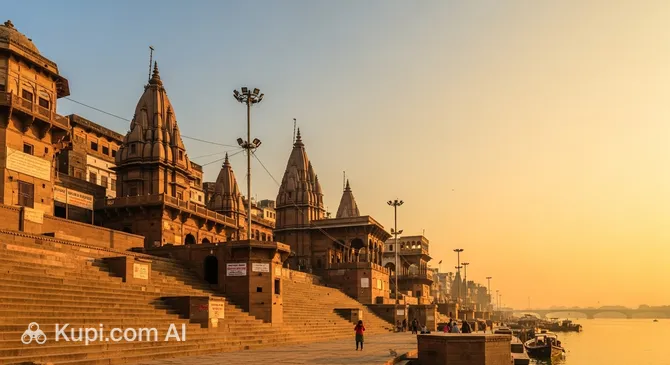
Situated on the picturesque banks of the sacred Ganges, Farrukhabad is the quintessence of provincial India. It is a city with a rich heritage, where the traditions of Uttar Pradesh intertwine with an everyday agrarian lifestyle. Founded in 1714, it long served as an important administrative and commercial hub for the region, preserving an atmosphere of sincerity and hospitality.
Farrukhabad. Illustration.
Source: Kupi.com AI
The city's geographic location within the Kanpur division makes it a key transport hub. With a population of over 275,000, Farrukhabad, along with neighboring Fatehgarh, forms a vibrant municipal unit. A significant part of the city's history is associated with the name of Nawab Muhammad Khan Bangash, who named the settlement after the Mughal Emperor Farrukhsiyar.
Tourists are drawn here not so much by the glitter of modern megacities, but by the unique culture of Ganga-Jamuni tehzeeb—a harmonious synthesis of Hindu and Muslim traditions. Strolling along the river, visiting local markets, and experiencing the authentic way of life allow for a deeper understanding of the heart of the northern part of the country. We invite you to discover this distinctive corner where every street corner holds a piece of the past.
Weather Overview
The climate in Farrukhabad is distinctly subtropical monsoon in character. The weather in the city is largely shaped by its proximity to the Ganges River, which creates high humidity, especially during the summer months. Travelers should be prepared for hot summers, when temperatures in May and June can rise to +38°C...+40°C, and for pleasant, cool winters.
The monsoon season arrives in June and lasts until September. The bulk of the precipitation falls during this period—July and August are considered the rainiest months (over 230 mm per month). Winter, lasting from December to February, is characterized by mild temperatures: around +20°C during the day, while it can cool down to +8°C at night. This time is considered the most comfortable for visiting the city, as the sky is usually clear and the air is dry.
Expect very hot summers with occasional thunderstorms and refreshing, dry winters with sunny days. If your trip is planned for the monsoon period, take into account possible flooding of the Ganges and adjust your plans accordingly. For the rest of the year, Farrukhabad enjoys stable weather conditions typical of the plains of northern India.
Average monthly temperature
Average monthly precipitation
Interesting Facts
Farrukhabad is a city with a rich history and interesting features that make it stand out on the map of Uttar Pradesh. Here are a few facts to help you get to know it better:
A Named City: The settlement was founded in 1714 by Nawab Muhammad Khan Bangash and was named in honor of the then-ruling Mughal Emperor, Farrukhsiyar.
Twin Cities:Farrukhabad is located just 5 kilometers from Fatehgarh, and together they function as a single municipal area, with Fatehgarh serving as the district's administrative headquarters.
Agrarian Heart: The district is an important agricultural region where nearly 86% of the land is irrigated, and the cropping intensity reaches an impressive 145%.
Ancient Roots: Archaeological finds indicate that the history of this region dates back to ancient times, as far as the Bronze Age.
Population Density: Farrukhabad district ranks 250th in population among the hundreds of districts in India, with a population density of about 865 people per square kilometer.
How to Get There
The transport accessibility of Farrukhabad makes it a convenient destination for those traveling through northern India. The city is located approximately 295 kilometers from Delhi and 210 kilometers from Lucknow. Thanks to a developed road network and rail connections, there are several ways to reach the city, taking into account local traffic patterns and seasonal weather conditions.
The city does not have its own airport. Travelers who prefer flying should look to major international air hubs in Delhi or Lucknow. Kanpur Airport is also relatively close (about 140 km), from where you can continue your journey by taxi or bus.
The railway is the most popular and reliable way to travel. Farrukhabad Junction station is an important hub connecting the city with key destinations, including Delhi, Lucknow, and Kanpur. A train from the Indian capital usually takes between 6 to 8 hours, offering passengers a chance to enjoy the rural landscapes of Uttar Pradesh.
Station
Passenger traffic
Distance
Bareilly Junction railway station
7
107 km
Kanpur Central railway station
14
128 km
Lucknow Charbagh railway station
10
146 km
Agra Fort railway station
9
156 km
Aligarh railway station
6
159 km
For those choosing to travel by car or bus, National Highway NH 34 serves as the main artery. The journey from Delhi by car can take between 5 to 7 hours. It is worth noting that during peak hours and the monsoon season, travel time can increase significantly due to traffic jams and weather conditions.
Main Attractions
While Farrukhabad is not a typical tourist hub with world-renowned names, its attractions possess a special provincial charm. The main historical landmark is Fatehgarh Fort, founded in the early 18th century. This site offers a glimpse into the era of the Nawabs and allows visitors to appreciate the strategic importance of the city in the Ganges Valley.
The spiritual life of the city is inextricably linked to the Ganges River. The riverbanks serve as a venue for rituals and festivals, and the peaceful atmosphere by the water attracts those seeking solitude and a chance to observe the traditional way of life. Small local temples scattered throughout the old quarters create the city's unique architectural character.
In the surrounding district, the ancient site of Sankisa is well worth a visit. It holds immense significance for Buddhists, as it is believed to be the place where Buddha descended to Earth after preaching in heaven. Here, you can see the remains of an Ashoka Pillar, a Buddha statue, and the Bisari Devi Temple, where colorful fairs are held during the summer months, attracting pilgrims and curious travelers alike.
Local Cuisine
A gastronomic journey through Farrukhabad is an introduction to the rich flavors of North India. The local cuisine is based on classic ingredients: wheat, rice, various legumes, and seasonal vegetables. The key feature is the influence of the Ganga-Jamuni tradition, which blends vegetarian Hindu recipes with the aromatic meat dishes of Muslim culture.
Be sure to try the local dal (a thick lentil soup) and freshly baked roti flatbreads. Those who prefer more filling food will enjoy the spicy biryani and tender kebabs, which are prepared here with a special blend of spices. For a light snack, street vendors often offer various chutneys and spicy appetizers that reflect the region's agrarian abundance.
As for drinks, a day in Farrukhabad is unimaginable without a cup of hot masala chai. During the hot season, locals prefer lassi—a refreshing yogurt drink—as well as freshly squeezed juices. Restaurants and small eateries are concentrated in the central parts of the city and Fatehgarh, offering guests simple yet incredibly tasty and honest food.
Travel Tips
A visit to Farrukhabad will give you a unique experience of authentic India, and these practical tips will help make your trip comfortable and safe.
Clothing and Dress Code: Choose light clothing made from natural fabrics for the summer, but be sure to bring warm clothes (a sweater or light jacket) if you plan to visit from December to February. When visiting temples and religious sites, shoulders and knees must be covered.
Transport: The best way to get around the city is by rickshaw. Always agree on the price of the ride in advance, before getting into the vehicle. For longer trips, using trains is most convenient.
Finances: Cash is the predominant method of payment in the city. Cards are only accepted at some large hotels, so always carry a sufficient supply of Indian Rupees in small denominations.
Health: Use only bottled water, even for brushing your teeth. Avoid ice in drinks at street cafes. Pharmacies with a basic set of medicines are available in the center, but it is better to bring specific medications with you.
Communication: The primary language is Hindi. English is understood at hotels and the train station, but knowing a few basic phrases in Hindi will significantly simplify communication with locals.
Etiquette: Greet people with the traditional "Namaste" gesture. Try not to use your left hand for passing money or food, as it is considered unclean.
What to Avoid: It is not recommended to walk alone on the outskirts after dark. Also, refrain from taking photos of people without their prior consent, especially during religious ceremonies.
Seasonality: Plan your trip for the period from October to March. Avoid the monsoon season (June–September), as heavy flooding on the Ganges and traffic disruptions are possible.
May your journey to Farrukhabad be filled with bright discoveries and warm encounters in the heart of Uttar Pradesh!
Entertainment & Nightlife
The entertainment scene in Farrukhabad is geared toward traditional family leisure and quiet pastimes. You won't find noisy nightclubs or bars with loud music here; the city's nightlife centers around cozy tea houses and evening markets where locals gather for leisurely conversation. The atmosphere encourages immersion in the local lifestyle and the culture of social interaction.
For those seeking cultural leisure, cinemas in the city center offer the latest Indian film releases. During the day, you can visit small cafes serving traditional sweets and aromatic tea. Major entertainment events are often tied to religious holidays and festivals, which are celebrated on a grand scale and accompanied by folk festivities and fairs along the banks of the Ganges.
If you are looking for large-scale shopping or modern art spaces, travelers usually head to nearby major centers like Shamsabad or further afield to Kanpur and Lucknow. In Farrukhabad itself, the main entertainment remains walking through the bustling streets, observing the work of artisans, and participating in the daily life of this hospitable Indian city.
Parks & Museums
The park infrastructure in Farrukhabad reflects its status as an agrarian and administrative center. While you won't find vast landscaped parks here, the city offers cozy green zones for short breaks. Small gardens are located primarily near administrative buildings and government quarters, providing shade on hot days.
The coastal area of the Ganges River holds a special place in the life of the city. This natural space for walking and contemplation serves as a substitute for traditional city parks for the residents. The riverbanks provide a sense of space and allow visitors to enjoy a natural landscape that has remained largely unchanged for decades.
There are no specialized museums within Farrukhabad itself; however, the entire city can be viewed as an open-air museum where history peeks through the architecture of old houses and the layout of the markets. For more formal cultural education and rich exhibitions, travelers usually head to neighboring Kanpur or Lucknow, which house large state museums and art galleries.
Getting Around
The transport system in Farrukhabad is simple and functional, perfectly suited for a compact city. The primary way for tourists and locals to get around is via auto-rickshaws and cycle-rickshaws. They are maneuverable, affordable, and make it easy to reach any point in the city or neighboring Fatehgarh, which is only about 5 kilometers away.
For traveling longer distances within the district, buses are used. It is worth keeping in mind that during peak hours, public transport can be very crowded, which is a typical feature of Indian provincial towns. Rail connections via Farrukhabad Junction station provide reliable links to other regions, making the city a convenient point for further travel.
Payment for local transport is made in cash, so tourists are advised to always carry small bills and coins. Online ride-hailing services have limited availability here, so the classic method is to negotiate with a rickshaw driver on the spot. In the central areas of Farrukhabad, it is quite comfortable to move around on foot, which allows for a better look at city details and the daily life of the streets.
Accommodation
Accommodation options in Farrukhabad are primarily focused on practicality and convenience. Budget hotels and guesthouses predominate, making them ideal for transit travelers and those visiting the city on business. There are no luxury five-star resorts in the city itself, which highlights its authentic, business-oriented character.
The most convenient area to find accommodation is around the Farrukhabad Junction railway station. Most affordable hotels are concentrated here, with nightly rates ranging from 1,000 to 3,000 Indian Rupees. Staying in this area allows for quick access to transport hubs and the city's central markets.
If you are planning a longer stay, apartment rental offers can be found in the residential areas of Farrukhabad and Fatehgarh. During peak seasons, such as when regional fairs or religious holidays are held, it is recommended to book accommodation in advance through popular online services. For those seeking a premium level of comfort, the best option would be to stay in hotels in Lucknow and make day trips to the city.
Nearby Cities
Thanks to its location in the heart of Uttar Pradesh, Farrukhabad can serve as a convenient base for short trips to neighboring colorful settlements. Exploring the surrounding area allows you to see a deeper, more rural India with its unhurried pace of life and ancient traditions.
Very close by is Rajepur, which is perfect for a short outing. It is also worth visiting Shamsabad, located just 22 kilometers away, where you can stroll through local markets and feel the atmosphere of a typical Indian town. A bit further away is Samdhin, and the journey there takes very little time.
City
Population
Distance
Rajepur
9 183
13 km
Shamsabad
33 144
22 km
Samdhin
31 479
30 km
Bhatpuri
22 255
39 km
Eklahra
12 140
41 km
If you have a whole day to spare, you can head to larger cultural centers. The industrial giant Kanpur is 140 kilometers away, and the majestic Lucknow, the state capital famed for its architecture and exquisite cuisine, is 210 kilometers away. Traveling through the region around Farrukhabad will reveal the many facets of this corner of the country.
Shopping & Souvenirs
Shopping in Farrukhabad primarily means visiting traditional Indian markets where life bustles from early morning until late evening. There are no modern shopping malls with global brands here, but that is exactly what makes shopping truly interesting. Most commercial activity is concentrated in the city's central markets and the Fatehgarh area.
The city is famous for its agricultural products and the work of local artisans. You can find high-quality fabrics, spices, and household goods on the stalls. The markets near the railway station offer a wide range of everyday items, and the oriental bazaar atmosphere allows you to practice the art of haggling, which is encouraged here.
As souvenirs from Farrukhabad, it is worth bringing back local spices, traditional clothing, or metalwork created by local craftsmen. Shops usually operate from 10 am until late in the evening, with cash remaining the most common method of payment. Strolling through the market rows is not just a way to buy something useful, but also an excellent opportunity to immerse yourself in the authentic rhythm of life in Uttar Pradesh.