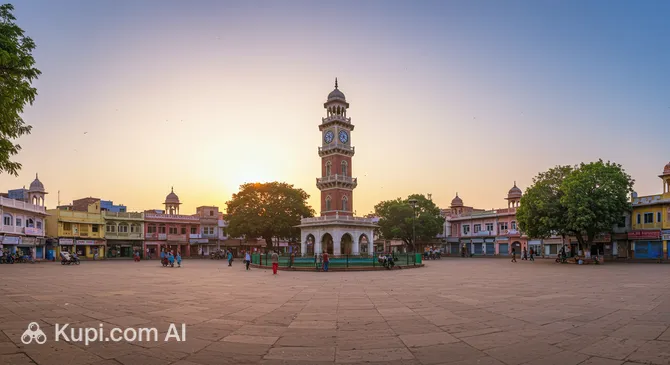
Shahjahanpur is a colorful and lively city located in the northern part of India, in the state of Uttar Pradesh. Founded in 1647 by the military commander Bahu Malik during the reign of the Great Mughal Emperor Shah Jahan, the city still preserves the memory of that grand era in its name. Although modern Shahjahanpur is primarily an administrative and commercial center, it offers travelers a unique opportunity to witness the authentic, non-touristic life of provincial India.
Shahjahanpur. Illustration.
Source: Kupi.com AI
Geographically, the city is nestled between the Deoha and Khannaut rivers at an altitude of 143 meters above sea level. Its population exceeds 340,000 people, creating an atmosphere of constant movement and energy. The history of Shahjahanpur is closely linked to the region's development as an important agricultural and logistics hub connecting the country's major metropolises.
Despite the absence of World Heritage sites, the city attracts visitors with its authenticity. Here, you can spend hours wandering through the labyrinths of old markets, such as Sadar Bazaar, observing the daily bustle of local residents, or exploring the architecture of administrative buildings from the colonial and Mughal periods. Shahjahanpur is a place for those seeking immersion into the real everyday life of a northern Indian state.
A visit to this city makes an excellent addition to a route through the north of the country, allowing for a pause between visiting noisy megacities and a chance to enjoy the hospitality of the locals. We invite you to discover this distinctive corner of Uttar Pradesh, where the traditions of the past meet the rhythm of modern life.
Weather Overview
The climate in Shahjahanpur is distinctly subtropical, featuring three clear seasons: a hot summer, a monsoon season, and a cool winter. Summer, lasting from April to June, can be very sweltering—in May and June, the thermometer often rises to +40°C or higher. During this time, the city is quite dry and dusty, so travelers are advised to plan their activities for the early morning or evening.
The rainy season arrives in July and continues until September. During this period, the city's climate becomes very humid, with July and August being the wettest months (up to 280 mm of precipitation). The rains bring a long-awaited coolness but can make moving around the city difficult. Winter, arriving in November and lasting until February, is the most pleasant time to visit: average daytime temperatures are around +15...+20°C, while nights can be quite brisk (around +8°C).
Expect an extremely hot summer with occasional dust storms and heavy rainfall during the monsoon period, followed by dry and sunny winter days. This is a typical weather pattern for North India, which largely dictates the rhythm of life for local residents and the agricultural cycles of the region.
Average monthly temperature
Average monthly precipitation
Interesting Facts
The city was officially founded in 1647 by the military commander Bahu Malik and was named after the Mughal Emperor Shah Jahan.
Shahjahanpur occupies a strategic position between two rivers—the Deoha and the Khannaut—which historically promoted the development of agriculture in the district.
The average elevation of the city is 143 meters above sea level, which is typical for the flat terrain of Uttar Pradesh state.
The city is located almost equidistant from two major hubs: it is about 140 km from the state capital, Lucknow, and approximately 265 km from New Delhi.
According to census data, the literacy rate in the city is about 61.2%, which is an important indicator for this region of India.
How to Get There
Shahjahanpur has good transport links with key cities in North India, making it a convenient stopover while traveling through the state of Uttar Pradesh. The main ways to get here are by rail and road. To plan your trip, we recommend checking more details about routes to choose the most comfortable option.
The city does not have its own airport. The nearest major international aviation hub is located in the state capital, Lucknow (about 140 km), from where you can reach Shahjahanpur by taxi or train. Also, 80 km away is Bareilly Airport, which handles domestic flights. A car journey from New Delhi takes between 5 to 7 hours via the NH-24 highway, depending on traffic.
The railway is the most popular and reliable way to travel. The city station is located on the important Delhi–Lucknow line. Trains from the Indian capital take about 6–8 hours, while from Lucknow, you can arrive in just 3–4 hours. Shahjahanpur Railway Station is a busy place where you can always find rickshaws for a ride to any part of the city.
Station
Passenger traffic
Distance
Bareilly Junction railway station
7
71 km
Rudrapur City railway station
3
132 km
Lucknow Charbagh railway station
10
153 km
Raibojha railway station
1
154 km
Kanpur Central railway station
14
163 km
Main Attractions
Shahjahanpur is not a typical tourist center with an abundance of glossy attractions, and that is precisely its main charm. The primary interest here lies in sites that reflect the daily life and history of the region. One of the most vibrant areas is the central district with its markets, where life teems from early morning until late evening.
Sadar Bazaar is the heart of the city's trade. Here, you can not only shop but also see traditional craft shops selling fabrics and spices. Another notable landmark is the Ghanta Ghar clock tower, which serves as an important reference point and architectural accent in the old part of the city. These places allow you to feel the spirit of Shahjahanpur much better than any museum exhibits.
For those interested in administrative architecture, the district court building and other government structures built in a classical Indian style are worth noting. The banks of the Deoha and Khannaut rivers add natural charm to the city, where you can take a peaceful walk while observing the flow of the water and the rural landscapes on the outskirts.
Although not many monuments from the Mughal era have survived in the city, an attentive traveler will find echoes of the past in the details of old houses and the street layout. A visit to Shahjahanpur is primarily an ethnographic experience, allowing you to see India without any embellishments or tourist filters.
Local Cuisine
The culinary scene in Shahjahanpur is a true paradise for lovers of spice-rich dishes typical of Uttar Pradesh cuisine. Local cooking relies heavily on Awadhi traditions, where special attention is paid to flavorful meats and a variety of flatbreads. The staple diet consists of spicy curries, thick dal (lentil soups), and basmati rice.
It is definitely worth trying the local kebabs and biryani, which are prepared with unique spice blends. Street food also deserves attention: chaat (savory snacks) and freshly made naan or chapati are sold everywhere in the markets. For dessert, locals prefer traditional Indian sweets based on milk and sugar.
As for drinks, no day in the city is complete without a cup of hot masala chai with spices and milk. During the hot season, lassi—a thick yogurt-based drink—is perfectly refreshing. The main places to sample local cuisine are the numerous dhabas (roadside cafes) and small restaurants in the Sadar Bazaar area, where you can always find fresh and affordable food.
Travel Tips
Planning a trip to Shahjahanpur requires a little attention to detail to ensure your acquaintance with the city is as comfortable as possible and brings only positive emotions.
Clothing and Essentials: Choose light, modest clothing made of natural fabrics to respect the local dress code and protect yourself from the sun. In the winter months (December–January), it can be chilly in the evening, so bring a light jacket or sweater.
Transport: The most convenient way to get around is by auto-rickshaws. Always negotiate the fare in advance, as meters are rarely used here.
Finances: Cash is the predominant method of payment in the city. Although there are ATMs in the center, it is best to always have a supply of rupees in small bills for paying at markets and in rickshaws.
Health: Drink only bottled water and avoid ice in drinks at street cafes. Pharmacies can easily be found in the Sadar Bazaar area.
Communication: The main language is Hindi, but hotel staff and young people usually speak basic English. Learning a few phrases in the local language is helpful for building rapport with the residents.
Etiquette: It is customary to remove your shoes when entering homes or some shops. Greet people with the traditional namaste gesture.
What to Avoid: It is not recommended to walk alone late at night in remote, poorly lit areas on the outskirts of the city.
Connectivity: It is easiest to buy a local SIM card at specialized mobile shops in the center; you will need a passport and a photo for this.
Enjoy every moment in Shahjahanpur, for it is in cities like this that the true soul of India is revealed!
Entertainment & Nightlife
Entertainment in Shahjahanpur is predominantly traditional and quiet. You won't find noisy nightclubs or modern bars with a Western atmosphere here, as the city's life follows the more conservative rhythm of a provincial center. The main places for evening leisure among locals are the city markets and teahouses, where people gather to socialize and discuss the news.
For cinema lovers, local theaters show the latest Bollywood releases. Going to the movies in India is always a vibrant event with enthusiastic audience reactions, which in itself can be an interesting cultural experience for a tourist. Daytime leisure can be varied with walks in small squares or visits to local trading squares, where spontaneous fairs often take place.
If you are looking for a more diverse nightlife with high-end restaurants or entertainment complexes, it is worth heading to nearby major cities like Bareilly or Lucknow. In Shahjahanpur itself, it is best to enjoy leisurely dinners at local dhabas and watch as the city slowly settles into sleep after sunset. Safety in central areas during the evening is generally good, but it is better to use taxis or trusted rickshaws for trips back to the hotel.
Parks & Museums
The cultural and recreational infrastructure of Shahjahanpur is currently under development, so the city cannot boast an abundance of museums or large landscaped parks. Nevertheless, there are several green zones that serve as resting places for citizens and help them escape the daytime heat. These are mainly small squares in the central part of the city and parks attached to administrative institutions.
Museums with classical exhibits are practically non-existent in the city. However, the space of the old quarters themselves can be viewed as a living open-air museum, where the architectural details of old houses tell the city's history better than any display cases. Locals often spend their free time in the open spaces near markets, which become centers of social life.
If you wish to visit large themed museums or extensive botanical gardens, it is recommended to plan a trip to Lucknow. In Shahjahanpur itself, walks along the banks of local rivers can be a pleasant alternative to park relaxation, offering picturesque views of the flat landscapes of Uttar Pradesh, especially during sunset hours.
Getting Around
The transport system of Shahjahanpur is typical for a mid-sized Indian city, where maneuverable and affordable modes of transport play the main role. The primary way to get around the city is via auto-rickshaws and cycle-rickshaws. This is the fastest way to navigate the traffic jams on narrow streets. A trip within the center usually costs between 10 to 50 rupees, but tourists are always advised to agree on the price in advance.
The city also operates buses that connect various districts with the railway station and suburbs. However, bus schedules can be irregular, and the vehicles themselves are often overcrowded during peak hours. There are no metro or tram systems in Shahjahanpur, as the scale of the city allows it to function with surface transport.
For more comfortable trips, you can use taxis or ride-hailing services through apps (such as Uber or Ola), which are gradually becoming popular in the central districts. For those who prefer independence, it is worth noting that traffic in the city is chaotic, and renting a car without a driver can be a difficult challenge. Walking is possible in the central part, but one must be prepared for intense traffic and noise.
Accommodation
Accommodation options in Shahjahanpur are primarily geared toward transit travelers and business visitors to the administrative center. The area is dominated by budget 2-3 star hotels and guest houses that offer a basic set of amenities. There are no luxury five-star resorts in the city, but finding clean and functional housing is quite realistic.
The most convenient area for choosing accommodation is considered the zone near the railway station and central markets. Most hotels are concentrated here, allowing for quick access to transport and major retail points. Room prices start at approximately 1000–3000 rupees per night for a standard double room with air conditioning.
When planning your trip, keep in mind that during local holidays or important administrative events, vacancies can fill up quickly. We recommend booking accommodation in advance through popular Indian online services. If you are looking for more modern apartments, they are available for rent in new residential areas, although tourist services there may be limited.
Nearby Cities
Thanks to its location, Shahjahanpur can serve as an excellent starting point for exploring lesser-known but interesting corners of Uttar Pradesh. Several small settlements are located in the vicinity of the city, allowing for a deeper look at the agricultural and cultural lifestyle of North India.
Just 20 kilometers away is the town of Tilhar, known for its local markets and traditional atmosphere. Also of interest for a day trip is Powayan, located 28 kilometers away. For those ready for a longer journey, 80 kilometers away is the large commercial and educational center of Bareilly, and 50 kilometers to the north is Pilibhit, famous for its natural areas and proximity to a tiger reserve.
City
Population
Distance
Tilhar
52 909
20 km
Pawayan
28 613
28 km
Pihani
36 014
40 km
Bisaria
9 558
49 km
Rajepur
9 183
50 km
The region around Shahjahanpur offers various opportunities for those who are not afraid to step off the beaten tourist path. Exploring these small towns will allow you to see the real life of the Indian provinces and enjoy the peace far from noisy megacities.
Shopping & Souvenirs
Shopping in Shahjahanpur is primarily about visiting colorful traditional bazaars where you can find everything from everyday goods to local handicrafts. The city's main commercial artery is Sadar Bazaar. The atmosphere of old India reigns here: narrow streets are filled with shops selling textiles, bright sarees, high-quality fabrics, and a variety of spices whose aroma carries far and wide.
Many shops are also concentrated in the area of the Ghanta Ghar tower. There are no large modern shopping malls with international brands in the city yet, so the main focus is on local goods. Be sure to look for cotton products and traditional Indian clothing—the prices here are significantly lower than in tourist metropolises, and the selection of styles is pleasantly surprising.
For souvenirs from Shahjahanpur, it is worth bringing back local sweets, spice sets, or handmade home decor items. Shops usually operate from 10:00 to 20:00, but many stalls in the markets may close for a lunch break. Payment in most places is made in cash (Indian rupees), so it is always wise to have a small supply of low-denomination bills for convenience when settling accounts at the bazaars.