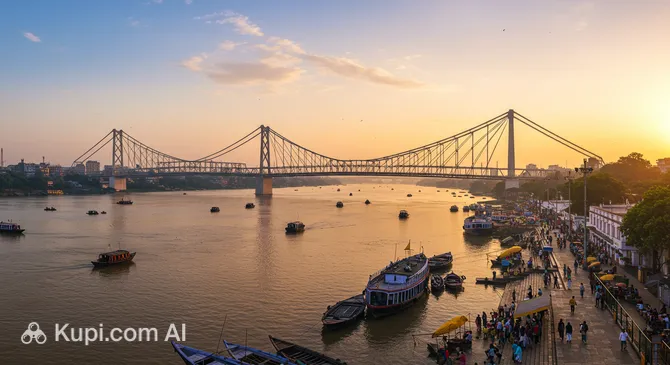
Howrah is one of the largest industrial and transport hubs in India, located in the state of West Bengal. The city stretches along the western bank of the Hooghly River, directly across from Kolkata, forming a massive metropolitan area with it. With a population of over one million people, this satellite city lives at a dynamic pace, serving as a vital link connecting the eastern part of the country with the rest of the regions.
Howrah. Illustration.
Source: Kupi.com AI
Although the city is often perceived as an industrial addition to the neighboring metropolis, Howrah's historical heritage dates back more than five hundred years. A unique atmosphere is created here by a combination of dense urban development, bustling markets, and majestic engineering structures. The legendary Howrah Bridge and the colossal railway station, which handle millions of people daily, are rightfully considered the main symbols of the city.
A visit to Howrah is an opportunity to see the real, working India as it is. The city invites travelers who appreciate authenticity, grand industrial-era architecture, and the incredible energy of the Bengali metropolis. It is a place where the history of transport and industry intertwines with the daily lives of millions of Bengalis.
Weather Overview
This region is characterized by a typical tropical wet climate, which dictates the rhythm of the citizens' lives. Three distinct seasons stand out here: a hot summer, a rainy monsoon period, and a mild winter. If you are planning a visit, it is important to consider that the weather in Howrah is often accompanied by high humidity, especially during the summer months.
The most pleasant time to visit is from November to February, when dry and moderately warm weather sets in with average temperatures ranging from +14°C to +25°C. Intense heat begins in March, which can reach peak values of +35°C...+38°C in April and May. From June to September, the city is under the influence of the monsoons: expect heavy rains and high humidity, while the temperature stays around +28°C...+32°C.
Keep in mind that in densely populated areas of the city, the heat can feel more intense due to tight development and heavy traffic. Winter evenings can be cool, so a light sweater will not be out of place. For the rest of the year, the priority should be the lightest and most "breathable" clothing possible, and during the rainy season, a reliable umbrella or raincoat.
Average monthly temperature
Average monthly precipitation
Interesting Facts
Howrah is a city capable of surprising even an experienced traveler with its scale and history. Here are some curious facts about this Indian metropolis:
Second largest: The city is the second most populous in the state of West Bengal, second only to its neighbor, Kolkata.
Engineering marvel: The famous Howrah Bridge, connecting the two cities, is considered one of the busiest cantilever bridges in the world, with hundreds of thousands of pedestrians and thousands of cars crossing it daily.
Centuries of history: According to official records, the history of settlements in this area spans over 500 years, making it one of the oldest urbanized places in the region.
Railway giant: The city's station is the largest and busiest railway hub in India, serving an incredible number of destinations across the country.
How to Get There
The city's transport accessibility is its defining characteristic, as it serves as a key "gateway" to the eastern part of the country. Given the traffic density in the metropolitan area, tourists should research ways to get to Howrah in advance to plan their time properly, especially when crossing bridges during peak hours.
The nearest major aviation hub is Netaji Subhash Chandra Bose International Airport (CCU) in Kolkata. It handles flights from many cities around the world and regions within India. From the airport to the city center, it is most convenient to take a taxi (Pre-paid Taxi services) or a transfer, allowing at least an hour and a half for the journey due to potential traffic jams.
The primary way to arrive remains the railway. The legendary Howrah Station receives long-distance trains from all over India, including Delhi, Mumbai, and Chennai. It is not just a transport facility but the pulsating heart of the city, where life never stops for a minute. Arriving here, you immediately find yourself at the epicenter of events, from where it is easy to reach any point in the metropolis by bus, taxi, or ferry.
Station
Passenger traffic
Distance
Howrah railway station
21
8 km
Jashore Junction railway station
5
115 km
Durgapur railway station
7
139 km
Rajshahi Railway Station
3
200 km
Dhanbad Junction railway station
8
230 km
Main Attractions
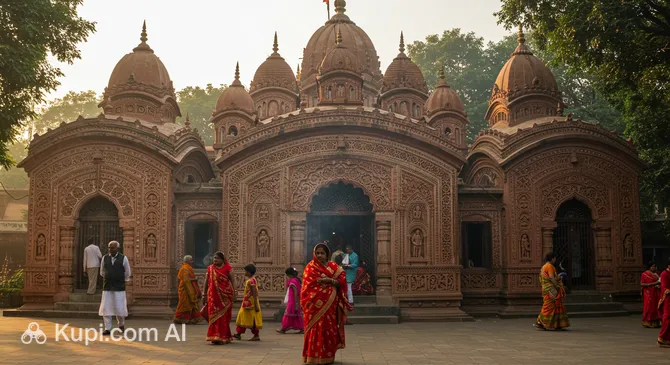
The main attractions of Howrah are inextricably linked to its role as a transport and spiritual center of the region. One of the most significant religious sites is the Ram Temple in Ramrajatala. This place attracts pilgrims and tourists with its vibrant architecture and a special atmosphere of devotion, especially during major festivals.
Ramrajatala Ram Temple. Illustration.
Source: Kupi.com AI
Traveler photos:
For those seeking tranquility by the water and wanting to experience local traditions, a visit to Rajganj Ganga Dhar is a must. This spot on the banks of the sacred river allows you to witness daily rituals and feel the city's unbreakable connection with the Hooghly River. The impressive views of the water and passing vessels provide an excellent backdrop for photography and reflection.
It is impossible to imagine the city's skyline without its engineering giants. Howrah Bridge (Rabindra Setu) is more than just a crossing; it is a true steel symbol of West Bengal, built without a single bolt. Nearby is Howrah Station, a majestic red-brick building that is an architectural monument in its own right and a living testament to the colossal scale of the Indian railway network.
Local Cuisine
The gastronomic scene in Howrah is a true paradise for lovers of authentic Bengali cuisine. The staple diet here consists of rice and various fish dishes, often prepared using aromatic mustard oil and spices. Be sure to try the classic Machher Jhol (fish curry) and a variety of vegetable sabjis, which local establishments prepare with special care.
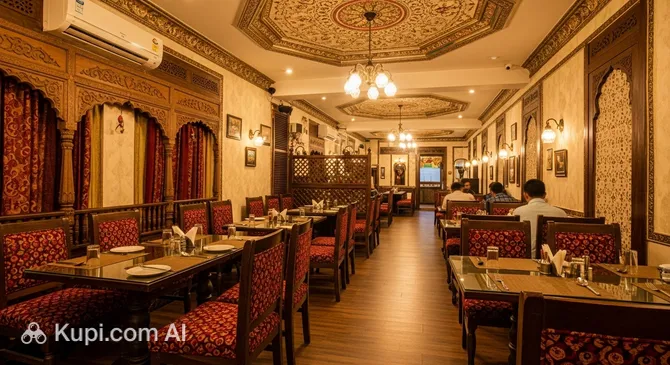
For those who prefer time-tested places, it is worth visiting Mann Wa Salwa Restaurant, where traditional dishes are served in a cozy atmosphere. Also very popular is Karim's (Nibra, NH-6), known for its meat delicacies, the recipes for which trace back to the famous culinary traditions of Old Delhi.
Mann Wa Salwa Restaurant. Illustration.
Source: Kupi.com AI
Traveler photos:
Don't forget to save room for dessert, as Bengal is famous for its milk and syrup-based sweets. Try the delicate rosogolla or mishti doi (sweet yogurt). The food culture in the city is closely tied to street food: at every turn, you can find stalls selling aromatic masala chai served in small clay cups, along with hot snacks like kachori or samosas.
Travel Tips
Visiting such a dynamic city as Howrah requires some preparation, and our tips will help you make your trip as comfortable and memorable as possible.
Clothing and dress code: Choose light clothing made from natural fabrics, as it is often very hot and humid in the city. When visiting temples, such as the Ram Temple, be sure to cover your shoulders and knees; also be prepared to remove your shoes before entering.
Transport planning: Always allow extra time (at least 40-60 minutes) for any travel across the river or to the station. Traffic jams on the bridges are common, especially during peak hours.
Finances: The primary currency is the Indian Rupee (INR). Large stores accept cards, but you will definitely need small denomination cash to pay for rickshaws, buy food at markets, and for small expenses.
Health: Drink only bottled water and avoid ice in drinks at street cafes. Always carry hand sanitizer and a basic first aid kit.
Communication: The main language is Bengali, but many residents understand Hindi and basic English. Learning a couple of phrases in Bengali, such as "Namaskar" (greeting), always earns the goodwill of locals.
Connectivity: It is best to buy a SIM card at official operator stores (Airtel, Jio) in Kolkata or at major retail outlets; a passport and a photo will be required for this.
What to avoid: Do not attempt to photograph strategic objects such as military zones or certain parts of railway structures if you see prohibitory signs. Also, avoid walking alone in poorly lit industrial outskirts late at night.
Etiquette: It is customary to remove your shoes when entering a private home or some shops. Greet people by putting your palms together (the Namaste gesture); this is a universal sign of respect.
Following these simple rules will help you focus on the amazing atmosphere of the city and ensure your trip is filled only with positive emotions!
Entertainment & Nightlife
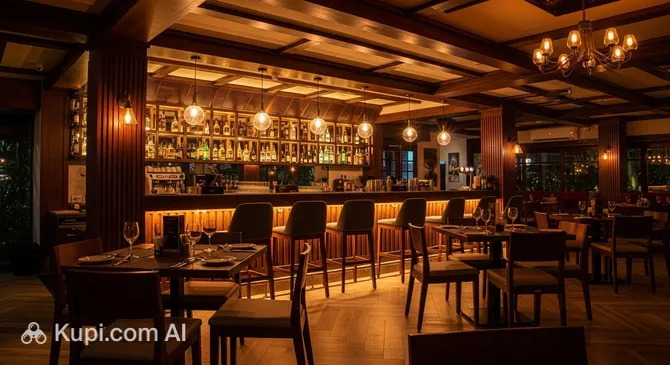
Evening life in Howrah is predominantly local and quiet, significantly different from the bustling glamour of major global capitals. Most activity after sunset is concentrated around the waterfronts and busy market quarters, where locals gather to socialize over a cup of tea. If you are looking for a place to dine and relax, consider Das Restaurant & Bar or drop by Tuli Bar and Restaurant.
Das Restaurant & Bar. Illustration.
Source: Kupi.com AI
Traveler photos:
For those who prefer more private venues and local clubs, Arupara Milan Sangha may be of interest. However, it is worth noting that for truly large-scale parties, trendy nightclubs, and concert venues, visitors usually head across the river to Kolkata, where the choice of entertainment is significantly wider and more diverse.
Daytime entertainment in the city includes walks near the bridges and visits to local parks. Safety in the central areas during the evening is at an acceptable level, but for comfortable travel at night, it is recommended to use official taxi services. Remember that life in this working city starts very early, so many evening establishments close earlier than in purely tourist centers.
Parks & Museums
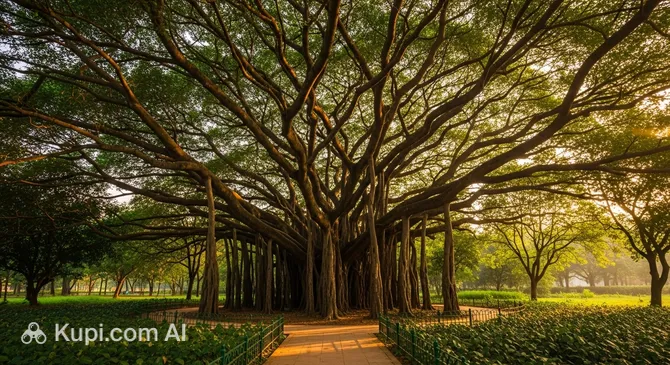
The main "green" treasure of the city and the entire metropolitan area is rightfully considered the Acharya Jagadish Chandra Bose Indian Botanic Garden. This place is a true oasis of silence amidst industrial noise. Its jewel is the Great Banyan Tree, which looks like an entire forest due to its numerous aerial roots. It is one of the largest trees in the world, and a walk under its canopy leaves an unforgettable impression.
The Great Banyan Tree. Illustration.
Source: Kupi.com AI
Traveler photos:
For those interested in history and architecture, it will be interesting to visit the Maheshpal area. Here you can see old buildings and feel the spirit of the past that still lives in the shadow of modern structures. Although the city is better known for its engineering sites, these local historical zones help to better understand the cultural layer of the region.
Museum life here is closely intertwined with industrial history. There are not many museums in the city itself, and for major exhibitions, tourists often head to neighboring Kolkata; however, Howrah railway station itself and its surroundings can be viewed as a vast open-air transport museum. Here, every object—from the vintage platforms to the massive structures of the bridge—tells the story of the development of technology and society in Eastern India.
Getting Around
The public transport system in Howrah is highly functional and oriented towards moving huge masses of people. The backbone consists of suburban trains (locals) that connect the city with distant areas of the state. This is the fastest but also the busiest way to travel. For a tourist, a ride on such a train can be a real adventure, allowing you to see the lives of the residents from the inside.
Many buses ply the city streets, ranging from colorful old models to more modern ones. Minibuses and auto-rickshaws are also popular, skillfully maneuvering through the heavy traffic. Payment in buses and rickshaws is usually made in cash to the conductor or driver, and prices are very low. A key feature is the ferries across the Hooghly River: this is not only transport but also an opportunity to enjoy a magnificent view of the bridge and the river for a symbolic fee.
Taxis and online ride-hailing services (such as Uber or Ola) are the most comfortable options for moving between attractions. However, you should always account for the "traffic factor," which can be unpredictable in this area. If you are planning a trip to the station or an important meeting, always allow an extra hour for the journey. Bicycle rental is not developed here due to the high intensity of traffic, so walking and taxis remain the main ways for guests to get around.
Accommodation
The choice of accommodation in Howrah is dictated primarily by its status as a transport hub. Mid-range city hotels and budget guesthouses predominate here, catering to travelers who need to be in close proximity to the railway station. This is an excellent option for those planning early train departures or looking to save on accommodation while staying within walking distance of key transport links.
If you are looking for more modern and comfortable conditions, consider new residential complexes and apartments available for rent in the city's developing areas. At the same time, fans of luxury chain hotels often prefer to stay on the other side of the river, using this city as a starting point for excursions.
When planning a trip during the peak season (especially during the Durga Puja festival), it is recommended to book accommodation in advance, as the demand for quality rooms near transport hubs increases sharply. The main booking methods are popular international and Indian online services. When choosing a hotel, be sure to check for air conditioning, as the region's climate can be very hot and humid.
Nearby Cities
Thanks to its location at the intersection of vital routes, Howrah serves as an excellent starting point for exploring the surroundings and nearby settlements of West Bengal. You can easily embark on a short journey to see the diversity of life in the Indian province without traveling far from your main base.
Very close by is the town of Bankra, which is effectively on the border of the metropolitan area. Other places of interest for a short trip include Mahiari and Domjur. These small towns allow you to see a calmer way of life and discover local crafts and traditional architecture that has been preserved away from the main highways.
City
Population
Distance
Bankra
63 957
1 km
Nibra
27 818
1 km
Mahiari
18 223
3 km
Dumjor
18 433
6 km
Chakapara
35 282
6 km
And of course, the main destination for any visitor remains Kolkata, which can be reached in minutes by simply crossing the bridge or taking a ferry. We recommend not limiting yourself only to the central streets and boldly exploring the nearby areas to fully experience the flavor of this densely populated and incredibly interesting region.
Shopping & Souvenirs
Shopping in Howrah is primarily about immersing yourself in the atmosphere of traditional Indian markets. You won't find endless rows of sterile boutiques here, but you will be able to feel the real excitement of Eastern trade. The main shopping areas are concentrated around the station and on the major streets leading to the bridges. This is an ideal place for those who want to purchase quality textiles, fabrics, and everyday Indian clothing at very affordable prices.
The city's markets are famous for their diversity: from huge wholesale areas selling flowers and vegetables in the pre-dawn hours to cozy shops selling household items. If you are interested in modern formats, shopping malls are gradually appearing in the city, offering a standard set of brands, but for world-class large-scale shopping, locals still prefer to travel to neighboring Kolkata.
As souvenirs from this region, it is worth bringing back Bengali sweets in gift boxes, jute and cotton products, as well as local spices. Shops usually operate from 10:00 to 20:00, but markets come alive much earlier. When paying in small shops and at markets, be sure to have cash rupees with you, as cards are not accepted everywhere. And don't forget that moderate bargaining here is part of the cultural tradition and pleasant social interaction.