Support

Kanyakumari

About

Kanyakumari is an amazing place where, it seems, the land of India itself comes to an end, giving way to the boundless expanse of water. Located at the southernmost tip of the country, on Cape Comorin in the state of Tamil Nadu, this city is known as "the edge of the earth." This is where the magical confluence of three water giants occurs: the Arabian Sea, the Bay of Bengal, and the Indian Ocean. With a population of just under 20,000 people, Kanyakumari maintains an atmosphere of tranquility and coziness, far from the hustle and bustle of major metropolises.
Kanyakumari. Illustration.
Source: Kupi.com AI

The uniqueness of Kanyakumari lies not only in its geographical position. It is one of the few places on the planet where you can witness a rare natural phenomenon – the simultaneous sunrise and sunset over different seas. The beaches here are famous for their multi-colored sand, shimmering in shades from golden to almost black. The city holds immense cultural and religious significance, being the final point of one of the main Hindu pilgrimage routes. Ancient legends and traditions literally float in the air, giving this place a special sacred aura.

Beyond its spiritual component, Kanyakumari charms with its picturesqueness. Here, you can wander through old streets, admire vibrant local bazaars, enjoy the fresh sea breeze, and observe the ritual ablutions of locals in the sacred waters. The city's atmosphere encourages slowing down, contemplation, and immersion in the rich culture of South India.

Visiting Kanyakumari is worth it if only to feel like you are at the end of the world, to see the unique combination of natural beauty and deep spirituality, and to touch the ancient traditions that exist harmoniously in the modern world. It is a place where not only seas meet, but also destinies, cultures, and histories, leaving an unforgettable mark on the heart of every traveler.

You can find more interesting facts on the history of Kanyakumari page.
Weather Overview

The weather in Kanyakumari is characterized by warm temperatures throughout the year. The average annual temperature ranges from 26.5°C in December to 29.7°C in April. Expect hot weather with high humidity, especially from April to June. In March and April, maximum temperatures can reach 33-34°C. The highest amount of precipitation falls in October and November (averaging 7-8 mm and 20-23 rainy days), while January, February, and March are the driest months with minimal precipitation (around 1 mm).

To get more detailed information about the weather, including forecasts for the coming days and average values by month, you can visit the page: Climate of Kanyakumari.

Average monthly temperature

Average monthly precipitation

Interesting Facts

Kanyakumari, a city at the southernmost tip of India, is known for more than just its stunning sunsets and sunrises. It holds many fascinating secrets and legends that make it a truly unique place to visit.

  • The Confluence of Three Seas and Unique Views: Kanyakumari is the only place in India where you can simultaneously watch the sunrise and sunset over the sea. This phenomenon is particularly impressive near Triveni Sangam, the meeting point of the Arabian Sea, the Bay of Bengal, and the Indian Ocean. On full moon days, you can witness an even rarer sight – the simultaneous setting of the sun and rising of the moon.

  • The Legend of the Virgin Goddess: The city is named after the goddess Kanyakumari, a virgin incarnation of the goddess Parvati. According to legend, she performed severe penance here, standing on one leg, to win the hand of Lord Shiva and rid the world of the demon Banasura. Legend says a footprint remains on one of the rocks in the sea. The Kanyakumari Amman Temple was built in the city in honor of the goddess.

  • Sunlight in the Gandhi Memorial: Kanyakumari is home to the Mahatma Gandhi Memorial, built on the site where a portion of his ashes was kept before being scattered over the three seas. The memorial's uniqueness lies in its construction: exactly on October 2nd, Gandhi's birthday, a ray of sunlight falls through a special hole in the roof precisely on the spot where the urn with the ashes once stood.

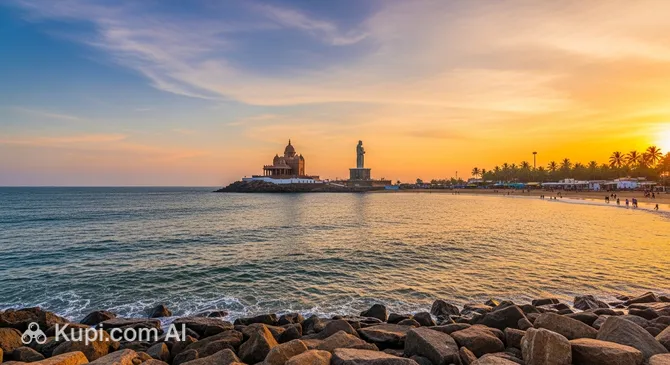
  • The Island of Enlightenment: Just offshore, on a rocky island, stands the majestic Vivekananda Rock Memorial. It is believed that here, in 1892, the great Indian philosopher and reformer meditated for three days and attained enlightenment. Next to the memorial rises the giant Thiruvalluvar Statue, dedicated to the famous Tamil poet and philosopher.

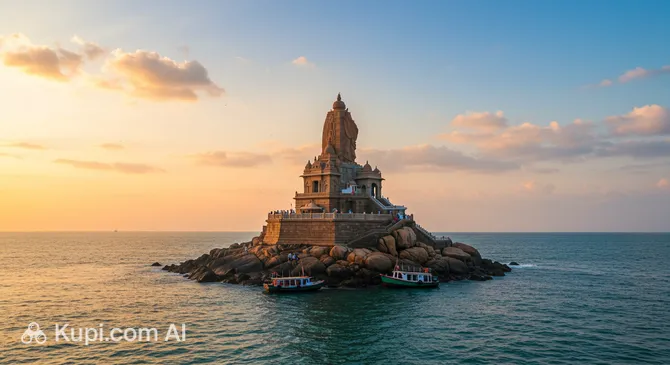
Swami Vivekananda Rock Memorial. Illustration.
Source: Kupi.com AI

Traveler photos:

How to Get There

Reaching the southernmost point of India can be done in various ways, each interesting in its own right. You can find all possible options and route details on the page more about how to get to Kanyakumari. The city has good transport links with the rest of the country, making it accessible to travelers.

Since there is no airport in Kanyakumari itself, most tourists fly into neighboring cities. The closest and most convenient hub is Trivandrum International Airport (TRV), located in the city of Thiruvananthapuram (Kerala). It is approximately 82 km from Kanyakumari. The journey by taxi or bus takes about 2.5 hours. It is a major airport accepting many flights and is the choice for most travelers.

An alternative option could be Tuticorin Airport (TCR) in Tuticorin, located 88 km from Kanyakumari. This is a small domestic airport, and the journey from there will take approximately 2.5–3 hours. If you are traveling through Tamil Nadu, you might consider flying into Madurai Airport (IXM) in Madurai. It is further away, approximately 202 km (about 5.5 hours of travel), but also handles a good number of flights.

For convenience, here is a summary of the main airports:

AirportPassenger trafficDistance
Trivandrum International Airport4.9 mln82 km
Tuticorin Airport230 15188 km
Madurai Airport1.4 mln203 km
Cochin International Airport11.2 mln262 km
Bandaranaike International Airport8.8 mln276 km

Rail travel is another popular and budget-friendly way to reach the city. Kanyakumari has its own railway station, Kanyakumari (CAPE), which is an important transport hub and the terminal point for many trains running across India. Direct express trains arrive here from Chennai, Bangalore, Mumbai, and even Delhi. The station is located just a few minutes' drive from the city center and the coast.

You can also reach Kanyakumari comfortably by bus. The city is connected to major centers of South India by a network of quality roads. Regular state and private buses run from Trivandrum, Chennai, Madurai, and Bangalore. The Kanyakumari bus station is located near the center, allowing you to start sightseeing immediately.

Main Attractions

Kanyakumari, the southernmost tip of mainland India, is famous for its unique attractions where three seas meet: the Arabian Sea, the Bay of Bengal, and the Indian Ocean. This city offers visitors not only breathtaking views but also a deep immersion into culture and spirituality.

Swami Vivekananda Rock Memorial. Illustration.
Source: Kupi.com AI

Traveler photos:

One of the most iconic landmarks is the Vivekananda Rock Memorial. This majestic structure, located on a small rocky island, is dedicated to the famous Indian philosopher and spiritual leader Swami Vivekananda, who, according to legend, meditated here in 1892. The memorial is accessible by ferry and attracts tourists with its peaceful atmosphere and beautiful ocean views.

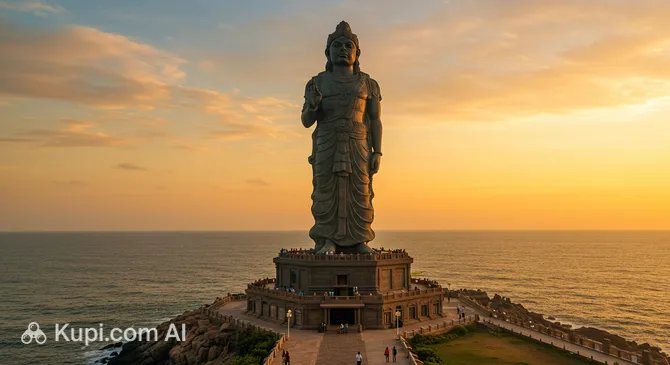
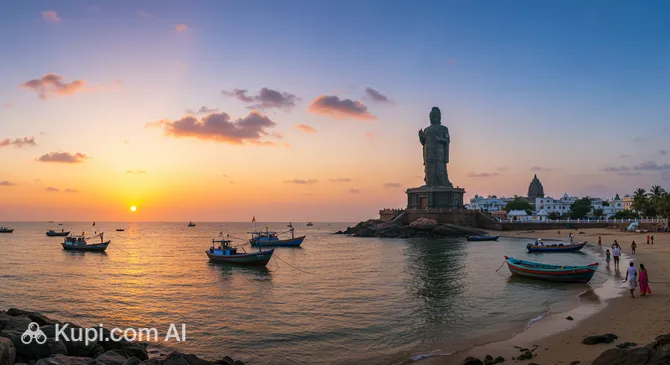
Standing tall near the Vivekananda Memorial is the impressive Thiruvalluvar Statue. This 133-foot (about 40.5 meters) stone sculpture is dedicated to the Tamil poet and philosopher Thiruvalluvar, author of the classic work "Tirukkural." The height of the statue symbolizes the 133 chapters of the "Tirukkural." Visitors can climb to the base of the statue, which offers a panoramic view of the confluence of the three seas.

Thiruvalluvar Statue. Illustration.
Source: Kupi.com AI

Traveler photos:

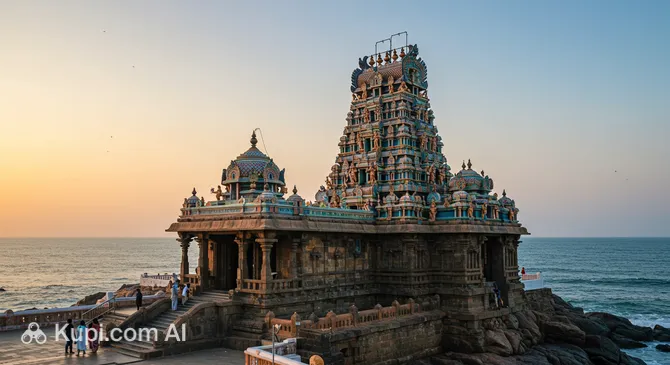
An equally important site of pilgrimage and tourist interest is the Kanyakumari Amman Temple. This ancient temple, dedicated to the goddess Kanyakumari (Devi Kumari), is considered one of the 108 Shakti Peethas. Legend has it that the goddess performed penance here to marry Shiva. The temple attracts visitors with its architecture and special spiritual aura. The diamond nose ring of the goddess is particularly revered, believed to shine so brightly that its light is visible even from the sea.

Kanyakumari Amman Temple. Illustration.
Source: Kupi.com AI

Traveler photos:

A unique natural and spiritual spot is Triveni Sangam – the meeting point of the Bay of Bengal, the Arabian Sea, and the Indian Ocean. It is considered a sacred place where pilgrims perform ritual baths. Watching the sunrises and sunsets here is a special pleasure, as the sun appears and disappears right on the horizon where the waters of the three seas meet.

Among other significant sites is the Mahatma Gandhi Memorial. It was built on the spot where the ashes of the "Father of the Nation" were kept before being scattered over the waters of Triveni Sangam. The architecture of the memorial is designed so that on October 2nd, Gandhi's birthday, the sun's rays fall exactly on the spot where the urn with the ashes was placed. This place attracts those who want to honor the memory of the great leader and learn more about Indian history.

Local Cuisine

The cuisine of Kanyakumari is a true feast for connoisseurs of South Indian dishes, especially for lovers of the freshest seafood. The city, washed by three seas, offers an incredible variety of gifts from the ocean, prepared with aromatic spices, coconut milk, and tamarind. Everyone will find a dish to their taste here, from fiery-hot curries to delicate delicacies.

Be sure to try the region's signature dish – "meen kuzhambu", a rich fish curry traditionally served with rice or appam (thin rice pancakes). Prawn and squid curries are equally popular. For breakfast, locals and tourists enjoy South Indian classics: crispy dosa (pancakes made from rice and lentil flour), soft idli (steamed rice cakes), and savory vada (lentil flour donuts) served with flavorful sambar (lentil stew) and coconut chutney.

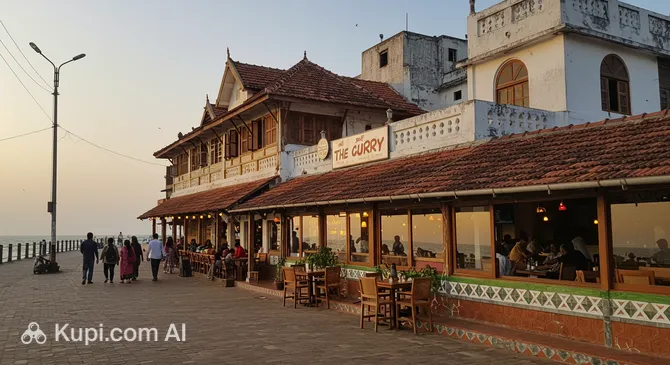
The Curry. Illustration.
Source: Kupi.com AI

Traveler photos:

Food culture in Kanyakumari is diverse. Locals often eat at home or in small eateries offering authentic dishes. Tourists can enjoy a meal in numerous restaurants, such as The Curry, which serves both local specialties and more familiar Indian dishes. Street food is an integral part of the gastronomic experience: on the waterfront and in the markets, you can try spicy pakoras, samosas, and freshly grilled fried fish. Markets are also abundant with fresh fruits, banana chips, and local sweets.

For drinks in Kanyakumari, opt for refreshing coconut water straight from the nut, freshly squeezed exotic fruit juices, and traditional masala chai – spiced tea with milk. The city's gastronomic scene reflects the blend of cultures characteristic of this region of India, offering bright and unforgettable taste experiences. Fairs and food festivals are often held here, where you can get a deeper look at the culinary traditions of Tamil Nadu and Kerala.

Travel Tips

Welcome to Kanyakumari, an amazing place at the southernmost tip of India! To make your trip here as comfortable and memorable as possible, we have prepared some practical tips to help you navigate this unique city.

  1. Clothing and Essentials: Kanyakumari has a tropical climate, so choose light, breathable clothing made of cotton or linen. Be sure to bring sunscreen, a hat, and sunglasses. You will need comfortable shoes for walking and sightseeing. Don't forget a universal adapter (types D and M sockets are used in India). When visiting temples, such as the Bhagavathi Amman Temple, and memorials (Vivekananda Rock Memorial, Thiruvalluvar Statue), modest clothing covering the shoulders and knees is required; also be prepared to remove your shoes before entering.
  2. City Transport: Kanyakumari is a small city, and many interesting places are within walking distance. For longer trips, the main form of transport is auto-rickshaws (tuk-tuks); always agree on the price of the trip in advance. Standard taxis are also available. Local buses connect different parts of the city and surroundings but can be crowded. Car rental is usually not required for moving within the city itself.
  3. Finances: The local currency is the Indian Rupee (INR). You can exchange currency at banks or authorized exchange offices; avoid street money changers. Credit and debit cards are accepted in hotels and large stores, but for markets, small shops, and paying for auto-rickshaw services, it is better to have enough cash with you. ATMs are available in the city, but it is better to withdraw money in advance. Tipping is not mandatory but welcomed (usually 5-10%) for good service in restaurants and for porters.
  4. Health and Safety: There are pharmacies in the city, but it is better to bring a basic first-aid kit. Hospitals and clinics are available for serious medical assistance; travel insurance is highly recommended. Kanyakumari is considered a relatively safe city for tourists. Nevertheless, follow standard precautions: watch your belongings, especially in crowded places, and avoid walking alone in unlit areas late at night. Drink only bottled water.
  5. Communication: The official language of Tamil Nadu is Tamil. In the tourism sector, many people speak English. Learn a few simple phrases in Tamil, for example, "Vanakkam" (Hello/Hi) and "Nandri" (Thank you), or the general Indian greeting "Namaste." A local SIM card (e.g., Airtel, Jio) can be purchased by presenting your passport and visa. Wi-Fi is available in most hotels and some cafes.
  6. Local Etiquette: Indians are friendly people. Greet people with a slight nod or a traditional "Namaste" (palms together at the chest). When visiting temples and holy sites, behave restrained and respectfully. Ask permission before photographing people. Remember that the left hand in India is traditionally considered "unclean," so try to use your right hand for eating, passing money, and objects.
  7. What to Avoid: Do not wear overly revealing clothing outside the beach, especially when visiting religious sites – this may be perceived as disrespectful. Avoid public displays of affection, as this is not customary in the local culture. Do not engage in loud arguments or criticize local customs or religion.
  8. Special Tip for Kanyakumari: Be sure to schedule time to watch the sunrise and sunset at Cape Kanyakumari. This place, where the Arabian Sea, the Bay of Bengal, and the Indian Ocean merge, offers a truly unforgettable sight. On full moon days, you can observe a unique phenomenon: the sun setting and the moon rising simultaneously over the sea.

We hope these tips help you better prepare for your trip to Kanyakumari and enjoy every moment in this unique corner of India. We wish you unforgettable impressions from the meeting of the three seas and the rich culture of this sacred place!

Entertainment & Nightlife

Kanyakumari, being primarily a pilgrimage site and a city famous for its breathtaking sunrises and sunsets, offers quiet and relaxing evening entertainment rather than a vibrant nightlife with a plethora of clubs and noisy parties. Nevertheless, there are opportunities to have a pleasant evening after a busy day.

The main evening activity in Kanyakumari is centered around restaurants and a few bars, often located within hotels. Here you can enjoy a dinner of local and international cuisine and then have a drink in a quiet setting. There are no dedicated "nightlife districts" similar to those in large metropolises in Kanyakumari. Most establishments where you can spend the evening are located near major tourist routes and hotels.

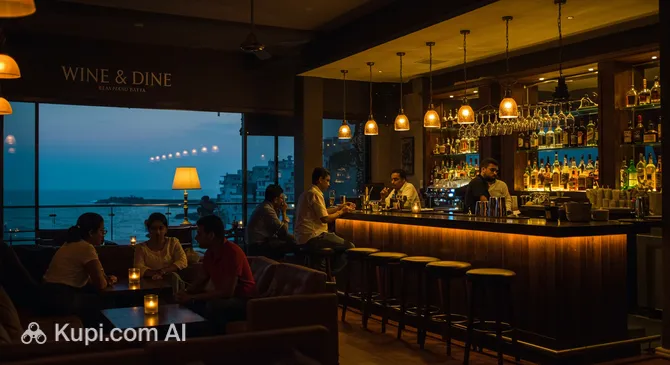
Among specific places to relax in the evening, the Wine & Dine bar is worth noting, offering a selection of drinks. For dinner, many tourists choose well-reputed restaurants such as The Curry or Zam Zam Restaurant, which usually stay open until late evening and offer a cozy atmosphere.

Wine & Dine. Illustration.
Source: Kupi.com AI

Traveler photos:

The atmosphere of Kanyakumari in the evening is generally peaceful and conducive to leisurely relaxation. The crowd here is mixed – Indian tourists, pilgrims, and a few foreign travelers. The dress code in most establishments is quite casual. It is worth considering that most restaurants and bars close relatively early, usually around 10:00 PM or 11:00 PM. Nightclubs in the traditional sense are absent here, as are noisy discos.

As for practical advice, it is best to use auto-rickshaws or taxis for moving around in the evening. It is recommended to agree on the price of the trip in advance or use taxi services ordered through the hotel. Average prices in Kanyakumari's restaurants and bars can be described as moderate. The city is considered quite safe for tourists; however, as in any other place, it is best to stick to well-lit and busy streets in the evening and follow basic precautions.

During the daytime, Kanyakumari offers a rich program for curious travelers. You can visit places like the Wonder Wax Museum or the Vivekananda Pictorial Exhibition to dive deeper into the culture and history of this unique corner of India. Naturally, the main daytime activities remain visiting iconic landmarks such as the Vivekananda Rock Memorial and witnessing the famous confluence of the three seas.

Parks & Museums

Kanyakumari, the southernmost point of India, attracts travelers not only with its famous sunrises and sunsets over the confluence of three seas but also with the opportunity to touch its rich cultural heritage through memorials and museums, as well as to enjoy unique coastal landscapes.

While Kanyakumari doesn't have a large number of traditional city parks, its entire coastal zone is a natural attraction in itself. Kanyakumari Beach is the heart of the city, offering breathtaking views, especially during sunrise and sunset. Nearby is Triveni Sangam, a sacred confluence point of the Bay of Bengal, the Arabian Sea, and the Indian Ocean, which has both geographical and spiritual significance. Specially equipped areas like the Sunrise View Point and Sunset Point are must-visits for every tourist wishing to see this natural wonder.

Kanyakumari Beach. Illustration.
Source: Kupi.com AI

Traveler photos:

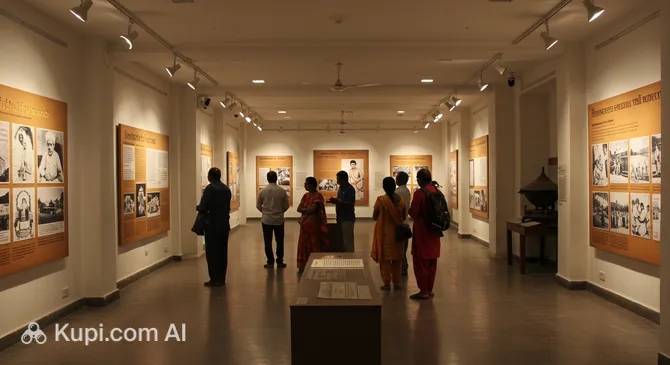
The city offers several interesting places to learn about culture and history. One popular spot is the Wonder Wax Museum, where you can see realistic figures of famous personalities from India and the world. It is a great place for family leisure and photo sessions. For those interested in the life and teachings of Swami Vivekananda, the Vivekananda Pictorial Exhibition is of interest, detailing his journey and philosophy. Although the Mahatma Gandhi Memorial is primarily a monument, it also holds a piece of history related to the "Father of the Nation," and its architecture is noteworthy; exhibitions dedicated to his life are often held here.

Vivekananda Pictorial Exhibition. Illustration.
Source: Kupi.com AI

Traveler photos:

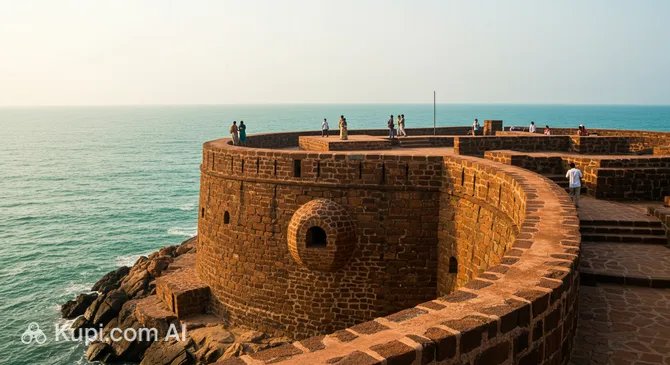
In addition to museums, Kanyakumari is famous for its iconic structures. The majestic Vivekananda Rock Memorial and the giant Thiruvalluvar Statue, rising above the sea, are symbols of the city and are must-visits. History buffs should also visit Vattakottai Fort – an 18th-century coastal fortress with picturesque ocean views.

Vattakottai Fort. Illustration.
Source: Kupi.com AI

Traveler photos:

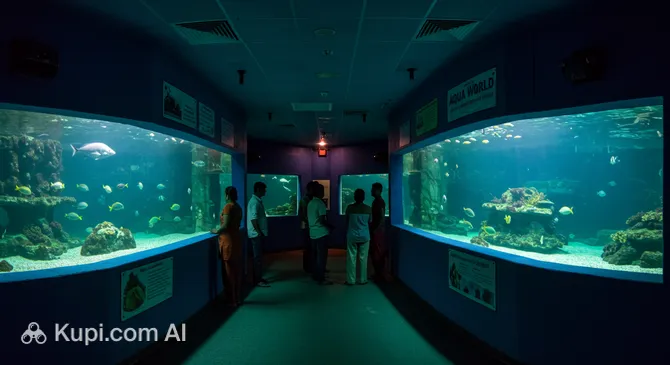
For families with children, an interesting addition to the cultural program could be a visit to Aqua World – a small but fascinating aquarium featuring various marine inhabitants of the region. This is a wonderful opportunity to get acquainted with the underwater world of the Indian Ocean.

Aqua World. Illustration.
Source: Kupi.com AI

Traveler photos:

To dive deeper into the atmosphere of Kanyakumari, try walking along the waterfront early in the morning when it is not yet crowded and observe the rituals of the locals. Also, keep an eye out for the small temples and shrines scattered around the city, each with its own unique history and architecture reflecting local color.

Getting Around

Public transport in Kanyakumari is mainly represented by buses and auto-rickshaws, which is typical for small cities in India. State and private buses run through the city and connect it with nearby towns. This is the most economical way to get around, although routes and schedules may not always be obvious to a tourist without knowledge of the local language.

Auto-rickshaws are an ubiquitous and convenient form of transport for short trips around the city. They can take you almost anywhere. It is important to remember that the cost of the trip should be agreed upon with the driver before starting the journey, as meters, if present, are not always used.

One of the features of Kanyakumari's transport system is the ferries. They play a key role in transporting tourists to iconic landmarks located on islands just off the coast, such as the Vivekananda Memorial and the Thiruvalluvar Statue. Ferry tickets are purchased at the ticket offices at the pier. Ferries run regularly throughout the day, although their operation may depend on weather conditions.

The payment system on buses is simple: tickets are purchased directly from the conductor for cash. Fares are low. Specialized travel cards or mobile apps for public transport payment in Kanyakumari are generally not available. For auto-rickshaws, as mentioned, the price is negotiable.

Practical tips for tourists: buses usually depart from central bus stops or makeshift stations. You can find out the desired route from locals or conductors. The main flow of transport occurs during the daytime. In the evening, the number of trips may decrease. For more comfortable movement, especially with luggage or for long distances in the surrounding area, you can use taxi services, which are also available in the city. In the central part of the city, many distances can be covered on foot.

Of the alternative ways to get around, besides taxis, you could consider renting a scooter or a bicycle if you plan to explore the coastal zone independently. However, you should take into account the traffic intensity and local road etiquette features. Car sharing is poorly developed or non-existent in Kanyakumari.

Accommodation

In Kanyakumari, tourists will find a variety of accommodation options to suit different budgets and preferences. The city offers everything from modest guesthouses and budget hotels to more comfortable mid-range accommodations. Luxury resorts are fewer here, but you can find cozy hotels with a good level of service. Room or apartment rentals are also available, especially for those planning a longer stay.

Most tourists prefer to stay in areas located in close proximity to the main attractions, such as the Vivekananda Rock Memorial, the Thiruvalluvar Statue, and the Kanyakumari Amman Temple. Coastal hotels are also popular, offering beautiful views, especially of sunrises and sunsets. The convenient location provides easy access to observation decks like the Kanyakumari Sunrise View Point and Sunset Point.

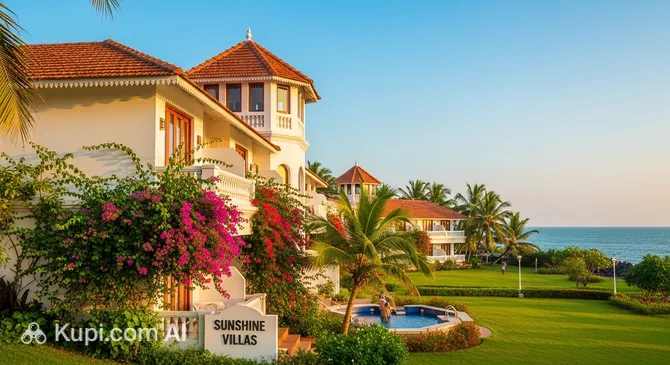
Sunshine Villas. Illustration.
Source: Kupi.com AI

Traveler photos:

Among the accommodation options in Kanyakumari, you can find resort hotels like Sunshine Villas or the JPA Travels Resort and Taxi Service. These places offer comfortable lodging and can serve as a good base for exploring the city and its surroundings. The price range varies from budget to mid-range and moderately high, depending on the level of comfort and the hotel's location.

It is recommended to book accommodation in advance, especially if your trip coincides with the peak tourist season or holidays, when Kanyakumari attracts a large number of pilgrims and tourists. To find and book hotels, it is convenient to use popular online platforms that allow you to compare prices and conditions. Direct booking through hotel websites or by phone is also possible.

Nearby Cities

For those who want to explore the surrounding area, Kanyakumari serves as an excellent starting point for day trips to several interesting nearby locations.

One such notable place is Padmanabhapuram, located about 29 km away. Its main gem is the Padmanabhapuram Palace, an impressive example of traditional Kerala wooden architecture. This historic complex was once the residence of the rulers of Travancore and allows visitors to immerse themselves in the rich history and culture of the region.

Another popular option for a short trip is Nagercoil, located just 19 km from Kanyakumari. This busy city is the administrative center of the Kanyakumari district and attracts visitors with iconic sites such as the Nagaraja Temple, dedicated to the serpent god, and the ancient St. Francis Xavier's Church, known for its history and architecture.

CityPopulationDistance
Kottaram13 0935 km
Alagappapuram10 7197 km
Pattukkottai15 6229 km
Tengampudur16 73111 km
Chettikulam12 43812 km

These and other nearby destinations allow for a deeper understanding of the diverse culture, history, and picturesque landscapes of the southern tip of India, complementing the experience of visiting Kanyakumari itself.

Shopping & Souvenirs

Shopping in Kanyakumari is, first and foremost, an immersion into the world of local crafts and souvenirs that reflect the unique geographical location and cultural heritage of this place. The city is not famous for large shopping malls or designer boutiques, but it offers many interesting items that will serve as a wonderful reminder of a trip to the southernmost tip of India.

Main shopping areas are concentrated around major tourist attractions, such as the Kanyakumari Amman Temple, and along the roads leading to Kanyakumari Beach and the Vivekananda Rock Memorial. Here you will find many small shops and street stalls offering a variety of goods. Stroll along Sannathi Street and adjacent alleys, where the main commercial life is concentrated.

There are no large modern shopping centers in Kanyakumari like those found in metropolises. Shopping here is more traditional, with an emphasis on small family shops and government craft emporiums where you can find quality items at fixed prices.

Although Kanyakumari doesn't have one large central market, the entire coastal area and the streets around the temples turn into a lively bazaar, especially in the evenings. Here, vendors offer fresh fruit and snacks, but the main focus is, of course, on souvenirs. You will find many stalls with seashell products, corals (pay attention to the legality of their sale and export), and textiles.

From Kanyakumari, it is worth bringing back seashell products – from simple jewelry to complex compositions. Also popular are palm leaf items, wooden figurines, textiles (especially sarongs, shawls, and cotton fabrics with local patterns), as well as religious attributes and images of Hindu deities. Spices or aromatic oils can also make interesting souvenirs.

Most shops in Kanyakumari are open daily from approximately 9:00-10:00 AM to 8:00-9:00 PM. Small shops and street vendors may operate on more flexible schedules, especially during the tourist season. Most shops accept cash (Indian Rupees). Larger stores and hotels may accept card payments, but it is better to always have some cash on hand, especially for purchases at markets and from street vendors. Don't hesitate to bargain in small shops and markets – it's part of the local culture.

A tax-free system for tourists exists in India (GST refund for tourists), but it is generally applicable to more expensive purchases made in registered stores, and the process can be quite complicated. For ordinary souvenirs purchased in small shops in Kanyakumari, this option will likely be unavailable or impractical.

Nearby cities

Reached the end of the page?

That means the route is fully explored