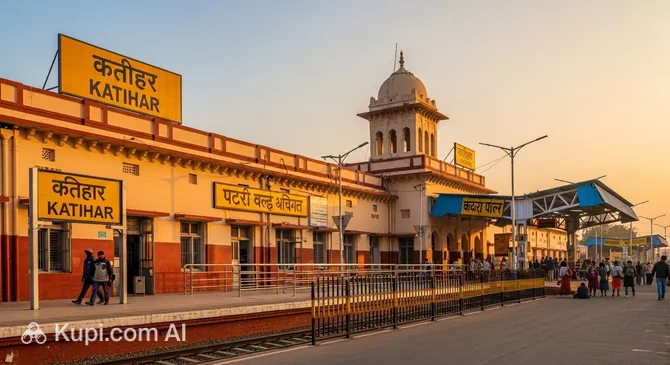
Katihar is a dynamic administrative center in the state of Bihar, located in the eastern part of India on the picturesque banks of the Kari Kosi River. Katihar. Illustration.
Source: Kupi.com AI
The city is known as one of the largest railway junctions in the region and an important hub for the agricultural industry. Although Katihar rarely makes it onto lists of popular tourist destinations, its industrious atmosphere and strategic importance make it a vital link between the northern and northeastern states of the country.
The development of transport routes played a key role in the city's history, transforming a small settlement into a thriving hub. Today, it is home to about 240,000 people, and the city's economy relies heavily on the processing and trade of agricultural crops such as jute, maize, and rice. Its geographical location on the plains makes these lands incredibly fertile, though they are prone to the influence of river monsoons.
A visit to Katihar is an opportunity to see the real, non-touristy side of the region with its bustling markets, massive railway workshops, and the sincere hospitality of the local people. This city invites those seeking an authentic experience who want to feel the rhythm of life in a modern agricultural center of eastern Bihar.
Weather Overview
The climate in Katihar is of the subtropical monsoon type, which determines a clear change of seasons. Expect hot summers with temperatures that can rise above +35°C in April and May, and relatively cool, dry winters when the average temperature in January is around +17°C. Winter nights can be quite chilly, so a light jacket will not be out of place.
An important feature of the region is the rainy season, which lasts from June to September. During this time, the weather in Katihar is characterized by heavy rainfall brought by the monsoons. Humidity increases significantly, and rivers often overflow their banks, leading to seasonal flooding. The highest amount of precipitation usually falls in July and August.
The best time to visit Katihar is considered to be the period from November to February. During these months, comfortable dry weather sets in, ideal for traveling and walking. The air at this time is clear, and the absence of exhausting heat and rain makes staying in the city as pleasant as possible.
Average monthly temperature
Average monthly precipitation
Interesting Facts
Katihar hides several surprising features that make it an important point on the map of Bihar:
Agricultural Sector Leader: According to 2022 data, Katihar district became the absolute leader in the state of Bihar in maize production, securing its status as the "maize capital" of the region.
Railway Giant: The local station serves as the headquarters for an entire railway division; historically, it was through Katihar that a vital meter-gauge line connected Bengal with Northern India.
The Legend of the Mani Stone: The name of the town of Manihari in Katihar district comes from the legend of a precious stone (mani) that Lord Krishna lost here.
Young District: Katihar officially became an independent administrative district quite recently — on October 2, 1973; before that, it was part of Purnia.
Jute Heritage: The city is one of the few places in the region where large jute mills still operate, continuing the tradition of processing this "golden fiber."
How to Get There
Katihar is a key transportation hub, and the easiest way to reach it is by rail. Katihar Junction station receives trains from all over the country. A journey from Delhi takes 24 to 30 hours, from Kolkata about 10–12 hours, and from the regional capital Patna, it can be reached in 8–10 hours. For travelers, this is the most convenient and budget-friendly way to get to the city.
Station
Passenger traffic
Distance
Jogbani railway station
3
99 km
Adhikari railway station
4
129 km
Parbatipur railway station
5
137 km
Baidyanathdham Deoghar railway station
6
147 km
New Jalpaiguri Junction railway station
17
153 km
Katihar does not have direct air service. The nearest airport with a limited number of domestic flights is in Bhagalpur (approximately 100 km away), but most tourists prefer to fly into Patna or Kolkata and then transfer to a train. If you are planning a complex route, it is useful to study the transportation options in Katihar in advance.
Road connections are also well-developed, with the city connected by a network of roads to neighboring districts. However, keep in mind that during the monsoon season (from June to September), some sections of the highways may be flooded. Intercity buses run within the region, but the trip can take longer due to heavy traffic.
Main Attractions
Katihar is not a typical tourist center, so it is difficult to find classic architectural monuments here; however, the city possesses its own unique industrial and natural character. The main "heart" and a landmark in its own right is Katihar Junction — one of the largest railway hubs in India. Watching the endless flow of trains and the work of large-scale workshops gives an idea of the city's colossal importance to the country's transport system.
For those interested in spiritual heritage and legends, it is worth heading to the Manihari area. This place on the banks of the Ganges is steeped in ancient lore: it is believed that this is where Lord Krishna once lost his precious stone. Despite the lack of developed infrastructure, Manihari attracts pilgrims and history buffs with its mystical atmosphere and proximity to the great river.
A walk through the central markets of Katihar is an adventure of its own. Here, you can see firsthand how the economy of Bihar functions: from massive jute warehouses to vibrant rows of maize and bananas. These are ideal places to feel the local flavor, observe the daily life of the citizens, and experience the energy of a real trading city.
Local Cuisine
The gastronomy of Katihar is a vivid reflection of Bihar's culinary traditions, where the basis of the diet consists of products grown in local fields. The main ingredients here are rice, wheat, maize, and oilseeds. Be sure to try traditional dal-roti (lentil stew with flatbreads) and a variety of vegetable stews called sabzi, the taste of which changes depending on the season.
The food culture in the city is closely linked to street food and small eateries near the markets and the station. Simple vegetarian dishes and fresh pastries are very popular here. Tea holds a special place: small tea shops are scattered throughout the city and serve as the main centers of social life. Also, on hot days, locals prefer refreshing lassi — a traditional yogurt-based drink.
The character of the local cuisine can be called "industrious" — it is hearty and simple food designed to give strength for the whole day. Gourmets should pay attention to banana-based dishes and maize products, which are particularly delicious here due to the proximity to farms. Alcohol is practically not sold in the region, so the focus is on tea and local soft drinks.
Travel Tips
A trip to Katihar is an immersion into the real Indian province. To ensure your journey is comfortable and safe, we have prepared some practical tips.
Clothing and Essentials: Choose light clothing made of natural fabrics to protect yourself from the heat. During the monsoon period (June–September), be sure to bring a raincoat and reliable waterproof shoes, as flooding is a common occurrence.
Transport: The most convenient way to move around the city is by auto-rickshaws. Always agree on the price before starting the trip, as meters are practically not used here.
Finances: The main currency is the Indian Rupee. Cards are accepted very rarely, so always carry a sufficient supply of cash. ATMs are best found near the railway station.
Health and Safety: Use only bottled water, even for brushing your teeth. It is recommended to carry a basic first-aid kit and hand sanitizers.
Communication: Local residents speak mostly Hindi. English is understood by station and bank employees, but in regular shops, gestures and basic words in the local language will help you.
Local Etiquette: Katihar is a non-tourist city, so be prepared for the friendly curiosity of passersby. When visiting temples, always remove your shoes and cover your shoulders and knees.
What to Avoid: Do not plan trips during the peak of the monsoon season, as rising rivers can paralyze transport connections for several days.
Extra Tip: If you are using the city as a transit point, try to stay as close to the station as possible — this will save you a lot of time and effort.
May your acquaintance with Katihar be a bright and memorable event in your collection of travels around India!
Entertainment & Nightlife
There is practically no developed nightlife in the classic sense — with noisy clubs and bars — in Katihar. The city lives at a quiet pace, focused on work and family values. Evening entertainment for locals is usually limited to strolling through the central squares or visiting tea stalls, where the latest news is discussed over a cup of traditional tea. Most activity after sunset is concentrated around the railway station, where life never stops for a minute.
For movie lovers, local cinemas are located near the station. Here, you can watch the latest Bollywood releases in the company of an emotional local audience, which is an interesting cultural experience in itself. If you are looking for more diverse evening entertainment, consider a trip to nearby Purnia, where the entertainment infrastructure is somewhat broader.
Daytime activities include visiting markets and walking near the rivers during the dry season. Safety in the city in the evening is considered acceptable, but tourists are recommended to stick to well-lit central streets and use the services of trusted taxis or rickshaws for travel after dark.
Parks & Museums
There are almost no state museums or large art galleries in Katihar, as the city is primarily an industrial and transportation center. Cultural life here is more concentrated in religious communities and marketplace squares. Nevertheless, history buffs can find interesting artifacts and ancient architecture in nearby settlements of the district that have preserved the heritage of former princely states.
Green zones within the city limits are represented by small gardens at administrative buildings and local recreational areas. Due to high building density and the agricultural nature of the area, there are few classic parks for walking. Greenery is mainly concentrated on the outskirts of the city, where endless fields and plantations begin.
The natural landscapes around Katihar are defined by the proximity of large rivers such as the Kosi and Saura. In the dry season, the riverbanks can become a place for bird watching and quiet relaxation in nature. However, it should be remembered that during the monsoon season, these areas become difficult to access due to the risk of flooding, so it is best to plan visits to natural zones in winter.
Getting Around
The public transport system in Katihar is highly utilitarian and adapted to the needs of a major railway hub. Within the city, the main means of transportation are auto-rickshaws and cycle-rickshaws. This is the fastest and most maneuverable way to get from one area to another, especially considering the narrow streets in commercial zones and occasional congestion at railway crossings.
There are also bus routes operating in the city, connecting Katihar with suburbs and neighboring towns. Fares for rickshaws and buses are paid in cash, and it is recommended to agree on the price of a rickshaw ride in advance. The central point from which most types of transport depart is the square in front of Katihar Junction station.
Taxis can serve as an alternative to public transport and can be called through local services or hired at stands near major sites. During the monsoon season, transport operations can be difficult due to flooding, so tourists should consider weather conditions when planning trips around the city and its surroundings.
Accommodation
Accommodation options in Katihar are primarily geared toward transit passengers and business travelers connected to the agricultural sector. The bulk of the housing consists of budget hotels and guesthouses that offer basic amenities. There are no luxury five-star hotels in the city, but for a short stay, you can certainly find a decent mid-range option.
The most convenient area to stay is the zone around Katihar Junction railway station. Most hotels are concentrated here, which significantly saves time on logistics, especially if you have come to the city for only one day. Accommodation prices in Katihar are very affordable, making it accessible for any budget.
When planning your trip, we recommend booking accommodation in advance, especially if your visit coincides with major festivals or the harvest season when business activity in the city increases. Most local hotels only accept cash, although modern booking services are gradually being introduced here as well.
Nearby Cities
Katihar serves as an excellent starting point for exploring the eastern districts of Bihar and neighboring states. Thanks to its status as a railway hub, the city makes it easy to take day trips to interesting historical and cultural centers of the region. The surrounding areas offer travelers a chance to get acquainted with the real way of life in the Indian provinces.
One popular destination is Purnia, located about 50–60 km to the north. It is a larger administrative center with developed trade and interesting markets. It is also worth visiting Bhagalpur, known as the "silk city," where you can see the production process of the famous Tussar silk. In the immediate vicinity of Katihar are settlements such as Dalan and Daharia, which can be reached quickly by local transport.
City
Population
Distance
Dalan
22 689
4 km
Daharia
13 419
5 km
Sirnia
19 240
7 km
Dandkhora
9 651
9 km
Sikat
13 491
12 km
Exploring nearby towns and villages will give you a fuller understanding of the diversity of cultures and traditions in this part of India. Trips on local trains or buses will allow you to see the endless fields of jute and maize that define the appearance of this fertile land.
Shopping & Souvenirs
Shopping in Katihar is, first and foremost, an immersion into the atmosphere of traditional Indian markets. The main shopping rows are concentrated around the railway station and in the central part of the city. There are no huge, glittering shopping malls here, but there is an abundance of shops with everyday goods, clothing, and fabrics. Local markets are famous for their color and the opportunity to see the full range of the region's agricultural products.
As original souvenirs from Katihar, it is worth bringing back jute products — this "golden fiber" is the pride of the district. You can find handmade bags, rugs, and other woven items. Local textiles and fabrics, often brought from neighboring districts of Bihar and West Bengal, are also noteworthy.
Shops and markets are usually open from early morning until late evening. Payment at most outlets is only accepted in cash in Indian Rupees, so it is important for tourists to have small bills. Bargaining in the markets is part of the local culture, so don't hesitate to discuss the price, especially when buying handicrafts or fabrics.