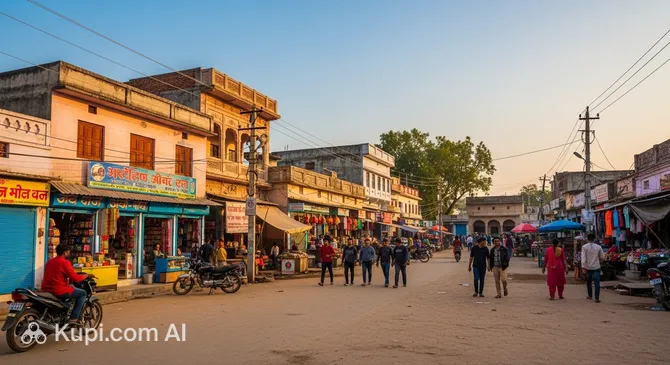
Located on the fertile plains of Bihar, Masaurhi is a colorful corner of authentic India. Also known by its historical name Taregna, this city is just 30 kilometers from the state capital, Patna, and serves as an important administrative and residential hub for the region. While the city is not a major tourist destination, its calm atmosphere and authentic way of life allow travelers to experience real provincial life in the country without any pretense.
Masaurhi. Illustration.
Source: Kupi.com AI
The city's geographic position in the Punpun River valley, a tributary of the majestic Ganges, largely defines its character. Agricultural lands and residential quarters predominate here, and the population of the metropolitan area exceeds 240,000 people. Exploring the history of the city, one can see how it gradually transformed from a quiet settlement into a bustling suburb, while still preserving its religious traditions and traditional way of life.
Local temples and the hustle and bustle of central markets create a special atmosphere in Masaurhi. Although the city is considered more of a "bedroom community" for those working in Patna, it attracts visitors with its unpretentious nature. Here, you can stroll along the riverbanks or visit small shrines that serve as spiritual centers for local residents. A visit to this place is an excellent opportunity to take a break from the noise of megacities and immerse yourself in the rhythm of a classic Bihari town.
Weather Overview
The climate in Masaurhi is classified as subtropical, typical of most cities in the Ganges Valley. Summer months, especially April and May, can be extremely hot, with average maximum temperatures often reaching 38-40°C. During this period, the air becomes dry and dusty, so travelers are advised to plan their activities for the early morning or evening.
From June to September, monsoons arrive in the region, bringing heavy rainfall and long-awaited cool relief, although humidity increases significantly. Winter in the city, lasting from November to February, is considered the most comfortable time to visit. Daytime temperatures during this period stay around 20-25°C, while nights can be quite cool (down to 10°C). Detailed weather in the city by month will help you choose the ideal time for your trip.
When planning your journey, it is worth noting that due to the proximity of the Punpun River, local flooding is possible during the rainy season. However, it is precisely at this time that the surrounding fields turn a vibrant green, transforming the rural landscapes into picturesque canvases. Overall, Masaurhi offers a typical northern Indian weather pattern, where each season has its own special charm.
Average monthly temperature
Average monthly precipitation
Interesting Facts
The city is known by the alternative name Taregna, which is often used in official documents and train schedules.
Masaurhi is located at the strategically important coordinates of 25°21′ north latitude and 85°01′ east longitude, in the heart of the Gangetic plains.
According to census data, children under the age of 6 make up about 17% of the city's population, highlighting its status as a dynamically growing, young center.
The Punpun River, which flows through the city, is a sacred tributary of the Ganges and plays a key role in the agriculture and religious life of local communities.
The literacy rate in the urban area is around 75%, which is a respectable figure for provincial districts in the state of Bihar.
How to Get There
The transport accessibility of Masaurhi is closely linked to its proximity to the state capital. Most travelers arrive here via Patna, which is the region's largest transport hub. The journey by car or bus takes about an hour, though heavy traffic and the peculiarities of driving in Bihar should be taken into account, as these can increase travel time.
While the city itself does not have its own airport, the nearest air gateway is in Patna (JPNI), approximately 40 kilometers away. From there, Masaurhi is easily accessible by taxi or regular buses. Detailed information on travel options will help you plan your route in advance and choose the most comfortable option.
Railway connection is perhaps the most convenient and reliable way to reach the city. Taregna station is located directly within the city limits and serves many suburban and regional trains from Patna and other cities. For long-distance travel, National Highway NH-22 is also actively used, connecting the region with major cities in northern India.
Main Attractions
Although Masaurhi is not a classic tourist center with world-famous monuments, there are several local sites that deserve the attention of cultural immersion enthusiasts. One of the main spiritual hubs of the city is Kali Mandir. Dedicated to the goddess Kali, this temple stands out for its traditional architecture and becomes a center of attraction during major religious festivals, when the entire area is filled with bright colors and the sounds of prayer.
Another interesting site is Chaturbhuj Mandir, dedicated to Lord Vishnu. This place is famous for its calm energy and is revered by local residents as an important shrine. For tourists, visiting such temples is a rare chance to see the living traditions of Hinduism in their natural, non-commercialized environment, away from crowds of foreign sightseers.
The banks of the Punpun River are a natural attraction in the city. It is an ideal place for leisurely walks at dawn or dusk, when the water reflects the soft light of the sun and daily life buzzes on the shores—from fishing to conducting rituals. For those traveling through to Patna, Masaurhi serves as an interesting example of how a modern suburb can harmoniously coexist with the centuries-old customs of Bihar.
Local Cuisine
The culinary traditions of Masaurhi are a vibrant example of classic Bihari cuisine, where simple, hearty, and aromatic dishes take center stage. Be sure to try Sattu Paratha—traditional flatbreads stuffed with roasted gram flour (sattu), which are often served with spicy yogurt or pickles. This dish is not only delicious but also an excellent source of energy for the traveler.
Local gastronomy is also rich in lentil dishes (dal) and fresh river fish caught in the waters of the Punpun River. Small dhabas (roadside eateries) serving fragrant vegetarian curries can be found throughout the city streets. A special flair is added by dishes from the city's Muslim community, such as spicy kebabs and biryani, which can be found in the local markets.
As for drinks, the absolute favorite is masala chai, brewed here with plenty of milk and spices. During the hot season, lassi—a thick yogurt drink that can be either sweet or salty—is perfectly refreshing. The food culture here is as simple as possible: food is prepared from fresh local ingredients and served without unnecessary frills, allowing you to fully enjoy the authentic taste of the region.
Travel Tips
Visiting Masaurhi will be an unforgettable experience of immersion into the real Indian province if you keep a few important practical recommendations in mind.
Clothing and Dress Code: Choose lightweight clothing made of natural fabrics, as it can get very hot in the region. When visiting temples like Kali Mandir, be sure to cover your shoulders and knees to show respect for local traditions.
Transport: Use autorickshaws to move around the city. If you need to call a taxi from Patna, it is most convenient to use the Uber or Ola apps, though they may not always work reliably within the city itself.
Finances: Be sure to carry a sufficient supply of cash in Rupees. Cards are rarely accepted, and ATMs may be unavailable or may not work with international cards.
Health: Drink only bottled water and avoid ice in drinks. Basic medications can be found in the city's pharmacies, but it is better to bring any specific prescriptions with you.
Communication: The main language of communication is Hindi. Not everyone understands English, so learn a few polite phrases (such as "Namaste") or use offline translators.
Local Etiquette: It is customary to remove your shoes when entering homes or temples. Always use your right hand for passing money, food, or for handshakes—in India, the left hand is considered unclean.
What to Avoid: You should not plan long walks alone after dark in unpopulated areas. Also, during the monsoon season, avoid low-lying areas near the river due to the risk of flooding.
Connectivity: For stable internet, it is best to purchase a local SIM card (such as Airtel or Jio) upon arrival at Patna airport, as the registration process in the city itself can take some time.
Be open to new experiences and show friendliness toward the local residents—their hospitality will make your stay in Masaurhi truly warm and pleasant.
Entertainment & Nightlife
The entertainment infrastructure in Masaurhi is primarily oriented toward local residents, so do not expect to find noisy nightclubs or modern bars here. Life in the city follows a quiet rhythm, and after sunset, the main events move to cozy tea stalls or festively decorated temples. Evening gatherings over a cup of hot masala chai at local markets are the main form of social leisure for the townspeople.
For youth and outdoor enthusiasts, the main centers of attraction are the public squares during religious festivals. During these days, the city is transformed: temporary amusement rides, street performances, and fairs appear. If you are looking for more conventional modern entertainment, such as cinemas or shopping malls, it is best to head to nearby Patna, which can be reached in an hour by train or car.
Daytime leisure in the city consists of walking along the Punpun River or visiting local bazaars, where you can observe the art of bargaining and the daily hustle. Safety in the city is at an acceptable level, though it is better to stick to central, well-lit streets for nighttime walks. For those who want to experience "real" India, the lack of a mass entertainment industry in Masaurhi is an advantage, allowing you to feel the authenticity of the region.
Parks & Museums
Due to its administrative and residential status, Masaurhi does not have large museum complexes. For classic exhibitions dedicated to the archaeology or art of Bihar, tourists should head to Patna, which houses the state's richest collections. However, for those interested in local history, the city itself, with its old quarters and temples, can serve as a kind of "open-air museum."
Park infrastructure in the city is minimally developed, but its absence is compensated for by natural landscapes. The main "green zone" for residents and visitors is the banks of the Punpun River. Here you can find quiet corners to escape the city bustle and observe the local flora and fauna of the Bihari plains. The surrounding agricultural lands also create a sense of open space and freshness, which is rare for densely built-up Indian megacities.
Small green areas can be found at local temples, such as Kali Mandir. These sites are traditionally kept clean and orderly, serving as oases of calm for meditation or simply a short rest. A journey through Masaurhi is more about connecting with rural nature and living culture than about visiting organized exhibition halls.
Getting Around
The public transport system in Masaurhi reflects its character as a dynamic suburb. The main means of getting around the city streets are autorickshaws and cycle rickshaws. This is the fastest and most affordable way to get from one neighborhood to another, especially given the narrow streets. A rickshaw ride is not just transport, but an opportunity to feel the city's rhythm from the inside.
For trips to neighboring cities, primarily Patna, buses are actively used. They run regularly but can be very crowded during peak hours when local residents are commuting to work or school. Fares are usually paid in cash to the conductor or driver. Travel costs are extremely low, making movement accessible to everyone.
The railway plays a key role in the life of the city. Taregna station is an important hub connecting Masaurhi with the national railway network. Trains are perhaps the most predictable mode of transport, allowing you to avoid road congestion. Tourists are recommended to use official Indian Railways apps to check schedules and ticket availability, although for short distances, tickets are often purchased directly at the station counter before departure.
Accommodation
Accommodation options directly in Masaurhi are quite limited and mainly consist of budget guest houses and small lodges. Most of them are oriented toward local residents or professionals visiting the city on business. Expect modest conditions and a basic set of amenities—this is typical housing for transit travelers looking to save money and immerse themselves in the local environment.
Tourists accustomed to higher levels of comfort, international service standards, or hotel features like swimming pools and restaurants are advised to consider staying in nearby Patna. Thanks to good transport links, you can easily visit Masaurhi as a day trip while returning to the more comfortable conditions of the state capital at night.
If you do decide to stay in the city, try to book your accommodation in advance, especially during major religious festivals when the demand for available rooms can skyrocket. The main budget hotel options are concentrated near the Taregna railway station, which is convenient for those traveling by train.
Nearby Cities
The city of Masaurhi is a convenient starting point for exploring central Bihar, offering travelers the chance to discover surroundings where life flows at a steady and traditional pace. Nearby settlements, despite their modest size, hold the charm of rural India and allow visitors to see the lifestyle of local farmers and artisans.
Just a few kilometers away is the settlement of Barni, and a little further is Sarari. These places are ideal for short trips by autorickshaw if you want to see endless fields and small village temples. It is also worth visiting Kako, where you can experience the unique atmosphere of the Bihar hinterland. The largest and most significant neighbor is Patna—the state capital, rich in museums, historical monuments, and modern markets.
City
Population
Distance
Barni
9 914
3 km
Sarari
21 168
14 km
Kako
25 605
14 km
Bhadsara
9 884
17 km
Chandhaus
13 077
18 km
Exploring these locations will help you better understand the structure of the region and see how different towns and villages complement each other. Transport links between them are provided by regular buses and trains, making day trips from Masaurhi simple and accessible for any curious tourist.
Shopping & Souvenirs
Shopping in Masaurhi is an exciting adventure for those who love the atmosphere of oriental bazaars. You won't find huge shopping malls with glass storefronts here, but you can immerse yourself in the bustle of local markets. The main commercial activities are concentrated on the city's central streets, where rows of stalls feature bright fabrics, household items, and the freshest produce.
Special attention should be paid to local textile products. Bihar is famous for its weaving traditions, and in the Masaurhi markets, you can find high-quality cotton fabrics and traditional clothing, such as saris or kurtas, at very affordable prices. As souvenirs, it is worth bringing back spices, local tea, or handmade crafts, which will serve as great reminders of your trip.
Markets operate from early morning until late evening, and it's worth noting that most stalls only accept cash. The ability to bargain is not only welcomed here but is an important part of the purchasing process. For serious Western-style shopping with brand-name stores and food courts, local residents typically head to nearby Patna.