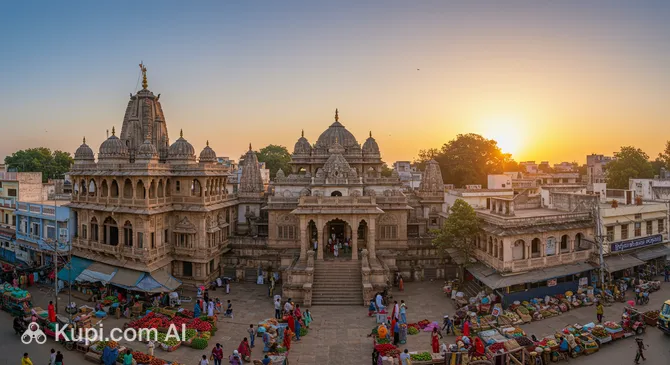
Nadiad is a dynamic industrial and administrative hub located in the heart of the state of Gujarat in India. The city holds a strategic position between the major metropolises of Ahmedabad and Mumbai, serving as an important transport node. With a population of over 225,000, it retains the atmosphere of a traditional Indian city where industrial rhythm harmoniously coexists with deep spirituality.
Nadiad. Illustration.
Source: Kupi.com AI
The city is famous for its rich historical heritage: it was here that Sardar Vallabhbhai Patel, an outstanding politician and one of the founding fathers of modern India, was born. Nadiad is also known as an important center of literature and education in the region, which earned it the respectful nickname "Sakshar Nagari" (City of Culture and Literacy) in the past.
For travelers, Nadiad reveals itself through its majestic temples, such as Santram Mandir, and authentic bazaars. This place is ideal for those who want to see the real, non-touristy India, experience the hospitality of the locals, and immerse themselves in the history of the country's struggle for independence. A visit to Nadiad will be an excellent addition to any itinerary through the state of Gujarat.
Weather Overview
The climate of Nadiad is characterized by a distinct tropical nature with three main seasons. Summer here can be very hot: in April and May, temperatures often reach +40°C and above, which, combined with dry air, requires special care and plenty of hydration from travelers. More detailed information can be found on the page dedicated to weather in the city.
From June to September, monsoons arrive in the region. This period is characterized by high humidity and heavy rainfall, peaking in July and August (over 260 mm of precipitation per month). The rains bring long-awaited coolness but can complicate travel due to flooding in the low-lying plains of Gujarat.
The most favorable time to visit the city is the winter period from November to February. During this time, mild and dry weather sets in, with average temperatures around +20°C...+25°C during the day and cool nights (down to +14°C). Expect warm sunny skies and a near-total absence of precipitation, making winter the ideal season for exploring temples and long walks.
Average monthly temperature
Average monthly precipitation
Interesting Facts
Nadiad is a city with a fascinating past and unique features that make it an important point on the map of Gujarat. Here are a few interesting facts:
Birthplace of the "Iron Man": Sardar Vallabhbhai Patel, the first Deputy Prime Minister of India who played a key role in the unification of the country, was born in Nadiad in 1875.
Philosophical Heritage: In 1895, the saint and philosopher Shrimad Rajchandra wrote his famous spiritual treatise "Shri Atmasiddhi Shastra" here in just an hour and a half; a memorial now stands at the site of this event.
Center of the "White Revolution":Verghese Kurien, known as the "Father of the White Revolution" in India, spent his final days in this city. Thanks to his efforts, the country became the largest milk producer in the world.
Changing Names: Over its long history, the city has changed names several times — in ancient times it was known as Natapadra or Natpur, and later it was mentioned as Nandgram.
Charitable Phenomenon: The Santram Mandir temple is famous across the country for its unique charity system, providing free food and medical aid to thousands of needy people daily.
How to Get There
Nadiad boasts excellent transport accessibility, being a vital link in Gujarat's transportation network. Although the city does not have its own airport, its proximity to the region's major air hubs makes traveling here relatively easy. You can learn more about logistics and plan your route on the page describing how to get to the city.
The nearest international airport is Sardar Vallabhbhai Patel International Airport in Ahmedabad (AMD), located approximately 60–70 kilometers away. Vadodara Airport (BDQ) is also an hour's drive away. From both airports, Nadiad can be easily reached by taxi, intercity bus, or train, taking between one and a half to two hours depending on traffic.
Railway transport is the most popular way to reach the city. Nadiad Junction is a major hub on the busy Ahmedabad – Mumbai line. Almost all fast and express trains connecting the northern and western regions of India stop here. A train journey from Ahmedabad takes only about 1 hour, making the city convenient to visit even as a day trip.
Station
Passenger traffic
Distance
Ahmedabad Junction railway station
11
46 km
Vadodara junction railway station
9
53 km
Bhavnagar Terminus railway station
3
125 km
Surat railway station
9
164 km
Rajkot junction railway station
8
216 km
For road travelers, Nadiad is accessible via modern national expressways. State and private buses run regularly from neighboring cities. Note that during peak hours, congestion is possible on city approaches and main highways, so it is recommended to allow extra travel time.
Main Attractions
Although Nadiad is primarily an industrial center, it hides several significant spiritual and historical treasures. The main point of attraction for both locals and pilgrims is the Santram Mandir. It is not just a religious site but a center for charity and social life; it becomes particularly crowded and atmospheric during full moon days when solemn ceremonies are held.
Another architectural gem of the city is Mai Mandir — a majestic temple dedicated to the Divine Mother. History buffs should visit the old Swaminarayan Temple, built back in 1824, which impresses with its fine craftsmanship and traditional construction style. In addition to the temples, the city has preserved historical gates, such as Marda Darwaja and Amadavdi Darwaja, which once served as the main entrances to the old city.
For those interested in philosophy and literature, the Shri Atmasiddhishatra Rachnabhumi memorial is an important spot. This is where the great saint and philosopher Shrimad Rajchandra created his famous treatise. Visiting these sites allows for a deeper understanding of the region's cultural code and a chance to experience traditions carefully preserved by the people of Nadiad for centuries.
Local Cuisine
A gastronomic journey through Nadiad is an introduction to classic Gujarati cuisine, which is famous for its vegetarian variety and unique combination of sweet, spicy, and salty flavors. The staple diet of the locals is the traditional thali — a complete meal including daal (lentil soup), several types of vegetable sabzi, fresh chapattis, rice, and piquant sauces.
Be sure to try local specialties and street snacks like fafda (a crunchy chickpea flour snack) and ganthodia. Nadiad is also known for its sweets and chaats (savory snacks), which are best sampled at the markets in the city center. Favorite drinks remain fragrant masala tea with spices, refreshing lassi, and freshly squeezed juices.
Food culture here is closely linked to temple traditions. Many pilgrims and tourists prefer to dine at establishments near Santram Mandir, which serve simple but incredibly tasty and authentic food. The city's restaurants are mostly cozy family-run spots where recipes are passed down through generations, creating the unique taste of home-style Indian cooking.
Travel Tips
Preparing for your trip to Nadiad will help make your journey as comfortable and safe as possible. Use these practical tips to get better acquainted with the city:
Clothing and Dress Code: Choose clothes made of light natural fabrics (cotton, linen). When visiting temples like Santram Mandir, be sure to cover your shoulders and knees, and always remove your shoes before entering.
Local Transport: The best way to get around is by auto-rickshaws. They are cheap and fast, but always agree on the fare in advance to avoid misunderstandings.
Finance: It is preferable to carry cash in rupees in Nadiad. While major stores may accept cards, you will need small bills for local markets and rickshaws.
Health: Drink only bottled water from recognized brands. Pharmacies are easy to find in the city center, but it's better to bring any specific medications with you.
Communication: The primary language is Gujarati, but many understand Hindi. English is spoken in hotels and larger establishments. It's best to buy a SIM card at official mobile shops in the center.
Etiquette: Greet people with the traditional "Namaste" gesture. Avoid using your left hand to pass money or food, as it is considered impolite.
What to Avoid: Avoid visiting peripheral slum areas, especially after dark, to minimize the risk of theft. It is also not recommended to photograph people in temples without their permission.
Seasonality: During the monsoon period (July-August), heavy rains and flooding on the plains are possible, so always check the weather forecast before heading out.
Following these simple rules will allow you to fully enjoy the hospitality of Nadiad and discover its authentic culture.
Entertainment & Nightlife
The entertainment scene in Nadiad is predominantly traditional and family-oriented. You won't find noisy nightclubs or bars here, as city life follows a quiet rhythm with an emphasis on religious and cultural events. The main areas for evening walks and social gatherings for locals are the squares around major temples and market districts, which come alive after the daytime heat subsides.
For youth and fans of modern leisure, the main points of attraction are local cinemas showing the latest Bollywood releases and small cafes in the city center. Most residents prefer to head to neighboring Ahmedabad, just an hour away, for larger-scale entertainment such as major shopping malls, concert halls, or evening restaurants.
In Nadiad itself, the most vivid impressions can be gained during local festivals and fairs. Events in ashrams and celebrations at the Santram Mandir temple, accompanied by folk singing and cultural programs, are particularly interesting. Safety in the central districts is good, and it's best to use official taxis or rickshaws for travel in the evening.
Parks & Museums
Given Nadiad's dense urban development, park areas and museums are quite modest; however, the city offers several cozy spots for quiet relaxation. In the absence of large state museums, their role is often played by memorial complexes and historical landmarks. For instance, the memorial at the ashram where "Shri Atmasiddhi" was written serves as an important cultural site preserving the memory of the city's spiritual heritage.
Nadiad's green zones are mainly concentrated around temple complexes and private ashrams. The gardens at Santram Mandir and Mai Mandir are islands of silence where one can take a break from the city noise and bustle. These areas are kept clean and orderly, offering visitors a chance to enjoy the cool shade of trees.
For lovers of large-scale park walks and professional museums, Nadiad residents usually recommend heading to neighboring Ahmedabad, as the city's industrial character leaves little room for extensive recreational zones. Nevertheless, walking along the city's historical gates and visiting local spiritual centers compensates for the lack of traditional parks with an atmosphere of authentic Indian antiquity.
Getting Around
The public transport system in Nadiad is primarily represented by municipal buses, auto-rickshaws, and an extensive railway network. Municipal buses connect the city's main districts and industrial zones, but auto-rickshaws remain the most convenient and fastest way for tourists to get around. They are maneuverable, available everywhere, and allow for easy navigation through traffic jams on narrow central streets.
The Nadiad Junction railway station serves as the main transport hub, handling most suburban and intercity travel. Bus fares are paid in cash to the conductor, while for rickshaws, it is recommended to agree on the fare in advance or ask to turn on the meter, if available.
Walking is quite suitable for moving within the central historical quarters, although one should be prepared for the chaotic traffic and dust characteristic of India's industrial cities. Car or bicycle rentals are not very developed in Nadiad, so it is best to hire a taxi through specialized agencies or use aggregator apps, if available in the region, for trips outside the city.
Accommodation
Nadiad's hotel infrastructure is primarily oriented toward transit travelers, business people, and pilgrims. Mid-range hotels and budget guesthouses (lodges) predominate, offering a basic set of amenities for a comfortable overnight stay without excessive luxury.
The city center, especially the blocks near Santram Mandir and the railway station, is considered the most convenient area to stay. Choosing accommodation in these locations provides quick access to major transport hubs and local markets. For those planning a long stay, apartments are available in the city, often rented by industrial workers and expats.
Accommodation prices in Nadiad remain very affordable compared to major metropolises. It is recommended to book rooms in advance if your trip coincides with major religious holidays or festivals when the flow of pilgrims increases significantly. At other times, finding a free room in local hotels is usually not difficult.
Nearby Cities
Nadiad serves as an excellent starting point for exploring the central part of the state of Gujarat, offering travelers easy access to neighboring cities with unique atmospheres. Just 16 kilometers away is the city of Anand, known worldwide as the dairy capital of India and the headquarters of the famous Amul cooperative; here you can visit interesting museums dedicated to the history of the food industry.
For those seeking historical experiences, Mahmedabad, located just 18 kilometers away, is an interesting destination. This small town attracts tourists with its monuments of Islamic architecture and ancient stepwells. Also within a short drive are Petlad and Umreth, each possessing its own unique character and ancient temple complexes.
Exploring the surroundings of Nadiad allows you to see different facets of life in Gujarat: from modern industrial and agricultural achievements to quiet corners with centuries-old history. Good rail connections and a network of roads make it possible to plan engaging day trips without undue haste.
Shopping & Souvenirs
Shopping in Nadiad is primarily an immersion into the atmosphere of traditional Indian bazaars. You won't find giant shopping malls with glass windows here, but you will be able to find unique locally made goods. Trade is concentrated in the narrow streets of the old city and market squares around the central temples.
The city is famous for its textiles and quality fabrics, which can be purchased at local markets at very favorable prices. Nadiad is also an excellent place to buy spices, Indian sweets, and traditional souvenirs. Visitors to Santram Mandir often bring back religious items and products made by local artisans, which are sold in nearby shops.
Shops are usually open from morning until late evening, though many may close for a break during the hottest daytime hours. At most market outlets, only cash is accepted, so it's worth making sure you have small change in advance. For those who need modern shopping with global brands, the best option is a trip to the shopping malls of Ahmedabad.