Support

Nanjangud

About

Nanjangud is a vibrant city located in the south of India, in the state of Karnataka. It is nestled on the banks of the scenic Kabini River, approximately 23 kilometers south of the famous city of Mysore. It is a place where ancient traditions and natural beauty are harmoniously intertwined, creating an atmosphere of peace and tranquility.
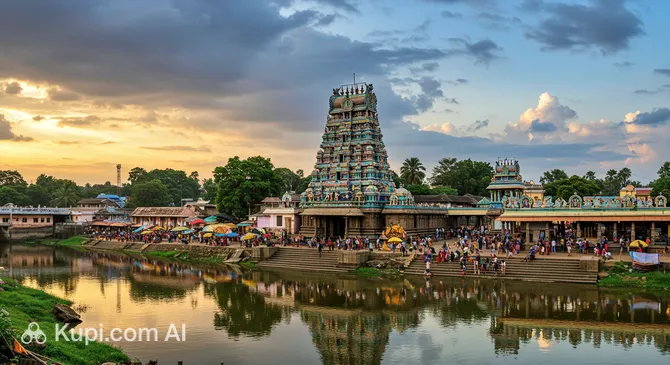
Nanjangud. Illustration.
Source: Kupi.com AI

With a population exceeding 60,000, Nanjangud remains a fairly compact and welcoming city. It holds significant cultural and religious importance, being one of the key pilgrimage centers in the region. This attracts not only locals but also travelers seeking to experience authentic Indian culture.

The crown jewel and pride of Nanjangud is the magnificent Nanjundeshwara Temple, dedicated to Lord Shiva. This ancient temple complex, adorned with intricate carvings and numerous sculptures, is considered one of the most revered in South India. The air here is filled with the scent of incense, the ringing of bells, and the sounds of sacred mantras, creating a truly unforgettable experience.

Nanjangud is an excellent choice for those seeking an authentic South Indian experience away from the hustle and bustle of major metropolises. Here, you can leisurely stroll through the streets, enjoy local cuisine, and immerse yourself in the atmosphere of traditional Indian hospitality. Visit Nanjangud to discover its unique charm and spiritual heritage.

You can find more interesting facts on the history of Nanjangud page.

Weather Overview

In Nanjangud, a warm climate awaits you all year round. Expect a hot and mostly dry period from January to April, when daytime temperatures, especially in March and April, can exceed 32-33°C, with minimal or no rainfall. From May to October, a period with more frequent precipitation begins; July stands out as the month with the highest number of rainy days (averaging 26 days), however, the rains themselves are most often very light, and the total amount of precipitation in July, for example, is about 7 mm. Even during this season, the temperature remains comfortably warm, with average values typically in the range of 23-27°C. To plan your trip in detail, we recommend checking out the in-depth information on the climate and weather in Nanjangud.

Average monthly temperature

Average monthly precipitation

Interesting Facts

Beyond its famous temples, Nanjangud holds many surprising stories and features that make it a truly unique place. Here are just a few interesting facts that will help you see this city in a new light:

  • Nanjangud is often called the "Kashi of the South." This is due to the deep belief of locals that visiting the famous Nanjundeshwara Temple brings as many spiritual benefits as a pilgrimage to the sacred city of Varanasi (Kashi) in northern India.

  • According to ancient legend, it was in these parts that Lord Shiva was healed from the poison he drank to save the world. It is believed that the waters of the Kabini River, which flows through Nanjangud, possess healing properties, and many pilgrims perform ritual ablutions here in hopes of healing and purification.

  • The city is famous for its traditional factories producing incense and aromatic sticks. The fragrances created in Nanjangud are highly valued across India and are widely used in various religious ceremonies and rituals.

  • Nanjangud is the birthplace or workplace of many talented individuals, including famous writers and poets who wrote in the Kannada language, as well as skilled temple sculptors. The works of these masters adorn numerous temples not only in the city but throughout the state of Karnataka.

How to Get There

When planning a trip to this spiritual center of Karnataka, it is important to think through the logistics in advance, as there is no airport in the city itself. You can find out more about how to get to Nanjangud by studying various routes, but most often tourists choose a combined journey via nearby major cities.

Since Nanjangud lacks its own airport, travelers usually fly into one of the nearby transport hubs. The most popular option, especially for international flights, is Kempegowda International Airport (IATA: BLR). It is located in Bengaluru, about 164 km from Nanjangud. It is a major aviation hub with massive passenger traffic, receiving flights from all over the world. The journey from here by taxi or bus takes about 4.5 hours.

An alternative option is Coimbatore International Airport (IATA: CJB), located in the city of Coimbatore. It is slightly closer—at a distance of about 127 km. This is a medium-sized airport, convenient for those traveling on domestic flights or from some international destinations. A car trip from here to Nanjangud takes approximately 3.5 hours.

For clarity, here is summary information on the main airports used to reach the city:

AirportPassenger trafficDistance
Kannur International Airport1.3 mln125 km
Coimbatore International Airport3.3 mln127 km
Calicut International Airport3.7 mln134 km
Salem130 132156 km
Kempegowda International Airport41.9 mln164 km

As for rail connections, Nanjangud has its own railway station — Nanjangud Town. It is not a major hub but has good connections with the nearby city of Mysore (Mysuru), which is only 20-25 km away. Many tourists prefer to take a train to the larger Mysore Junction station in Mysore, where express trains arrive from Bengaluru, Chennai, and other metropolises, and then transfer to a local train, bus, or taxi to Nanjangud. The journey from Mysore takes less than an hour.

The city is also easily accessible by bus. State-run and private buses regularly ply between Nanjangud and Mysore, and also connect it with other cities in Karnataka and the neighboring state of Tamil Nadu. A car trip will offer you views of South India's picturesque rural landscapes.

Main Attractions

Nanjangud, often referred to as "Dakshina Kashi" (Southern Kashi), attracts pilgrims and tourists with its rich spiritual atmosphere and significant shrines. The city offers a unique immersion into Hindu culture and traditions.

The crown jewel of Nanjangud is undoubtedly the magnificent Srikanteshwara Temple (also known as the Nanjundeshwara Temple). This ancient temple is dedicated to Lord Shiva and is one of the largest in the state of Karnataka. Visitors are struck by its impressive Dravidian-style architecture, especially the high nine-story gopuram (gateway tower) decorated with many colorful sculptures. Inside the temple, you can see numerous shrines, intricately carved columns, and statues of deities. This site is not only an important pilgrimage center but also a wonderful example of ancient architecture.

Inextricably linked to the temple and the spiritual life of the city is the Kapila River (a tributary of the Kaveri), on whose picturesque banks the Srikanteshwara Temple is located. The river is considered sacred, and many believers perform ritual ablutions in its waters, especially during temple festivals. Walking along the river or simply observing the rituals on the ghats (steps leading to the water) allows for a deeper feeling of the atmosphere of this place.

Another important site for pilgrims and those interested in Hindu mythology is Parashurama Kshetra. It is believed that this sacred site is sanctified by the presence of Parashurama, one of Vishnu's avatars, who, according to legends, performed penance here. This site gives Nanjangud additional spiritual depth and attracts those seeking to visit iconic places associated with ancient Indian epics.

Local Cuisine

A gastronomic journey to Nanjangud is an immersion into the authentic flavors of South India, where traditions and fresh local produce create unique dishes. The city's main culinary pride is undoubtedly the famous "Nanjangud Banana" (Nanjangud Rasabalehannu). This unique variety, grown only in the vicinity of Nanjangud, is famous for its special aroma and taste, and it is definitely worth trying during your visit.

The foundation of local cuisine consists of traditional South Indian dishes. Be sure to try dosa – thin, crispy pancakes made from rice flour, served with aromatic lentil stew (sambar) and a variety of chutneys. No less popular are idli – soft steamed rice cakes, perfect for breakfast. Of course, don't miss the chance to taste dishes using the local banana – it is added to both sweet desserts and savory curries, giving them a special local character.

To refresh yourself, try traditional Indian drinks. A classic filter coffee (kaapi) with milk and sugar will give you a boost of energy, while sweet or salty lassi – a yogurt-based drink – is a great thirst quencher on a hot day. Freshly squeezed juices from local fruits are also widely available and make a great addition to any meal.

You can get acquainted with Nanjangud's cuisine in numerous local cafes and eateries where food is prepared simply, tastily, and home-style. Street food also plays an important role, offering quick and aromatic snacks. A special atmosphere prevails at farmers' markets, where you can find the freshest spices, local honey, jaggery (unrefined palm sugar), and traditional sweets. If your trip coincides with one of the temple festivals, you will experience true gastronomic festivals, when the streets are filled with the aromas of freshly prepared dishes and locals happily share their culinary creations.

Travel Tips

Planning a trip to Nanjangud? This ancient city, known for its majestic temple and spiritual atmosphere, is located in the Indian state of Karnataka and promises a unique experience. To make your journey as comfortable and memorable as possible, we have prepared some practical tips.

  1. Clothing and Essentials: Nanjangud has a tropical climate, so choose light, breathable clothing made of cotton or linen. For visiting the Srikanteshwara Temple (also known as the Nanjundeshwara Temple) and other religious sites, modest clothing covering the shoulders and knees is mandatory. Don't forget comfortable shoes for long walks, sunscreen, a hat, and a universal power adapter, as India uses Type C, D, and M sockets.
  2. City Transport: The main modes of transport in Nanjangud are local buses and auto-rickshaws – the most authentic and affordable way to get around. Taxis are also available, but it's better to agree on the price in advance. Ride-hailing apps like Ola or Uber may be less common directly in the city but might work in larger nearby centers. Car rental is possible, but keep in mind that traffic in India can be chaotic and requires experience.
  3. Finances: The official currency is the Indian Rupee (INR). You can exchange money at banks or licensed exchange offices; avoid street money changers. Credit and debit cards (Visa, Mastercard) are accepted in large hotels and some shops, but for daily expenses, market purchases, and auto-rickshaw fares, cash is necessary. There are ATMs in the city, but it's better to check with your bank in advance about withdrawal conditions abroad. Tipping is not always mandatory but is appreciated in restaurants (5-10%) and for small services.
  4. Health and Safety: There are pharmacies in Nanjangud where you can buy basic medications. For serious medical assistance, it is better to go to clinics in larger cities like Mysore. Drink only bottled or boiled water. Nanjangud is generally a safe city, especially in pilgrimage areas, but always follow general precautions: watch your belongings, avoid displaying expensive jewelry, and don't walk alone in poorly lit areas late at night.
  5. Communication: In the state of Karnataka, the official language is Kannada. Hindi is also understood by many. English is common in the tourism sector, in hotels, and among the educated population. Learning a few phrases in Kannada, such as "Namaskara" (Hello) or "Dhanyavadagalu" (Thank you), will be a nice gesture for the locals. A local SIM card (e.g., Airtel, Jio, Vi) can be bought at official mobile stores by presenting your passport and visa. Wi-Fi is available in most hotels and some cafes.
  6. Local Etiquette: Greet people with "Namaskara" (or "Namaste") while placing your palms together at chest level. It is customary to remove your shoes before entering temples and homes. Use your right hand for eating, handing over money, and important items, as the left hand is traditionally considered unclean. Show respect for local customs and traditions, especially in religious places.
  7. What to Avoid: It is strictly recommended not to point your feet at people, images of deities, or sacred objects – this is considered offensive. Also, avoid public displays of affection and do not take photos of people without their permission, especially during religious ceremonies.
  8. Nanjangud's Specialty: The city is famous for its ancient Srikanteshwara Temple, dedicated to Lord Shiva, and is known as "Dakshina Kashi" (Southern Kashi). Try to visit the temple during the morning or evening puja (service) for a deeper immersion into the atmosphere. If your trip coincides with major temple festivals like Mahashivaratri or Rathotsava (chariot festival), be prepared for large crowds of pilgrims, but it is also a unique opportunity to see vibrant traditions.

We hope these tips help you better prepare for your trip and fully enjoy your stay in Nanjangud. This is a place with a rich history and spirituality that will undoubtedly leave you with bright memories. Enjoy your journey through India!

Entertainment & Nightlife

Nanjangud, primarily known as an important spiritual center in India, offers its guests a calm and peaceful atmosphere that extends into the evening hours. Here, you won't find loud night clubs or quarters filled with bars open until dawn as you would in major metropolises. Evening entertainment in Nanjangud is more conducive to leisurely relaxation and immersion in local culture.

Since Nanjangud is first and foremost a spiritual hub rather than a tourist resort with active nightlife, the choice of specialized nightclubs or lively bars is quite limited. It is difficult to single out specific streets or districts where nightlife is booming. Evening activities mainly center around dining at local restaurants and cafes, where you can sample authentic South Indian cuisine. Many of these establishments are hospitable and open late into the evening, offering a quiet, often family-oriented atmosphere. The dress code is generally casual and relaxed. While you won't find a wide variety of typical nightlife venues, some small local restaurants or guesthouses may offer drinks in an informal setting.

When planning your evening, it is better to aim for an earlier dinner time, as many establishments may close earlier than in larger cities. Average prices in Nanjangud's restaurants are usually affordable. For getting around the city in the evening, you can use auto-rickshaws. It is highly recommended to always agree on the fare in advance, before getting in. Nanjangud is considered a relatively safe city for walking; however, as with any place, standard precautions should be taken, especially after dark and in less busy areas. Taxis via mobile apps may have limited availability, so it's best to check available options locally or ask for transport assistance at your hotel.

As for daytime entertainment, the main magnet for visitors to Nanjangud is its famous temple, which attracts pilgrims and tourists with its architecture and spiritual atmosphere. It's also worth strolling through the local markets to feel the authentic rhythm of the city and perhaps purchase souvenirs or local products. Although Nanjangud does not offer tourists large commercial theaters, modern museums, or major amusement parks, its charm lies in its unique spiritual atmosphere, the opportunity to touch ancient traditions, and a quiet pace of life far from the bustle of big cities.

Parks & Museums

Nanjangud, often called "Dakshina Kashi" (Southern Kashi), invites travelers to explore its rich spiritual heritage and tranquil natural beauty. The city offers a unique combination of ancient shrines and picturesque river landscapes, making it attractive for pilgrims and curious tourists alike.

While Nanjangud is not famous for large formal city parks, its natural charm is revealed along the banks of the sacred Kapila River (also known as the Kabini). These riverside areas offer peaceful spots for walking, where you can enjoy fresh air and silence. The city's surroundings will also delight nature lovers with scenic rural landscapes, giving a sense of harmony. These natural green corners are perfect for leisurely relaxation and contemplation.

The cultural heart and main historical attraction of Nanjangud is the majestic Srikanteshwara Temple (or Nanjundeshwara Temple). This ancient temple, dedicated to Lord Shiva, impresses with its Dravidian architecture, intricate carvings, high gopurams (gate towers), and numerous shrines. For tourists, the temple is interesting not only as an object of worship but also as a kind of open-air museum, preserving centuries-old traditions, art, and the history of the region. Although there may not be large specialized museums in the city, the temple complex itself is a treasury of cultural heritage, where every stone tells its own story.

In addition to the main temple, it is worth exploring other significant sites that will complement your understanding of Nanjangud's culture. For example, Parashurama Kshetra, located nearby, is another important religious site with interesting mythology and a calm atmosphere. For authentic impressions and to get to know the daily life of the city, take a walk through the local markets. Here you can see the trade in fresh produce, flowers for offerings, and products of local craftsmen, which will allow you to feel the character of this ancient city more deeply.

Getting Around

Public transport in Nanjangud is mainly represented by buses and auto-rickshaws, which are the most common ways to get around the city and its surroundings. The city's transport system is adapted to the needs of the local population and offers affordable options for travel.

The main form of public transport is city and suburban buses. The route network connects different parts of Nanjangud and links the city with nearby settlements. Buses are generally owned by the state transport corporation or private operators. Fares are usually paid in cash directly to the conductor or driver upon boarding. The ticket price depends on the distance. Specialized tourist passes or transport cards for short-term trips are generally not provided in Nanjangud.

Auto-rickshaws are a popular and flexible alternative to buses, especially for short trips or for reaching places where buses do not go. They are easy to find throughout the city. It is important to agree on the fare with the driver in advance, before starting the journey, as not all auto-rickshaws are equipped with meters, or drivers may not use them for tourists. This will help avoid misunderstandings upon arrival.

For more comfortable or long-distance trips, you can use the services of local taxis. They can be found at taxi stands or ordered by phone through local services. Taxi-hailing apps common in large cities may have a limited presence in Nanjangud, so it's best to rely on traditional ways of calling a car. Bicycle rentals and car-sharing are poorly developed or absent in the city.

Practical tips for tourists: buses usually run from early morning until late evening, but schedules may not always be precise, especially on less popular routes. Bus tickets are purchased on the spot. For auto-rickshaw rides, always have small bills with you for convenience. Plan your movements in advance, especially if you need to be somewhere by a specific time.

Accommodation

When planning a trip to Nanjangud, you will find a variety of accommodation options to suit different budgets and preferences. The city, being an important pilgrimage center, offers both modest and more comfortable living conditions.

Various types of housing are available in Nanjangud: from budget guesthouses and lodges aimed at pilgrims and thrifty travelers, to mid-range hotels offering more comfort and a wider range of services. While luxury resorts are less common here, you can find clean and cozy places to stay. Some travelers might also consider renting rooms or apartments if they plan for a longer stay.

Most tourists prefer to stay in areas located in close proximity to the city's main attraction – the Srikanteshwara Temple (also known as the Nanjundeshwara Temple). Staying here provides easy access to the temple and allows you to immerse yourself in the atmosphere of this sacred site. Areas near the Nanjangud bus station are also considered convenient for staying, as they facilitate movement around the city and its surroundings.

Although there are no specific hotel examples mentioned in the provided data, the city typically has standard hotels offering comfortable accommodation. The choice depends on your preferences for service level and location.

Booking Tip: It is highly recommended to book accommodation in advance, especially if your trip coincides with major religious festivals (such as the annual Dodda Jathre temple festival) or the peak pilgrimage season. During these periods, the demand for housing increases significantly.

The price range for accommodation in Nanjangud varies from very budget-friendly to moderate. You can book a suitable option through popular online platforms for travelers or by contacting hotels and guesthouses directly by phone or email, if such information is available.

Nearby Cities

For those looking to explore the surrounding area, Nanjangud serves as an excellent starting point for day trips to several interesting nearby locations:

CityPopulationDistance
Hullahalli10 92613 km
Mysore1 189 00020 km
Tirumakudal Narsipur13 10327 km
Kagglipura9 11729 km
Sosale9 32429 km

These nearby destinations provide a glimpse into the diverse culture and landscapes of the region.

Shopping & Souvenirs

Shopping in Nanjangud primarily reflects its status as an important pilgrimage center. Here you won't find the huge shopping complexes typical of megacities, but you can immerse yourself in the atmosphere of traditional Indian trade. The city is famous for items related to religious rituals, as well as local crafts and products.

The main shopping activity in Nanjangud is concentrated around the famous Srikanteshwara Temple. On the streets adjacent to the temple and on the main road passing through the city, there are many small shops and stalls. Here you can find both essentials and specific items of interest to pilgrims and tourists.

In Nanjangud, there are no large modern shopping centers in the usual sense. Shopping here is more traditional, represented by individual stores and market rows rather than big malls. For a wider selection of branded goods and modern shopping complexes, it is better to head to larger cities in Karnataka, such as Mysore.

Although Nanjangud may not have one large central market like some other Indian cities, you will surely find lively street markets and rows of vendors. Trade is especially active during festivals and religious holidays. At such markets, you can buy fresh fruits, vegetables, spices, flowers for offerings, as well as inexpensive clothing and household items. Look for small clusters of stalls, especially near the temple complex.

As souvenirs from Nanjangud, it is worth bringing back items that reflect its spiritual atmosphere and local traditions. Popular choices include images of deities, ritual supplies (e.g., incense, lamps), and small figurines. You can also look for traditional Indian fabrics, shawls, sandalwood products (though for authentic ones it's better to go to Mysore, there may be simpler options here), as well as local sweets and snacks. Sometimes you can find handmade products by local artisans.

Most shops in Nanjangud, as in India in general, are usually open from the morning (around 10:00-11:00) until the evening (19:00-21:00), often with a lunch break in the afternoon. Small stalls may have more flexible schedules. Cash (Indian Rupees) remains the main method of payment, especially in markets and small shops. Some larger stores may accept bank cards and UPI (the local instant payment system), but it's always best to have enough cash with you.

The Tax Free system for tourists in India is not as common or simple as in some other countries, especially for everyday purchases in small towns like Nanjangud. The possibility of a VAT (GST) refund is most often provided when purchasing high-value goods in large, government-authorized stores (emporiums) in big cities or in Duty-Free shops at international airports. For ordinary souvenirs and goods purchased in Nanjangud, such an option will most likely be unavailable.

Reached the end of the page?

That means the route is fully explored