Support

Jagannath Temple

About

The Jagannath Temple in Puri is not just a landmark, but one of the most sacred places for millions of believers in India and around the world. This grand temple complex, dedicated to the deity Jagannath—a form of Krishna—rises to 65 meters and is not only an outstanding architectural masterpiece but also a vital spiritual center. The temple is considered one of the four major pilgrimage sites in Hinduism (Char Dham), which believers strive to visit during their lifetime.
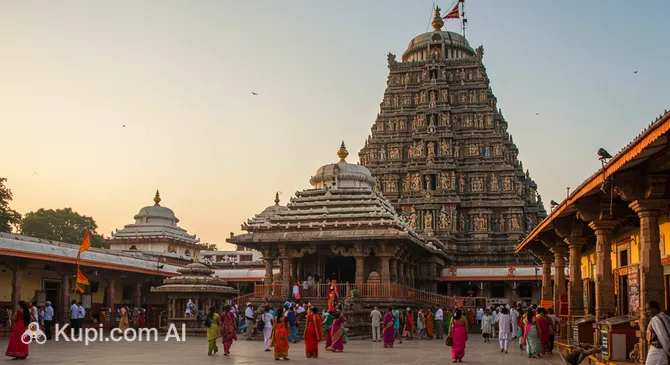
Jagannath Temple. Illustration.
Source: Kupi.com AI

Traveller photos:

The significance of this place is hard to overstate. The shrine plays a special role for followers of Gaudiya Vaishnavism, as the founder of this tradition, Chaitanya Mahaprabhu, was a devoted worshipper of Jagannath and spent the last 16 years of his life in Puri. Every year, the temple organizes the grand chariot festival, Ratha Yatra, attracting millions of pilgrims who pull enormous, richly decorated chariots carrying the deities through the city streets.

The atmosphere here is permeated with deep spirituality. According to local beliefs, being in Puri is equivalent to visiting the spiritual world, and any food offered in this sacred city is considered prasadam—sanctified food and the Lord's mercy. A visit to the Jagannath Temple offers a unique opportunity to touch ancient traditions and feel the incredible energy of one of the planet's key religious centers.

Contacts

For up-to-date information on visiting rules, ritual timings, and potential donations, it is recommended to consult official sources. The temple's primary contact details, including its phone number and official website, are available for inquiries.

How to contactContact
AddressPuri, Odisha 752001, India
Phone+91 6752 222 002
Websitewww.shreejagannatha.in

What to Do

Visiting the Jagannath Temple offers a unique experience of immersion into India's living spiritual traditions. The main event attracting thousands of pilgrims and tourists is the annual Ratha Yatra, or "Festival of Chariots." During this colorful event, giant, richly decorated chariots carrying the wooden deities of Jagannath, his brother Baladeva, and sister Subhadra are ceremoniously paraded down the main street of Puri. This spectacular procession is a rare opportunity for everyone to see the temple deities and be part of one of the most impressive religious festivals in the world.

Even if your trip doesn't coincide with the festival, the temple offers many reasons to visit. Visitors can participate in or observe daily rituals and ceremonies, receive darshan (a sacred viewing of the deities), and taste the famous temple prasadam—sanctified food prepared in one of the world's largest kitchens. However, it is important to know that entry into the main temple complex and its sanctums is strictly permitted only to followers of Hinduism. Nevertheless, international guests can experience the spiritual atmosphere by walking around the massive walls of the complex or viewing the inner courtyard from the roof of the neighboring Raghunandan Library.

Beyond the religious aspect, the Jagannath Temple is of great interest to art and history enthusiasts. Its Kalinga-style architecture, the majestic 65-meter tower, stone carvings, and numerous sculptures leave an indelible impression. Exploring the details of the outer walls and gates, decorated with images from Vedic texts, allows you to touch the centuries-old heritage and craftsmanship of ancient architects. Thus, every visitor, regardless of faith, will find something fascinating in this amazing place.

Getting There

Reaching the Jagannath Temple is quite simple, as the city of Puri is well-connected to other regions of India. The nearest airport is located in Bhubaneswar (BBI), approximately 50-60 kilometers from Puri. You can travel from the airport to the city by taxi or bus; the journey takes about two hours. Additionally, Puri is a major railway station, with trains arriving from large cities like Delhi, Kolkata, and Chennai, making rail travel a convenient and popular choice.

Within the city of Puri itself, the temple serves as the main landmark, as the entire urban layout historically developed around it. For short distances, you can easily find an auto-rickshaw or taxi to take you quickly to the temple complex. If you are staying in the central part of the city, walking to the temple is an excellent opportunity to experience the unique atmosphere of this ancient pilgrimage center.

Nearest city: Puri

History & Facts

The history of the Jagannath Temple dates back thousands of years and is shrouded in numerous legends. Although the current grand structure was erected by King Ananga Bhima Deva about 800 years ago, it stands on the site of an even more ancient shrine. According to legend, the very first temple, known as Niladri ("Blue Hill"), was built by the legendary King Indradyumna approximately 4000 years ago. It is believed that this sacred site was chosen for a reason—it is where, according to tradition, the body of Lord Krishna was cremated, giving the place profound spiritual significance.

The construction of the original temple was a truly epic event. King Indradyumna not only founded the city of Ramakshetra Puri at the foot of the Nila-Kandara hill but also organized massive efforts to bring stones from the distant lands of Baula-mala to build the sanctuary. Thus, the history of the temple is inextricably linked with the birth of the city of Puri itself, which was intended from the start as an abode for the "Lord of the Universe"—Jagannath. For centuries, this site has maintained its status as one of the most important pilgrimage centers in India.

Notably, the influence of the Jagannath Temple has extended far beyond India. This sacred place inspired the creation of similar temples in other parts of the world. For example, the Shri Jagannath Puri Temple was built in South Africa, founded by an Indian Brahmin named Shiskishan Maharaj, who emigrated there in 1895. This fact highlights that the Jagannath Temple is not only a religious shrine but also a powerful symbol of cultural and spiritual heritage, uniting followers worldwide.

Time Needed

When planning a visit to the Jagannath Temple, you should consider the depth of immersion you are looking for. For a general introduction to the shrine, to see the main buildings from the outside, feel the atmosphere, and observe life in one of the key pilgrimage centers of Puri, 2–3 hours is usually enough. During this time, you can walk around the perimeter of the complex and perhaps observe some rituals from vantage points allowed for non-Hindus.

If your goal is a deeper immersion into the spiritual life of the temple, it is worth dedicating an entire day. This will allow you to unhurriedly observe the various ceremonies held throughout the day and fully experience the energy of this sacred place. It is especially important to plan your time if your trip coincides with the grand Ratha Yatra festival. Given the scale and duration of this colorful celebration, it is recommended to set aside at least 1–2 days to participate and witness the main events.

Working Hours

The Jagannath Temple in Puri is open to worshippers year-round, but visiting it involves strict rules and restrictions that are crucial to know in advance. According to some reports, visiting hours may be limited, for example, from 10:00 to 12:00 and from 16:00 to 20:00, with Sunday possibly being a day off. Other sources indicate that the temple operates from early morning until late at night. Given the discrepancies in information and the special significance of the site, it is highly recommended to check the current opening hours on-site or through the temple's official communication channels.

The most important aspect for tourists to consider is that entry into the temple complex and its sanctums is strictly prohibited for anyone who does not practice Hinduism, as well as for Hindus of non-Indian origin. This ancient rule is strictly enforced. Nonetheless, visitors to the city have the opportunity to experience the atmosphere of the shrine. You can view the temple's inner courtyard and its architecture from the roof of the neighboring Raghunandan Library, which is typically open to visitors from 9:00 to 13:00 and from 16:00 to 19:00, Monday through Saturday. Advance ticket booking is not required for visiting the temple, as access is determined solely by religious affiliation.

4:30 – 23:30

Nearby

While the Jagannath Temple is undoubtedly the heart and soul of Puri, exploring its surroundings will help you gain a deeper understanding of the multifaceted life of this coastal hub. A stroll through the nearby streets and sites will reveal not only other cultural landmarks but also the daily life bustling outside the sacred complex walls.

In the immediate vicinity of the temple, you will find many interesting attractions—from museums and parks to vibrant markets and beaches. This is a great opportunity to complement your pilgrimage or tourist trip with new experiences, dedicating time to both the spiritual and secular aspects of life in Puri. Below is a list of some nearby places.

NameDistance
Netaji Museum1 km
Reba Beach Resort1.1 km
Puri Beach Market1.3 km
Puri Club1.4 km
Neeladri Beach and Park1.4 km
Mahatma Gandhi Park1.4 km
Mehfil Rooftop Restaurant and Cafe1.6 km

Reached the bottom of the page?

Looks like you know this route inside out