Support

Tulja Bhavani Temple

About

Tulja Bhavani Temple is a revered Hindu temple located in the city of Tuljapur in India. This site is one of the most important religious centers for followers of Goddess Bhavani, also known as the Giver of Life. Built in the 12th century, the temple attracts pilgrims and tourists eager to discover the spiritual heritage of the region.
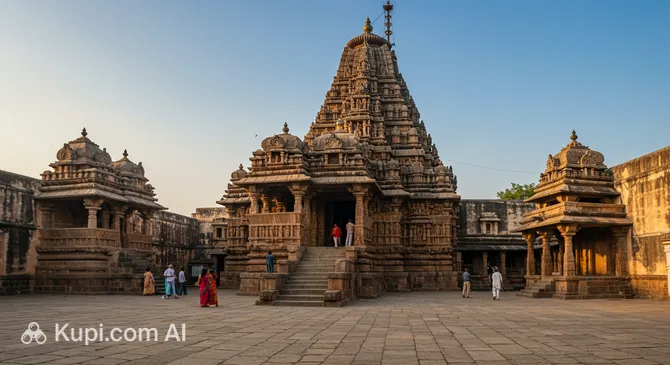
Tulja Bhavani Temple. Illustration.
Source: Kupi.com AI

Traveler photos:

The temple's architectural style is Hemadpanti, which was popular in early Indian architecture. In the center of the sanctuary stands a dagoba (stupa), surrounded by twelve elegant octagonal columns. These columns support the dome, creating a sense of harmony and space. The surrounding passage is covered by a semi-arched vault, which gives the structure integrity and completeness.

A visit to Tulja Bhavani Temple offers a unique opportunity not only to appreciate its architectural features but also to immerse yourself in the atmosphere of ancient rituals and traditions. It is truly a special place where you can feel the spiritual power and cultural richness of India and see a shrine closely linked to the history and beliefs of the local people.

Contacts

To plan your visit, check service schedules, or get other up-to-date information, it is recommended to contact the temple administration directly. The official website shrituljabhavani.org allows you to book darshan (viewing of the deity) and various rituals online, which helps avoid long queues, especially during festival days. Below are the primary contact details.

How to contactContact
Addressnear Pavnara Ganpati, Shukravar Peth, Tuljapur, Maharashtra 413601, India
Phone number+91 2471 242 031
Websiteshrituljabhavani.org

What to Do

Visiting Tulja Bhavani Temple offers guests the opportunity to deeply immerse themselves in the spiritual life of Hinduism. The main activity for many pilgrims is participating in religious ceremonies and worshiping Goddess Bhavani, who is considered an incarnation of the supreme female divine power. The temple is a key pilgrimage site for Hindus, particularly for followers of Shaktism—a tradition that reveres the feminine divine principle. It is a unique chance to witness ancient rituals and feel the special atmosphere of this holy place.

Beyond spiritual practices, visitors should pay attention to the temple's architectural details. A spacious platform, built through donations from devotees, is located in front of and alongside the main entrance. The Chaitya window above the entrance deserves special attention: its inner arch is decorated with patterns of knotted ribbons, reminiscent of the decor in the famous Nasik Caves. The front part of the arch is complemented by delicate floral ornaments that give the temple a finished and sophisticated appearance.

Getting There

There are several ways to reach Tulja Bhavani Temple, but the most convenient route is via the city of Solapur, which serves as the nearest major transport hub. It is located approximately 45 kilometers from Tuljapur. Solapur houses a major railway station receiving trains from many of India's large cities. From Solapur station, you can easily reach the temple by bus or taxi; the trip usually takes about an hour.

For those preferring to travel by air, the nearest major airports are in Pune (about 290 km away) and Aurangabad (about 250 km away). After landing at either airport, a further overland transfer is required. You can rent a car, book a taxi, or use state and private buses that run regularly to Tuljapur. Keep in mind that the drive from the airport will take several hours, so it's wise to plan your time with a buffer.

If you are already in Tuljapur, finding the temple is easy as it is the city's main attraction and heart. Getting around the city is convenient via local motor rickshaws (auto-rickshaws), which can take you to the temple gates from any point. For those staying nearby, a pleasant alternative is a walk, allowing you to better soak in the atmosphere of this holy place.

Nearest city: Tuljapur

History & Facts

Tulja Bhavani Temple boasts a rich and multi-layered history, closely interwoven with the Shaktism tradition of Hinduism. One of the most intriguing features of this site is its architectural transformations. For instance, the central dagoba (stupa) was intentionally altered: its top was removed to transform it into a massive Shiva lingam—a symbol of one of Hinduism's supreme gods. This fact attests to the fusion and interaction of different cults within a single sacred space.

The transformations were not limited to the central stupa. During these changes, the temple's dome was also significantly rebuilt, and some of its columns were damaged—notched or even broken. These details, which might seem like destruction, actually tell the story of how the temple evolved and adapted over centuries, reflecting the changing religious emphases and beliefs of its followers.

Interesting facts also concern Goddess Bhavani herself. While traditionally revered as the consort of Shiva, her image in certain sacred texts, such as the "Devi Mahatmya," is revealed much more broadly. In these sources, the goddess is also associated with Vishnu and Krishna, and her connection with Shiva is not always dominant. This versatility highlights the syncretic nature of Hinduism and makes Tulja Bhavani Temple a place where various divine lineages intersect.

Time Needed

You should set aside approximately 2 to 4 hours to visit Tulja Bhavani Temple. This time is usually enough to calmly experience darshan (viewing of the deity), explore the main temple complex grounds, its architectural elements, and soak in the spiritual atmosphere of this holy place. If you are short on time, you can manage in 1-2 hours, but such a visit would be rather superficial.

The duration of the visit can vary greatly depending on several factors. On regular weekdays, especially in the morning hours, there are fewer pilgrims, and you can avoid long lines. However, on weekends and during major festivals such as Navaratri, Diwali, or Gudi Padwa, the temple attracts a massive number of devotees, and the wait can take several hours. If you plan to participate in special rituals like puja or aarti, which are held at specific times throughout the day, allow for extra time. To shorten the wait, you can take advantage of the option to book your visit online through the temple's official website.

Working Hours

Tulja Bhavani Temple is open to pilgrims and tourists year-round. Standard operating hours are from 4:00 AM to 10:00 PM daily. Various rituals and services are held throughout the day, such as the morning abhisheka (ritual bathing of the deity) and evening aarti (light ceremonies). It is worth noting that during major festivals like Navaratri, Diwali, or Gudi Padwa, the schedule may change, and the temple attracts a huge number of devotees, significantly increasing wait times in queues.

To avoid long waits, it is highly recommended to book your visit (darshan) online in advance, especially if your trip falls on a weekend or holiday. This option is available on the temple's official website. For a more peaceful visit, it is best to choose morning hours on weekdays. Although tickets can be purchased on-site at special counters, pre-booking online will help you plan your visit more efficiently and comfortably.

4:00 – 22:00

Nearby

Visiting Tulja Bhavani Temple is a profound spiritual experience, but exploring its surroundings can make your journey to Tuljapur even more complete and memorable. Strolling through the streets around the temple will not only allow you to rest after darshan but also help you better feel the atmosphere of this holy place, get to know local life, and, of course, try authentic Indian cuisine.

Near the temple complex, there are several interesting establishments where you can grab a bite and recharge. Below is a list of places located within walking distance of the main shrine.

NameDistance
Ashoka Family Restaurant0.6 km
Samadhan Family Pure Vegetarian Restaurant0.6 km

Have you reached the end of the page?

So the route has been studied inside and out