Support

Sultan Iskandar Muda International Airport

About the Airport

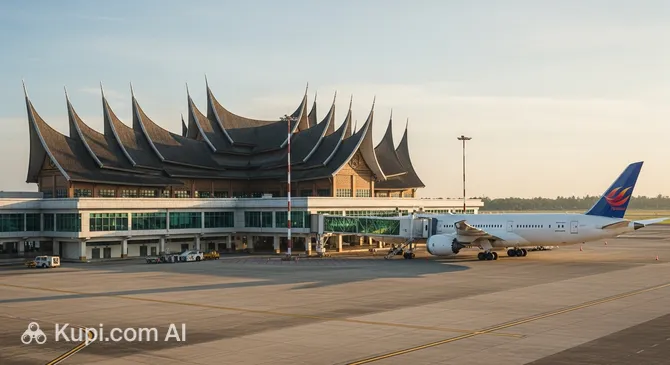
Sultan Iskandar Muda International Airport. Source: Kupi.com Binoculars
Sultan Iskandar Muda International Airport is not merely a transport hub, but a true architectural gateway to the Aceh province, known as the "Veranda of Mecca". With its majestic domes and modern design inspired by Islamic traditions, the terminal resembles a palace more than a standard airport facility. From the very first minutes after landing, travelers are immersed in the unique atmosphere of tranquility and hospitality characteristic of this Indonesian region.
IATA Code BTJ
ICAO Code WITT
City Banda Aceh
Distance to center ~14 km
Status International
Annual Passengers About 1,000,000
Schedule Online Flight Board

Airport Features and Advantages

The airport takes pride in its status as one of the most Muslim-friendly hubs in the world — in 2016, it even received the prestigious World Halal Tourism Awards. Ideal conditions for comfortable waiting are created here: spacious prayer rooms, a wide selection of Halal dining options, and relaxation areas compliant with Sharia standards.

The terminal building features unique architecture that combines modern technology with traditional Acehnese motifs. High ceilings and an abundance of natural light make the space feel visually light and airy. Furthermore, the airport played a historic role as the main center for logistics and aid during the region's recovery after the 2004 tsunami, making it a symbol of Aceh's resilience and rebirth.

Contact Information

  • Official Website: sultan-iskandar-muda (page on the operator Angkasa Pura II portal).
  • Help Desk Phone: +62 651 8012300; operator's unified contact center: 138.
  • Airport Address: Jalan Blang Bintang Lama KM. 20, Blang Bintang, Aceh Besar, Aceh 23372, Indonesia. The airport serves the city of Banda Aceh.
  • Email: contact.center@angkasapura2.co.id (general email for all airports managed by Angkasa Pura II).
  • Social Media: You can follow airport news on its official Instagram page (@btj_ap2).
  • Lost Luggage Information: If your luggage was lost on board the aircraft, please contact your airline's representative directly. For items left behind in the terminal, you should contact the airport information service.
  • Passenger Support Contacts: For general questions, consultations, and support, please use the help desk phone number or email.

How to Get to the Airport

Getting to Sultan Iskandar Muda International Airport (BTJ) from the city center of Banda Aceh is straightforward, as it is located just 15-17 kilometers away. Travelers have access to several convenient and budget-friendly transport options, allowing them to plan their trip according to their schedule and budget.

Public Transport is the most economical method. Special Trans Koetaradja buses operate on a route connecting the airport with key points in the city, including the famous Baiturrahman Grand Mosque. This is an excellent choice for budget travelers. The ticket price usually does not exceed 5,000 Indonesian Rupiah, and under government programs, the ride may even be free. The bus journey takes about 40-50 minutes.

Taxis and Online Services are the most popular and convenient options. Right in the arrival terminal, you can find the official airport taxi counter, where the trip is paid at a fixed rate, which is approximately 100,000–150,000 Indonesian Rupiah. Additionally, mobile transport apps such as Grab and Gojek are widely used in Indonesia. Their services often cost less — starting from 80,000 Rupiah, depending on traffic conditions and demand. A taxi ride to the city center takes approximately 20-30 minutes.

For those who value independence and plan to travel around the region extensively, car rental is available. Rental company offices can be found both at the airport and in the city. Many tourists prefer to rent a car with a driver, which eliminates the need to navigate local traffic. If you are arriving at the airport in your own or a rented vehicle, parking is available, offering both short-term and long-term rates.

Terminals and Map

Sultan Iskandar Muda International Airport (BTJ) is a modern and compact aviation hub characterized by a simple and clear structure. This significantly facilitates navigation for all passengers, even those arriving here for the first time.

The airport consists of one main terminal that serves both domestic and international flights. Thanks to this, there is no need for complicated transfers between buildings — all zones are under one roof. The terminal's architecture is inspired by the traditional style of Aceh, giving it a special flair and making it a hallmark of the region.

The terminal layout is logical and intuitive. Departure and arrival zones are clearly separated. The ground floor usually houses the arrival hall with baggage claim belts and customs control. The departure zone is typically located on the first floor and includes check-in counters, security checkpoints, and a small but cozy waiting area with boarding gates. Navigation is simplified by signage in Indonesian and English.

Completing all formalities at the airport in Banda Aceh usually does not take much time due to its relatively small size. Nevertheless, it is recommended to arrive at the airport according to standard practice: 1.5-2 hours before a domestic flight and 2-3 hours before an international one. This time will be sufficient for calm check-in, baggage drop, and security screening, even during peak periods.

Key Navigation Recommendations:

  • Since there is only one terminal, you will not get lost. All key zones — check-in, security, boarding gates — are within walking distance of each other.
  • Pay close attention to the signs; they will help you orient yourself quickly.
  • After checking in for your flight and passing security, you will have access to the waiting lounge, where there are small shops, cafes, and prayer rooms (Musholla).

Overall, Sultan Iskandar Muda Airport leaves a pleasant impression due to its compactness, cleanliness, and clear organization, making the start or end of your journey through Indonesia as comfortable as possible.

Airport History

The history of Sultan Iskandar Muda International Airport is a tale of resilience and revival. The airport was founded in 1943 during the Japanese occupation and was originally called Blang Bintang Airfield. In the first decades of its existence, it served primarily military purposes, gradually developing as a civil facility connecting the Aceh province with the rest of Indonesia.

A key and tragic moment in the airport's history was the Indian Ocean Tsunami on December 26, 2004. The disaster caused serious damage to infrastructure, but the runway remained practically intact. This allowed the airport to become the main gateway for international humanitarian aid. Within months, hundreds of aircraft carrying medicine, food, and rescue workers from all over the world arrived here, making the airport a symbol of hope for the entire region.

After the tsunami, massive reconstruction and modernization began. Thanks to international support, a new runway 3,000 meters long was built, capable of accommodating wide-body aircraft, and a modern passenger terminal was erected. It was then that the airport was officially renamed in honor of Sultan Iskandar Muda, the greatest ruler of the Aceh Sultanate. This reconstruction transformed it into a modern international airport ready to serve the growing flow of tourists and pilgrims.

One interesting fact in the airport's history is its important role in organizing the Hajj. It is one of the official departure and arrival points for Indonesian pilgrims heading to Mecca. Every year, thousands of believers begin their sacred journey specifically from the airport in Banda Aceh, which underscores its cultural and religious significance for the entire country.

Services and Facilities

Sultan Iskandar Muda International Airport offers passengers a wide range of services to make waiting for a flight as comfortable as possible. In the terminal, you will find several cafes and restaurants where you can try both Indonesian dishes and familiar international snacks. For those looking for souvenirs or travel goods, there are shops offering local crafts, clothing, and Duty Free products.

Free Wi-Fi is available throughout the airport, allowing you to stay in touch with loved ones or handle work matters. Special charging stations are provided for electronic devices. Passengers wishing to relax in a quieter environment can use the services of VIP lounges, offering additional amenities and beverages.

For financial matters, the airport has ATMs and currency exchange counters where you can exchange money upon arrival or before departure. In case of unforeseen health issues, a medical center is active within the terminal building, ready to provide first aid.

The airport in Banda Aceh cares for all categories of travelers. Mother and child rooms are equipped for passengers with small children. Travelers with reduced mobility can count on a barrier-free environment (ramps, specially equipped restrooms) and staff assistance when moving through the terminal and boarding.

Although there are no hotels directly inside the airport building, several hotels of varying comfort levels are located in the immediate vicinity, which is convenient for transit passengers or those with early flights. For business travelers, conference rooms or business centers may be available; it is best to check information about them in advance at the airport information desk.

Where to Eat

At Sultan Iskandar Muda International Airport (BTJ), passengers will find several cozy options for a snack or a full meal. Although the selection here is not as extensive as in giant hubs, the airport offers a chance to experience authentic local cuisine before departure.

The majority of dining establishments are located in the public area (landside), before security control. Here you will find several cafes and small restaurants where you can discover the cuisine of Indonesia and try local Acehnese dishes typical of the Banda Aceh region. After passing security (airside), the choice is more limited and usually amounts to small coffee shops and kiosks with drinks and snacks.

What to Try:

  • Kopi Aceh: Do not miss the chance to enjoy a cup of the famous Aceh coffee, known for its strong and rich taste. Local coffee shops take pride in their product.
  • Nasi Goreng or Mie Aceh: For a full lunch, look for Indonesian classics such as fried rice (Nasi Goreng) or spicy Aceh noodles (Mie Aceh).
  • Local Snacks (Kue): Cafes often sell traditional sweets and pastries — an excellent option for a light snack.

Dining Features and Prices:

  • Halal: Virtually all food offered at the airport is Halal, which complies with local cultural norms.
  • Vegetarians should look for dishes based on rice and vegetables (sayur), although specialized vegan or gluten-free menus are generally not available.
  • Prices at the airport are moderate, especially compared to major international airports. A full lunch will cost a reasonable amount, and coffee and snacks are quite affordable.

For a quick snack, the coffee shops in the departure zone are ideal, where you can grab a sandwich, pastry, and drinks to go. If you have time before flight check-in, it is better to have lunch at one of the restaurants in the public zone. Most establishments operate according to the flight schedule, opening early in the morning and closing after the last plane departs.

Travel Tips

When planning a departure from Sultan Iskandar Muda International Airport, located in the city of Banda Aceh, it is worth considering several practical points that will make your journey more comfortable. For domestic flights within Indonesia, it is recommended to arrive at the airport 2 hours before departure, and for international flights — at least 3 hours prior. This time buffer is sufficient to go through all formalities without rushing.

To save time at check-in, use your airline's online services. This will allow you to select a seat and receive a boarding pass in advance. The security screening procedure is standard: be prepared to remove laptops, tablets, and liquid containers from your carry-on luggage. Following the security staff's instructions precisely will help you pass control faster.

The choice of seat on the plane depends on your priorities. If you want to enjoy the views, choose a window seat. If you value freedom of movement and extra legroom, your ideal seat is by the aisle. For those rushing for a transfer or simply wanting to leave the plane faster, seats in the front of the cabin are the best solution.

Remember the rules for carry-on luggage. Liquids can be transported in containers up to 100 ml, packed in a single transparent bag. Sharp objects, weapons, and flammable substances are strictly prohibited in the cabin. Always keep all valuables, documents, and gadgets with you.

Passengers with transfers should clarify in advance whether their luggage will be automatically transferred to the next flight or if it needs to be collected and checked in again. Leave a sufficient time gap between flights, especially if you are flying with different airlines, to avoid unpleasant situations due to potential delays.

Customs control upon entering Indonesia requires filling out a declaration. If you do not have goods subject to declaration, you can use the "Green Channel". Otherwise, you must go through the "Red Channel". Be prepared to answer the customs officer's questions about the purpose of your trip and the contents of your luggage.

To save money, you can have a snack before arriving at the airport, as prices in local establishments are generally higher. Also, bring an empty water bottle — after passing security, it can be filled at drinking fountains. For trips to or from the city, it is often more profitable to use taxi-hailing apps than the services at the counter in the arrival hall.

In case of a flight delay, remain calm. First, contact your airline's counter for up-to-date information and instructions. Depending on the length of the delay, you may be provided with drinks, meals, or even hotel accommodation. Keep receipts for unforeseen expenses to request compensation later.

Reached the end of the page?

That means the route is fully explored