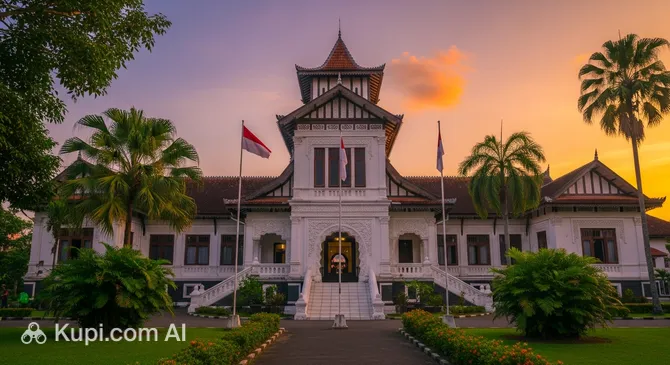
A trip to the island of Sumbawa is incomplete without a visit to the Asi Mbojo Museum. This majestic building, which once served as the residence for the rulers of the Bima Sultanate, is now the primary guardian of the region's history and traditions. Located in the heart of the city, the former palace catches the eye with its unique architecture, where local folk motifs intertwine with the clean lines of the colonial style.
Asi Mbojo Museum (Former Sultanate Palace of Bima). Illustration.
Source: Kupi.com AI
Traveler photos:
This museum complex in Indonesia is unique because it consists of two structures with different spirits: an authentic wooden palace and a more modern wing built using Dutch techniques. Inside the halls, visitors will encounter royal relics, ancient weapons, and everyday objects that offer a firsthand look at how the sultans of past centuries lived.
Asi Mbojo is of particular value as a cultural bridge connecting modern times with the era of the great maritime powers of the Lesser Sunda Islands. With a rating of 4.5, this place is rightfully considered a must-visit for anyone who wants to understand the soul of the western part of the island and touch the authentic heritage of the ancient sultanate.
Contacts
For those planning a visit, it is important to know the exact location of this cultural center. The museum is located in the heart of the city and is easy to find thanks to its distinctive architectural appearance.
Within the museum walls, a fascinating journey into the past awaits you. The main reason visitors come here is to see the royal relics. You can view a rich collection of ancient weapons, exquisite everyday objects, and traditional fabrics with the unique geometric patterns for which this region is famous. A special atmosphere is created by the "simple room" associated with the story of the first sultan's exile — this location adds a deep emotional layer to the tour.
Architecture enthusiasts should note the contrast between the original wooden building and the colonial-era cement wing. This is a wonderful opportunity to take atmospheric photos that combine elements of different cultures. The building itself and its well-kept grounds invite thoughtful contemplation and the study of intricate ancient carvings.
After diving into history, you can stroll through the surrounding area, enjoying views of the picturesque Bima Bay. Many tourists choose to end their visit with a trip to the local market, where you can find artisans creating traditional-style souvenirs, or head to nearby Lawata Beach to relax by the water after a rich cultural program.
Getting There
The museum is located in the central part of the city of Bima at Jl. Sultan Ibrahim No.2, making it easily accessible for travelers. The city is a key transport hub in the east of Sumbawa island. You can reach it by plane via Sultan Muhammad Salahuddin Airport or by ferry from neighboring regions such as Lombok or Flores.
From the airport or the local bus station, the most convenient way to reach the gates of the former palace is by taxi or by using ojek (motorbike taxi) services. If you prefer a local touch, you can take angkots — traditional Indonesian minibuses that run regularly through the city and stop near the museum.
A good landmark for those arriving in the city is Lawata Beach, located at the entrance. From there, the road to the museum complex takes only a few minutes. For precise navigation, it is recommended to use mobile maps, which lead unerringly to the main gates of the sultanate.
Nearest city: Bima
History & Facts
The history of this place is rooted in deep antiquity. The first mentions of Bima are found in the famous 14th-century Javanese poem "Nagarakretagama," where the city is described as an important part of the Majapahit Empire's sphere of influence. Local legends even link the founding of the ruling dynasty to a mythical hero of the "Mahabharata" epic — Prince Bima.
Over the centuries, the city's strategic position in the bay of the same name contributed to its prosperity. Thanks to active trade with the Moluccas and the export of the famous local horses, the sultanate turned into a powerful maritime force. A significant turning point in history occurred around 1620, when Bima embraced Islam, forever changing the cultural and architectural landscape of the region.
The current Asi Mbojo palace building was completed during the sultanate era and became a symbol of the harmonious transition from Hindu-Buddhist traditions to Islamic culture. Today, it is not just a historical building, but a living testament to past greatness and a multicultural heritage that is carefully preserved within the museum's walls for future generations.
Time Needed
To leisurely explore all the museum halls, see the royal relics, and appreciate the architectural features of the building, it usually takes 1 to 2 hours. This time is sufficient to see the main exhibition and walk around the surrounding grounds.
If you plan to take artistic photos against the backdrop of colonial architecture or spend more time in the ancient weapons hall, it’s worth setting aside a bit more time. Many tourists also combine a visit to the museum with a walk along the Bima Bay waterfront, which can take about half a day in total.
Working Hours
The museum welcomes guests daily, which is very convenient for planning a route around the island. The complex's doors are open from 08:00 to 20:00, including weekends and holidays.
Despite the consistent schedule, it is recommended to check for updates on the official website or with local guides before your visit, as working hours may change slightly during special cultural events or public holidays.
08:00–20:00
Nearby
Exploring the surroundings of the palace will allow you to dive deeper into the atmosphere of this historical region. Nearby are both ancient artifacts and modern monuments reflecting the spirit of Sumbawa island.
A walk through the city center will give you access to unique stone inscriptions and the burial sites of the sultan's family, which complement the story of Bima's rich past.