Support

Keraton Kanoman

About

Hidden behind the bustling stalls of the old market, Kanoman Palace (Keraton Kanoman) is one of the most significant historical gems of the city of Cirebon. This active royal residence, founded in the 17th century, is a unique architectural ensemble where Javanese traditions, Islamic motifs, and decorative elements from China and Europe intertwine. Indonesia carefully preserves such places where time seems to slow down amidst ancient walls.
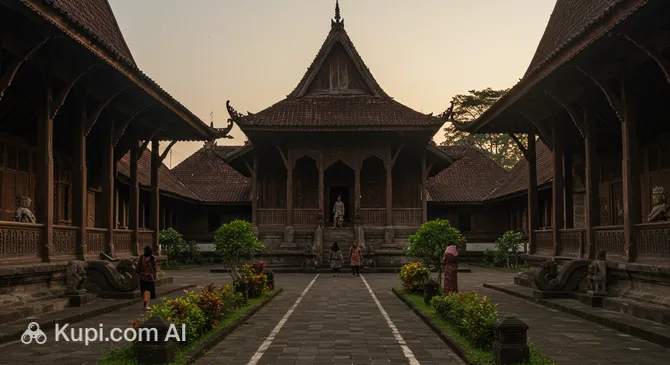
Kanoman Palace
Kanoman Palace. Иллюстрация. Источник: Kupi.com AI

One of the most recognizable features of the palace is its walls, inlaid with authentic Chinese porcelain plates—gifts from foreign merchants and diplomats of past centuries. The vast territory of the complex includes historical pavilions, such as Vitana, dating back to 1428, and Dalem Agung, making it a true living open-air museum.

Today, this historical site (categorized as a historical_place) attracts travelers with its authenticity and tranquility. Unlike more formal palaces, Kanoman preserves the spirit of antiquity within its mossy walls and shady courtyards, while remaining an important center for the cultural and spiritual life of the local community.

Contacts

To clarify information about visiting or holding special events at the palace complex, you can use the official contact details.

How to contactContact
AddressJl. Kanoman No.40, Lemahwungkuk, Kec. Lemahwungkuk, Kota Cirebon, Jawa Barat 45111, Indonesia
Phone+62 822-1866-6463
Websitekesultanan-kanoman.blogspot.com

What to Do

The first thing to look for when visiting the palace is its museum collection. It houses unique royal relics, including ancient carriages: Paksi Naga Liman, which combines the features of a mythical bird, a dragon, and an elephant, and the Jempana, intended for the wives of the Sultan. These intricately carved 18th-century carriages are striking in their detail and symbolism.

While walking through the grounds, be sure to examine the gates with their carvings and ceramic inserts. The architecture of the buildings will surprise you with its blend of colonial style (note the bell towers) and traditional "mega mendung" patterns, which resemble drifting clouds. In the palace courtyards, you can find tiger statues, which, according to legend, guard the peace of the royal family.

History buffs will enjoy exploring the ancient Vitana and Dalem Agung pavilions, as well as peeking into the audience hall where sultans have received honored guests for centuries. If your visit coincides with important holidays, such as Grebeg Syawal, you can witness traditional rituals that have been preserved here unchanged for centuries.

Getting There

Kanoman Palace is located in the heart of the city's historical district. It is easy to find: it is situated at Jl. Kanoman No.40, right behind the lively traditional Kanoman Market. This market serves as the best landmark for tourists—you need to walk through the trading rows towards the white gates decorated with ancient ceramics.

If you are in the city center, it is most convenient to use a taxi or the popular regional mobile apps Grab or GoJek. A motorbike ride will allow you to navigate the narrow streets more quickly. The palace is also within walking distance of other significant historical sites, such as Kasepuhan Palace, making it easy to create a great walking route.

For those arriving by train, the palace is just a 10–15 minute ride from Cirebon's main station by local transport or taxi. Look for the Lemahwungkuk district and the massive walls that separate the quiet grounds of the royal residence from the city bustle.

Ближайший город: Cirebon

History & Facts

The history of this site dates back to the 15th century. One of the oldest structures on the grounds, the Vitana pavilion, was built as early as 1428 by Prince Walangsungsang. Kanoman Palace itself was officially established as a separate residence in 1678 by Pangeran Mohammad Badriddin (Sultan Anom I). This event marked the division of the sultanate into two branches under the influence of the Dutch colonial administration.

The palace is closely linked to the name of Sunan Gunung Jati, one of the legendary nine saints (Wali Songo) who brought Islam to the island of Java. The Keraton became not only a political center but also an important stronghold for religious enlightenment. The blend of architectural styles—Sundanese, Javanese, Islamic, and even Chinese—clearly demonstrates the region's role as a major trading port where the paths of merchants from India, China, and the Middle East crossed.

An interesting detail is the northward orientation of the buildings and the presence of tiger statues in the courtyards. These elements symbolize a connection to the legendary King Prabu Siliwangi and the ancient traditions of the Kingdom of Pajajaran. To this day, the palace remains living history: the Sultan's family still resides here, preserving ancient rituals such as the Muludan festival, which has been celebrated with full solemnity since the 17th century.

Time Needed

To leisurely explore the grounds of Kanoman Palace, visit the museum, and take beautiful photos, it usually takes 1.5 to 2 hours. This is quite enough time to soak in the atmosphere of the ancient residence and study the architectural details.

If you also plan to visit the adjacent Kanoman Market to buy local delicacies or souvenirs, we recommend setting aside about half a day. It is best to visit in the morning when the weather is cooler and there is a better chance of finding the museum halls open.

Working Hours

Kanoman Palace is open to visitors daily. You can plan your visit for any day of the week, as the site operates without days off.

The palace complex schedule is: from 9:00 AM to 5:00 PM (Monday to Sunday). It is recommended to arrive by 4:00 PM to have time to view the museum exhibits before they close.

9:00 – 17:00

Nearby

A walk around Kanoman Palace allows you to dive deeper into the atmosphere of the old city and get acquainted with its daily life. Exploring the surroundings of Cirebon will reveal interesting spots, from modern entertainment centers to small specialty shops.

NameDistance
British American Tobacco Building0.4 km
Kacirebonan Palace0.4 km
Sang Cipta Rasa Grand Mosque0.4 km
Kasepuhan Palace0.5 km
Panjunan Red Mosque0.6 km
Waterland Cirebon0.8 km
Kampung Kecil Cirebon0.9 km

Reached the end of the page?

That means the route is fully explored