Support

Fak Fak Airport

About the Airport

Fakfak Airport (Torea), located in the city of the same name on the Bomberai Peninsula in West Papua, serves as the aerial gateway to one of the most unexplored and picturesque corners of Indonesia. It is not a massive international hub, but rather a cozy air harbour where true adventures begin. For many travellers, this small airport becomes the starting point for discovering the unique nature and culture of the Fakfak region. Its modest size and close proximity to the city make arrivals and departures as quick and convenient as possible.

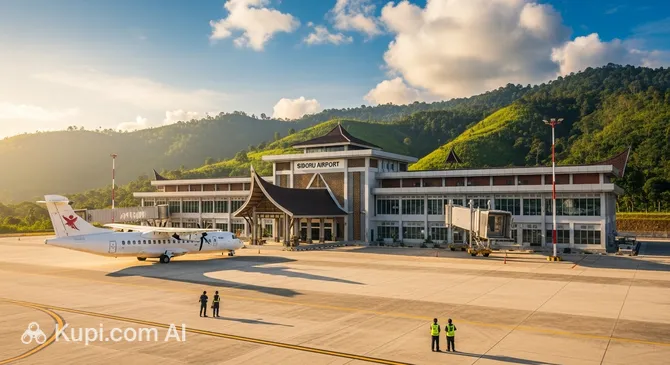
Fak Fak Airport. Source: Kupi.com Binoculars
IATA CodeFKQ
ICAO Code WASF
City Fakfak
Distance to centre approx. 2 km
Status Domestic
Annual Passengers approx. 25,000 (estimated)
Popular Airlines Wings Air, Trigana Air Service, Susi Air
ScheduleOnline board

The main feature of Fakfak Airport is its intimate atmosphere and convenient location. It is situated practically within the city limits, allowing you to reach the centre in just a few minutes by car or motorcycle taxi. There are no long queues for check-in or tedious waits for luggage here; everything proceeds quickly and without fuss, which is especially valuable after a long flight. The airport mainly serves turboprop aircraft operating flights to other cities in West Papua and the Maluku Islands. Although the terminal infrastructure is minimal, it fulfils its main function — reliably connecting this remote region with the rest of the country.

Contact Information

Finding direct and up-to-date contact details for small regional airports, such as Fakfak Airport (FKQ), can be challenging. It is recommended to resolve most flight-related issues through the airline you are flying with. Nevertheless, the general information gathered below may be useful.

  • Official Website: Like many small airports in Indonesia, Fakfak Airport likely does not have its own official website. Management is carried out by the national aviation authorities of Indonesia (Direktorat Jenderal Perhubungan Udara).
  • Information Desk Phone: Finding a public phone number for the airport information desk is extremely difficult. For information regarding flights, schedules, and other queries, please contact your airline directly.
  • Airport Address: Torea Airport (FKQ), Fakfak, Fakfak Regency, West Papua, Indonesia.
  • Email and Social Media: Official public email addresses or social media pages for the airport are generally non-existent.
  • Lost & Found Information: Matters regarding lost or damaged luggage are handled by the Lost & Found service of the specific airline you flew with. Please approach your carrier's counter at the arrival airport or contact their customer support.
  • Customer Support Contacts: To resolve any issues related to tickets, flight cancellations or delays, special assistance on board, and other services, it is necessary to contact your airline's customer support service.

How to Get to the Airport

Getting to Fakfak Airport (FKQ) from the centre of Fakfak city is quite simple, as it is located just a few kilometres away. The journey usually takes no more than 10–15 minutes depending on your location and traffic conditions. Since this is a small city in a remote part of Indonesia, transport options are limited but cover all the basic needs of travellers.

Taxis and Transfers. This is the most convenient and common way to get to the airport. You can hail a local taxi or use a motorcycle taxi, known as an "ojek", which is a cheaper option for solo travellers with light luggage. It is recommended to agree on the fare in advance, as not all vehicles are equipped with meters. Many hotels also offer transfer services for their guests, which is a reliable and comfortable solution.

Public Transport. Small minibuses, called "bemo", operate in the city. This is the most budget-friendly way to travel, however, they do not have a strict schedule and can be overcrowded. For tourists with luggage and limited time, this option may not be the most practical, but it allows you to immerse yourself in local life.

Car Rental and Parking. You can rent a car, most often with a driver, which is convenient if you plan to explore the surroundings before or after your flight. Roads in the region can be challenging, so having a local driver is a big plus. Fakfak Airport has a simple parking area where you can leave a car for a short time to drop off or pick up passengers. Long-term parking is generally not formally organised.

Recommendations. For maximum convenience and predictability, we advise booking a taxi or hotel transfer. Be sure to carry cash in Indonesian Rupiah for payment, as bank cards are not accepted everywhere. Although Fakfak Airport serves the city, for travel across the wider West Papua region, other aviation hubs may be useful, such as Sorong Airport or Rendani Airport, from where you can reach Fakfak by other means of transport.

Terminals and Map

Fakfak Airport (FKQ) is a small regional airport serving domestic flights. Its structure is extremely simple and intuitive, making it convenient for travellers unaccustomed to the complex layouts of major aviation hubs.

The airport has just one passenger terminal, which is a compact building serving both departing and arriving passengers. Thanks to this, you won't have to worry about transfers between terminals — everything is in one place. The airport layout is very straightforward: upon entering the building, you will immediately see the check-in counters, followed by a small security screening area and a general waiting hall.

Departure and arrival zones are not separated into large wings or floors as in metropolises. The departure zone is essentially the waiting room before the boarding gate. The arrival zone consists of a small baggage claim belt (or counter) and an exit to the city. Navigation will cause no difficulties: all signs are within direct line of sight, and getting lost here is practically impossible.

Completing all formalities, such as flight check-in and security screening, usually takes significantly less time than in large airports. The entire process rarely lasts more than 20-30 minutes. Nevertheless, it is recommended to arrive at the airport approximately 1–1.5 hours before departure to check in luggage and go through all procedures without rushing. The main advice for navigation is to simply follow the general flow of passengers, as all key points are a couple of steps away from each other.

Airport History

Fakfak Airport (FKQ), also known as Torea Airport, served for many decades as the main aerial gateway for the city of Fakfak and the regency of the same name in the West Papua province. The exact date of its founding is not widely publicised, yet for a long time, it was a vital transport hub, ensuring the connection of this remote region with other parts of Indonesia.

A major phase in the airport's history was its operation under difficult geographical conditions. Located in immediate proximity to the city, it was sandwiched between hills on one side and the sea on the other. This, combined with a relatively short runway, imposed serious limitations on the types of aircraft that could serve it and made landing and taking off a true challenge for pilots.

The key historical event that determined the airport's fate was the decision to replace it. Due to safety concerns and the impossibility of further expanding and modernising the runway, construction began on the new, more modern Siboru Airport a few dozen kilometres from the city. This project became the largest transport infrastructure upgrade in the region in recent years.

Following the official opening of Siboru Airport in late 2023, the old Fakfak Airport (FKQ) ceased accepting regular flights. Thus, its history is that of a small but critically important airfield that served the region faithfully and eventually gave way to a safer and more modern successor, opening a new page in the development of air travel in Fakfak. An interesting fact is that its challenging location made it legendary among pilots flying in this part of Indonesia.

Services and Facilities

Fakfak Airport (FKQ) is a small regional air hub in the West Papua province, Indonesia. The terminal is distinguished by its modest size and simple infrastructure, so passengers should expect only a basic set of services necessary for a short stay before departure.

Restaurants and Shops are present in minimal volume. Usually, small kiosks or local cafes (warungs) operate within the airport territory, where you can buy water, soft drinks, coffee, and light snacks. There are no full-service restaurants or Duty-Free shops here. It is recommended to carry small denomination cash to pay for purchases.

Waiting Lounges and Connectivity. The airport has a general waiting hall for passengers. Specialised VIP lounges or business lounges are absent. The availability of stable Wi-Fi is not guaranteed, so it is better to use mobile data for communication (if you have a local SIM card). The number of power outlets for charging gadgets is limited, so it is worth charging your devices in advance or bringing a power bank.

Financial Services. Currency exchange points and ATMs within the terminal itself may be absent or operate intermittently. Tourists are strongly advised to withdraw the necessary amount of cash (Indonesian Rupiah) in advance in major cities or use banks in the centre of Fakfak.

Special Services. Infrastructure for passengers with reduced mobility is basic; ramps and entrances are usually located at ground level, but specialised equipment may not be available. If you require assistance with boarding, you should notify the airline in advance. There are no special playrooms provided for passengers with children. Medical assistance is limited to a basic first aid kit held by the staff.

Hotels and Business Services. There are no hotels on the airport grounds. The nearest hotels and guest houses are located directly in the city of Fakfak, which can be reached by taxi. Conference rooms and business centres are also absent from the terminal.

Where to Eat

At Fakfak Airport (FKQ), the choice of dining places corresponds to the format of a small regional air hub. Passengers should not expect international chain restaurants or extensive food courts here. The gastronomic infrastructure is limited and represented by a few local outlets offering a basic range of products.

Types of Establishments and Location. The basis of catering consists of small kiosks and traditional Indonesian eateries — "warungs". Most of them are located in the public area (landside) before the security check entrance, as well as in the waiting hall. These are simple establishments with a minimal number of seats, oriented towards quick service for passengers before a flight.

Menu and Local Dishes. For a quick snack, the most popular option is Indonesian instant noodles (for example, the Pop Mie brand), which vendors brew with boiling water right on the spot. Also, the assortment always includes packaged snacks, biscuits, crisps, and bottled drinks. If you are lucky, you might find homemade pastries or simple rice dishes, such as nasi goreng (fried rice) or nasi kuning (yellow rice), which are suitable for a more substantial lunch. Do not miss the opportunity to drink a cup of hot local coffee or sweet tea, which are prepared very strong here.

Dietary Features. Since Indonesia is a country with a predominantly Muslim population, practically all food offered at the airport is Halal by default. There is no specialised menu for vegetarians or vegans; a safe choice would be fruits (if available for sale), nuts, or pastries without filling. People with gluten intolerance should be particularly careful and it is better to have their own supply of food, as wheat flour or soy sauce is contained in most local dishes and sauces.

Prices and Opening Hours. The price range at Fakfak Airport remains quite affordable and only slightly exceeds city prices. A light snack with a drink will cost on average 20,000 – 50,000 IDR (Indonesian Rupiah). Establishments operate in strict accordance with the flight schedule: they open in the morning before the first departure and close immediately after the last aircraft leaves. Please note that only cash is accepted for payment.

Travel Tips

Arrival Time. Despite Fakfak Airport (FKQ) being small and having no complex terminal transfers, it is recommended to arrive at the airport 1.5–2 hours before departure. Check-in for flights at small regional airports in Indonesia often closes strictly according to schedule (usually 30–45 minutes before departure), and processing times may take longer due to manual checking of documents and luggage.

Documents and Check-in. Given the unstable mobile signal and possible internet issues in the terminal, it is strongly recommended to have a printed ticket or a saved offline copy on your phone. For check-in, you will require a passport (for foreigners) or a local identity card. Be prepared for security screening to be conducted thoroughly, but in a calm environment.

Hand Luggage. Mostly small turboprop aircraft (for example, ATR type) fly to Fakfak. The overhead bins for hand luggage in such aircraft are significantly smaller than standard ones. "Cabin-size" suitcases that fit in the cabins of large liners may not fit on the shelf here. You will be asked to hand them over to the baggage hold right at the steps (Delivery at Aircraft service). It is better to take only small backpacks, bags with documents, and valuables into the cabin. Strictly observe the hand luggage weight limit (usually up to 7 kg).

Seat Selection. The flight to this region is often accompanied by picturesque views of the coast, tropical forests, and mountains of West Papua. To enjoy the scenery, ask for a Window seat during online check-in or at the counter. Avoid rows located directly under the wing (if the aircraft is a high-wing monoplane), as the engines may partially block the view and create increased noise.

Transfers and Connections. If Fakfak is merely an intermediate point in your journey, allow ample time for transfer (minimum 3–4 hours, or better yet — a night in the connecting city, for example, in Sorong or Makassar). The weather in Papua is changeable, and flight delays due to fog or rain are a frequent occurrence. If you are flying with different airlines, luggage will have to be collected and checked in again, which also requires time.

Special Rules and Customs. Since flights are domestic, customs control as such is absent, however, strict nature conservation rules apply. It is categorically forbidden to take out corals, rare plant species, shells, and protected animals. Airport security closely monitors the contents of luggage to prevent the smuggling of the region's natural resources.

Saving and Preparation. There is practically no possibility to withdraw money at the airport, so ensure you have cash Rupiahs in advance to pay for excess baggage or snacks. Food prices inside are reasonable, but the selection is meagre, so it is better to buy sandwiches or fruit in the city beforehand. This will save not so much money, but rather nerves, if the cafe turns out to be closed.

Flight Delays. In case of a departure delay, be prepared that information boards may be updated with a lag. Listen to voice announcements (often only in Indonesian) or check the status with airline staff. Since there is little entertainment and few power outlets in the waiting hall, be sure to take a fully charged power bank (in hand luggage!), a book, or downloaded films to pass the waiting time comfortably.
Reached the end of the page?

That means the route is fully explored