Support

Sultan Hasanuddin International Airport

About the Airport

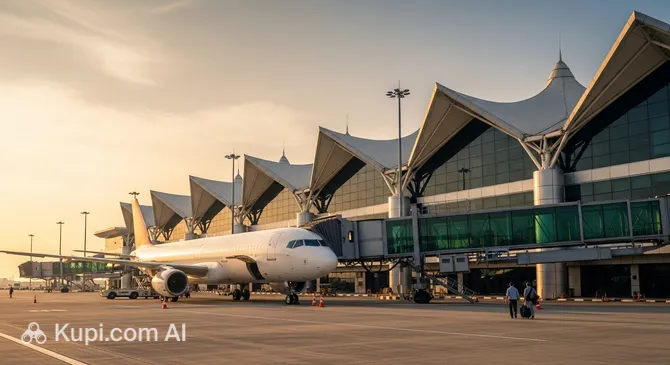
Sultan Hasanuddin International Airport. Source: Kupi.com Binoculars

Sultan Hasanuddin International Airport is not merely a transit point, but a truly futuristic gateway to Eastern Indonesia that captures the imagination at first sight. Its unique architectural design, inspired by the shape of traditional "Pinisi" sailing vessels, reflects the rich maritime heritage of the Bugis-Makassar people, harmoniously blending history with modern high-tech style. High ceilings with undulating lines and an abundance of natural light create a sense of space and lightness, setting travelers up for a pleasant introduction to the wonders of Sulawesi Island.

IATA Code UPG
ICAO Code WAAA
City Makassar
Distance to center ~20 km
Status International
Passengers per year ~13 million
Schedule Flight Information

Features and Advantages of the Airport

The airport is renowned for its well-thought-out infrastructure and strategic importance as the main hub for flights to the country's eastern regions, such as Papua and the Maluku Islands. The terminal is equipped with everything necessary for a comfortable wait: from cozy lounge areas and wireless internet to shower rooms, allowing you to freshen up after a long journey.

The gastronomic zone deserves special attention, offering guests the chance to taste famous local dishes, such as the hearty Coto Makassar soup, right before departure. Additionally, there are numerous souvenir shops on the premises where you can purchase high-quality handicrafts, fabrics, and the famous Toraja coffee to take a piece of Indonesian charm home with you.

Contact Information

For your convenience, we have compiled the main contact information for Sultan Hasanuddin International Airport (UPG). We recommend clarifying details directly through official communication channels.

  • Official Website: hasanuddin-airport.co.id
  • Information Desk Phone: You can contact the information center at +62 411 481 3253 or via the unified Angkasa Pura I call center at 172.
  • Airport Address: Jalan Airport No. 1, Baji Mangngai, Kecamatan Mandai, Kabupaten Maros, Sulawesi Selatan 90552, Indonesia.
  • Email: For general inquiries and feedback, you can use the address humas.upg@ap1.co.id.
  • Social Media: Current information and news can be found on the airport's official pages, for example, on Instagram (@hasanuddin_airport).
  • Lost Luggage Information: For issues related to lost or damaged luggage, you should first contact your airline's representative. If you left personal items in the airport terminal, contact the Lost and Found service via the information desk.
  • Passenger Support Contacts: Information desks are located in the departure and arrival halls. Staff are ready to assist with airport navigation and answer your questions.

How to Get to the Airport

Getting to Sultan Hasanuddin International Airport (UPG) from the city center of Makassar is quite simple, thanks to several modes of transport. Depending on your budget, time, and preferences, you can choose the most suitable option. The trip usually takes between 30 to 60 minutes, but it is always worth allowing extra time in case of traffic jams, which are common in cities in Indonesia.

Public Transport is the most economical way to get to the airport. Specialized DAMRI buses run regularly between the airport and several key points in the city. These are comfortable, air-conditioned buses, making them an excellent choice for budget travelers. Stops and schedules can be checked on-site, but they typically cover the main districts of the city.

Taxis and Online Services, such as Grab or Gojek, are the most popular and convenient methods. You can find an official taxi counter directly in the arrival terminal or book a car via a mobile app. The cost of the trip will be fixed or metered, ensuring price transparency. This is an ideal option if you have a lot of luggage or are traveling in a group. You can also pre-book a private transfer so that a driver meets you with a name sign.

For those who prefer maximum freedom of movement, car rental offices operate at the airport. Renting a car will allow you not only to reach the city but also to explore the surroundings of Makassar at your own pace. If you are arriving at the airport in your own or a rented vehicle, both short-term and long-term parking facilities are at your service. Please note that traffic in the city can be intense, so be prepared for local driving conditions.

Terminals and Map

Sultan Hasanuddin International Airport (UPG) in Makassar is a modern and passenger-friendly complex. All operational activity is concentrated in one main terminal, which serves both domestic and international flights. This structure significantly simplifies navigation and eliminates the need to move between different buildings.

The terminal layout is logical and intuitive. Generally, the building is divided into several levels: the departure zone is located on the upper floor, and the arrival zone is on the lower floor. Inside the terminal, there is a clear separation between domestic and international sectors, helping passengers orient themselves easily. Transitions between zones take place within a single building, so no special shuttles or long walks are required.

The departure zone houses airline check-in counters, security checkpoints, and, for international flights, passport control. After completing all formalities, passengers enter a spacious airside area with boarding gates, shops, and cafes. The arrival zone includes baggage claim halls, customs control for those arriving from abroad, and the exit to taxi stands, buses, and car rentals.

To avoid rushing, it is recommended to arrive at the airport well in advance. For domestic flights, it is advisable to arrive 1.5–2 hours before departure, and for international flights, 2.5–3 hours. This time is usually sufficient for a calm check-in, baggage drop, and security screening. Navigation through the terminal is facilitated by numerous signs in Indonesian and English, and if questions arise, you can always turn to the staff at the information desks.

Airport History

The history of Sultan Hasanuddin International Airport begins during the years of World War II. It was built in 1943-1944 by Japanese occupation forces and originally bore the name Kadieng Airfield. After the war, in 1945, the facility was taken over by Dutch forces, who rebuilt and renamed it Mandai Airfield. This period laid the foundation for the future development of the aviation hub in the region.

A new stage in the airport's life began in 1955, when it was handed over to the government of Indonesia and officially opened for commercial flights. In 1980, its status was upgraded, and it received the name Hasanuddin Airport. The final and modern name, Sultan Hasanuddin International Airport, was assigned in 1985 in honor of Sultan Hasanuddin, a national hero of Indonesia and ruler of the Gowa Sultanate, famous for his struggle against Dutch colonizers.

A key moment in the modern history of the airport was the large-scale modernization at the beginning of the 21st century. In 2008, a new passenger terminal was ceremoniously opened. This event radically changed the appearance and capabilities of the airport, turning it into one of the most modern and busiest in the eastern part of Indonesia. The new terminal allowed for a significant increase in capacity and improved passenger service quality, contributing to its international status.

An interesting fact: the architectural design of the new terminal is often compared to a butterfly or a traditional Indonesian "Pinisi" boat, giving it a unique and memorable look. Today, the airport in Makassar is not only an important transport hub connecting the western and eastern parts of the country but also serves as a testament to the dynamic development of the Sulawesi region.

Services and Facilities

Sultan Hasanuddin International Airport offers passengers all necessary services for a comfortable wait for their flight. The terminal features a wide selection of dining establishments: from cozy coffee shops where you can have a quick snack, to restaurants offering dishes of both local Indonesian and international cuisine. For shopping enthusiasts, there are Duty Free shops, souvenir stalls, and outlets selling travel essentials.

For those who prefer to wait for their departure in a calmer atmosphere, the airport has several waiting lounges, including VIP lounges. Here, guests can relax in comfortable armchairs and enjoy complimentary snacks and drinks. Free Wi-Fi is available throughout the terminal, and numerous stations for charging gadgets will allow you to always stay connected.

For financial matters, ATMs and currency exchange points are at travelers' disposal. In case of necessity, passengers can visit the medical center, where first aid will be provided. Families with small children will appreciate the presence of specially equipped mother and child rooms, ensuring privacy and comfort.

The airport is fully adapted to the needs of passengers with reduced mobility: there are ramps, special toilets, and escort services provided upon prior request. For business travelers, business centers and conference rooms are equipped where one can hold a meeting or work in silence.

If you have a long layover or an early flight, you can stay at the Ibis Budget Makassar Airport hotel, which is conveniently connected to the main terminal, allowing you to reach it on foot in a few minutes. There are also several other hotels located in the immediate vicinity of the airport that offer transfer services.

Where to Eat

Sultan Hasanuddin International Airport (UPG) offers passengers diverse dining opportunities reflecting the culinary richness of Makassar and all of Indonesia. Whether you are looking for a quick snack before departure or a full lunch, you will find suitable options both in the public area and after passing security control.

For those wishing to experience local cuisine, the airport provides an excellent opportunity. Look for establishments offering authentic dishes such as Coto Makassar (a rich beef soup) or Konro (ribs in a spicy sauce). This is a wonderful chance to enjoy the famous flavors of the region without leaving the terminal. You can also find kiosks with fresh pastries and local sweets here.

If you are short on time, numerous cafes and fast-food outlets are at your service. In the departure zone (airside) and the general zone (landside), coffee shops are located where you can order both a classic espresso and Indonesian coffee. Establishments serving sandwiches, pastries, and popular fast-food chains operate here as well, ideal for a quick and satisfying bite. For a full lunch or dinner, restaurants located primarily in the main departure hall are more suitable, offering menus with Indonesian and international cuisine in a calmer setting.

Most establishments at the airport offer Halal dishes, which is the standard for the region. Vegetarian options are typically available in restaurants serving Indonesian cuisine — look for dishes based on rice and vegetables (for example, Gado-gado). For stricter dietary restrictions, such as gluten-free or vegan meals, it is recommended to check the ingredients directly with the staff. The price range varies from budget eateries to mid-range restaurants. The opening hours of most cafes and restaurants are aligned with the flight schedule, and some outlets serving drinks and snacks may operate around the clock.

Travel Tips

Planning a trip through Sultan Hasanuddin International Airport in the city of Makassar will go smoothly if you consider a few useful tips. To avoid rushing, arrive at the airport in advance: 2-3 hours before international flights and 1.5-2 hours before domestic ones. Consider possible traffic jams on the roads, especially during peak hours.

To save time, use online check-in for your flight if your airline provides this option. This will allow you to proceed immediately to baggage drop or, if you are traveling light, to the security screening area. Keep your passport and boarding pass handy. During screening, be prepared to remove laptops, tablets, and liquid containers from your carry-on luggage.

Seat selection on the plane depends on your preferences. Window seats will give you the opportunity to enjoy views during takeoff and landing, especially on scenic routes in Indonesia. Aisle seats are convenient if you plan to get up often during the flight. For greater comfort, you can study the aircraft layout on specialized websites in advance.

Standard carry-on luggage rules apply here as well. All liquids, gels, and aerosols must be in containers of no more than 100 ml and packed in a single transparent bag. It is forbidden to carry sharp objects, weapons, and flammable substances in the cabin. Power banks and other batteries generally must be carried specifically in hand luggage, not in checked baggage.

If you have a layover at Sultan Hasanuddin Airport, follow the "Transit" or "Transfer" signs. Depending on your itinerary and airline, you may need to undergo security screening again. Clarify in advance whether your luggage will be transferred automatically to the final destination or if you need to collect it and check it in again.

When passing through customs control, be prepared to present a completed customs declaration. Fill it out honestly, indicating all goods subject to declaration. Remember that Indonesia has very strict laws regarding the transport of narcotics, so do not even consider violating these rules.

To save money, bring an empty reusable water bottle with you — after security, it can be filled at drinking fountains. It is better to exchange currency in small amounts, as the rate at airports is often less favorable than in the city. Pre-booking a transfer from the airport can also help save both time and money.

In the event of a flight delay or cancellation, first contact your airline representative for information on further actions. Clarify whether you are entitled to meals, drinks, or hotel accommodation. Be sure to keep all receipts for necessary expenses if you have travel insurance — they will be needed to claim compensation.

Reached the end of the page?

That means the route is fully explored