Support

Sam Ratulangi International Airport

About the Airport

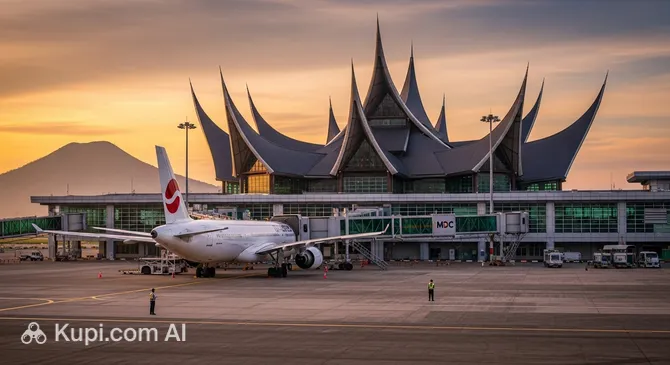
Sam Ratulangi International Airport. Source: Kupi.com Binoculars

Sam Ratulangi International Airport (MDC) is the main air gateway to the North Sulawesi province, opening the way to the amazing underwater worlds of Bunaken National Park and the picturesque Minahasa highlands. The air harbour, named after the renowned educator and national hero of Indonesia, is situated amidst majestic volcanic mountains, offering passengers unforgettable views during takeoff and landing. Despite its status as an international hub, a calm and friendly atmosphere prevails here, allowing travellers to instantly tune into the rhythm of a tropical holiday.

IATA Code MDC
ICAO Code WAMM
City Manado
Distance to Centre 13 km
Status International
Annual Passengers ~1.76 million (2024)
Schedule Live Flight Status

Airport Features and Amenities:

The Sam Ratulangi terminal is distinguished by modern architecture featuring ethnic motifs that reflect the culture of the Minahasa people. The building is equipped with everything necessary for a comfortable wait: passengers have access to various cafés where they can try both familiar fast food and local delicacies (such as the famous "Tinutuan" porridge), as well as duty-free shops and souvenir stalls. For the convenience of tourists, ATMs, currency exchange points, and rest zones are provided in the halls.

The airport is rightfully considered a hub for divers from all over the world, so the staff is accustomed to handling oversized luggage and diving equipment. Transport accessibility is well-organised here: you can reach the centre of Manado in just 30–40 minutes by official taxi or local minibuses, known here as "Mikrolets". Additionally, the airport serves as a convenient starting point for trips to the neighbouring cities of Tomohon and Bitung.

Contact Information

  • Official Airport Website: samratulangi-airport.com
  • Information Desk Phone: +62 431 814 320
  • Airport Address: Jalan A.A. Maramis, Mapanget, Manado, Sulawesi Utara, Indonesia 95256
  • Email: mdc@angkasapura1.co.id
  • Social Media: Instagram and Twitter (X) — @angkasapura172 (Angkasa Pura I Support Service)
  • Lost & Found Information: +62 431 814 320 (ask to connect to the department) or contact your airline's counter in the arrival hall
  • Passenger Support Contacts: Contact Center 172 (dial 172 within Indonesia) or cc172@ap1.co.id

How to Get to the Airport

Sam Ratulangi International Airport is located just 13 kilometres northeast of the city centre of Manado. Due to the short distance, the journey usually does not take much time, although traffic density should be taken into account, especially during peak hours. Travellers have several transport options available: from comfortable taxis to authentic local minibuses.

Taxi and Transfer

This is the most popular and convenient way to get to the city or your hotel. Official airport taxi counters operate in the arrival zone, where you can book a trip at a fixed price. This eliminates the need to haggle and protects against inflated fares.

  • Official Airport Taxi: A reliable option with fixed rates depending on the destination zone.
  • Metered Taxi: Popular services in Indonesia, such as Blue Bird, also serve the airport. Their blue cars are known for their honesty and use of taximeters.
  • Ride-hailing Services: Apps like Grab and Gojek are widely used in Manado. Booking a car through an app is often cheaper than a regular taxi, but the pick-up point may be located slightly further from the terminal exit (follow the signs or check with the driver via chat).

Cost: A trip to the city centre usually costs between 100,000 and 150,000 Indonesian Rupiah (IDR). The travel time is about 30–45 minutes in light traffic.

Public Transport

For budget travellers and those wishing to immerse themselves in the local atmosphere, there are buses and minibuses.

  • DAMRI Buses: Comfortable air-conditioned buses connecting the airport with the city centre (usually heading to the Boulevard area). This is an excellent compromise between price and comfort. The ticket price is around 25,000 – 35,000 IDR.
  • Mikrolets (Mikrolet): The famous blue minibuses that serve as the main public transport in Manado. To catch a Mikrolet, you need to walk outside the airport parking area to the main road (about 5-10 minutes on foot). The route usually requires a transfer at the Paal 2 terminal. The fare is very low (about 5,000 – 10,000 IDR per segment), but this option is suitable only for tourists without large luggage and with an adventurous spirit.

Car Rental

Counters for car rental companies are located in the arrival hall. Both self-drive rentals and car rentals with a driver are available, which is often recommended due to chaotic local traffic and the left-hand driving system. If you plan to explore the surroundings on your own, ensure you have an international driving permit.

Airport Parking

The airport has an extensive parking zone, divided into sectors for cars and motorcycles (which are very popular in the region). The payment system is progressive: the first hour costs a fixed amount, after which a fee is charged for each subsequent hour. Payment is made in cash or by electronic cards upon exit. Rates for motorcycles are significantly lower than for cars.

Recommendations and Regional Connections

When planning a trip to the airport, always allow extra time for potential traffic jams. If your itinerary involves further travel within Indonesia, Sam Ratulangi serves as a convenient hub for flights to neighbouring regions. Flights frequently depart from here to Gorontalo and the city of Ternate (Babullah Airport). Flights are also operated to smaller settlements, such as Tahuna, Bolaang Mongondow, and the remote Kao.

Terminals and Map

The structure of Sam Ratulangi Airport (MDC) is notable for its compactness and logic, making navigation intuitive even for first-time arrivals. The airport complex consists of a single integrated terminal that serves both domestic flights within the archipelago and international destinations. The absence of the need to transfer between separate buildings significantly saves passengers' time.

Terminal Layout and Zoning

The airport building is divided into two main levels, with passenger flows intelligently separated:

  • Ground Floor: Here you will find the Arrival Hall, baggage claim, customs control, and the general Check-in area for all flights. Immediately at the exit, there are taxi counters, ATMs, and small cafés.
  • Second Floor: Entirely dedicated to the Departure Hall. After check-in, passengers proceed upstairs to undergo pre-flight security screening and immigration control (for international flights). The Boarding Gates, duty-free shops, and lounge areas are also located here.

Features and Navigation

The terminal is nominally divided into two wings: the south wing usually serves domestic flights, and the north wing serves international ones. However, since they are under one roof, moving from one zone to another (for example, during transit) does not require going outside if your luggage is checked through to the final destination. The interior design of the halls includes elements of traditional architecture and large panoramic windows, which visually expand the space.

In the "airside" departure zone, travellers will find several business lounges (such as the Concordia Lounge), where they can wait for their flight in comfort, enjoying Wi-Fi and a buffet. Navigation signs are in Indonesian and English, eliminating confusion.

Check-in and Security Procedures

Despite the calm rhythm of the airport, tourists are advised to adhere to standard timeframes:

  • For domestic flights, check-in usually opens 2 hours before and closes 30–45 minutes prior to departure. It is recommended to arrive at the airport at least 1.5–2 hours in advance.
  • For international flights, counters open 3 hours before and close 60 minutes prior to departure. Allow at least 2.5–3 hours to complete all formalities, including passport control.

During peak tourist seasons and holidays, queues for security screening may increase, so having extra time is advisable.

Navigation Recommendations

If you are departing from Manado, please note that entry to the check-in area is allowed after the first security check (luggage scanning at the building entrance). Keep your tickets and passports handy immediately upon entering the terminal. For transit passengers, it is important to follow the "Transfer" or "Transit" signs to avoid exiting into the public zone and undergoing security screening again unnecessarily.

Airport History

The history of Manado Airport is a journey from a World War II military airfield to a modern international hub connecting Indonesia with East Asian countries. The air harbour has undergone many transformations, reflecting the stages of development of the North Sulawesi region itself.

Military Beginnings and Early Years

The airport owes its existence to the strategic location of the island. It was founded in 1942 by the Japanese army during the occupation of Indonesia and initially bore the name Mapanget Airfield (after the district where it is located). The 700-metre runway was used for military aircraft. After Indonesia gained independence, the facility came under the control of the national Air Force and later began serving civil flights as well. An important milestone was the renaming of the airport in honour of Sam Ratulangi (Dr. Gerungan Saul Samuel Jacob Ratulangi) — a renowned educator, the first governor of Sulawesi, and a national hero of Indonesia.

Era of Modernisation

By the end of the 20th century, with the growing popularity of diving in Bunaken, the old infrastructure could no longer cope with the flow of tourists. Massive reconstruction began in the 1990s. A turning point was 2001, when the new terminal was ceremoniously opened. This building immediately stood out for its architecture, combining modern technologies with local flair.

Recent History and Expansion

The most significant expansion phase occurred in recent years (2020–2022). Despite global challenges in aviation, the airport was radically updated to support Manado's status as one of Indonesia's priority tourism destinations. The terminal area was more than doubled — from 26,000 to 57,000 square metres, and the capacity grew from 2.6 million to nearly 6 million passengers per year. The runway was also upgraded, allowing it to accommodate wide-body aircraft such as the Airbus A330.

Interesting Facts:

  • Geographical Record: Sam Ratulangi is geographically one of the closest Indonesian airports to East Asian countries (Philippines, Japan, China), making it the country's strategic "northern gateway".
  • Design with Meaning: The architecture of the renovated terminal incorporates motifs of the traditional batik pattern "Tarawesan Pareday" (a geometric ornament in the form of rhombuses), which symbolises the cycle of life.
  • "Open Sky" Policy: The airport was one of the first in the region to actively implement the Open Sky policy, contributing to an increase in the number of direct international charters, especially from China.

Services and Facilities

The infrastructure of Sam Ratulangi International Airport (MDC) is constantly improving to meet the growing flow of tourists arriving to enjoy the beauties of North Sulawesi. The airport offers a balanced set of services combining modern amenities with Indonesian hospitality.

Restaurants, Cafés, and Shops

The terminal features an excellent selection of dining establishments where you can grab a bite before your flight. Passengers will find both international coffee houses (such as Starbucks) and popular Indonesian chains. Be sure to look out for spots with the aroma of fresh baking, such as Roti’O — these coffee buns have become an unofficial symbol of Indonesian airports.

The retail area includes:

  • Souvenir Stalls: Here you can buy last-minute gifts before departure, including the famous local dessert klappertaart (coconut tart) in special packaging for transport, batik fabrics, and T-shirts with Bunaken symbols.
  • Duty Free: A duty-free shop operates in the international departure zone with a standard assortment of perfumes, chocolates, and beverages.
  • Minimarkets: Chain stores like Indomaret or Alfamart, where you can purchase water, snacks, and necessities at regular city prices.

Lounges and VIP Service

For those who value enhanced comfort or wish to work in silence, business lounges such as the Concordia Lounge operate in the departure zone (after security). Access can be paid for on the spot or obtained for free with loyalty cards from certain banks and airline status. Guests are offered a buffet with hot dishes, refreshing drinks, comfortable seating, and more stable internet.

Connectivity and Finance

Staying connected at the airport is easy: free Wi-Fi is available throughout the terminal (usually requires simple registration via a browser). For charging gadgets, special stands with sockets and USB ports are installed in the waiting halls at the gates. In the general arrival and departure areas, there are 24-hour ATMs of major Indonesian banks (Mandiri, BNI, BCA), allowing you to withdraw cash Rupiah (IDR). There are also currency exchange points in the arrival zone, which is convenient for tourists who have just arrived in the country.

Services for Passengers with Children and Medical Assistance

Travelling with a family through Manado is quite comfortable. The terminal is equipped with mother and child rooms (Ruang Menyusui), where you can have privacy for breastfeeding or changing a baby. For emergencies, a medical post (Port Health Office) operates at the airport, with staff ready to provide first aid.

Accessibility

The airport is adapted for passengers with reduced mobility. The building is equipped with ramps, elevators, and specially equipped toilets. If necessary, airlines provide wheelchairs and escort from the check-in counter to the aircraft (it is recommended to book this service in advance when booking your ticket).

Hotels and Business Services

There is no transit hotel directly inside the terminal, but excellent accommodation options are located in the immediate vicinity:

  • Novotel Manado Golf Resort & Convention Center: Located just a 5-minute drive from the terminal. This is a high-standard hotel with a pool, spa, and large conference halls, ideal for business travellers and transit passengers.
  • Around the airport, there are also several budget guesthouses for those with early flights.

For business meetings, you can use the business centre at the Novotel or meeting rooms in the airport VIP lounges (subject to availability in the specific lounge).

Where to Eat

The gastronomic infrastructure of Sam Ratulangi International Airport (MDC) is pleasantly surprising in its variety, despite the compact size of the terminal. Travellers will not go hungry: here you can find both familiar international coffee shops and establishments offering authentic North Sulawesi dishes. This is a great opportunity to get acquainted with the vibrant cuisine of Manado immediately upon arrival or enjoy a final spicy lunch before departure.

Location and Service Zones

Dining outlets are conveniently distributed across the two levels of the single terminal, allowing for a snack at any stage of the journey:

  • Public Zone (Landside, Ground Floor): Located before security control and check-in. Here you will find cafés accessible to both departing passengers and those seeing them off. This is an ideal place for those who arrived at the airport early. The aroma of fresh pastries greets guests right at the entrance.
  • Secure Zone (Airside, 2nd Floor): The main concentration of restaurants and cosy lounges is found here, in the departure hall. After passing immigration control and screening, passengers enter a space with a panoramic view of the runway, where they can have a quiet lunch while waiting for boarding.

Restaurants and Cafés: What to Choose

The choice of establishment depends on how much time you have and how hungry you are:

  • For a full lunch: We recommend visiting Excelso Coffee or Solaria (usually located in the departure zone). Solaria is a popular Indonesian brand with a huge menu including Nasi Goreng (fried rice), noodles, and soups at very democratic prices. Excelso offers a more premium atmosphere, steaks, and excellent Toraja coffee from the neighbouring highlands.
  • For a quick snack: The undisputed leader is the Roti’O kiosks. Their famous warm coffee buns with butter inside have become a kind of symbol of Indonesian airports. Also suitable for a quick bite is CFC (California Fried Chicken) — a local analogue of KFC with fried chicken and rice, or the classic Starbucks for lovers of familiar sandwiches.
  • Bars: The airport is oriented towards family and traditional travel, so classic bars with a wide alcohol menu are practically non-existent here, with the exception of limited offerings in business lounges (e.g., Concordia Lounge).

Local Specialities: Tastes of Manado

Do not miss the chance to try unique regional dishes right in the terminal:

  • Tinutuan (Bubur Manado): A thick, hearty porridge made of rice, pumpkin, corn, and greens. This is the main breakfast dish in North Sulawesi. Look for it on the menus of local cafés in the departure zone.
  • Klappertaart: A delicate coconut tart with custard and raisins — a sweet legacy of the Dutch era. Airport souvenir shops sell it in convenient boxes that you can take with you on the plane.
  • Spicy Snacks: Kiosks often sell bread filled with smoked tuna (cakalang). Be careful: Manado cuisine is considered one of the spiciest in Indonesia!

Dietary Needs

The airport caters to the needs of different categories of passengers:

  • Halal: Indonesia is a Muslim-majority country, so major chains (Solaria, CFC, Roti’O) are strictly certified as Halal. Pork is generally not found on airport dining menus.
  • Vegetarian and Vegan: There are no specialised vegan cafés, but on the Solaria menu, you can always find Gado-gado (vegetable salad with peanut sauce) or Cap-cay (stir-fried vegetables). When ordering Tinutuan, check if they add fish sauce or shrimp paste.
  • Gluten-free: A safe choice would be white rice with chicken (without soy sauce) or fruit slices in convenience stores.

Prices and Opening Hours

Sam Ratulangi Airport does not operate 24/7, and life in the terminal quiets down after the last flight.

  • Opening Hours: Most establishments open by the first departure (around 05:00–06:00 AM) and close after 20:00–21:00. Finding food at night will be problematic.
  • Price Range: Prices are 20–30% higher than in the city but remain affordable. A coffee and a bun will cost 35,000–55,000 IDR (about 2–3.5 USD), a hearty lunch at Solaria — 70,000–100,000 IDR (4.5–6.5 USD), and lunch at a restaurant like Excelso — from 120,000 IDR (8 USD).

Tips for Travellers

Travelling through Manado is generally a pleasant and calm experience, but knowing local nuances will help make it even more comfortable. Sam Ratulangi Airport, although not a huge metropolis, has its specific rules characteristic of Indonesian transport hubs.

Optimal Arrival Time

Despite the terminal's compactness, you should not arrive right before departure. In Indonesia, screening processes can be thorough and unhurried.

  • For domestic flights (e.g., to Jakarta or Makassar), it is recommended to be at the airport 2 hours before departure.
  • For international flights (Singapore, China, Philippines), it is better to arrive 3 hours in advance to calmly pass customs and immigration formalities.

Check-in and Security Features

An important nuance of Sam Ratulangi Airport is the double security check. The first screening of luggage and hand carry takes place right at the entrance to the terminal building (even before the check-in counters). Keep your tickets (electronic is fine) and passports handy as soon as you get out of the taxi. A second, more thorough screening awaits you before entering the boarding gates.

To save time, it is highly recommended to complete online check-in for your flight. Most Indonesian airlines (Garuda Indonesia, Lion Air, Batik Air) have convenient mobile apps. This will allow you, if flying without checked luggage, to proceed immediately to the second screening (provided you have a boarding pass).

Seat Selection: Volcano Views

North Sulawesi is incredibly picturesque from the air. During online check-in, try to choose a window seat. During takeoff or landing, breathtaking views often open up of the cone of the Manado Tua volcano rising straight from the sea, and the outlines of Bunaken National Park. You can also see the majestic Mount Klabat — the highest volcano in the province.

Hand Luggage: Do's and Don'ts

Carry-on rules are standard for international aviation, but there are local emphases:

  • Power Banks: Indonesian aviation security services are very strict regarding external batteries. It is strictly forbidden to check them in luggage — only in hand carry. The device must have a clear capacity marking. Power banks with a capacity exceeding 20,000 mAh may raise questions, and those over 32,000 mAh are prohibited for transport.
  • Corals and Shells: Even if you found a dead coral on the beach, under no circumstances put it in your hand luggage or checked bags. The export of natural resources is strictly controlled, and scanners easily detect such items.
  • Durian: This popular fruit is prohibited in the aircraft cabin due to its specific smell. If you want to bring it home, it must be very carefully packed and checked in as luggage (check the rules with your specific airline).

Customs Control (for International Arrivals)

Indonesia has switched to an Electronic Customs Declaration (ECD) system. Paper forms have practically disappeared. To avoid wasting time upon arrival:

  • Fill out the declaration online on the official Indonesian Customs website 2-3 days before departure or at the departure airport.
  • Save the received QR code on your phone.
  • Show this code to the customs officer at the exit of the "Green Channel".

Tips for Transit Passengers

If Manado is just an intermediate point in your journey (for example, you are flying to Raja Ampat via Sorong or to the Moluccas), remember that the airport consists of one terminal. This simplifies transfers. However, if you do not have a through ticket, you will have to collect your luggage and check in again. Allow at least 3 hours for the connection, as delays due to weather conditions in the tropics are not uncommon.

How to Save Time and Money

Do not exchange large amounts of currency in the arrival zone — the rate there may not be the most favourable. It is better to withdraw a small amount of cash (IDR) from an ATM for a taxi and petty expenses. To travel to the city, use taxi apps (Grab or Gojek), having downloaded them in advance. This is usually cheaper than an official airport taxi and eliminates the need to haggle. To board an online taxi, you may have to walk a little further from the exit zone (follow the locals or instructions in the app).

In Case of Flight Delay

Tropical downpours can temporarily paralyse airport operations. If your flight is delayed:

  • Do not panic; use the airport's free Wi-Fi to contact family or check flight status via FlightRadar24.
  • If the wait drags on, consider purchasing access to the Concordia Lounge on the second floor. For a reasonable fee, you will get a comfortable chair, food, drinks, and a calm atmosphere, which is much better than sitting on hard seats at the gate.
  • There are sockets and USB ports in the airport, but they are often occupied, so have your own charged power bank ready.
Reached the end of the page?

That means the route is fully explored