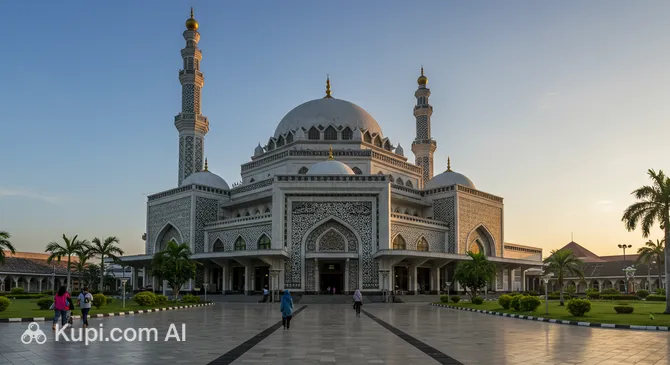
The history of the Great Mosque of Medan dates back to the dawn of the 20th century. Its construction was initiated on August 21, 1906, by order of Sultan Ma'mun Al Rashid. The Sultan sought to build a mosque that would surpass even his own palace—Istana Maimun—in its splendor. This ambitious project was completed quite quickly, and just three years later, on September 10, 1909, the mosque was solemnly opened to worshippers, becoming a major milestone in the history of Medan.
The architectural design of this magnificent structure was initially commissioned to the Dutch architect Van Erp. He was also the designer of the aforementioned Sultan Ma'mun's palace, which speaks to his high skill and the ruler's trust in him. However, an interesting turn occurred: Van Erp was recalled to Java to participate in an equally significant project—the restoration of the famous Borobudur temple. As a result, the construction of the Great Mosque of Medan was completed by another talented architect, JA Tingdeman, who successfully brought the original vision to life.
The construction of such a grand mosque was a significant undertaking, and the history of its financing is also of interest. The majority of the costs were covered by Sultan Ma'mun Al Rashid, but a substantial contribution was also made by Tjong A Fie, a well-known and respected representative of the Chinese community in Medan at the time. This collaboration highlights the participation of various sectors of society in creating this iconic structure.
The Great Mosque of Medan gains its special splendor from the use of high-quality materials, many of which were imported, reflecting the scale of the vision. Exquisite marble decorating its interiors and facades was brought from Europe and China. Stunning stained glass for the chandeliers and windows was imported from France. These details not only provided the mosque with its breathtaking beauty but also made it a unique architectural wonder of its time, showcasing a blend of local ambition and international craftsmanship.