Support

Guanyin Cave Temple

About

Guan Yin Cave Temple, also known as Perak Tong, is an impressive Chinese Buddhist temple complex located in Ipoh, Malaysia. This temple is one of the most significant and largest cave shrines in the region, unique for its location directly inside a massive limestone mountain formation.
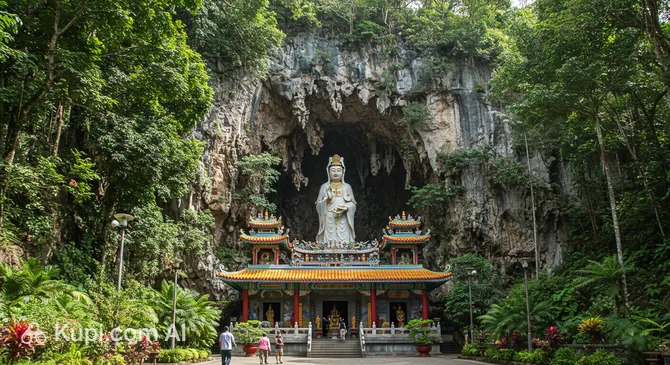
Guanyin Cave Temple. Illustration.
Source: Kupi.com AI

Traveler photos:

Guan Yin Temple is famous for its striking architecture and peaceful atmosphere. The complex includes several prayer halls of various sizes, each decorated with traditional ornaments and paintings. The passages between the halls, carved into the rock, create the feeling of a journey into another world, hidden from prying eyes.

The main and most spacious hall of the temple is dominated by a huge statue of Buddha, which inspires awe with its grandeur. In other, smaller halls, visitors can see images of various Bodhisattvas, including Guan Yin—the Goddess of Mercy, to whom the temple is dedicated. Taking center stage in the main prayer hall is a large statue of Guan Yin, surrounded by statues of other Bodhisattvas. This place attracts both pilgrims and tourists eager to experience Malaysia's rich culture and spiritual heritage.

Contacts

Unfortunately, detailed contact information for the Guan Yin Cave Temple, such as a phone number or an official website, is not always available in open sources. We recommend checking for the latest information on opening hours and visiting conditions directly on-site in Ipoh, at local tourist information centers, or through official Malaysia tourism portals.

Usually, such temple complexes can be reached by local public transport or taxi from the city center. Plan your route in advance to make your visit as comfortable as possible.

How to contactContact
Address31350 Ipoh, Perak, Malaysia
Phone number+60 5-311 2451
Websiteangkongkeng.com

What to Do

A visit to the Guan Yin Cave Temple in Ipoh offers a unique experience of immersion in a spiritual atmosphere while enjoying natural beauty. Inside the temple, visitors can explore various prayer halls decorated with numerous statues of Buddhist deities and Bodhisattvas, each with its own history and meaning. This is a place where you can not only admire the art but also feel peace and tranquility.

One of the main activities at the temple is climbing the stairs that lead to the top of the hill. A small donation is usually required to access the stairs. The effort spent on the climb is fully rewarded: from the top, you'll find a breathtaking panoramic view of Ipoh and the picturesque limestone mountain formations characteristic of this region of Malaysia. It's a wonderful opportunity to take impressive photos and enjoy the moment.

The temple complex also features several cozy gazebos. From here, you can admire views of the surroundings, including Ipoh's industrial areas and unique mountain landscapes. Despite the potentially hot and humid climate, the views from the height are definitely worth it. Another interesting feature of the temple is the turtle pond. In Chinese culture, turtles are considered symbols of longevity and good luck, and visitors often feed them, which, according to belief, helps accumulate positive karma.

Getting There

Guan Yin Cave Temple is one of the spiritual gems of Ipoh, located in the state of Perak, Malaysia. When planning your visit, keep in mind that the temple may be slightly off the main tourist route that connects other famous cave shrines in Ipoh. This gives it a special atmosphere of seclusion but requires a more careful approach to travel arrangements.

The most convenient and common way to reach Guan Yin Cave Temple, especially if you value comfort and time, is by taxi. In Ipoh, this mode of transport is well-developed and accessible. A taxi ride from the city center or your hotel will take you directly to the temple complex without any hassle. This is also a good option if you plan to visit several Ipoh attractions in one day.

While Ipoh has a public transport system, including city buses, traveling to the Guan Yin Cave Temple by bus may involve transfers and take more time, especially for those unfamiliar with local routes. If you prefer a more flexible schedule, besides taxis, you can consider renting a scooter or a car, which will give you the freedom to move around Ipoh and its surroundings.

Nearest city: Ipoh

History & Facts

Guan Yin Cave Temple, also widely known as Perak Tong, is one of the most remarkable spiritual sites in Ipoh, Malaysia. Founded in the 1920s—roughly a century ago—it is considered one of the country's most important Buddhist temples and a must-visit for many tourists. Its uniqueness lies in its location inside a natural limestone cave, which creates a special atmosphere of peace and connection with nature.

The temple is located in the famous Kinta Valley. The geological history of this area is extraordinary: millions of years ago, it was covered by the waters of the world's oceans. Over time, the remains of marine organisms settled on the seabed, forming limestone deposits under the pressure of the water. These long-term processes led to the formation of the characteristic mountain ranges and caves that today house many shrines, including the Guan Yin Cave Temple (Perak Tong).

The Ipoh region is truly rich in cave temples with long histories, and Guan Yin Cave Temple (Perak Tong) is a prominent part of this tradition. For comparison, other famous shrines like Nam Thean Tong, whose history dates back to the mid-19th century and is considered one of the oldest in Ipoh, and Sam Poh Tong, discovered by a Chinese monk in 1890, also bear witness to the deep spiritual tradition of using caves in this area. Guan Yin Cave Temple (Perak Tong) makes its own significant contribution to the unique heritage of the Kinta Valley.

Dedicated to Guan Yin, the Goddess of Mercy (as reflected in one of its names), and serving as a major Buddhist center, Perak Tong offers visitors more than just a chance to touch ancient traditions; it also provides a peaceful atmosphere. This site harmoniously blends the natural majesty of the cave with spiritual practice, serving as a reminder of how, for centuries, people have found spaces for meditation and worship within natural shelters, creating truly unique sanctuaries.

Time Needed

It is recommended to set aside 1 to 2 hours for a visit to the Guan Yin Cave Temple in Ipoh, also known as the Perak Tong Cave Temple. This time is usually sufficient to explore this significant and beautiful temple complex without rushing.

Within 1-2 hours, you can explore the temple's main halls and caves, admire the numerous statues of deities, including the central figure of Guan Yin, and experience the special calming atmosphere of the place. Given the size of the complex, the presence of several levels and halls, and the possibility of climbing to the observation deck at the top of the hill for panoramic views, the specified time will allow for a fairly complete impression of the attraction.

Of course, the visit time is always individual. If you want to delve deeper into the details of the paintings and sculptures, take more photos, meditate in the silence of the caves, or simply enjoy the tranquility of this unique place for longer, feel free to add more time to your plan. The most important thing is that the visit brings you positive emotions and leaves pleasant memories.

Working Hours

Finding the exact opening hours for the Guan Yin Cave Temple in Ipoh can be tricky, as such information is not always widely published and may change. Often, for religious sites in the region, specific opening hours are not fixed or depend on various factors. Therefore, it is strongly recommended to check for up-to-date information directly before your visit on the attraction's official website (if one exists) or through local tourist information services in Ipoh.

When planning your visit, it's also worth checking if advance ticket booking or special registration is required, especially if your visit falls during peak tourist seasons or public holidays. Although many temples like the Guan Yin Cave Temple are open to visitors year-round, it's best to confirm this in advance, along with any possible entry restrictions during certain hours, to ensure your visit to this amazing place is as comfortable as possible.

9:00 – 17:30

Nearby

Visiting the Guan Yin Cave Temple is undoubtedly a highlight, but Ipoh and its surroundings are ready to offer even more discoveries. Exploring nearby attractions will allow you to dive deeper into the culture and atmosphere of this amazing region of Malaysia, complementing the impressions from your main destination.

Each new location can reveal the city from an unexpected side, whether it's another ancient temple, an interesting museum, or simply a picturesque spot perfect for walks and photography. Don't miss the chance to expand your itinerary and make your trip even more fulfilling. Near the Guan Yin Cave Temple, you will find several interesting sites worth your attention:

NameDistance
Sam Poh Tong Temple0.6 km
Geology Museum4.4 km
Karaoke Ipoh Parade4.8 km
Yum Cha House Dim Sum4.8 km
Station 18 Mall4.8 km
D'Pets Kingdom5 km
Ipoh Town Square5.1 km

Have you reached the end of the page?

So the route has been studied inside and out