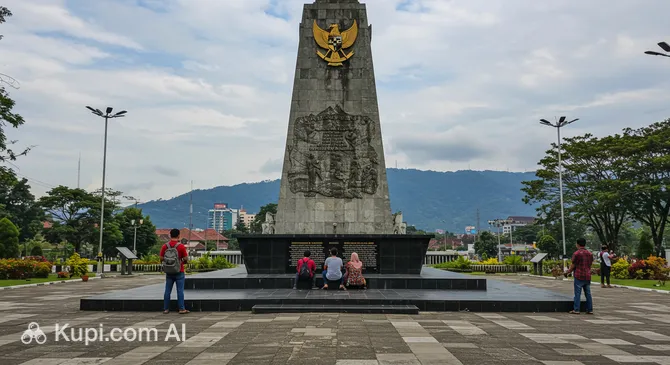
In the very heart of Padang lies a place that is impossible to visit without feeling deep emotion. The Earthquake Monument (Monumen Gempa Padang) is a solemn memorial dedicated to the memory of the victims of the devastating 2009 natural disaster. Located on the seismically active island of Sumatra, Indonesia frequently encounters the power of nature, and this monument has become a symbol of the local people's resilience and unity.
Padang Earthquake Monument. Illustration.
Source: Kupi.com AI
Traveler photos:
The memorial consists of an architectural composition, with its central element being a wall inscribed with the names of those who perished. It is a quiet and dignified place that serves as a reminder of the importance of mutual aid and the strength of the human spirit. Unlike the bustling markets of Padang, an atmosphere of peace and reflection prevails here.
For travelers, this monument is an important point on the map for understanding the region's recent history. It is more than just a photo opportunity; it is a chance to touch the living memory of a city that managed to recover after a massive catastrophe.
Contacts
The memorial complex is located in the heart of the city's historic district, making it easily accessible for walking tours and organized excursions. Below is the current contact information and the exact location of the site.
The primary activity for visitors here is to pay their respects to the victims of the tragedy. Tourists come for quiet contemplation and reflection. Walking along the memorial wall, where the names of the victims are engraved, allows one to grasp the scale of the event and feel a deep connection between the city's generations.
Since the memorial is a place of remembrance, it is customary to maintain silence. It is an excellent spot for thoughtful photography: the monument's architecture and the play of light on the memorial plaques allow for shots that capture Padang's special atmosphere. You can also observe local residents coming here to lay flowers or simply sit in silence.
A visit to the monument can be combined with exploring the modern urban environment. Surrounding the memorial are restored buildings that showcase the region's architectural resilience. Walking nearby, you will see how the city has integrated the memory of the past into its daily life, creating a space for dialogue between history and modernity.
Getting There
The Earthquake Monument is located in the Belakang Tangsi district, which is in the central part of the city. The easiest way to get here is by taxi or by using popular ride-hailing apps in Indonesia (Grab or Gojek). A trip from most hotels in the central district will take no more than 10–15 minutes.
If you want to experience the local flavor, use public transport—the brightly colored "angkot" minibuses. Look for routes heading toward the Pasar Raya central market. From the market, the memorial is just a 5–7 minute walk away.
For those walking along the Padang embankment, the memorial is a 15-minute walk. The path leads through lively city blocks where you can see a blend of colonial and modern architecture.
Nearest city: Padang
History & Facts
The history of this memorial is inextricably linked to the tragic events of September 30, 2009. A powerful 7.6-magnitude earthquake virtually paralyzed Padang, destroying thousands of buildings and changing the lives of hundreds of thousands of people. The monument was erected as a place of mourning and, simultaneously, a symbol of the city's rebirth.
The city itself has historically played a key role on the west coast of Sumatra. In the 18th century, it was a vital stronghold for the Dutch East India Company. A turbulent history of colonial wars and trade rivalries shaped the unique character of the local people, who have repeatedly proven their resilience in the face of both human and natural trials.
The names of more than 1,100 victims are carved into the walls of the monument. This makes the site not just a tourist attraction, but a sacred place for many families. Interestingly, the memorial's design is intentionally minimalist so that nothing distracts visitors from deep reflection on the power of nature and the fragility of human existence.
Time Needed
A quiet tour of the memorial typically takes 30 to 45 minutes. This is ample time to read the inscriptions on the memorial wall, take photos, and soak in the solemn atmosphere of the place.
If you are interested in the region's modern history or want to spend some quiet time away from the city's hustle and bustle, you might stay for up to one hour. Visiting the monument is easy to plan as a short stop during a larger walking route through downtown Padang.
Working Hours
Visiting the memorial is possible during daylight hours; however, the grounds have a set operating schedule. Please note that the complex is closed on Fridays.
On other days of the week, you can visit the monument from 09:30 to 17:30. It is recommended to come in the morning or closer to closing time when the sun is less intense and the atmosphere of solitude is felt most strongly.
Day
Opening hours
Monday
9:30 – 17:30
Tuesday
9:30 – 17:30
Wednesday
9:30 – 17:30
Thursday
9:30 – 17:30
Friday
Closed
Saturday
9:30 – 17:30
Sunday
9:30 – 17:30
Nearby
The memorial's location in central Padang allows tourists to easily combine a visit with other interesting locations. Exploring the surrounding area will help you better feel the rhythm of this port city and see its many facets—from modern entertainment centers to quiet aquariums.