Support

Balanga Museum Central Kalimantan

About

The Balanga Museum of Central Kalimantan is a unique cultural space that serves as the main gateway to the world of traditions and customs of the Dayak people. Located in the city of Palangka Raya, this provincial museum occupies a vast territory of 5 hectares and is a must-visit for those who want to understand the soul of Borneo and get acquainted with the heritage of Indonesia.
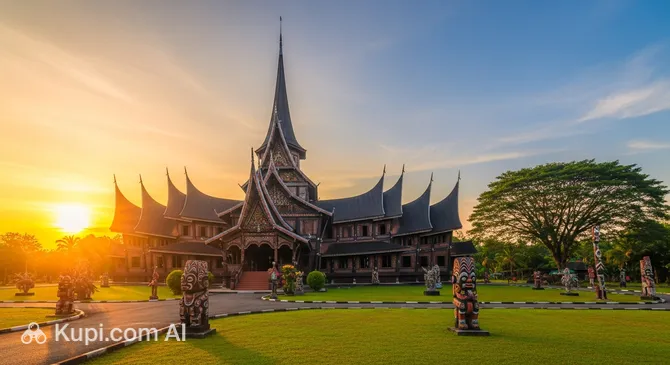
Balanga Museum Central Kalimantan
Balanga Museum Central Kalimantan. Иллюстрация. Источник: Kupi.com AI

The museum houses rich collections spanning ethnography, archaeology, ceramics, and numismatics. Visitors can see legendary traditional Mandau swords, unique magical fish traps called Mihing, as well as exquisite Chinese vessels from the Ming and Qing eras, which were kept as heirlooms in local families for centuries.

A special feature of the exhibition is its structure, which follows the human life cycle: from birth and wedding rites to complex Tiwah funeral ceremonies. The museum offers a rare opportunity to see miniatures of traditional Betang longhouses and get acquainted with ancient Sapundu sculptures, making it a true treasure for history and anthropology enthusiasts.

Contacts

To clarify details before your visit, you can use the provided phone number. The museum does not have an official website or active social media pages, so information regarding schedule changes is most often available directly on-site.

How to contactContact
AddressJl. Tjilik Riwut No.Km. 2.5, Palangka, Kec. Jekan Raya, Kota Palangka Raya, Kalimantan Tengah 73112, Индонезия
Phone+62 536 3222991

What to Do

A visit to the museum is organized as a sequential journey through the life stages of the Dayak people. On the first floor, the ritual Sapundu statues will surely catch your eye, while on the second floor, you can study detailed models of Betang longhouses, traditional canoes, and even floating houses. You will see rare weapons—Mandau swords and blowpipes—and learn about the purpose of the magical fish traps known as Mihing.

The exhibits are very visual, demonstrating ceremonies ranging from childbirth to maja misek wedding rituals. A special place is held by the hall dedicated to the Tiwah funeral ceremony, which is considered one of the most significant events in Dayak Ngaju culture. Here, you can examine spiritual objects, Penyang fetishes, and learn about the symbolism of the Tree of Life (Batang Garing), a key image in local mythology.

In addition to the ethnographic halls, it is worth paying attention to the collection of traditional fabrics. It features unique clothing made from nyamu tree bark, embroidered velvet wedding costumes, and modern batik with traditional motifs. The museum is perfect for independent exploration in a quiet atmosphere, allowing you to see the daily life and beliefs of the indigenous people of Kalimantan in detail.

Getting There

Reaching the museum is quite easy, as it is located just 2.5 kilometers from the city's central roundabout, Bundaran Besar. The exact address is Jl. Tjilik Riwut No.Km. 2.5. Being within the city limits, the trip from central Palangka Raya takes only a few minutes by vehicle.

For getting around, it is most convenient to use taxis or popular Indonesian ride-hailing apps like Grab or Gojek. You can also take local public transport that runs along the main Tjilik Riwut street.

If you are heading to the museum from the airport, the drive is relatively short and comfortable. The museum grounds cover about 5 hectares and include parking for visitors arriving by private or rental transport.

Ближайший город: Palangkaraya

History & Facts

The history of the Balanga Museum began in 1973. It was established by the government of the Central Kalimantan province as a regional repository of memory. The primary goal of creating the museum was the urgent need to preserve the unique cultural heritage and artifacts of the Dayak people, the indigenous inhabitants of Borneo.

An important milestone in the institution's development occurred in 1990. As part of a state policy to strengthen provincial cultural institutions, the museum was granted official provincial status. This allowed for the expansion of the exposition and the systematization of the collections, turning the museum into the region's main ethnographic and archaeological center.

Of particular value is the collection of ancient Chinese ceramics from the Ming and Qing dynasties, which were highly prized by locals for centuries and used in rituals. Notably, the museum is constantly growing; its historical section includes a diverse array of traditional weaponry and items added over the decades, making the collection a living witness to the island's history.

Today, under the guidance of its administration, the museum actively participates in national exhibitions throughout Indonesia. Special attention is given to popularizing traditional Dayak textiles with their characteristic flora and fauna patterns, which are recognized as an important element of the country's intangible cultural heritage.

Time Needed

To leisurely explore all the halls and get acquainted with the main collections, most travelers need between 1 and 2 hours. The museum is quite compact but very densely packed with small details and interesting explanations for the exhibits.

If you plan to study the symbolism of textile patterns in detail or delve into the intricacies of Dayak wedding rituals, it is better to set aside 2 hours. This time is quite enough for a self-guided tour at a calm pace and a brief interaction with volunteers or guides, should they be on-site.

Working Hours

Balanga Museum primarily welcomes visitors on weekdays. The standard operating schedule is Monday through Friday, with doors open from 08:00 to 15:00 (according to some reports, the museum may open slightly earlier at 07:30).

Please note that the museum is usually closed on Saturdays and Sundays. As the schedule may change due to public holidays or local events, tourists are advised to confirm current opening hours immediately before their trip.

DayWorking hours
понедельник08:00–15:00
вторник08:00–15:00
среда08:00–15:00
четверг08:00–15:00
пятница08:00–15:00
субботаЗакрыто
воскресеньеЗакрыто

Nearby

Exploring the museum's surroundings will help you get a deeper feel for the atmosphere of Central Kalimantan's administrative center. Within a few kilometers, you can find both important historical monuments and places for peaceful walks.

Special attention should be paid to monuments related to the city's founding and traditional "Rumah Betang" structures, which allow you to see Dayak architecture in its full size.

NameDistance
O2 Cafe & Sport Bar0.1 km
Palangkaraya Mall1.9 km
Matahari Department Store2.1 km
Bundaran Besar Palangkaraya2.1 km
Pasuk Kameloh Park2.2 km
Soekarno Monument2.4 km
Detones3.1 km

Reached the end of the page?

That means the route is fully explored