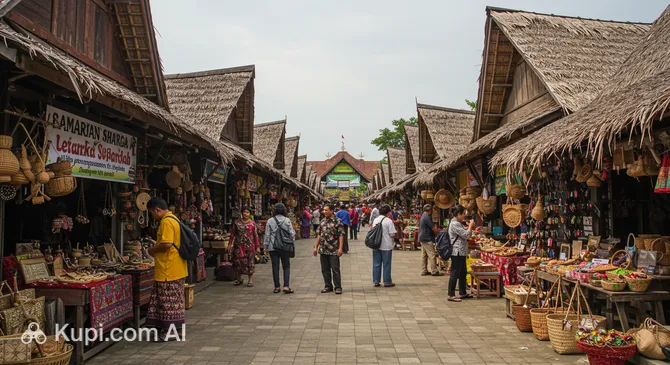
If you're looking for a truly authentic experience on the island of Borneo, then Ketupat Village (Kampung Ketupat) is a place definitely worth including in your itinerary. Located in the historic Samarinda-Seberang district, this traditional Indonesian village in the city of Samarinda is a living open-air museum where time seems to slow down.
Ketupat Village. Illustration.
Source: Kupi.com AI
Traveler photos:
The village earned its name in honor of the famous Indonesian dish ketupat — rice wrapped in palm leaves. It’s not just a culinary brand, but a symbol of local identity. By visiting this place, you'll find yourself in the heart of the culture of East Kalimantan province, which is part of the amazing country of Indonesia.
The village's unique character lies in its architecture: here you can see classic stilt houses, typical of the region's coastal settlements. Ketupat Village is very popular with travelers (boasting an impressive 4.5-star rating on Google), who come here for the atmosphere of genuine hospitality and to learn about the daily lives of the indigenous peoples of Kalimantan.
Contacts
To check for current information before your visit, you can refer to official resources or use navigation data.
A stroll through Ketupat Village is, first and foremost, a visual and cultural exploration. You can walk through narrow, winding streets, admiring the colorful stilt houses and observing the daily life of Samarinda's residents. Don't miss the chance to peek into small workshops where local artisans demonstrate the art of palm leaf weaving — this is how the pouches for the dish that gave the village its name are created.
For photography enthusiasts, this place is a true paradise: the combination of traditional architecture, bright boats by the shore, and panoramic views of the Mahakam River creates perfect shots. You can watch fishermen returning with their catch or children playing on the wooden walkways that connect the houses.
Be sure to try the local street food at the small stalls. Besides ketupat, you can find unique Kalimantan dishes that are rarely seen in tourist centers. Chatting with the friendly locals, who belong to the Dayak or Banjar peoples, will add warmth to your trip and allow you to learn about the customs of Borneo firsthand.
Getting There
Ketupat Village is located in the Samarinda-Seberang district, and getting here is quite simple. If you are arriving in the city by plane, the nearest airport is APT Pranoto. The journey from there to the central part of the city takes about 30–40 minutes by taxi. You can use popular regional services like Grab or Gojek, which are fast and reliable.
From the center of Samarinda, the village is just a 10–15 minute drive. Tourists often choose colorful modes of transport: ojek (motorcycle taxi) or becak (traditional rickshaw), which easily maneuver through the narrow streets. Additionally, public minibuses called angkot regularly run toward Samarinda-Seberang.
Since the village is situated on the banks of the majestic Mahakam River, there is an even more scenic route — by speedboat from the city center. This trip takes about 15–20 minutes and offers a view of the city from the water. If you prefer traveling by private transport, parking spaces are available in the village area.
Nearest city: Samarinda
History & Facts
The village's name comes from the word ketupat — a traditional Indonesian dish consisting of rice boiled inside a tightly woven pouch of palm leaves. Historically, this form of packaging was not just a culinary delight but a practical necessity. The dense casing allowed the rice to stay fresh for a long time, which was critical for Borneo's traders and sailors on long voyages.
Over time, ketupat became an important cultural symbol representing hospitality and community. The tradition of preparing this dish is especially prominent during major Muslim holidays. In this village, the secrets of weaving the casings and special preparation recipes are passed down from generation to generation, maintaining a living link to the region's past.
While Samarinda is actively developing as a modern hub of East Kalimantan, Ketupat Village remains a guardian of the lifestyle of the Banjar and other indigenous peoples. Here, history is not just about dates, but about the daily rituals that can still be observed today while walking along the riverbank.
Time Needed
To take a leisurely stroll through Ketupat Village, admire the traditional architecture, and take atmospheric photos, it usually takes 1 to 2 hours. This is plenty of time to immerse yourself in the local rhythm of life and chat with the friendly residents.
About 40 minutes should be set aside for the walk itself and viewing the stilt houses. The remaining time can be spent tasting local street food or watching craftsmen skillfully weave palm leaf products. If you plan to combine your visit with a boat trip on the Mahakam River, you should add another hour to your visit.
Working Hours
Ketupat Village does not have strictly regulated operating hours, as it is a residential area accessible for walking during daylight hours. However, it is best to plan your visit from early morning until sunset to fully enjoy the river views and catch the craftsmen at work.
Since there is no official schedule, it is recommended to check for updates on local community social media or ask for details from guides in Samarinda before your trip.
Nearby
Exploring the surroundings of Ketupat Village will help you better understand the multifaceted culture of East Kalimantan. Nearby, you'll find spiritual centers as well as scenic parks where you can relax after your walk.