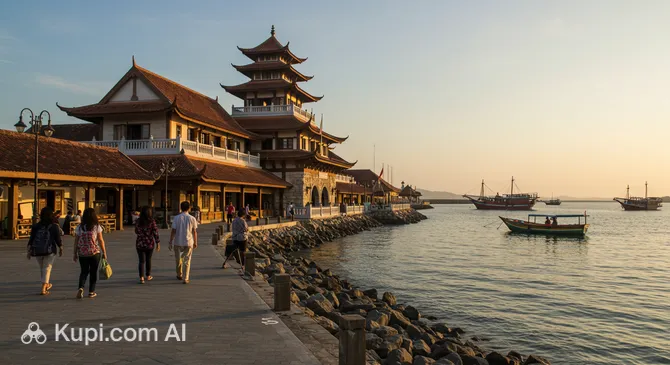
Imagine a building that looks like a giant golden seashell washed ashore. This is the Gonggong Building, a unique architectural structure in the city of Tanjung Pinang. Located in Indonesia, this building serves as the official tourist information center and is the region's signature landmark.
Gong Gong Building. Illustration.
Source: Kupi.com AI
Traveler photos:
The facade owes its unusual shape to the gonggong snail—a popular local delicacy considered a symbol of Bintan Island. The building's futuristic design contrasts effectively with the seascape, catching the eye of every passerby. Inside, visitors can find useful travel tips, maps, and information about cultural events.
The site is located on the picturesque Laman Boenda promenade, which locals call the "Mother's Garden." It is an open public space with manicured lawns and relaxation areas. From here, you can enjoy stunning views of the sea and the neighboring Penyengat Island, especially in the rays of the setting sun.
Contacts
If you need help or up-to-date information about routes in the region, you can contact the center's staff directly. The building is located in the heart of the coastal recreation area.
The first thing to do is step inside the "Seashell Hall." This houses the tourist center, where you can pick up city maps, learn about upcoming cultural events, and get recommendations for the best routes on Bintan Island. The building itself often hosts exhibitions dedicated to local art and traditions.
The surrounding Laman Boenda promenade offers excellent opportunities for relaxation. You can walk along the shaded paths, sit on benches by the water, or have a small photo session—the building and the sea horizon create a magnificent backdrop. This place is considered one of the best spots in the city for watching sunsets.
Don't forget to pay attention to the gastronomic side. Since the building's design is inspired by the local delicacy—the gonggong snail—it would be symbolic to try this dish at one of the nearby restaurants. They are usually steamed and served with spicy or aromatic sauces, allowing you to literally "get a taste" of Tanjung Pinang's culture.
Getting There
Getting to this iconic city landmark is easy, as it is located in the central part of the waterfront. The Gonggong Building is situated in Tanjungpinang Kota, and its unusual silhouette is visible from afar. If you are staying in the center, a pleasant walk along the sea will lead you straight to your destination.
For those arriving from Raja Haji Fisabilillah International Airport, the trip by taxi or public bus takes about 15–20 minutes. If you are traveling between islands and arrive at the Tanjung Pinang ferry terminal, you can reach the promenade on foot or take a short transfer.
Ride-hailing services like Grab and Gojek are active in the city and are the most convenient and fastest way to get around. For independent travelers, there is parking for cars and scooters near the promenade.
Nearest city: Tanjung Pinang
History & Facts
The Gonggong Building is a striking example of modern architecture that seeks to highlight regional identity. The structure was built relatively recently but has already become the city's main symbol. The core idea of the project was to create a visual embodiment of local pride—the gonggong sea snail.
The architects aimed to reflect the residents' close connection to the sea in stone and metal. The choice of the shell shape is no coincidence: this mollusk has been a key element of local cuisine and culture for generations. In this way, the building has become a bridge between ancient traditions and the modern development of the region.
Although this site does not have centuries of history, it quickly turned into a center of public life. Today, it is not just a beautiful building, but a venue for annual art festivals and cultural events that bring the community together and attract travelers. It symbolizes a fresh perspective for a city striving to become an important tourist destination on the world map.
Time Needed
Most travelers find that 1 to 2 hours is enough to explore the site and its surroundings. This is plenty of time to admire the building's architectural details, stop by the information center, and take memorable photos against the backdrop of the unusual facade.
If you plan a leisurely stroll along the Laman Boenda waterfront, you should allow a bit more time. About 30 minutes is usually spent on the building itself, and the rest of the hour can be dedicated to relaxing in the green areas, watching the sea, or visiting the playground if you are traveling with family.
Working Hours
The building and the adjacent park area of the waterfront are accessible to visitors at any time of day. This makes it an excellent spot for both morning walks and evening gatherings by the sea under the glow of night lights.
Opening Hours:
Monday — Sunday: Open 24 hours
The information center inside may have its own working hours, but you can admire the architecture and the surroundings 24/7.
Open 24 hours
Nearby
A stroll around the waterfront allows you to see many interesting sights that complement the overall experience of visiting the city. Many significant monuments and memorial sites are within walking distance, making this area ideal for walking routes. Exploring these locations will help you better understand the cultural context and history of the region.
Below are the most interesting sites located nearby: