Support

Meshgin Shahr

About

Meshginshahr is a true gem of northwestern Iran, nestled at the foot of the majestic extinct Sabalan volcano. This city, the administrative center of the eponymous county in Ardabil Province, attracts visitors with its unique atmosphere and the rich cultural traditions of the region.

The city lies at an altitude of about 1,400 meters above sea level, giving it a mild, pleasant climate and stunning views of snow-capped peaks. With a population of about 74,000 people, Meshginshahr retains the charm of a friendly provincial town where every guest feels welcome. Here, you can enjoy peace and a steady pace of life.
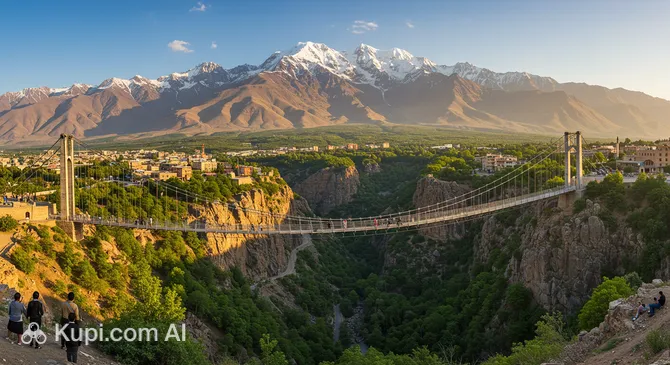
Meshgin Shahr. Illustration.
Source: Kupi.com AI

Meshginshahr is literally surrounded by natural beauty: green hills, healing thermal springs, and picturesque gorges that beckon nature lovers and outdoor enthusiasts. One of the main attractions is Mount Sabalan itself, a destination for climbers and mountain scenery connoisseurs. The city is also famous for its suspension bridge, one of the longest in the Middle East, offering breathtaking views.

Meshginshahr is ideal for travelers seeking authentic experiences. Here, you can stroll through cozy streets, enjoy mountain vistas, learn about local customs, and try dishes that can be found nowhere else. It is a place where time seems to slow down, allowing every guest to feel the true taste of Iranian hospitality and discover an amazing corner of this ancient country.

You can find more interesting facts on the History of Meshginshahr page.

Weather Overview

The weather in Meshginshahr is characterized by distinct seasonality. In summer, especially in July and August, the average temperature stays around +20°C, while maximum values can rise to +26-27°C. Winters here are cold: in January, the average temperature is approximately -3°C, with possible cold snaps down to -8°C.

Expect warm summers with little precipitation and cold, relatively dry winters. The highest number of rainy days and precipitation (up to 3 mm per month) occurs in the spring, especially in May. For a more detailed look at the weather conditions in Meshginshahr by month, visit the Meshginshahr Climate page.

Average monthly temperature

Average monthly precipitation

Interesting Facts

In addition to its famous landmarks, Meshginshahr hides many curious details and stories that make it even more attractive to travelers. Ready to learn some surprising facts about this Iranian city?

  • Meshginshahr is famous for its thermal springs, which are considered some of the most healing in Iran. Legends attribute miraculous powers to the local hot mineral waters to heal fatigue and ailments, drawing those who wish to improve their health and restore their strength to traditional baths and spa centers.

  • The city is located in close proximity to the unique Arasbaran forests, which are included in the UNESCO World Network of Biosphere Reserves. These ancient forests are home to rare species of flora and fauna, offering unique opportunities for ecotourism, hiking, and wildlife observation.

  • Meshginshahr is home to one of the longest pedestrian suspension bridges in the Middle East – the Meshginshahr Suspension Bridge. Stretching over a picturesque gorge, this bridge has become not only an engineering marvel but also a popular spot for thrill-seekers and those looking for breathtaking panoramic views.

  • Meshginshahr is the birthplace of talented poets, skilled artisans, and master carpet weavers. Folk art traditions are carefully preserved here, and local carpets and handmade goods are highly valued for their quality and unique designs, considered true works of art.

How to Get There

There are several ways to reach the city of Meshginshahr, located in the picturesque Ardabil Province of Iran. For most tourists, the most convenient option is a flight to one of the nearest airports followed by a ground transfer, as there is no airport in Meshginshahr itself.

The closest airport to Meshginshahr is Ardabil Airport (IATA: ADU), located in the city of Ardabil, approximately 66 km away. This is a regional airport from which you can reach Meshginshahr by taxi or local bus in about 1.5–2 hours. This airport primarily serves domestic flights within Iran.

A larger transport hub that accepts both domestic and some international flights is Tabriz International Airport (IATA: TBZ). It is located in the city of Tabriz, about 130 km from Meshginshahr. The journey from here to your destination will take approximately 3–3.5 hours by car. Due to the larger number of flights, this airport may offer more travel options.

You might also consider flying through Lankaran International Airport (IATA: LLK), located in the city of Lankaran (Azerbaijan), about 106 km from Meshginshahr. This airport may be convenient for travelers arriving from certain countries. The road from Lankaran to Meshginshahr takes about 2.5–3 hours, not including the time for border crossing.

For convenience, here is summary information on the main airports used to reach Meshginshahr:

AirportPassenger trafficDistance
Ardabil Airport204 00066 km
Lankaran International Airport16 000106 km
Zangilan120 000113 km
Tabriz Airport1.8 mln130 km
Kapan Airport4 800139 km

There is no direct rail link to Meshginshahr. Therefore, besides flying and transferring, the main way to reach the city is by road. You can use taxi services, rent a car, or consider intercity buses from major nearby Iranian cities such as Ardabil or Tabriz. It is recommended to check schedules and the availability of local transport in advance, especially if you plan to use public buses.

Main Attractions

Meshginshahr, located in the picturesque Ardabil Province, attracts travelers not only with its natural beauty but also with unique attractions that blend history and modernity. The city offers a variety of experiences for curious tourists.

One of the most famous and exciting landmarks in Meshginshahr is the renowned Suspension Bridge (Pol-e Moallaq). It is one of the longest and highest pedestrian suspension bridges in the Middle East. A walk across it provides not only an adrenaline rush but also unforgettable panoramic views of the surrounding Sabalan Mountains and the Khiyav Chay River valley. The bridge has become a true symbol of modern Meshginshahr and a popular spot for photography.

For connoisseurs of history and architecture, a visit to the Sheikh Haydar Mausoleum is a must. This historical complex is the final resting place of Sheikh Haydar, the father of Shah Ismail I, the founder of the Safavid dynasty. The mausoleum is an impressive structure with architecture characteristic of that period, decorated with tiles and calligraphy, and holds great cultural and historical significance.

Not far from the city lies the impressive Qahqaheh Castle. This ancient citadel, situated on a mountain peak, is shrouded in many legends and historical events. The climb to the fortress can be challenging but is rewarded with stunning views and the chance to touch the centuries-old history of the region. The castle played an important role in different historical eras, serving as both a defensive structure and a prison.

Nature lovers and those seeking wellness should pay attention to the Shirin Su thermal springs. These hot springs are famous for their healing properties and attract visitors looking to relax and improve their health. The spring water is rich in minerals and is used to treat various ailments, while the surrounding nature adds tranquility to the site.

Local Cuisine

The cuisine of Meshginshahr is a true gastronomic journey, reflecting the natural abundance and cultural traditions of the region. Local dishes are prepared with the freshest ingredients, and recipes are passed down through generations, preserving authentic taste and aroma.

The main star of local culinary art is undoubtedly lamb dishes. Be sure to try the famous Meshginshahr kebab, cooked over charcoal with fragrant spices and fresh herbs. It is often served with aromatic saffron rice and seasonal vegetables. You can find this dish in numerous local restaurants and cafes where it is prepared according to traditional recipes.

In addition to kebab, it is worth trying the traditional soup "ash". This hearty and healthy dish is made from various local herbs, legumes, and grains, representing a true discovery for fans of healthy and authentic food. Dairy products also play an important role in the diet: be sure to try the fresh homemade yogurt and local cheese, which make a wonderful addition to any meal.

Among drinks, doogh (ayran) is particularly popular – a refreshing fermented milk drink that perfectly quenches thirst. However, the hallmark of hospitality in Meshginshahr is tea. In every home, you will certainly be treated to aromatic herbal tea, brewed according to a special recipe. This is not just a drink, but a whole culture of communication and warmth.

To discover local delicacies and fresh produce, head to the street markets and bazaars of Meshginshahr. Here you will find an abundance of seasonal fruits, nuts, as well as traditional sweets prepared according to ancient recipes. Local dried fruits and fruit leather (lavashak) are especially popular – they are not only delicious but also make excellent gastronomic souvenirs from your trip.

The gastronomic scene of Meshginshahr attracts visitors with its authenticity and use of fresh, natural products. Besides everyday dishes, the city sometimes comes alive with food festivals, where you can delve deeper into culinary traditions and even learn cooking secrets from local masters. Immersing yourself in the world of Meshginshahr's flavors will leave you with the warmest and most appetizing memories.

Travel Tips

Planning a trip to Meshginshahr, a cozy city in the Iranian province of Ardabil known for its impressive suspension bridge and picturesque surroundings? To ensure your journey goes smoothly and leaves only pleasant impressions, we have prepared some practical tips to help you better prepare for your visit.

  1. Your Wardrobe and Essentials: The climate in Ardabil Province, where Meshginshahr is located, is continental, with cool winters and warm summers. Bring clothes that can be layered. Comfortable shoes are a must for walking. Don't forget a universal power adapter for your electronics. Remember that Iran has a strict dress code: for women, a headscarf (hijab or roosari) covering the hair and opaque, loose clothing that hides the figure, covering arms to the wrists and legs to the ankles, are mandatory. Men should wear long trousers and shirts (short-sleeved T-shirts are acceptable, but tank tops are not).
  2. Getting Around Meshginshahr: Within the city, it is most convenient to use taxi services. There are regular taxis as well as shared taxis ("savari"), which travel along specific routes and pick up multiple passengers. Public buses also run, but navigating their routes without knowing the language can be difficult. Renting a car may be an option for exploring the surroundings, but be aware of local traffic patterns; renting a car with a driver might be a more comfortable solution.
  3. Financial Matters: The official currency is the Iranian Rial (IRR). However, in daily life, prices are very often quoted and transactions made in "Tomans" (1 Toman = 10 Rials). It is critically important to know that international bank cards (Visa, Mastercard, etc.) do not work in Iran. You must bring enough cash with you (preferably US Dollars or Euros) for your entire trip and exchange it at official exchange offices ("sarrafi") or banks. Tipping is not always mandatory but is welcomed in restaurants and for small services (usually 5-10% of the bill or a small amount).
  4. Health and Safety: There are pharmacies ("dārukhāneh") in Meshginshahr where you can purchase basic medications, but it is recommended to carry a personal first-aid kit with your necessary medicines. Be sure to take out comprehensive medical insurance before your trip that covers the costs of treatment abroad. Meshginshahr, like most Iranian cities, is considered quite safe for tourists. However, always follow basic precautions: keep an eye on your belongings, especially in crowded places, and avoid walking alone in poorly lit areas at night.
  5. Language and Communication: The official language is Persian (Farsi). In Ardabil Province, including Meshginshahr, the Azerbaijani language is also widely spoken. The level of English proficiency among the local population is generally low, especially outside the tourist infrastructure. Learn a few basic phrases in Farsi: "Salam" (Hello), "Kheyr"/"Na" (No), "Bale" (Yes), "Mersi"/"Tashakkor" (Thank you), "Khoda hafez" (Goodbye), "Bebakhshid" (Excuse me). A local SIM card can be purchased at the airport or at mobile operator stores (e.g., Irancell, Hamrahe Aval). Wi-Fi is available in most hotels and some cafes, but internet speed may be low and some resources are blocked, so many tourists use a VPN.
  6. Local Etiquette and Traditions: Iranians are famous for their hospitality. It is customary to remove your shoes when entering a home or a mosque. Be prepared for a phenomenon called "Taarof" – a complex system of politeness and etiquette where something might be offered to you out of courtesy, and several polite refusals are expected from you before accepting (or if the offer is not sincere, it will not be repeated). When interacting with locals, especially older people or those of the opposite sex, maintain a respectful distance and restraint. Ask permission before photographing people.
  7. What to Avoid: It is strictly forbidden to photograph government buildings, military sites, police officers, and airports. Failure to comply with the dress code may cause disapproval and problems. The consumption, import, and purchase of alcohol in Iran are strictly prohibited by law. Avoid public displays of affection between men and women. Do not engage in discussions on political or religious topics if you are unsure of their appropriateness.
  8. The Highlight of Meshginshahr: Don't miss the opportunity to visit the city's main attraction – the famous Meshginshahr Suspension Bridge (Pol-e Moallaq). It is one of the longest pedestrian suspension bridges in the Middle East, offering breathtaking views of the surrounding mountains and valley. Also, the Ardabil region is known for its hot springs, some of which are located near Meshginshahr and can be a great place to relax.

Meshginshahr is not only about an impressive bridge and picturesque nature but also about hospitable people and a unique culture. By following these simple recommendations, you can immerse yourself deeper into the atmosphere of this amazing corner of Iran and bring home the warmest and most unforgettable memories of your journey.

Entertainment & Nightlife

Nightlife in Meshginshahr has its own unique, tranquil rhythm, quite different from bustling metropolises. Here, you won't find conventional Western-style nightclubs or bars serving alcohol, as strict laws apply in Iran. However, this doesn't mean the city goes to sleep after sunset. Evening leisure here is a time for heartfelt conversation, gastronomic discoveries, and walks under the starry sky.

The main center of attraction in the evening is the area around the famous Suspension Bridge. As darkness falls, the structure is beautifully illuminated, creating a magical atmosphere against the mountain silhouettes. It is a popular spot for evening strolls among both tourists and locals. Surrounding the bridge is a recreation area with cafes and small snack bars where you can enjoy the cool air and the views.

The core of "nightlife" consists of traditional teahouses and restaurants. Locals love to gather with families or groups of friends to discuss news over a cup of aromatic tea with sweets or a full dinner. Restaurants often stay open late, offering guests famous kebabs and rice dishes. The atmosphere in such establishments is always hospitable and relaxed, often accompanied by traditional music.

Those looking for local flavor should head to the Evening Bazaar or walk along the city's central shopping streets. In the evening, when the heat subsides, trade here comes alive with renewed vigor. This is a great time to immerse yourself in the local culture, try street food, buy fresh fruit or souvenirs, and simply observe the unhurried flow of life in the Iranian provinces.

During the day, Meshginshahr offers an equally interesting program. Tourists can visit historical monuments and museums or head out into nature to the thermal springs. However, it is in the evening that the city reveals its coziest and most welcoming side.

Practical tips for evening walks:

  • Safety: Meshginshahr is a safe and friendly city. You can comfortably walk through the central streets and tourist zones after dark.
  • Transport: If you stay out late, it is best to use a taxi. They are easy to find near popular spots, or you can ask restaurant staff to call one for you.
  • Dress code: In the evening, clothing requirements remain the same — observe local standards of modesty (hijab for women, modest clothing).
  • Prices: Dining in a restaurant or visiting a teahouse is inexpensive, making evening relaxation accessible to any tourist.

Parks & Museums

The city of Meshginshahr and its surroundings offer travelers a unique combination of picturesque natural landscapes and a rich cultural heritage. Here, you can find peaceful green zones for relaxation as well as significant historical sites that tell the story of the region's centuries-old history.

For nature lovers and those seeking quiet relaxation, Meshginshahr offers several interesting spots. One popular choice is the Meshginshahr Forest Park (Jangalī Park), which serves as a wonderful place for walks, picnics, and enjoying the fresh air. The region is particularly famous for its thermal springs, such as Gaynardja and Moil, located in the vicinity of the city. These natural resorts attract visitors with their healing waters and the opportunity to relax surrounded by beautiful nature. Additionally, one cannot fail to mention the tourist complex around the famous Meshginshahr Suspension Bridge. While the bridge itself is an outstanding engineering feat, the adjacent area is often well-maintained and offers relaxation zones with breathtaking views of the Khiyav Chay River valley.

The cultural and historical heritage of Meshginshahr also deserves attention. A key historical and architectural landmark is the Sheikh Haydar Mausoleum, the father of the Safavid dynasty founder. This impressive structure with its characteristic turquoise tower is an important pilgrimage site and an object of interest for connoisseurs of Islamic architecture and history. While the city may not have large metropolitan museums, travelers can often find small local exhibitions or private collections dedicated to archaeology, ethnography, or the history of the region, which provide insight into the local culture.

For those interested in ancient history, the outskirts of Meshginshahr hold traces of past eras. Here you can find the ruins of ancient fortresses, such as Qahqaheh Castle or Arshaq Castle. These once-mighty citadels testify to the strategic importance of this area over the centuries and offer a chance to touch ancient history.

To further immerse yourself in the atmosphere of Meshginshahr, it is worth strolling through the local bazaar. Here you can find traditional handicrafts and spices and feel the true spirit of an Iranian city. Also, don't miss the chance to try local cuisine in one of the cozy teahouses or small restaurants – it will be a pleasant addition to your journey.

Getting Around

The main ways for tourists and locals to get around Meshginshahr are buses and taxis. The city's transport system is quite simple and allows you to reach most districts, although it does not offer as much variety as major metropolises.

Buses represent the most budget-friendly option for moving around the city. They run on established routes, connecting key points in Meshginshahr. Fares are most often paid in cash directly to the driver upon boarding, or, if such a system is in place in the city, prepaid transport cards may be used. It is recommended to carry small bills, as the driver may not always have change. Buses usually operate from early morning until evening, but schedules and flight frequencies can vary, especially on weekends and holidays.

Taxis in Meshginshahr are a more comfortable and faster way to travel. Shared taxis (often called "savari") are widespread; they follow specific directions and pick up several passengers along the way. This is a popular and relatively inexpensive option. Individual taxis are also available and can be ordered by phone, found at special stands, or hailed on the street. The cost of a trip in an individual taxi will be higher, but you get "door-to-door" service. It is highly recommended to agree on the fare with the driver before starting the journey, especially if you are using a private taxi without a meter.

For tourists planning to use public transport in Meshginshahr, a few points will be useful. While some drivers may understand basic English, having the address of your destination written in Farsi or using a navigation app on your phone can significantly simplify communication. Bus tickets or transport cards, if used, can usually be purchased at small kiosks at major stops or directly from the driver.

As an alternative to public transport, especially for exploring the central part of Meshginshahr, you might consider walking. The city is quite compact, and many interesting places can be within walking distance of each other. Regarding more modern options like car-sharing or a developed bike rental network, these are generally less common in cities of this size, so buses and taxis will be your main assistants for getting around.

Accommodation

When planning a trip to Meshginshahr, you can choose an accommodation option that suits your preferences and budget. The city offers tourists various types of housing, ranging from modest options to comfortable hotels.

In Meshginshahr, you can find both small guesthouses and mid-range hotels. While the selection may not be as wide as in major tourist centers, travelers can usually find a suitable place to stay. When choosing accommodation, it is worth paying attention to its location relative to the attractions or transport hubs you are interested in, although in a city with a population of about 74,000, most sites are within reasonable reach.

The price range for accommodation in Meshginshahr varies: you can find budget-friendly options as well as rooms in hotels with a higher level of comfort. For searching and booking accommodation, it is convenient to use popular online platforms or, in some cases, contact the hotels directly. It is recommended to book your accommodation in advance, especially if your trip falls during the peak tourist season or during local festivals, to ensure the best choice and prices.

Nearby Cities

For those who want to explore the surrounding area, Meshginshahr serves as an excellent starting point for day trips to several interesting nearby locations.

Notable among them is Ardabil, located just 57 km from Meshginshahr. This city is famous for its magnificent Sheikh Safi al-Din Ensemble, which is a UNESCO World Heritage site and attracts pilgrims and tourists alike. Another noteworthy destination is Tabriz (127 km), one of Iran's oldest and largest cities, home to the famous Tabriz Historic Bazaar Complex (also UNESCO) and the impressive Blue Mosque. For a shorter trip and a taste of local atmosphere, Ahar (55 km) offers the chance to learn about the region's culture and its scenic surroundings.

Below is a table with information about some nearby cities, their populations, and their distance from Meshginshahr:

CityPopulationDistance
Heris10 51552 km
Sarab42 05752 km
Ahar100 64155 km
Ardabil529 37457 km
Namin13 65970 km

These nearby destinations allow for a more complete understanding of the diverse culture, rich history, and unique landscapes of the region surrounding Meshginshahr.

Shopping & Souvenirs

Shopping in Meshginshahr is an immersion into the authentic atmosphere of the Iranian provinces, where the focus is on local goods and traditional crafts rather than large shopping malls with global brands. The city offers a unique opportunity to purchase handmade items and fresh local products that reflect the culture and daily life of the region.

Main shopping points in Meshginshahr are usually concentrated along the central streets and in the traditional bazaar area. Here you will find many small shops and stalls offering a variety of goods – from food items to household necessities and clothing. A walk along these streets can be an interesting experience in itself, allowing you to observe the daily life of the city.

Large modern shopping centers in the Western sense are not a characteristic feature of Meshginshahr. Instead, purchases are made in individual shops or at markets. This gives shopping a special, more traditional flavor.

The heart of trade in Meshginshahr is undoubtedly the Evening Bazaar. This lively place is where you can find the freshest fruits, vegetables, aromatic spices, nuts, and products made by local artisans. It is at the bazaar that the spirit of the city is felt best, and here you can bargain, which is part of the local culture. It is an excellent place to buy edible souvenirs and get to know regional products.

As souvenirs from Meshginshahr and Ardabil Province, it is worth bringing back local delicacies such as the famous Ardabil honey, known for its quality, as well as dried fruits and nuts. Look for handmade items: small carpets or kilims, traditional embroidery, ceramics, or copperware if offered by local craftsmen. Iranian sweets and spices are also popular.

Shops in Meshginshahr usually operate from morning until evening, with a possible lunch break in the middle of the day. On Friday, which is a day off in Iran, most shops may be closed or operate on a reduced schedule. The primary method of payment is cash in Iranian Rials. The use of international bank cards in Iran is extremely limited, so tourists are recommended to carry a sufficient amount of cash.

The possibility of Tax Free shopping for tourists in Iran is currently not a common practice, so you generally cannot count on a tax refund for your purchases.

Reached the end of the page?

That means the route is fully explored