Support

Rafsanjan

About

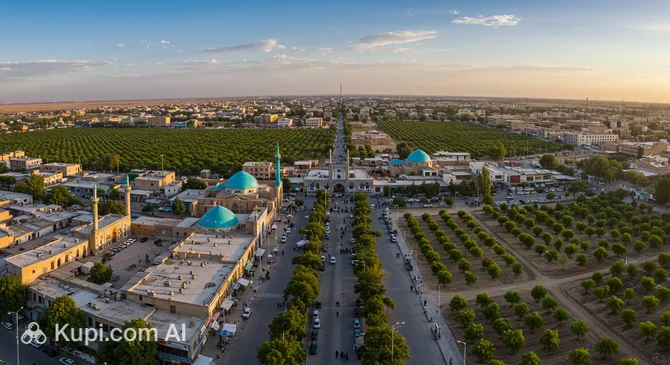
Rafsanjan is a city with a distinct southern charm, nestled in the Kerman Province in southeastern Iran. Surrounded by majestic mountains and vast desert plains, it possesses a unique atmosphere where Eastern tranquility meets surprising energy.

Rafsanjan. Illustration.
Source: Kupi.com AI

With a population of about 162,000, Rafsanjan is an important economic center that manages to maintain its coziness and hospitality. The unique history of Rafsanjan is reflected in its architectural style: modern residential neighborhoods harmoniously coexist with monuments from the Qajar era. A stroll through the old streets and colorful bazaars will make you feel like a welcome guest and allow you to touch ancient traditions.

One of the main natural attractions in the vicinity is the picturesque Rageh Valley, located just 20 kilometers from the city. The region is also widely known for its magnificent pistachio orchards—the "green gold" of the region—which not only support the local population but also provide pleasant shade for relaxation.

A journey to Rafsanjan is a true gift for those seeking authentic experiences and culinary discoveries. It is a place where time seems to slow down, inviting you to enjoy the beauty of the moment and the warmth of a local welcome.

Weather Overview

The climate of Rafsanjan is typical for the desert areas of Kerman Province: dry weather with plenty of sunny days prevails here. Expect hot summers with almost no rainfall and cool but short winters, when nighttime temperatures can drop to low levels.

The hottest period is in July, when the thermometer rises to 37°C during the day, and rain is entirely absent. Winter, by contrast, brings freshness: in January, the average daytime temperature is around +13°C, but the air can cool down to 0°C at night. Precipitation in winter months is rare but possible.

The most comfortable time for strolling through pistachio orchards and sightseeing is considered to be spring and autumn, when mild temperatures in the range of +18°C to +24°C are established. Before your trip, we recommend checking the detailed weather in Rafsanjan to choose the ideal dates for your journey.

Average monthly temperature

Average monthly precipitation

Interesting Facts

Rafsanjan is not just a point on the map, but a city with deep traditions and amazing natural phenomena. Beyond its main attractions, this corner of the world hides many fascinating secrets that will surprise even experienced travelers.

  • The World’s Pistachio Capital. The city holds this unofficial but well-deserved title. It is here that famous varieties of nuts are grown and exported worldwide, and Rafsanjan itself is surrounded by a ring of emerald pistachio groves, creating a saving oasis amidst the desert landscape.

  • Iran's Grand Canyon. Just 20 kilometers from the city limits lies Rageh Valley, a unique geological monument. Local residents proudly compare this canyon, with its sheer walls and whimsical shapes carved by wind and water over millennia, to its famous American counterpart.

  • Adobe Palace. Rafsanjan is home to the Haj Ali Agha House, one of the largest mud-brick mansions in the world. Built in the 19th century by a wealthy merchant, the scale of this complex is staggering: luxurious stucco halls and a sophisticated courtyard system showcase the peak of Qajar-era architectural mastery.

  • Life in Stone. Near the city, you can visit Meymand, an ancient rock village listed as a UNESCO World Heritage site. This is a true open-air ethnographic museum where people still live in caves carved into the soft rock, preserving the lifestyle of their ancestors.

How to Get There

When planning a trip to this picturesque corner of Kerman Province, it is wise to think about logistics and find out how to get to Rafsanjan. Most often, tourists choose to fly to major regional aviation hubs followed by a transfer by land transport.

The closest and most convenient option for arrival is Kerman Airport (KER). It is located just 94 km from Rafsanjan. A trip by car or taxi takes approximately 1–1.5 hours. This is a major transport hub receiving flights from Tehran and other cities.

As an alternative, consider Yazd Airport (AZD). The distance is 233 km, so the travel time by car is about 3 hours. This route is often chosen by travelers who wish to combine their trip with a visit to the ancient city of Yazd.

Summary information for the nearest airports:

AirportPassenger trafficDistance
Kerman Airport730 00094 km
Yazd Airport764 074233 km

Rafsanjan has good transport accessibility. The city is connected to other regions of the country by highways and a railway line. Intercity buses in Iran are comfortable and run regularly between cities in the province. Another popular way to travel is by shared taxis ("savari"), which allow you to quickly reach the city center from airport terminals.

Main Attractions

While Rafsanjan is primarily known as a center for pistachio cultivation, this city in Kerman Province holds surprising architectural and natural monuments. Travelers can expect majestic mud-brick buildings, ancient bazaars, and unique geological formations that provide a deeper understanding of the history and culture of Iran.

The main architectural gem of the city is undoubtedly the Haj Ali Agha House. This grand structure, built at the end of the 18th century, is recognized as the largest indoor mud-brick house in the world. Spanning over 7,000 square meters, the complex is impressive in its design: it features luxurious halls with stucco work, summer and winter quarters, and tall windcatchers (badgirs) that have served as natural air conditioners in the hot desert climate for centuries.

History buffs should visit the Anthropology Museum, located in the building of the old Aga Seyed Mehdi hammam (bathhouse). Following careful restoration, scenes from daily life in past centuries have been recreated here. The exhibition, featuring wax figures, clearly demonstrates the traditions, clothing, and crafts of local residents, immersing guests in the atmosphere of old Rafsanjan.

For nature lovers, a trip to Rageh Valley is a must. This impressive canyon, about 20 kilometers long, was formed by thousands of years of water and wind erosion. Fanciful rock columns, sharp peaks, and a deep gorge with the Giodri River flowing at the bottom create landscapes reminiscent of Arizona's famous canyons but with a unique Persian flair.

Don't miss the opportunity to walk through the Old Bazaar of Rafsanjan. It is not just a marketplace but the historical heart of the city, preserving architecture from the Seljuk and Qajar eras. Under the vaulted ceilings of the market, you can find the best varieties of pistachios, spices, copperware, and traditional sweets, as well as watch local craftsmen at work.

Local Cuisine

A gastronomic journey to Rafsanjan is impossible to imagine without the region's main symbol—pistachios. This city is rightfully considered the "pistachio capital," and the local cuisine clearly reflects this status. Nuts here are not just a popular snack but an essential ingredient added to everything from meat stews to exquisite desserts.

Among the main dishes to try, abgoosht stands out. This thick and hearty soup made from lamb, chickpeas, and vegetables is a classic of Iranian cuisine, but in Rafsanjan, it is often served with flatbread and, of course, crushed pistachios. At family celebrations and holidays, pistachio pilaf takes pride of place. The combination of fluffy rice, tender meat, aromatic saffron, and crunchy nuts creates a unique palette of flavors.

For those with a sweet tooth, Rafsanjan will seem like paradise. Local confectioners work wonders, creating unique pistachio halva and thick nut pastes. The most popular edible souvenir is pistachios in honey with saffron—this combination is considered not only delicious but also very healthy. In the street markets, you can also find fresh fruit, dried berries, and spices grown in the surrounding orchards.

The drink culture here is traditional for Iran: alcohol is strictly prohibited. The main beverage is strong black tea, consumed at any time of day, often accompanied by dates or sugar cubes. In the heat, locals prefer refreshing sherbets made from fruit syrups, basil seeds, and rose water, as well as nutritious smoothies with ground pistachios.

Tourists and locals mostly eat in traditional restaurants or family cafes. However, to truly feel the city's atmosphere, it is worth visiting gastronomic festivals often held during the harvest season. There, you can not only taste dozens of types of nuts but also participate in workshops on preparing ancient dishes.

Travel Tips

Rafsanjan is a city with a unique character, and for your journey to this land of "green gold" to be perfect, it's worth considering a few important nuances. We have prepared a list of practical recommendations to help you feel confident in the Iranian province and avoid awkward situations.

  1. Clothing and Dress Code. Since Rafsanjan is in Iran, adherence to the Islamic dress code is mandatory: women should cover their heads with a scarf (roosari) and wear loose clothing that covers the hips (such as a manto or tunic), while men should avoid shorts and sleeveless shirts. Given the desert climate, choose lightweight natural fabrics in summer, and be sure to bring a warm jacket for winter evenings—temperature fluctuations in the desert are quite significant.
  2. Transport. There is no metro in the city, so the most convenient way to get around is by taxi. You can use traditional yellow taxis or install the popular Snapp! app (a local version of Uber), which usually works in cities of this size. For trips to remote natural attractions like Rageh Valley, it is highly recommended to rent a car with an experienced local driver, as roads can be challenging.
  3. Finances and Currency. International Visa and Mastercard do not work here, so bring a sufficient supply of cash (USD or EUR) for exchange. Change money only at official exchange offices (Sarafi). Be careful: the official currency is the Rial, but in speech and on price tags, locals almost always use "Toman" (1 Toman = 10 Rials). Always clarify which unit the price is quoted in to avoid overpaying.
  4. Health and Safety. Rafsanjan is a peaceful city, but the dry climate requires attention to health. Always carry a bottle of water to avoid dehydration and use sunscreen even on cloudy days. Pharmacies (darukhaneh) are easy to find in the center, but it's better to bring specific medications with you. Drinking tap water is not recommended; use bottled water instead.
  5. Communication and Language. Unlike the capital, English is less common in Rafsanjan, so download an offline translator or learn a few phrases in Farsi ("Salam" — hello, "Mersi" — thank you). For internet access, buy a local SIM card (e.g., Irancell) immediately upon arrival in the country. Also, take care to install VPN services in advance, as many common messengers and social networks may be inaccessible.
  6. Local Etiquette. Iranians are famous for their hospitality and a complex system of politeness called "taarof." If a taxi driver or vendor refuses to take money the first time, it is a gesture of courtesy; you must insist on paying. It is best to greet members of the opposite sex with a reserved nod or by placing your hand over your heart; handshakes are generally only accepted between men.
  7. What to Avoid. Strictly observe the "dry law"—alcohol is completely prohibited. Also, refrain from public displays of affection (kissing and long embraces) between men and women on the street. Be cautious with the "thumbs up" gesture: while young people understand its modern meaning, for the older generation, it can be an offensive equivalent to the middle finger.
  8. Pistachio Season. If you plan to shop, remember that Rafsanjan is the best place in the world to buy pistachios. Try to buy them by weight at the bazaar, making sure to taste them before purchasing. The best time to visit is late summer and early autumn (September-October) during the harvest season: the nuts are freshest then, and prices are most favorable.

Rafsanjan knows how to surprise with its warmth and hidden treasures. By following these simple tips, you can easily immerse yourself in the local culture, find common ground with friendly residents, and take home only the most pleasant memories of the heart of "pistachio country."

Entertainment & Nightlife

Nightlife in Rafsanjan has its own unique characteristics that differ from the typical Western lifestyle. In Iran, the evening is when the daytime heat fades, and locals take to the streets for family walks, park picnics, and leisurely dinners. You won't find noisy nightclubs or bars here, but you can immerse yourself in an atmosphere of Eastern hospitality, tranquility, and lively conversation.

The cultural hub for those looking to spend an evening out is the Golestan Amin Cultural Complex. This modern multifunctional space includes a cinema, cozy cafes, and well-maintained green areas. Families and groups of young people come here to watch the latest Persian films, enjoy a cup of coffee, or simply stroll through the beautiful grounds. The atmosphere is always lively yet sophisticated.

Gastronomy plays a key role in the city's evening life. To experience authentic surroundings and cuisine, visit Tavakol Traditional Restaurant. The interior is decorated in a classic style: guests can sit on traditional wide takhts (daybeds) covered with carpets and enjoy the taste of real kebabs to the sound of live music. Another popular location is Lux Talaei Restaurant, often chosen by locals for celebratory dinners.

For fans of evening strolls and shopping, the Amirkabir Shopping Center is worth a visit. Life here picks up late in the evening: shops stay open until 10:00–11:00 PM, and the food courts are filled with people. It’s a great place to see the modern side of Rafsanjan, buy souvenirs, clothing, or just observe local fashion.

Practical tips for evening leisure:

  • Peak Hours: The liveliest time in the city is from 8:00 PM to 11:00 PM. Thursday evenings are particularly crowded, as Friday is the official weekend in the country.
  • Drinks: The country has a strict "dry law." Instead of alcohol, establishments offer a wide choice of tea, fresh juices, traditional sweet sherbets, or non-alcoholic beer with various fruit flavors (lemon, peach, pomegranate).
  • Dress Code: In the evening, clothing requirements remain as strict as during the day (headscarf and modest clothing for women, long trousers for men), though the atmosphere in cafes and restaurants becomes slightly more relaxed.
  • Safety and Transport: Rafsanjan is a safe city where you can walk comfortably after dark. To travel between locations, it is most convenient to use taxis or the local ride-hailing app, Snapp.

Parks & Museums

Despite its location in the arid Kerman Province, Rafsanjan manages to surprise travelers with well-maintained green oases and educational cultural sites. The city offers a harmonious combination of places for peaceful relaxation in nature and institutions that preserve the memory of the region's rich history and outstanding personalities.

Among the green zones, Mellat Park (Park-e Mellat) is particularly popular with locals. This is one of the city's oldest parks, where tall trees provide saving shade even on the hottest days. It is pleasant to stroll along the alleys, watch the slow rhythm of city life, or have a picnic on the grass. Another important recreation spot is Javan Park, which attracts families and young people with its well-appointed grounds and more modern infrastructure.

Speaking of Rafsanjan's nature, one cannot fail to mention the famous pistachio orchards that surround the city in a dense ring. Although these are agricultural lands rather than public parks, their endless rows create a unique landscape and serve as the "green lungs" of the region. In spring, the blossoming trees turn the surroundings into a picturesque sight worthy of every tourist's attention.

The city's cultural program is inextricably linked to its history. The main museum site is considered to be the Presidential Museum of Rafsanjan. This complex is dedicated to the life and work of Akbar Hashemi Rafsanjani, one of the most influential politicians in the history of modern Iran, who was originally from this area. The museum houses an impressive collection of gifts presented to him by world leaders, as well as personal items, documents, and photographs that allow a glimpse into the country's recent history through the prism of a single biography.

To dive into the ethnography of the region, visit the Anthropology Museum, located in the restored building of an old bathhouse. Here, amidst historical interiors with domed ceilings and mosaics, are exhibitions about the life, crafts, and traditions of desert dwellers. Realistic wax figures and antiquities create a time-travel effect.

Insider tip: Plan your visit to the parks closer to sunset. It is in the evening, when the heat subsides, that the city gardens truly come to life: the fountains' lights come on, and local families go out for their traditional evening stroll, creating an incredibly warm and friendly atmosphere.

Getting Around

Public transport in Rafsanjan is simple and functional, perfectly matching the size and rhythm of the city. You won't find a metro or tram lines here; the main burden of passenger transport falls on buses and an extensive taxi network. For a tourist, navigating the city is not difficult, as the main attractions and important sites are located quite compactly.

City buses run along the main streets and connect the center with residential areas and the outskirts. This is the most budget-friendly way to get around, though be aware that intervals can be irregular and the route network may be confusing for a foreigner who doesn't speak the language. An important feature to remember is the gender-segregated seating: by tradition, men occupy the front of the bus and women the back. Tickets are usually purchased from the driver in cash or paid upon exiting.

The most popular and convenient way to get around Rafsanjan is by taxi. They are divided into two types: "darbast" (private taxi) and "savari" (shared taxi). Savaris run along fixed routes between major squares and streets. This is a very cheap option: you share the car with other passengers and pay only for your seat. To catch a savari, simply stand on the roadside and call out your destination to the driver; if it's on his way, he will stop.

For more comfortable trips, it is recommended to use a "darbast"—a classic taxi that carries only you. Cars can be found at special stands near bazaars and terminals or simply hailed on the street. Meters are rarely used in these cars, so it is crucial to agree on the price with the driver in advance, before getting in. Bargaining in this case is not only appropriate but expected.

A real lifesaver for tourists has been the spread of mobile taxi apps like Snapp (the local equivalent of Uber). The service works in Rafsanjan and allows you to order a car without needing to explain yourself in Farsi or bargain: the price is fixed in the app. This is the most reliable way to avoid overpaying and language barriers. Payment in the app can be made in cash to the driver, which is convenient for travelers without local bank cards.

The payment system in the city is primarily cash-based. International Visa and Mastercard do not work here, so always carry a supply of small bills. When paying, pay attention to the currency: prices are often quoted in "Tomans" (1 Toman = 10 Rials), even though Rials are written on the banknotes. In buses and taxis, it is customary to pay at the end of the trip.

For short distances in the city center, especially around the old market and the museum, walking is the best alternative to transport. Rafsanjan is located on a plain and is easy to walk, though in summer months, plan your routes to avoid the scorching sun during midday hours. Bicycle rental is poorly developed in the city and is not a popular means of transport for tourists.

Accommodation

The choice of accommodation in Rafsanjan is relatively modest, which is typical for small cities in Kerman Province that are not mass tourism centers. You won't find luxury five-star resorts from international brands here. The hotel stock primarily consists of mid-range hotels (2–3 star level) and state-run tourist guesthouses offering basic amenities. In recent years, traditional guesthouses (ecolodges) have also begun to develop in the region, offering a glimpse into local life.

From a logistics standpoint, the city center is the most convenient area to stay. By staying here, you will be within walking distance of the Old Bazaar, shops, and major transport links. This will significantly save time when looking for taxis for trips to out-of-town attractions like the Haj Ali Agha House or the pistachio orchards.

Usually, the most reliable accommodation options are hotels belonging to the Iran Tourism and Touring Organization (ITTO) network, known as "Jahangardi" in Iran. They generally offer a stable level of service, clean rooms, breakfast, and their own restaurants serving national cuisine. There are also several private hotels in the city (such as Hilan Hotel or Khesht Hotel) that cater to both tourists and business travelers visiting the "pistachio capital" for commerce.

Price ranges vary from budget to mid-range. Even the best rooms in the city will cost significantly less than similar accommodation in Tehran or Isfahan. Payment is almost always made in cash using the local currency (Rials), as international Visa and Mastercard are not accepted.

Booking Tip: Although Rafsanjan is not overcrowded with tourists, the number of quality rooms is limited. It is highly recommended to book your accommodation in advance, especially if your trip falls in September or October—the pistachio harvest season. During this time, hotels may be fully booked by wholesalers and traders. Since popular international booking platforms do not operate in Iran, it is better to search and book rooms through local Iranian online services or local travel agencies.

Nearby Cities

For those looking to explore the surrounding area, Rafsanjan serves as an excellent starting point for day trips to several interesting nearby locations.

Just a hundred kilometers to the east is the provincial capital—Kerman. This is an ideal destination for getting to know classic Persian architecture and history. Be sure to visit the famous Ganjali Khan complex with its bathhouses and teahouses, and stroll through one of the country's oldest bazaars, where a unique Eastern trading atmosphere prevails.

Ethnography and unusual landscape enthusiasts should head towards the city of Shahr-e Babak. It serves as the gateway to the famous village of Meymand—a UNESCO World Heritage site. This is a unique settlement where people still live in caves carved into the soft rock thousands of years ago.

Also of interest is Sirjan, located southwest of Rafsanjan. This city is recognized as a world center for the craft of weaving kilims (a special type of flat-weave carpet). Additionally, Sirjan's architecture surprises with its unique "tubular" windcatchers (badgirs), whose shape differs from traditional Iranian designs.

CityPopulationDistance
Maymand10 12062 km
Zarand63 74472 km
Bardsir25 15278 km
Baghin10 40782 km
Anar15 53287 km

These nearby destinations provide an insight into the diverse culture and landscapes of the region.

Shopping & Souvenirs

Shopping in Rafsanjan is more of a cultural adventure than a hunt for fashion brands. The city cannot boast huge futuristic malls like Tehran, but it offers something more valuable: authenticity and access to the region's best agricultural and handcrafted goods. Here, it is customary to shop slowly, chatting with sellers and always tasting the product before purchasing.

Main Shopping Areas and Streets

The city's commercial life is concentrated in its central part. The main artery for shopping enthusiasts is Shohada Street and its surrounding blocks. Numerous clothing stores, jewelry shops, and appliance stores are located here. A walk along this street allows you to immerse yourself in the daily bustle of the city and find shops with traditional Iranian goods adjacent to modern boutiques.

Shopping Centers

While Rafsanjan is a traditional city, there are several modern shopping complexes. One of the most popular places is the Amirkabir Shopping Center. This is where locals buy clothes, shoes, and accessories. The complex is convenient for tourists because you can find fixed-price goods and rest in the cool air-conditioning. Also worth noting is the Setareh Passage, which offers a decent selection of textiles and cosmetics.

Markets

The heart of commerce in Rafsanjan is undoubtedly the Old Bazaar. This historical site is where the aromas of spices and roasted nuts drift under vaulted ceilings. The bazaar is interesting not only as a place to shop but also as an architectural monument. Here you can find the freshest produce, traditional fabrics, and items made by local craftsmen. For tourists, it is an ideal location to feel the spirit of old Iran and take colorful photographs.

Souvenirs: What to Bring Back

The main souvenir from Rafsanjan is undoubtedly pistachios. The city is considered the world capital of this nut, and you will find dozens of varieties: from the long "Akbari" to the round "Fandoghi." It is best to buy them by weight at the bazaar after tasting them. The nuts are sold raw, salted, with saffron, or in lemon juice.

Additionally, look out for the following items:

  • Copperware. Due to its proximity to large copper deposits (the Sarcheshmeh mine), local masters create magnificent trays, pots, and decorative items from high-quality copper.
  • Sweets. Be sure to buy "kolompeh"—traditional Kerman Province cookies filled with dates and walnuts—as well as "komach-e sen"—a nutritious dessert made from sprouted wheat.
  • Carpets and Kilims. The region is famous for its weaving traditions, and you can find small handmade rugs with unique desert patterns here.

Opening Hours and Payment

Shops in Rafsanjan usually operate on a schedule with a daytime break (siesta). They open around 9:00 AM, stay open until 1:00 or 2:00 PM, then close for a break and reopen from 4:00 or 5:00 PM until 10:00 PM or later. The bazaar follows a similar schedule. It is important to remember that Friday is the official weekend in Iran, and most shops will be closed.

Payment is made almost exclusively in cash in the local currency (Rials). International Visa and Mastercard do not work here. Some larger stores may have terminals for local bank cards, but they are useless for tourists. Always carry a supply of cash, especially when visiting the bazaar, where bargaining is expected.

Tax Free

The Tax Free system, in the format familiar to European tourists, does not operate in Rafsanjan. When you buy goods, you pay the final price, and there is generally no possibility to reclaim VAT at the airport when leaving the country. Calculate your budget based on the prices you see on the shelf.
Nearby cities

Reached the end of the page?

That means the route is fully explored