Support

Yazd

About

Stepping into Yazd feels like embarking on a journey through time, where ancient traditions and architectural ingenuity have perfectly adapted to the desert environment. Known as the "City of Windcatchers," this UNESCO World Heritage site offers a mesmerizing labyrinth of winding lanes, mud-brick houses, and a skyline punctuated by distinctive badgirs (wind towers) and minarets. Located in the heart of Iran, Yazd is geographically isolated between the Dasht-e Kavir and Dasht-e Lut deserts, which has helped preserve its unique character and authentic atmosphere over the centuries.
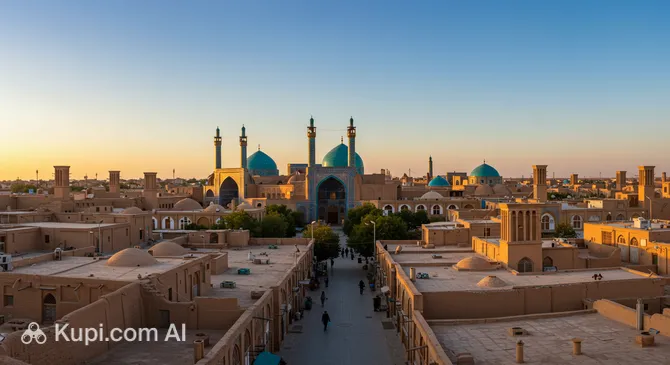
Yazd. Source: Kupi.Binoculars

With a population of approximately 530,000 people, the city serves as the capital of Yazd Province and remains a center of Zoroastrian culture. The climate here is classically desert-like: very hot and dry in the summer and cold in the winter. This harsh environment drove the locals to develop fascinating architectural solutions, such as the extensive network of qanats (underground water channels) and the iconic wind towers that naturally cool the buildings.

The history of Yazd is a testament to human resilience and creativity. As a major stop on the ancient Silk Road, the city flourished as a hub for trade and weaving, particularly known for its high-quality silk and carpets. Today, visitors are captivated by its well-preserved old town, where they can marvel at the stunning tile work of the Jameh Mosque, explore the symmetric beauty of the Amir Chakhmaq Complex, or visit the Fire Temple, which houses a flame said to have been burning for over 1,500 years.

Whether you are watching the sunset from a rooftop café or wandering through the quiet, adobe-walled alleyways, Yazd offers a tranquil and deeply cultural experience. It is a destination that invites you to slow down and appreciate the enduring beauty of desert life.
Weather Overview

The climate in Yazd is typically desert-like, defined by hot summers, cool winters, and very low humidity throughout the year. Due to its location surrounded by deserts, the city experiences significant temperature fluctuations, so packing layers is often a good idea depending on when you visit.

July is generally the hottest month, with average temperatures reaching 30.9°C and daily highs often climbing to 37.2°C. Conversely, January is the coldest time of the year, with averages dropping to 6.4°C and nighttime lows dipping close to freezing. Rainfall is exceptionally rare, with most months recording 0mm of precipitation. To help plan your trip with the best conditions in mind, you can check the detailed weather in Yazd.

Interesting Facts

Beyond the main attractions, Yazd holds many fascinating secrets that reveal the ingenuity and spiritual depth of its people. This desert city is not just a collection of mud-brick buildings but a living museum of ancient engineering and enduring traditions.

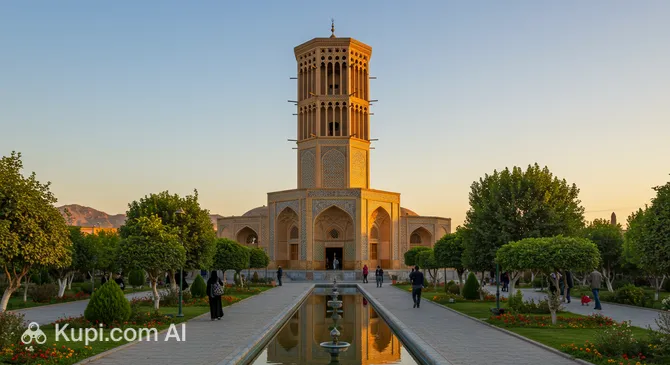
Dowlatabad Garden. Source: Kupi.Binoculars
  • The city is home to the tallest windcatcher in the world, located at the Dowlatabad Garden. Standing at over 33 meters, this octagonal tower captures the slightest breeze to cool the pavilion below, serving as a brilliant example of ancient natural air conditioning that makes life in the desert bearable.

  • The sacred flame housed within the Yazd Atash Behram (Zoroastrian Fire Temple) is said to have been burning continuously since 470 AD. Before finding its final resting place here in the 1930s, the fire was secretly moved between various locations for centuries to protect it from invaders, symbolizing the resilience of the Zoroastrian community.

  • One of the most intriguing local structures is Alexander's Prison, known locally as Zindan-e Eskandar. Despite its ominous name and legends claiming it was a dungeon built by Alexander the Great, historical evidence suggests it was actually a 15th-century Islamic school with no connection to the Greek conqueror.

  • During the religious mourning ceremonies of Ashura, a massive wooden structure called a "Nakhl" is carried through the crowds at the Amir Chakhmaq Complex. Resembling a cypress leaf, this heavy wooden frame symbolizes a coffin and requires hundreds of strong men to lift and carry it in a spectacular display of communal unity.

  • Yazd sits atop one of the world's most extensive networks of qanats, ancient underground channels that transport water from the mountains. These hand-dug tunnels, some thousands of years old, allow the city to thrive in an arid landscape by minimizing evaporation, a feat recognized globally as a masterpiece of hydraulic engineering.

How to Get There

Reaching the historic city of Yazd is relatively straightforward, thanks to its position as a major stop along the routes connecting Tehran to the southern parts of the country. Whether you prefer flying or taking a scenic ground journey, there are several convenient options available. For a complete overview of all transport methods, routes, and tips, you can read more about how to get to Yazd on our detailed page.

The most direct way to arrive is via Yazd Airport (IATA: AZD), located just outside the city limits. It is a regional hub that handles frequent domestic flights, particularly from the capital. The airport is situated approximately 7.6 km from the city center, and a taxi ride to your hotel typically takes about 30 minutes depending on traffic. This is the most convenient option for travelers looking to save time.

If you cannot find a suitable direct flight, another option is to fly into Isfahan International Airport (IATA: IFN) in the neighboring city of Isfahan. Although it is located about 253 km from Yazd, Isfahan is a major destination with more extensive flight connections. From there, you can rent a car or take a bus to Yazd, a journey that generally takes around 3 to 4 hours by road.

For clarity, here is a summary of the main airports:

Airport Name City Passenger Traffic Km from City
Isfahan International Airport Isfahan Large 253.3
Yazd Airport Yazd Medium 7.6

In addition to air travel, Yazd is well-connected to the national railway network. Trains are a popular and comfortable way to reach the city, with regular services running from Tehran, Kashan, and other major cities. The train station is located somewhat outside the immediate city center, but taxis are readily available upon arrival. Long-distance buses are another reliable and budget-friendly alternative, offering frequent departures from terminals across Iran.

Main Attractions

Yazd is a treasure trove of architectural wonders and historical sites, offering visitors a unique glimpse into desert life and Persian heritage. The city's skyline, dominated by turquoise domes and soaring minarets, invites exploration into its rich past.

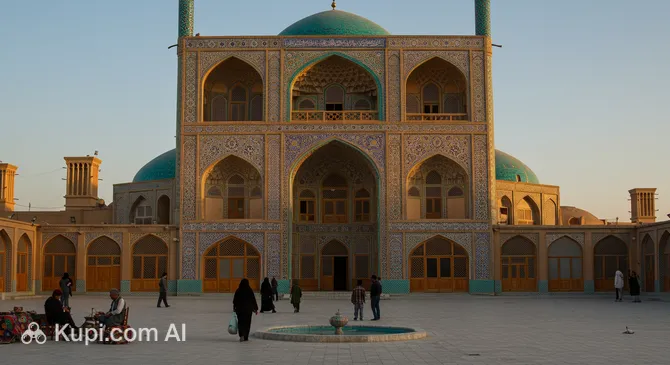
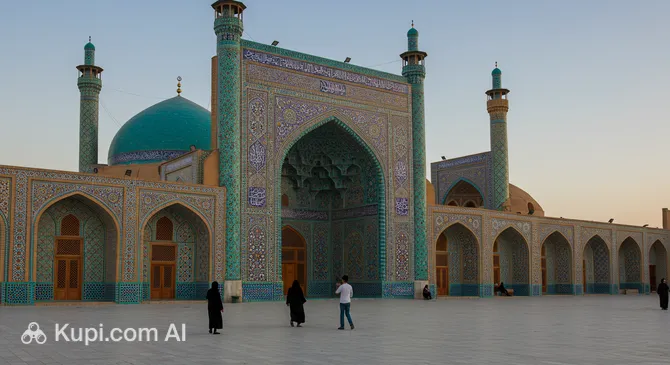
One of the most magnificent masterpieces in the city is the Jameh Mosque of Yazd. Dating back to the 12th century, this mosque is renowned for having some of the tallest minarets in Iran. Visitors are mesmerized by the intricate blue mosaic tile work that covers the portal and the dome, creating a stunning contrast against the earthen tones of the surrounding mud-brick buildings. It is a prime example of Persian-Islamic architecture and a peaceful place to admire the craftsmanship of a bygone era.

Jameh Mosque of Yazd. Source: Kupi.Binoculars

Another iconic landmark is the Amir Chakhmaq Complex, a prominent structure located in the eponymous square. This three-story facade is celebrated for its symmetrical sunken alcoves, which look particularly spectacular when illuminated at sunset. The complex serves as a social hub and includes a caravanserai, a bathhouse, and a confectionery, making it a perfect spot to observe local life and enjoy the vibrant atmosphere of the city center.

Amir Chakhmaq Complex. Source: Kupi.Binoculars

For those interested in the spiritual roots of the region, the Yazd Atash Behram (Zoroastrian Fire Temple) is an essential stop. This temple is the center of the Zoroastrian community in Yazd and houses a sacred victory fire that is said to have been burning continuously for over 1,500 years. Seeing the holy flame behind a glass enclosure offers a profound connection to one of the world's oldest monotheistic religions and its enduring legacy in Iran.

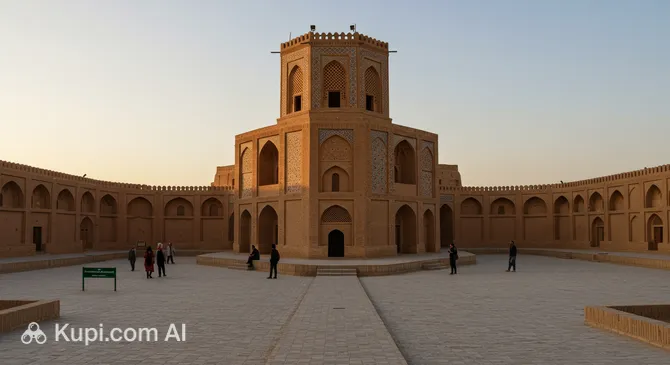
Steeped in mystery and legend, Alexander's Prison (Zindan-e Eskandar) is another fascinating site to explore. Despite its name, which stems from a reference in a Hafez poem, historians believe the building was actually a 15th-century domed school rather than a dungeon built by Alexander the Great. The structure features a beautiful clay dome with golden molding and offers a cool, atmospheric courtyard where visitors can learn about the myths and realities of Yazd's history.

Local Cuisine

Yazd is widely considered the confectionery capital of Iran, making it a paradise for travelers with a sweet tooth. The city's dry climate has historically influenced its cuisine, leading to the creation of pastries that can withstand the heat and a reliance on non-perishable ingredients. Local sweets are famous throughout the country, with Qottab—a deep-fried almond-filled pastry—being the most iconic. You should also try the local style of Baklava, which uses cardamom and almonds, and Pashmak, a hand-spun Persian cotton candy that melts in your mouth.

When it comes to savory dishes, the cuisine here is hearty and distinct from other parts of the country. A must-try starter or light meal is Shuli, a thick and sour soup made with spinach, parsley, beets, and sometimes lentils, often seasoned with vinegar or pomegranate paste. For a main course, look for Qeimeh Yazdi. Unlike the standard Persian stew, this local version uses chickpeas instead of split peas and is flavored with aromatic spices like cinnamon and dried lime, typically served over saffron rice.

Dining in Yazd is as much about the atmosphere as it is about the food. Many traditional adobe houses and caravanserais have been converted into atmospheric restaurants, offering a chance to eat in courtyards cooled by central pools. Rooftop cafes are also incredibly popular here; they offer the perfect vantage point to gaze out over the city's forest of windcatchers and blue-tiled domes while enjoying a meal under the stars.

Regarding beverages, tea is the cornerstone of social life and is served everywhere, often accompanied by rock candy (Nabat). Due to local laws and customs, alcoholic drinks are not available. Instead, locals enjoy refreshing herbal distillates and fruit syrups known as Sharbat. In the heat of the desert afternoon, a glass of Sekanjebin (mint and vinegar syrup) with cucumber is the traditional way to cool down and rehydrate.

If you are looking to buy boxes of sweets to take home as souvenirs, the area surrounding the Amir Chakhmaq Complex is the best place to start. This square is lined with historic confectionery shops that have been baking these treats for generations, allowing you to sample the fresh flavors of Yazd right at the heart of the city.

Travel Tips

Visiting Yazd offers a magical glimpse into the rich heritage of Iran, but a little preparation goes a long way in ensuring your trip to this desert city is smooth and enjoyable. Here are some practical tips to help you navigate the winding alleys and cultural nuances with ease.

  1. Clothing and Gear: Since Yazd is located in the desert, packing layers is essential. Summers are intensely hot, while winters can be surprisingly chilly, especially at night. Respecting local regulations is crucial: women must wear a headscarf and loose-fitting clothing that covers the arms and legs, while men should wear long trousers and avoid shorts. Comfortable walking shoes are a must for exploring the uneven cobblestones of the historic center.

  2. Transportation: The best way to experience the Old City (Fahadan) is on foot, as many lanes are too narrow for cars. For longer distances, taxis are plentiful and very affordable. Ride-hailing apps like Snapp (the local equivalent of Uber) are widely used and convenient, allowing you to set the price and destination without a language barrier.

  3. Finances: The official currency is the Iranian Rial (IRR), but locals almost exclusively quote prices in Toman (1 Toman equals 10 Rials). International credit and debit cards (Visa, Mastercard) do not work in the country, so you must bring enough cash (USD or EUR) for your entire trip. You can exchange money at authorized exchange offices, and tourists can also obtain a "Mah Card" or similar local tourist debit card upon arrival to avoid carrying large bundles of cash.

  4. Health and Safety: Yazd is considered one of the safest cities for travelers. Pharmacies are well-stocked and easy to find, often marked with a green cross. Due to the dry heat, staying hydrated is vital; stick to bottled water and carry a reusable bottle. The sun can be harsh, so high-SPF sunscreen, sunglasses, and a hat are highly recommended.

  5. Communication: The official language is Persian (Farsi). While many younger people and those in the tourism industry speak English, it is not universally understood. Learning basic words like Salam (Hello) and Mamnoon (Thank you) will go a long way. Buying a local SIM card (Irancell or MCI) is recommended for accessing maps and translation apps on the go.

  6. Local Etiquette: Iranians are famous for Taarof, a system of politeness where people may initially refuse payment or offer things they don't mean to give. If a shopkeeper or taxi driver refuses payment, you should insist on paying. Also, always remove your shoes before entering a mosque or a local's home.

  7. What to Avoid: Public displays of affection, such as kissing or hugging, should be avoided as they are culturally frowned upon. Additionally, be mindful when taking photos; never photograph government buildings, military sites, or people without their permission.

  8. Afternoon Siesta: Be aware that Yazd follows a desert schedule. Many shops and businesses close in the afternoon (roughly between 1:00 PM and 4:00 PM) to escape the peak heat. This is a great time to rest at your hotel or relax in a cool, underground cafe before the city comes alive again in the evening.

By keeping these simple tips in mind, you will be well-equipped to immerse yourself in the timeless beauty of Yazd. The locals are known for their warm hospitality, so don't hesitate to ask for help or strike up a conversation—it is often the start of a wonderful memory.

Entertainment & Nightlife

Entertainment:

Entertainment in Yazd is defined by its relaxed pace and deep connection to history, offering a stark contrast to the bustling nightlife of modern metropolises. Here, leisure time is best spent immersing yourself in the city's ancient atmosphere, where the activities are as much about cultural discovery as they are about relaxation. From wandering through mud-brick labyrinths to stargazing in the silence of the desert, the city offers unique experiences that linger in the memory.

The heart of the city's charm lies in the historic Fahadan district. Exploring this area on foot is a favorite pastime for visitors, who can spend hours navigating the narrow, winding alleyways known as kuches. These high-walled lanes were designed to provide shade and channel the wind, keeping pedestrians cool. As you wander, you will encounter traditional workshops, hidden courtyards, and landmarks like Alexander's Prison. Now serving as a museum and artisan center, this historic structure is a perfect example of the architectural ingenuity you will find around every corner.

Alexander's Prison. Source: Kupi.Binoculars

For a truly magical evening, head to one of the city's many rooftop cafes. As the sun begins to set, the skyline transforms into a silhouette of windcatchers and domes against a fiery desert sky. Sipping on a cold glass of Sekanjebin or hot tea while listening to the call to prayer echo across the rooftops is a quintessential Yazd experience. It offers a peaceful vantage point to observe the city from above and capture stunning photographs of the illuminated minarets.

To witness a fascinating local tradition, seek out a Zurkhaneh (House of Strength) performance. This ancient form of heroic sport combines physical training with spiritual rhythms and poetry. One of the most accessible venues is located in the old water reservoir of the Amir Chakhmaq Complex. Watching the athletes swing heavy wooden clubs to the beat of a drum is a mesmerizing display of Persian heritage that dates back centuries.

Nature enthusiasts should take advantage of Yazd's location by embarking on a desert tour. Short excursions to the nearby sands of Fahraj or Bafgh allow you to experience the vastness of the landscape. Activities range from thrilling dune bashing and camel riding to the quiet contemplation of a sunset over the rolling dunes. At night, the lack of light pollution makes the desert an incredible spot for stargazing, offering a view of the Milky Way that is rarely seen elsewhere.

Finally, no trip is complete without browsing the local bazaars. Shopping in Yazd is a leisurely affair where you can find the city's famous Termeh, a luxurious hand-woven silk fabric with intricate paisley designs. The bazaars are also the best place to buy traditional copper handicrafts and the city's renowned sweets, allowing you to take a piece of Yazd's rich culture home with you.

Parks & Museums

Parks and Museums:

While Yazd is defined by its desert landscape, the city hides several lush oases and fascinating museums that offer a refreshing counterpoint to the arid surroundings. These spaces not only provide shelter from the heat but also serve as custodians of the region's rich history, showcasing the ingenuity and artistic heritage of its people.

The crowning jewel of the city's green spaces is the Dowlatabad Garden. As a UNESCO World Heritage site, this 18th-century complex is a brilliant example of a traditional Persian garden (Charbagh). Visitors can stroll along pathways lined with cypress and pine trees, enjoying the cooling effect of the fountains and pools that run through the center. The garden is also home to a stunning hexagonal pavilion, famous for its intricate stained-glass windows and effective ventilation system, making it a perfect spot to relax and admire the harmony between nature and architecture.

For a different perspective, the Mountain Park (Park-e Koohestan) offers a more modern recreational experience. Located on the outskirts of the city, this expansive park features an artificial lake and hiking trails that lead up into the hills. It is particularly popular in the evenings when locals gather to enjoy the cooler air and panoramic views of the illuminated city below.

To truly understand how civilization flourished in this dry climate, a visit to the Yazd Water Museum is essential. Housed in the historic Kolahduz House near the Amir Chakhmaq Complex, this museum delves into the ancient technology of qanats (underground aqueducts). Through photographs, tools, and architectural models, it explains the complex engineering required to bring water to the desert, and visitors can even view the remnants of old water channels that still pass beneath the house.

Another cultural highlight is the Museum of Mirrors and Lighting (Qasr-e Ayneh). Set within a beautiful Qajar-era building surrounded by a pleasant garden, the museum displays a collection of mirrors and lamps that trace the history of lighting in Iran. The building itself is a masterpiece, featuring exquisite plasterwork and mirror decorations that reflect the light in dazzling patterns, offering a visual treat for art and history lovers alike.

Insider Tip: After exploring the Water Museum, take a moment to relax in the central courtyard of the building. It is often much cooler than the street outside, and the traditional architecture provides a quiet, atmospheric setting to reflect on the incredible resilience of the desert dwellers.

Getting Around

Navigating Yazd is relatively straightforward, as the city is compact and many of its most famous sights are clustered within the historic center. Unlike the capital, Yazd does not have a metro system. Instead, the public transport network relies primarily on a fleet of buses that connect the main residential areas with the city center. These buses are a reliable and budget-friendly way to move around the newer parts of the city, although they cannot access the narrow, winding lanes of the UNESCO-listed Old Town.

For bus travel, the payment system typically involves rechargeable electronic cards, which can be purchased at ticket booths located near major bus terminals and key stops. Fares are extremely low by international standards. While some drivers might accept cash in a pinch, it is highly recommended to obtain a card if you plan to use the bus frequently. It is also important for tourists to be aware of local customs regarding seating on public buses: men generally sit in the front section, while women occupy the rear. This rule is strictly observed, and there are usually separate doors for entering and exiting based on these sections.

Most tourists, however, find that taxis are the most convenient and efficient way to travel distances that are too far to walk. There are official yellow or green taxis that can be hailed from the street or found at designated ranks. For a shared and very economical option, you can use "shuttle taxis" that run along fixed routes between major squares; simply shout your destination to the driver as they slow down. If the route matches, you hop in and pay a small set fare.

A highly popular alternative to traditional taxis is the use of ride-hailing apps. Services like Snapp (the local equivalent of Uber) operate extensively in the city. These apps are particularly useful for travelers because they remove the language barrier; you set your pickup and drop-off points on a map, and the price is fixed beforehand. This prevents any confusion over fares and eliminates the need for negotiation.

When exploring the historic Fahadan district, walking is essentially the only—and best—mode of transport. The ancient alleyways are often too narrow for cars, and the high mud-brick walls provide shade, making walking pleasant even during warmer parts of the day. For a different pace, bicycle rentals are available at several points near the historic center. Cycling is a great way to cover more ground in the flat terrain of the old city, allowing you to weave through the labyrinthine streets at your own leisure.

Transport services generally operate from early morning, around 6:00 AM, until late evening, typically winding down between 9:00 PM and 10:00 PM. On Fridays and public holidays, services may be less frequent. Since traffic in Yazd is far less chaotic than in larger metropolises, moving around is generally stress-free, allowing you to focus on the unique architecture and atmosphere of the desert surroundings.

Accommodation

Accommodation in Yazd offers a distinct experience that is quite different from staying in a standard modern city. The highlight of the hospitality sector here is the abundance of traditional houses that have been lovingly restored and converted into hotels and guesthouses. These accommodations range from budget-friendly hostels perfect for backpackers to luxurious boutique hotels that let you live like a wealthy merchant from the Qajar era. Staying in these heritage buildings, often characterized by central courtyards, fountains, and windcatchers, is an attraction in itself and provides a deep connection to the local culture.

The most popular and atmospheric area to stay is undoubtedly the Old City, particularly the Fahadan district. This neighborhood is a UNESCO World Heritage site, and staying here puts you within walking distance of major landmarks like the Jameh Mosque of Yazd and Alexander's Prison. The experience of stepping out of your hotel directly into the winding, mud-brick alleyways is magical. For those seeking a quieter environment or more modern facilities, there are also excellent options located just outside the historic core, offering easier access to main roads and transportation.

Booking Tip: The most sought-after traditional hotels in the Old City tend to fill up quickly, especially during the peak travel seasons of spring (April-May) and autumn (September-October). It is highly recommended to book your room well in advance to secure a spot in one of the historic courtyard houses, which often have a limited number of rooms compared to large chain hotels.

Regarding prices and booking methods, Yazd is generally very affordable for international travelers. You can find everything from simple dorm beds to opulent suites at a fraction of the cost of similar quality stays in Europe or North America. However, due to international banking restrictions, major global booking platforms often do not list Iranian properties or process payments. Travelers typically need to use local Iranian travel websites or contact hotels directly via email or messaging apps to make a reservation. Be prepared to pay for your stay in cash (Euros or US Dollars) upon arrival, as international credit cards are not accepted.

Nearby Cities

Yazd serves as an excellent base for exploring the surrounding desert region, with several historical cities and unique settlements located within a short driving distance. These nearby destinations offer a deeper insight into the ancient civilization, architecture, and natural beauty of the province, making them perfect for day trips or overnight excursions.

One of the most popular stops is Meybod, situated just 51 km to the north. This ancient city is believed to be thousands of years old and is famous for its impressive mud-brick fortress, Narin Castle, as well as its traditional pottery workshops and historic caravanserais. Just a short distance further lies Ardakan (56 km), a charming and quiet city known as a religious center and for its well-preserved old town, which features a maze of adobe alleys and windcatchers similar to those in Yazd.

For those interested in desert landscapes and nature, a trip to Bafq is highly recommended. Located approximately 104 km southeast of Yazd, Bafq is renowned for its lush date palm groves and the spectacular Caracal sand dunes nearby, which attract photographers and adventure seekers alike.

Travelers willing to venture further can explore the cities of Shahr-e Babak and Rafsanjan. While Rafsanjan is globally celebrated as the heart of Iran's pistachio production, Shahr-e Babak offers a gateway to the region's unique geological features and cultural history.

Here is a summary of nearby cities to help you plan your excursions:

City Distance from Yazd (km) Population
Meybod 51 80,712
Ardakan 56 75,271
Bafq 104 45,453
Shahr-e Babak 210 51,620
Rafsanjan 227 161,909

Shopping & Souvenirs

Shopping in Yazd is a delightful cultural experience that focuses less on modern high-street fashion and more on centuries-old artisanship. The city is celebrated across the country for its high-quality handicrafts, particularly its exquisite textiles and legendary confectionery. Visitors will find that browsing the local markets is a sensory journey, filled with the rhythmic sounds of copper hammering, the scent of fresh pastries, and the shimmer of hand-woven silks.

The beating heart of the city's traditional commerce is the Khan Bazaar (Bazaar-e Khan). Dating back to the Qajar era, this sprawling covered market is constructed from adobe and brick, offering a cool retreat from the desert heat. It is divided into specialized sections, including the vibrant Copper Bazaar, where artisans create pots and trays by hand, and the Goldsmiths' Bazaar, which is famous for its intricate gold jewelry known for its high purity and distinct yellow hue.

For a more contemporary atmosphere, you can visit the Setareh Yazd Shopping Centre located on Kashani Street. This modern complex provides a contrast to the old bazaars, featuring stores that sell clothing, electronics, and accessories in an air-conditioned environment. It is a popular spot for locals and offers a glimpse into the modern lifestyle of the city, along with a few cafes for a quick break.

When it comes to souvenirs, Termeh is the ultimate keepsake from Yazd. This luxurious hand-woven fabric, made from silk and wool, often features the traditional "botteh" (paisley) motif and was historically used for royal garments. You can find the finest quality Termeh in the bazaar or specialized boutiques, available as tablecloths, cushion covers, and decorative items that showcase the pinnacle of Persian weaving art.

Foodies should head directly to the area surrounding the Amir Chakhmaq Complex, which serves as the hub for the city's famous confectioneries. Yazd is known as the land of sweets, and this is the best place to buy boxes of Qottab (almond-filled deep-fried pastries), Baklava, and Pashmak (Persian cotton candy). These treats are packaged beautifully and make for excellent gifts to bring back home.

When planning your shopping excursions, it is important to remember the local schedule. Most shops open around 9:00 AM but close for an afternoon siesta between 1:00 PM and 4:00 PM, reopening in the evening until roughly 10:00 PM. Payment is almost exclusively in cash (Iranian Rials or Toman), as international credit cards do not work in the country. While bargaining is expected in the bazaars, prices in modern malls and established sweet shops are usually fixed.

Regarding taxes, there is currently no operational tax-free or VAT refund system for international tourists in Yazd. The prices displayed on goods are final, but travelers will generally find the cost of local handicrafts and food to be very reasonable by international standards.

Nearby cities

Reached the end of the page?

That means the route is fully explored