Support

Basra International Airport

About the Airport

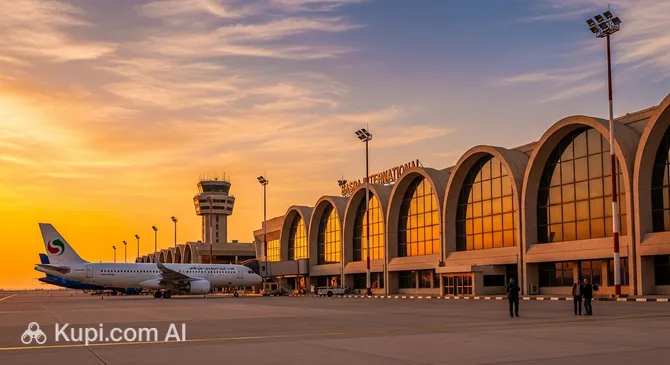
Basra International Airport. Source: Kupi.com Binoculars

Basra International Airport is not merely a transport hub, but the true southern gateway to Iraq, opening the path to one of the most economically significant regions of the Middle East. Located in close proximity to the city often referred to by historians as the "Venice of the East," this airport plays a key role in the lives of business travellers and tourists. The terminal combines functionality with Eastern hospitality, ensuring a comfortable start for exploring the ancient culture and modern life of Basra.

IATA Code BSR
ICAO Code ORMM
City Basra
Distance to Centre 17 km
Status International
Annual Passengers Over 600,000

Airport Features and Advantages:

Basra Airport is continuously being modernized, striving to meet high standards of passenger service. Among its key advantages are:

  • Strategic Location: The airport is located just a 20–30 minute drive from the city centre, making it convenient for those who value their time.
  • Developed Route Network: As the country's second-busiest airport, it offers direct flights to major regional hubs such as Dubai, Doha, and Istanbul, ensuring excellent connections with the rest of the world.
  • Business Comfort: Given Basra's status as the oil capital of Iraq, the terminal is equipped with everything necessary for business people, including VIP lounges and expedited formalities.
  • Security and Service: In recent years, modern security systems have been implemented, and the waiting area has been renovated, where travellers can find cafes and shops with essential goods.

Contact Information

  • Official Website: Currently, Basra Airport does not have a consistently functioning official website for passengers. We recommend obtaining up-to-date information on flights and services directly from your airline.
  • Information Desk Phone: You can try contacting the number +964 780 140 2424. Please note that line availability may be limited. The most reliable way to obtain information is through your airline's representative office.
  • Address: Basra International Airport, Basra, Iraq.
  • Email: A dedicated email address for general passenger inquiries is not provided. To resolve issues, please use the telephone or contact airline representatives.
  • Social Media: There are no official and regularly updated airport pages on social media. Please be cautious of unofficial sources of information.
  • Lost Luggage Information: For all issues related to lost or damaged luggage, please contact your airline's Lost & Found service directly. Airport staff do not handle these matters centrally.
  • Passenger Support Contacts: The best way to get support is to contact the airline operating your flight. Carrier representatives will be able to provide the most accurate and current information.

How to Get to the Airport

There are several ways to get to Basra International Airport (BSR), located approximately 20 kilometres northwest of the city centre. A trip by car usually takes from 25 to 45 minutes depending on traffic conditions. The choice of transport depends on your budget, time, and comfort preferences while travelling through this region of Iraq.

Taxi and Private Transfer

The most convenient and popular way to get from the city to the airport for most tourists is by taxi. You can find cars at hotels or hail one on the street. The estimated cost of a trip from the city centre ranges from 15,000 to 25,000 Iraqi dinars. It is highly recommended to agree on the fare with the driver before starting the journey to avoid misunderstandings. For greater peace of mind, you can book a private transfer through a hotel or online service. This is slightly more expensive but guarantees a fixed price and reliability.

Public Transport

The public transport system in Basra can be difficult to navigate without knowledge of the local language and routes. Although there are local buses that may head in the direction of the airport, they do not have a clear schedule and are not always comfortable for travelling with luggage. This option is the most budget-friendly but the least predictable, so it is recommended only for experienced travellers.

Car Rental and Parking

If you prefer to drive yourself, car rental offices can be found in the city. Ensure you have an International Driving Permit and feel confident driving in local traffic conditions. Basra International Airport provides parking for both short-term and long-term stays, which is convenient if you are arriving in your own or a rented vehicle.

Terminals and Map

Basra International Airport (BSR) is a modern and compact aviation hub with one main passenger terminal. This significantly simplifies navigation for travellers, as all domestic and international flights are handled in the same building. You will not have to worry about transferring between different buildings or using shuttles.

The terminal layout is intuitive. Departure and arrival zones are clearly separated. Upon arriving at the airport for departure, you enter a general hall with check-in counters and airline offices. After receiving a boarding pass and checking in luggage, passengers proceed to passport control and security screening zones, which lead to the departure lounge. The arrival zone houses passport control counters, baggage reclaim belts, and customs inspection.

Due to the relatively small size of the terminal, completing all pre-flight formalities usually does not take much time. Nevertheless, it is recommended to arrive at the airport in advance: approximately 2-3 hours before an international flight and 1.5-2 hours before a domestic one. This time will be sufficient to check in, drop off luggage, and pass security control without rushing, especially during peak periods.

For convenient navigation through the terminal, pay attention to the information boards and signs, which are available in Arabic and English. The boards display up-to-date information on check-in counter numbers, boarding gates, and flight status. Airport staff are also always ready to help and suggest the right direction. Thanks to the thoughtful layout, even if you are here for the first time, you will easily find your way.

Airport History

The history of Basra International Airport (BSR) is a reflection of the events that southern Iraq has endured. The airport was designed and built in the 1980s with the assistance of German companies. Initially, it was conceived as a modern transport hub and an alternative air gateway for the country, intended to stimulate the economic development of the region. However, its opening for civil operations was delayed due to the regional conflicts of that time.

In subsequent years, the airport in Basra could not fully function as a civil facility. As a result of the events of 1991 and the subsequent establishment of a no-fly zone over the southern part of the country, its operations were suspended. After 2003, the airport was used as a significant military airbase before being handed over to Iraqi authorities for the restoration of civil aviation.

The true revival of the airport began in the mid-2000s. Large-scale reconstruction and modernization works were carried out to repair damage and bring infrastructure in line with international standards. Runways, the terminal, and navigation equipment were updated, allowing for the gradual resumption of commercial flights. The first international routes connected Basra with neighbouring countries, marking the beginning of a new chapter in the airport's history.

Today, Basra International Airport is a key transport hub for the entire southern region. It plays a strategic role in serving the oil industry, as well as welcoming many pilgrims and business travellers. The continuous development and expansion of the route network make it a vital gateway connecting this historic city with the world.

Services and Facilities

Basra International Airport (BSR) offers passengers all necessary services for a comfortable wait for their flight. In the terminal, you will find several cafes and restaurants where you can have a snack or a full meal, enjoying local and international cuisine. For those wishing to shop, there are stores, including Duty Free, with an assortment of perfumes, cosmetics, souvenirs, and other goods.

For a more comfortable wait, the airport provides VIP lounges. Here, passengers can relax in a quiet atmosphere, enjoy complimentary snacks and beverages, and read the latest press. Free Wi-Fi is available throughout the terminal, and special charging stations are equipped for gadgets, so you will always remain connected.

The airport building houses bank branches, ATMs, and currency exchange points, making it easy to resolve financial matters upon arrival or before departure. In case of unforeseen situations or feeling unwell, a medical point is available where qualified personnel are ready to provide first aid.

The airport cares for passengers with special needs. Mother and child rooms are provided for travellers with children. Passengers with reduced mobility can count on staff assistance and special equipment, including ramps and adapted restrooms. It is recommended to notify the airline in advance regarding the need for assistance.

For business travellers, basic business services may be available in the VIP lounges. Although there are no hotels directly on the airport grounds, in the city of Basra, located a few minutes' drive away, you can find many accommodation options to suit any taste and budget.

Where to Eat

At Basra International Airport (BSR), passengers will find several decent options for a snack or a full meal while waiting for a flight. Although the selection is not as vast as in giant international hubs, the basic needs of travellers are met here. The main dining spots are concentrated primarily in the departure zone (airside), after passing passport control. Among them, popular establishments such as CAFE RINO and Zanilli's Cafe stand out.

The menus of local cafes are dominated by international snacks. You can easily find fresh pastries, sandwiches, salads, as well as hot and cold beverages — an excellent option for a quick bite. Sometimes the assortment includes dishes adapted to local tastes, offering a chance to try something from the culinary traditions of Iraq in a "to go" format. Virtually all food at the airport complies with Halal standards. Vegetarians will be able to find simple dishes like hummus, salads, or meat-free pastries. However, choices for vegans or people with gluten intolerance are extremely limited, so with strict dietary restrictions, it is better to carry your own snacks.

Prices at the airport are higher than in the city but remain at an acceptable level. Expect the following approximate costs: a cup of coffee and a pastry will cost $7-12 USD, and a more substantial lunch or hot dish — $15-25 USD. Regarding payment, major cafes generally accept international bank cards (Visa, Mastercard). Nevertheless, it is always useful to have some cash in local currency (Iraqi Dinars) or US Dollars, especially for purchases at small kiosks.

Most catering establishments are located in the main departure hall and operate according to the flight schedule. They open a few hours before the first morning departures and serve passengers until the last evening flights depart, ensuring a comfortable wait.

Traveller Tips

Planning a trip through Basra International Airport is an important step in your journey through Iraq. To ensure everything goes smoothly, familiarize yourself with our tips that will help save time, money, and stress.

Arrival time at the airport. For international flights, it is recommended to arrive at the airport at least 3 hours before departure. For domestic flights, 2 hours is usually sufficient. This will give you enough time to complete all formalities without rushing, even in case of queues.

Check-in and security control. Many airlines offer online check-in, which saves time. If you are travelling only with hand luggage, this is the ideal option. Have your passport, visa, and boarding pass ready. During screening, be prepared to remove all electronic devices, liquids, and metal items from your hand luggage.

Choosing a seat on the plane. If you have the opportunity to choose a seat in advance, take advantage of it. A window seat is perfect for those who enjoy admiring the views, especially during takeoff and landing. An aisle seat is more convenient if you plan to get up during the flight without disturbing your neighbours.

Hand luggage rules. Standard international rules usually apply here as well. It is prohibited to take liquids in containers larger than 100 ml, sharp objects, weapons, and flammable substances in hand luggage. Be sure to pack all valuables, documents, prescription medications, portable chargers, and fragile items in your carry-on.

Tips for transfer passengers. If you have a connecting flight, check in advance whether you need to collect your luggage and check it in again. Also, verify if a transit visa is required. Once you know your next boarding gate number, head towards it immediately to estimate the distance and remaining time.

Customs control. Upon entering the country, be prepared to present your passport and visa. You may need to fill out a customs declaration. Answer the officer's questions about the purpose of your visit and the items you are bringing in honestly. If you are carrying something that needs to be declared, it is better to report it immediately.

Saving time and money.

  • Time: Check in online and travel light.
  • Money: Avoid exchanging currency at unfavourable rates at the airport; it is better to exchange a small amount there and the rest in the city. Bring an empty water bottle and fill it after passing security control.

In case of flight delay. First, contact your airline representative for information on the flight status and your rights. Depending on the length of the delay, you may be provided with beverages, meals, or even hotel accommodation. Keep all receipts for unforeseen expenses if you have travel insurance.

Reached the end of the page?

That means the route is fully explored