Support

Nasiriyah Airport

About the Airport

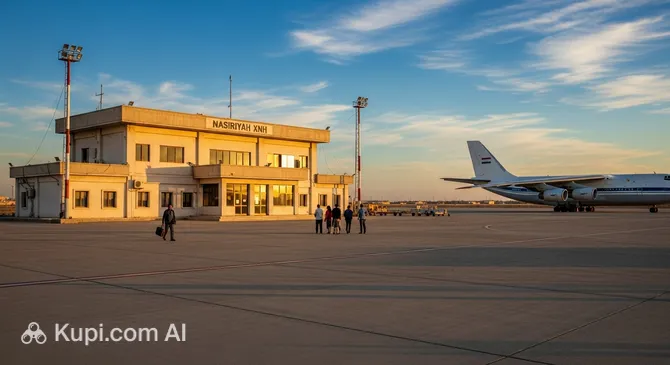
Nasiriyah Airport. Source: Kupi.com Binoculars

Nasiriyah Airport serves as the new aerial gateway to southern Iraq, symbolizing a strong connection between eras. Located in immediate proximity to the ancient city of Ur, the cradle of civilization, this modern aviation complex is designed with deep respect for the region's great past. The design of the main terminal, inspired by the architecture of ancient Mesopotamia, creates a unique atmosphere for travellers arriving in the Dhi Qar Governorate. The launch of the airport is a key step in the economic development of the region, aimed at stimulating tourism and transforming the south of the country into an important tourist and logistics hub.

IATA Code XNH
ICAO Code ORTL
City Nasiriyah
Distance to Centre 23 km
Status International
Annual Passengers Approx. 750,000 (projected for the first phase)
Popular Airlines Information regarding scheduled airlines will be available upon the full commissioning of the airport, expected by the end of 2025.
Schedule "Nasiriyah Airport" Online Board

Nasiriyah Airport is not merely a transport hub but a large-scale infrastructure project. It is classified as a high-grade 4E facility, allowing it to accommodate extra-large aircraft. The complex includes a modern terminal building, a control tower, a cargo complex, and a high-speed motorway ensuring rapid connection to the city. One of its main features is its architecture: in addition to references to the ancient city of Ur, the façade design incorporates motifs resembling date palm groves — a traditional symbol of this region.

The airport's main advantage is its strategic location. It is designed to serve the southern part of Iraq, which is rich in Mesopotamia's most important archaeological sites. The opening of the airport will significantly reduce the load on the air harbours of Baghdad and Basra, simplifying access for tourists and facilitating the creation of new jobs for the residents of the Dhi Qar province. This project is a symbol of revival and opens new horizons for travellers wishing to explore the historical heart of Iraq.

Contact Information

Finding precise and centralised contact information for Nasiriyah Airport can be challenging, as it serves a dual purpose and the passenger infrastructure is currently under development. We recommend addressing all flight-related queries directly to your airline representatives.

  • Official Website: Currently, the airport does not have a dedicated official website for passengers. All information regarding flights, schedules, and carriage regulations should be sought on the websites of airlines operating flights to Nasiriyah.
  • Help Desk Phone: A single public telephone number for enquiries has not been published. For up-to-date information, please contact your airline's customer support service.
  • Airport Address: Nasiriyah Airport (XNH), near the city of Nasiriyah, Dhi Qar Governorate, Iraq.
  • Email: A public email address for passenger communication is not provided.
  • Social Media: Official social media pages for informing passengers are currently absent.
  • Lost Luggage Information: Issues regarding lost or damaged luggage should be addressed directly to the Lost & Found service of the airline you travelled with.
  • Passenger Support Service: Assistance and support for passengers within the airport territory are provided by airline representatives.

Getting to the Airport

Nasiriyah Airport (XNH) is located relatively close to the city of the same name, making the journey there quite quick. However, the choice of transport for tourists has its nuances. The primary and most predictable way to get from the city centre of Nasiriyah to the airport is to use a taxi or a pre-booked transfer. The trip usually takes about 20-30 minutes depending on traffic conditions.

Taxi and Transfer

This is the most convenient and recommended option for travellers. You can find a taxi in the city or ask your hotel to arrange a car for you. For greater reliability and a fixed cost, it is better to book a transfer in advance through a travel agency or a specialised service. It is extremely important to agree on the price of the trip with the driver before moving off if you are using a regular taxi, to avoid misunderstandings upon arrival. This method is the safest and most comfortable.

Public Transport

The public transport system in Iraq can be difficult to navigate without knowledge of the local language and customs. There are likely no direct buses or shuttles running on a schedule from the city centre to the airport. Locals may use shared taxis or minibuses, but this can be inconvenient for a tourist, especially with luggage. This option is the most budget-friendly, but also the most unpredictable.

Car Rental and Parking

Car rental services exist in major cities of Iraq, however, self-driving can be fraught with difficulties due to local traffic peculiarities and the need for good orientation in the area. If you do decide to rent a car, check the conditions and road status along your route with the rental company. The airport territory typically has a car park where vehicles can be left for short or long periods. It is recommended to check information regarding availability and rates in advance.

Terminals and Map

Nasiriyah Airport (XNH) is a small regional airport serving the city of Nasiriyah and its surroundings. Due to its size, it has a simple and clear structure, making navigation for passengers as easy as possible.

Structure and Terminals

The airport consists of one passenger terminal, which handles both domestic and international flights. All infrastructure — from check-in to boarding — is concentrated in one compact building. There is no need for transfers between terminals, as all zones are within walking distance of each other.

Departure and Arrival Zones

Departure and arrival zones are located within the same terminal. Upon entering the building, you find yourself in a general hall where check-in counters are situated. The departure zone includes a security checkpoint and a small waiting lounge before the boarding gate. The arrival zone is usually a separate part of the hall where baggage reclaim takes place. Due to the terminal's compactness, the journey from the aircraft steps to the city exit does not take much time.

Procedures and Timings

The process of check-in and security screening at Nasiriyah Airport generally proceeds significantly faster than in major international hubs. Nevertheless, it is recommended to arrive at the airport well in advance — approximately 1.5-2 hours before departure, to complete all formalities without haste. Given the modest size of the terminal, finding the necessary counter or boarding gate will not be difficult — simply follow the signs.

Airport History

The history of Nasiriyah Airport (XNH), also known as Imam Ali Air Base, begins long before its transformation into a civil aviation hub. The original airfield on this site was built back in the 1930s. For most of its history, it functioned primarily as a military facility, which laid the foundation for its robust infrastructure, including long runways.

A key moment in the airport's modern history was the decision to open it to civil aviation. In the early 2010s, a project was launched to convert the military base into an airport capable of serving commercial flights. This strategic move was aimed at improving transport accessibility to the southern regions of Iraq, promoting tourism development, and stimulating the local economy.

A significant event that opened a new chapter in the airport's life occurred in March 2017. It was then that the first civil flight in history, operated by Iraqi Airways from Baghdad, landed here. This event officially turned the former military base into an active civil airport. Since then, work has been ongoing to further modernize and expand the passenger terminal and ground services with the aim of increasing passenger flow and opening new routes.

Services and Amenities

Nasiriyah Airport (XNH) is a regional airport serving the city of Nasiriyah and adjacent territories in southern Iraq. The airport's infrastructure is focused on meeting the basic needs of passengers, so the range of services here may be more modest compared to major international aviation hubs.

For a snack before departure, there is typically a small café or snack bar operating in the airport, where beverages and light refreshments can be purchased. Shopping opportunities are usually limited to a kiosk selling essentials and local souvenirs. Apart from general waiting areas, the availability of separate VIP lounges is not guaranteed, and this information is best clarified with your airline.

Passengers can expect the presence of charging stations for mobile devices. Access to a Wi-Fi network may be provided, but it is recommended to check usage conditions (paid or free) in advance. An ATM or currency exchange point may be installed in the terminal for financial transactions, however, for more complex banking services, it is worth visiting branches in the city itself.

A medical point should be available within the airport territory to provide emergency assistance. A mother and child room may be equipped for passengers with small children. Travellers with reduced mobility are strongly advised to contact the airline in advance to book assistance services and clarify the availability of special infrastructure.

Specialised business centres and conference halls are generally absent in airports of this type. For business meetings, it is better to use venues in the city. There are no hotels directly on the airport grounds, so travellers needing overnight accommodation should look for lodging options in Nasiriyah.

Dining

When planning a flight through Nasiriyah Airport (XNH), it is important to consider that this is a small regional hub, and the choice of dining establishments here is quite limited. You will not find a large food court or restaurants of famous global chains here. Typically, opportunities for a snack are limited to one or several small cafés or buffets located in the main airport hall, accessible to both departing passengers and those meeting them.

In local cafeterias, you can usually purchase quick snacks: sandwiches, pastries, crisps, and sweets. Beverages available include tea, coffee, water, and soft drinks. Finding a full hot meal will be problematic, so the airport is more suitable for a light snack before departure. Sometimes, local dates or other traditional sweets of Iraq can be found on sale, which can make for a delightful authentic treat for the journey.

Travellers with strict dietary restrictions (vegans, vegetarians, people with gluten intolerance) are strongly recommended to bring food with them. A specialised menu at the airport is likely absent. Although the majority of products in the region are Halal by default, the presence of official certification is not guaranteed. Opening hours of establishments are usually tied to the flight schedule, so they may be closed at night.

Prices at the airport are generally moderate, but it is better to have local currency for ease of payment. If you have plenty of time before your flight, more diverse dining options can be found in the city of Nasiriyah itself, however, this would require leaving the airport territory, which should be considered when planning your time.

Travel Tips

To ensure your journey through the airport of Nasiriyah goes as smoothly as possible, it is worth familiarising yourself with a few useful tips in advance. Planning is the key to a calm start and end to your trip. It is recommended to arrive at the airport at least 2-3 hours before international flights and 1.5-2 hours before domestic ones. This will give you enough time for all pre-flight formalities without rushing.

To save time, use online check-in if your airline provides this option. This will allow you to proceed immediately to baggage drop or, if you are travelling light, to the security checkpoint. Keep your passport, visa, and boarding pass to hand so you can quickly present them at the check-in counter and when passing through security control.

Seat selection on the plane can significantly affect flight comfort. Window seats will offer you beautiful views during take-off and landing. Aisle seats are convenient if you plan to get up during the flight. Rows by emergency exits usually offer more legroom but also impose certain responsibilities on the passenger.

When packing hand luggage, remember safety regulations. It is prohibited to bring liquids exceeding 100 ml in a single container into the aircraft cabin, as well as any sharp objects, weapons, and flammable substances. Ensure that all valuables, documents, money, gadgets, and necessary medications (with a prescription, if required) are in your hand luggage.

If you have a connecting flight, check in advance whether you will need to collect and re-check your luggage at the transit airport. Also, check visa requirements for the country of transit. When passing through customs control at your destination, be prepared to declare goods or cash amounts exceeding established limits to avoid misunderstandings.

You can save time and money in several ways. Book flight tickets and airport transfers in advance, use online services, and pack light snacks for the journey (ensuring they are permitted for carriage). Travelling with only hand luggage also significantly speeds up the passage of all formalities upon arrival.

In the event of a flight delay or cancellation, contact your airline representative immediately. Depending on the duration of the delay, you may be provided with beverages, meals, or even hotel accommodation. Keep all receipts for unforeseen expenses — they may be needed to claim compensation.

Reached the end of the page?

That means the route is fully explored