Support

Castelbuono

About

Castelbuono is a true gem of Sicily, nestled comfortably at the foot of the green hills of the Madonie Nature Park. This town, seemingly hidden from the bustle of the outside world, offers travelers the chance to immerse themselves in the atmosphere of authenticity and tranquility for which Italy is so famous. Here, surrounded by dense forests, olive groves, and vineyards, time flows differently, allowing you to enjoy every moment.

Located in the province of Palermo at an altitude of over 400 meters above sea level, the town features a pleasant climate and picturesque panoramas. Despite its modest size and a population of about 8,700 people, Castelbuono plays an important role in the cultural life of the region while remaining an ideal destination for those seeking solitude away from busy tourist routes.
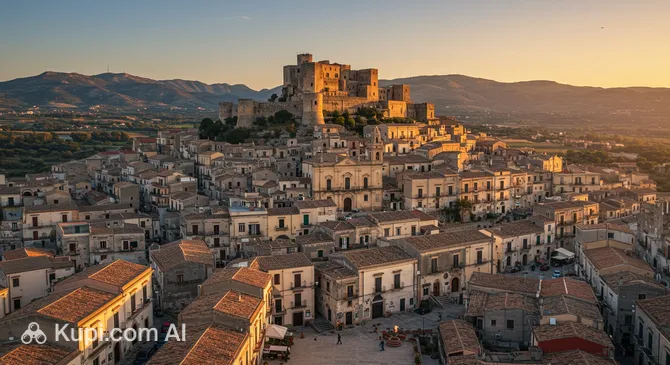
Castelbuono. Illustration.
Source: Kupi.com AI

The town's architectural appearance was formed over centuries, absorbing Arabic, Norman, and Spanish motifs. The main symbol and landscape dominant is the majestic Ventimiglia Castle, which stands like a guardian over the ancient quarters. Castelbuono's history literally comes to life on the narrow cobbled streets, where the facades of ancient churches sit alongside cozy houses with flower-filled balconies.

A walk through the town gives the feeling of being at a large family celebration. Traditions are honored here, and the air is filled with the aroma of fresh bread and the tolling of church bells. Travelers should stop by the local squares to appreciate the slow pace of life in the Sicilian hinterland or head to one of the panoramic viewpoints offering breathtaking views of the surroundings.

Castelbuono is definitely worth including in your travel itinerary for its unique hospitality and exceptional combination of medieval heritage and natural beauty. It is a place where an ordinary day turns into a feast for the soul, leaving the warmest memories of the trip.

Weather Overview

The climate of this Sicilian town is characterized by the mildness typical of the Mediterranean but with a pleasant freshness provided by the proximity of the Madonie mountain park. To choose the perfect time for a visit, it's worth checking in advance what the weather in Castelbuono is expected to be during your travel dates.

Summer here is the sunniest and most stable time of year. In July and August, the average temperature is around 25°C, with daytime temperatures reaching up to 28°C. Precipitation during this period is almost non-existent; in July, for example, rain is extremely rare, occurring on average only a couple of days per month. September and June are also pleasantly warm (up to 25°C during the day) but may bring some slight cloud cover.

Winter and late autumn bring cool temperatures and humidity. From November to March, temperatures average between 9–11°C, dropping to 7–8°C at night. This is the wettest season: in January and November, the number of rainy days can reach 12–13. Expect a warm, predominantly dry summer and cool winters with frequent rain.

Average monthly temperature

Average monthly precipitation

Interesting Facts

In addition to picturesque views and ancient streets, Castelbuono holds many surprising secrets that make it unique even by the standards of history-rich Sicily. Here are a few facts that will help you see this town from a new perspective:

  • Sacred relic in the castle. The town's symbol, Ventimiglia Castle, is not only a defensive structure but also an important religious center. Within its walls, a revered relic is kept — the skull of Saint Anne, the patron saint of Castelbuono. Every year during a festival, the relic is solemnly carried through the streets, which consistently attracts thousands of pilgrims and tourists.

  • Temple on the foundation of a mosque. The Matrice Vecchia Church (Old Matrix) is a living testimony to the region's complex history. It was erected in the 14th century on the site of a former mosque, and its architecture is a whimsical blend of Arab, Norman, and Spanish cultures. Inside the temple, you can see unique frescoes dating back to the 14th–17th centuries.

  • European capital of indie rock. Castelbuono surprises with the contrast between its medieval scenery and modern art. The town is famous for its Ypsigrock festival — an open-air music event. Every year, ancient squares turn into a stage for the best alternative music performers, gathering fans from all over the continent.

  • Gastronomic fame. The town is known far beyond Italy thanks to the Fiasconaro family and their confectionery factory. It is here that the famous Sicilian panettones are created, which have become a sweet symbol of the town. Locals are proud that their desserts can rival the best Milanese pastries.

How to Get There

A journey to this picturesque corner of Sicily usually begins with arrival at one of the island's major transport hubs. Since the town is located in the Madonie Mountains, there is no direct air link, but a developed road network allows for a comfortable drive from the coast. You can find out more about how to get to Castelbuono by studying all available routes and types of transport.

The most convenient way to reach the region is by air. The nearest major hub is Falcone–Borsellino Airport (PMO). There is no airport in Castelbuono itself, but you can fly into this airport in the city of Palermo, which is located about 91.7 km from Castelbuono. This is one of the island's main air gateways with high passenger traffic. A trip from here by car or bus will take about 1.5–2 hours, allowing you to enjoy views of the northern coast along the way.

Another popular option is Catania–Fontanarossa Airport (CTA), located on the east coast. It is in the city of Catania, about 100.5 km from Castelbuono. This is the largest international airport in Sicily, handling many flights. The drive from here to your destination will take just over an hour and a half by taxi or rental car, as most of the journey follows the high-speed motorway.

For clarity, here is summary information on the main airports through which you can plan your route:

AirportPassenger trafficDistance
Falcone-Borsellino Airport8.9 mln92 km
Catania-Fontanarossa Airport12.3 mln101 km
Comiso Airport260 642114 km
Tito Menniti Airport400 000138 km
Trapani-Birgi Airport1.3 mln141 km

If you prefer ground transport or are traveling from the mainland, you can consider the railway, although this will require transfers. There is no railway station in Castelbuono itself, but you can arrive at Reggio di Calabria Centrale Station in the city of Reggio di Calabria, which is about 137.2 km from Castelbuono (on the mainland). From there, a ferry crossing across the Strait of Messina and a further journey across the island by train or car will be required, taking several hours.

Below is a list of the nearest major railway hubs that could be part of your complex route:

StationPassenger trafficDistance
Reggio di Calabria Centrale Station137 km
Lamezia Terme Centrale Railway Station1 mln219 km

Main Attractions

Castelbuono is a town where every stone breathes history. Its architectural appearance was shaped over centuries, creating a unique ensemble that delights even seasoned travelers. Walking through the center is like flipping through the pages of an art history book, where Gothic, Baroque, and Arabic motifs blend together. Here are several places that must be included in your visit program.

Ventimiglia Castle (Castello dei Ventimiglia) is the undisputed dominant feature of the town and its main symbol. This 14th-century fortress combines features of Arab-Norman and Swabian architecture. For tourists, it is primarily interesting for the Palatine Chapel, decorated with magnificent stucco work by Giacomo Serpotta — snow-white figures against a background of gold leaf create an incredible effect. Additionally, it houses the Civic Museum with archaeological finds and a sacred relic — the skull of Saint Anne.

Matrice Vecchia Church is located on the main square and surprises with its unusual appearance. The temple was built in the 14th century on the ruins of a pagan sanctuary and likely a mosque, which is reflected in its architecture. Travelers are drawn to the Renaissance portico and the majestic bell tower, which was originally a watchtower. Inside, it is worth descending into the crypt to see ancient frescoes depicting medieval life in the region.

Piazza Margherita is the heart of social life in Castelbuono. It is here that you can feel the true rhythm of a Sicilian town, watching the locals and enjoying a cup of coffee at one of the cafes. The square is surrounded by historical buildings, including a former monastery and an old bank, and the center is filled with the atmosphere of comfort and hospitality for which Italy is renowned.

Fountain of Venus Ciprea (Fontana della Venere Ciprea) is an elegant 15th-century monument gracing the center of the old town. The sculptural composition depicts the goddess Venus and Cupid, with water flowing from four mascarons. This spot is popular among tourists not only as a beautiful backdrop for photos but also as a meeting point where mythological themes and the daily life of the townspeople intertwine.

Local Cuisine

Castelbuono's cuisine is a true feast of flavor, where Sicilian traditions are harmoniously intertwined with the generous gifts of the Madonie Park's nature. Local gastronomic habits are built around the "zero kilometer" concept: only the freshest products grown or produced in the immediate vicinity of the town reach the table. The diet is based on aromatic olive oil, various cheeses, wild mushrooms, and wild herbs, which give the dishes a unique mountain character.

Among the main dishes that are definitely worth trying, pasta with wild herbs stands out — a simple but incredibly fragrant treat. Vegetable lovers will enjoy the local caponata — a stewed eggplant dish with olives and capers, featuring a rich sweet-and-sour note. Since the town is located away from the sea, meat delicacies are very popular here: homemade sausages prepared according to old recipes and hearty meat stews often take center stage at lunch.

However, the town has gained true world fame through its sweets. Castelbuono is considered the unofficial capital of Sicilian panettone, largely thanks to the skill of the confectioners at the famous Fiasconaro factory. Their light pastries with wild berries, pistachios, and unique honey from Madonian bees have become the region's sweet calling card. Also, don't miss the opportunity to try the artisanal almond ice cream, which is perfectly refreshing on a hot day.

The food culture here is democratic and diverse. You can start the morning at a coffee shop with traditional pastries and head to a cozy trattoria or pizzeria in the evening to enjoy Sicilian pies and street food. Farmers' markets hold a special place in the life of the town, where you can buy fresh cheeses and seasonal fruits. Locals prefer to finish a meal with a glass of robust homemade wine or a small glass of herbal liqueur, which perfectly aids digestion after a hearty dinner.

Travel Tips

Preparing for your trip to Castelbuono will help you avoid minor inconveniences and fully enjoy the atmosphere of the Sicilian hinterland. We've compiled a list of useful recommendations to make your journey comfortable and carefree.

  1. Wardrobe and Dress Code. Since the town is located in the mountains, evenings can be cool even in summer — be sure to bring a light jacket or cardigan. The main rule for footwear is comfort and stability: the historical center is paved with ancient cobblestones, so it's better to leave heels at home and opt for sneakers or flat-soled sandals. When visiting religious sites like churches, maintain modesty: shoulders and knees should be covered.

  2. Transport Nuances. Castelbuono's historical center is compact, and it is best to move around it on foot so you don't miss any picturesque details. Public transport inside the town is practically unnecessary. If you plan to explore the surroundings of the Madonie Park, renting a car is highly recommended. However, be careful: limited traffic zones (ZTL) operate in the center, where entry is prohibited for tourists — look for parking on the outskirts of the old town.

  3. Finances and Cash. The currency is the Euro. Although most restaurants and hotels accept cards, terminals may be absent or not working in small souvenir shops, bars, or when buying street food. Always carry a small supply of cash (small denominations). Tipping in Italy is not a strict obligation, but rounding up the bill or 1–2 euros for good service will be received with gratitude. Remember the "coperto" — a service charge often included automatically in the check.

  4. Health and Safety. Castelbuono is a very calm and safe town where you can walk late without worry. Pharmacies are marked with a Farmacia sign with a green cross; duty pharmacies operate according to a schedule posted on their doors. Water from street fountains, unless there is a "non potabile" (non-potable) sign, is usually safe to drink — it's clean mountain water.

  5. Communication. The main language is Italian, and locals also often use the Sicilian dialect. In tourist areas, staff speak basic English, but you might need gestures to communicate in small shops. Learn a few phrases: "Buongiorno" (Good day) and "Grazie" (Thank you) — this will immediately win over your interlocutor. Wi-Fi is available in most cafes, but for navigation, it's better to buy a local SIM card.

  6. Local Etiquette. Sicilians are very friendly. When entering a shop or cafe, it's customary to greet the staff and other patrons. Life here flows slowly, at a "piano piano" (slowly) pace, so don't rush the waiters or show impatience — relax and enjoy the moment.

  7. What to Avoid. Don't plan for active shopping or lunch between 1:30 PM and 4:30 PM. This is when the siesta (riposo) takes place, and most shops, as well as many establishments, close for a break. Trying to get somewhere during these hours might lead to disappointment.

  8. Unique Tip. Be sure to try products with manna — this is solidified ash sap harvested only in this region. It's used as a natural sweetener and added to cosmetics. This will be the most authentic souvenir from Castelbuono that cannot be found in other parts of the world.

Castelbuono is a place where the hospitality of the locals warms you as much as the southern sun. By following these simple tips, you'll feel like a welcome guest, avoid tourist traps, and take home only the warmest memories of authentic Sicily.

Entertainment & Nightlife

Nightlife in Castelbuono is fundamentally different from that of noisy metropolises or coastal party resorts. You won't find neon signs of massive nightclubs or thumping discos until dawn here. Evening leisure in this town is the embodiment of the Italian "dolce vita": measured, cozy, and filled with lively conversation. Most of the action takes place outdoors, where locals and tourists mingle in a single flow, enjoying the cool air after a hot Sicilian day.

The epicenter of evening activity is always Piazza Margherita. As dusk falls, this square turns into one large open-air living room. People of all ages flock here: young people gather in groups by the fountain, families with children stroll along the perimeter, and the older generation occupies cafe tables. The atmosphere here is incredibly friendly and safe; the dress code in most establishments is "casual chic" — comfortable yet neat.

The drinking culture here is built around the ritual of the aperitivo. The evening usually begins around 7:00 PM with a glass of wine or an Aperol Spritz cocktail, accompanied by light snacks. Night spots stay open until late, especially during the summer season and on weekends. Among specific places worth visiting, the legendary Fiasconaro bar stands out. Although the brand is world-famous for its panettones, their establishment on the main square is an ideal spot to start the evening with an excellent cocktail and dessert.

For those looking for a more lively atmosphere and music, Cycas Ristorante Pizzeria & Bar is an excellent choice. Located in the heart of the town, this venue often becomes a hub for young people thanks to its modern interior and extensive drinks menu. Here you can not only have dinner but also stay for a cocktail to the sound of trendy sets. Another popular meeting spot is Cin Cin Bar, which boasts a relaxed atmosphere perfect for long conversations over a glass of local wine.

In terms of safety, Castelbuono is one of the calmest towns in the region. You can safely walk through the historical center even late at night. The streets are well-lit, and crime is practically non-existent. As for transport, you won't need it within the town — all key locations are within walking distance. If you are staying out of town, arrange a taxi in advance or use a rental car, as catching a car on the street at night is almost impossible. Prices in bars will pleasantly surprise you: they are lower than in Palermo or Cefalù.

Daytime entertainment in the city is cultural and educational. The main point of attraction remains Ventimiglia Castle, which houses the Civic Museum with a rich collection of sacred art and archaeology. Nature lovers should take a walk along the trails of the Madonie Park, which begin literally just beyond the city limits, offering spectacular views and pure mountain air.

Parks & Museums

Castelbuono harmoniously combines natural beauty and rich cultural heritage, offering tourists more than just sightseeing, but a full immersion into the atmosphere for which Italy is famous. The town, located in the heart of protected forests, serves as an ideal starting point for eco-tourism while carefully preserving its historical treasures in museum halls.

Madonie Nature Park (Parco delle Madonie) is the main green "treasure chest" surrounding the town. Castelbuono effectively serves as one of the gateways to this vast reserve. Here, travelers will find picturesque trails through dense forests where unique ash trees grow, from which the famous manna is extracted. This place is ideal for trekking, quiet walks in the fresh air, and observing rare plant species in their natural habitat.

The Civic Museum (Museo Civico), located within the walls of Ventimiglia Castle, is the cultural core of the town. The museum's exhibition is multifaceted: it includes a sacred art section with precious church utensils, an archaeological department telling the ancient history of the settlement, and even a modern art gallery. For tourists, this place is interesting for the opportunity to see the town's history through the centuries without leaving the confines of one majestic fortress.

The Francesco Minà Palumbo Naturalistic Museum (Museo Naturalistico Francesco Minà Palumbo) is a unique institution dedicated to the nature of Sicily. Its collection, gathered by an outstanding local scientist of the 19th century, houses thousands of specimens of flora, fauna, minerals, and fossils. Visiting this museum allows for a deeper understanding of the unique ecosystem of the Madonie region and a chance to see rare historical herbaria of great scientific and educational value.

For those who want to learn more about local traditions, discovering the culture of manna harvesting — Sicily's "white gold" — will be an interesting find. While there may not be a large separate manna museum in the center, many agritourism farms in the surrounding area act as open-air museums, demonstrating the ancient process of collecting sweet ash sap, which is an exclusive experience for this region.

Getting Around

The transport system in Castelbuono has its own characteristics, shaped by the town's size and its location in a mountainous area. Since it is a small medieval town, there are no metros, trams, or trolleybuses. Life is concentrated in the compact historical center, which is best explored on foot, enjoying the atmosphere of the ancient streets.

The main form of public transport connecting the town with the outside world and the nearest major hubs (Palermo and Cefalù) is buses. The main operator is SAIS Trasporti. The buses are modern and comfortable and run regularly, though the schedule may change depending on the season and day of the week. Stops are usually located at the main entrances to the town and central squares.

The fare payment system here is quite traditional for the Italian province. Tickets for intercity buses can be purchased at tobacco shops (look for the sign with the letter T), in some bars, or directly from the driver when boarding (it's advisable to have small cash). For planning trips and buying tickets, it's also convenient to use the carrier's official website or mobile app, which guarantees a seat during the high season.

If you are traveling by rental car, be careful: a Limited Traffic Zone (ZTL) operates in the historical center. Entry is permitted only to residents, and violations are recorded by cameras, which can lead to a substantial fine. Tourists are recommended to leave their cars in intercepting parking lots outside the old walls and continue on foot.

As an alternative to public transport, you can use taxi services or car hire with a driver (NCC). However, keep in mind that there are no classic taxi services that you can hail with a wave of your hand on the street. A car must be ordered in advance by phone or through the hotel reception. Bicycle rental is also available and popular among those who want to see the surroundings of the Madonie Park.

A unique feature of Castelbuono's municipal logistics is the use of donkeys for garbage collection in the historical center. Although not passenger transport, these "ecological workers" have become a true symbol of the town. Seeing them in the morning on narrow streets where heavy machinery cannot pass is a unique sight, highlighting the locals' careful attitude toward ecology and history.

An important tip for tourists: the number of bus services is sharply reduced on Sundays and public holidays. If you plan a trip on a weekend, be sure to check the schedule in advance. Also, remember that the "Castelbuono" railway station is located about 9 km from the town itself, so if you choose the train, you will still need to transfer to a bus or taxi to reach the center.

Accommodation

Choosing accommodation in Castelbuono is an opportunity to become part of local life, as there are practically no faceless hotel chain giants here. The town offers tourists comfort and authenticity: from small family-run bed and breakfasts (B&Bs) in medieval alleys to luxurious country estates surrounded by the nature of Madonie Park. The main focus is on hospitality and a personalized approach.

There are two main areas for staying, each with its own advantages:

  • Historical Center. The ideal choice for those who want to be in the heart of the action. By staying here, you will be within walking distance of Ventimiglia Castle, Piazza Margherita, and the best restaurants. Living in an ancient building with a balcony overlooking a busy street allows you to feel the true rhythm of a Sicilian town.
  • Surroundings and Madonie Park. Here, the agriturismo format prevails — farmhouses converted into comfortable hotels. This is an excellent option for lovers of silence, nature, and gastronomic discoveries, as these places often feature restaurants using their own produce.

Agritourism complexes are particularly popular in this region. They often feature swimming pools and spacious grounds, making them a wonderful alternative to a beach holiday, especially during the hot summer months. Here you can enjoy the cool mountain air and panoramic views of the valleys.

Booking tip: Castelbuono is a popular destination, especially in August when the main town festivals and the Ypsigrock music festival take place. During this period, demand for accommodation spikes, so it is recommended to search and book options 3–4 months before your trip. In the off-season, finding a room is much easier, and prices become even more attractive.

The price range in the town varies from budget (small rooms and guest houses) to mid-range and above (boutique hotels and resorts with a pool). The cost of living here is generally lower than on the coast in Cefalù. Booking is most convenient through popular international online platforms, but many small B&Bs also take direct bookings, offering guests more flexible terms.

Nearby Cities

For those looking to explore the surroundings, Castelbuono serves as an excellent starting point for day trips to several interesting nearby locations:

Just 35 kilometers away is the coastal town of Termini Imerese. It is known for its historical thermal springs, which were valued as far back as Ancient Roman times. Here you can combine a cultural program with a stroll along the promenade, enjoying the sea view, which provides a pleasant contrast to Castelbuono's mountain landscapes.

Slightly further, in the heart of the island, lies Enna — a unique city perched on a plateau at an altitude of nearly 1000 meters. It is called the "Belvedere of Sicily" for its stunning panoramic views of Mount Etna and the surrounding valleys. The main point of attraction here is the majestic Lombardy Castle, one of Italy's most significant medieval forts.

Baroque architecture enthusiasts should head to Bagheria, known as the "city of villas." In the 18th century, the Sicilian aristocracy built their luxurious summer residences here. The most famous is Villa Palagonia, also called the "Villa of Monsters" because of the grotesque statues decorating its garden, which create a uniquely mystical atmosphere.

CityPopulationDistance
Cefalù14 29813 km
Nicosia13 58834 km
Termini Imerese26 02935 km
Trabia10 43039 km
Leonforte13 10642 km

These nearby destinations provide insight into the diverse culture and landscapes of the region.

Shopping & Souvenirs

Shopping in Castelbuono is not about chasing fashion brands but an exciting immersion into the world of Sicilian crafts and gastronomy. Unlike major metropolises, you won't find huge storefronts with haute couture clothing here. Instead, the town offers cozy shops filled with the aromas of local delicacies and workshops where unique handmade items are created. Purchases here become part of the cultural experience, allowing you to take home a piece of the soul of this ancient town.

Main shopping streets are concentrated in the historical center. The main artery for shopping enthusiasts is Via Sant'Anna, which leads to the castle, as well as the adjacent Corso Umberto I. Strolling through these cobbled streets, you will encounter many souvenir shops, ceramic boutiques, and gastronomic stalls. Piazza Margherita can also be called the heart of shopping life, as it is home to iconic confectioneries and cafes offering signature products.

Shopping centers in the conventional sense do not exist in Castelbuono. It is a small town that preserves its medieval appearance, so there are no malls or large department stores. If you need large-scale shopping at chain clothing and electronics stores, it's better to plan a trip to Palermo or Cefalù. Here, the atmosphere of "slow shopping" prevails — taking your time to choose unique goods in small family-owned shops.

Markets play an important role in the lives of the townspeople. A weekly street market usually takes place on specific days (most often Tuesdays or Thursdays) on the outskirts of the center. Here you can buy fresh seasonal fruits, vegetables, cheeses from local farmers, as well as inexpensive clothing and household goods. This is an excellent place to observe the daily life of Sicilians and taste products grown in the Madonie Park.

When choosing souvenirs, pay attention to what this specific region is famous for:

  • Manna. Castelbuono is one of the few places in the world where solidified ash sap is harvested. It is sold in its pure form (manna "cannoli"), and is also added to cosmetics, soaps, liqueurs, and sweets. This is the most authentic gift from here.
  • Fiasconaro Panettone. The products of this legendary confectionery are known far beyond the country. Even if you don't visit at Christmas, be sure to buy their signature pastries or creams (pistachio, almond, manna).
  • Ceramics. Sicilian ceramics with traditional patterns — bright plates, bowls, and the famous "Moor's heads" — will make an excellent interior decoration.
  • Local delicacies. Sheep cheeses, salami from the black pigs of Madonie Park, olive oil, and wines from local wineries.

Opening hours and payment have their peculiarities. Shops are usually open from 9:00 AM to 1:00 PM and from 4:30 PM to 8:00 PM. The afternoon break (siesta) is strictly observed, especially in summer. Many shops may be closed on Sundays. Cards are accepted in most tourist spots, but it is recommended to carry cash euros for purchases at the market or in small kiosks. Italy is actively developing cashless payments, but in the hinterland, "cash" is still respected.

The Tax Free system is available to non-EU tourists for a single purchase exceeding 70 euros in one store (the threshold was lowered in 2024). Look for "Global Blue" or "Tax Free Shopping" stickers on storefronts. However, keep in mind that most purchases in Castelbuono are food and small souvenirs that rarely reach this amount, and small craft shops may not participate in the tax refund system.

Nearby cities

Reached the end of the page?

That means the route is fully explored