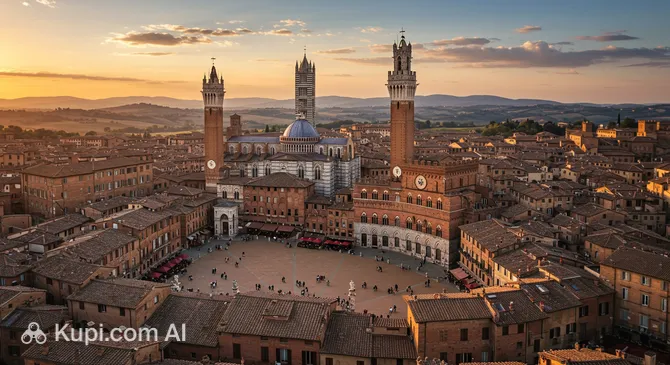
Siena is one of the most charming and well-preserved medieval cities not only in Tuscany but in all of Italy. Perched on three hills in the heart of the Tuscan region, Siena is famous for its unique atmosphere, rich history, and stunning architecture. With a population of about 54,000, the city has maintained its historical character, making it a true open-air museum.
Siena. Illustration.
Source: Kupi.com AI
The crown jewel of Siena is its central square, Piazza del Campo. This uniquely fan-shaped square is world-renowned not only for its beauty but also for hosting the famous Palio medieval horse races twice a year. Another iconic landmark is the majestic Siena Cathedral (Duomo), a masterpiece of Italian Gothic architecture that impresses with its marble facade and rich interior decoration. Don't forget to climb the Torre del Mangia, which offers breathtaking panoramic views of the entire city and the surrounding picturesque hills.
A stroll through the narrow medieval streets of Siena, each holding its own secrets and legends, will give you an unforgettable experience. Siena is a city that makes you fall in love at first sight, leaving you with a desire to return and once again immerse yourself in its unique atmosphere and enjoy its beauty.
The weather in Siena is Mediterranean in character with clearly defined seasons. Summers here are generally hot and sunny, while winters are mild but with more frequent precipitation. Spring and autumn offer comfortable temperatures, ideal for walking and sightseeing.
The warmest months are July and August, when the average temperature stays at 24.7°C, and the maximum can reach 30.5°C. These summer months also see the least amount of precipitation—only about 1 mm. The coolest month is January with an average temperature of 5.8°C and nightly minimums around 1.8°C. The highest amount of precipitation (about 4 mm) and rainy days occur in November and December.
Overall, expect a warm, mostly dry summer and a cool, wetter winter. For more detailed monthly information and the current forecast, you can study the climate of Siena.
Average monthly temperature
Average monthly precipitation
Interesting Facts
Beyond its world-famous landmarks like Piazza del Campo and the majestic Siena Cathedral, Siena hides many less obvious but equally fascinating stories and facts. Here are just a few that will help you look at this Tuscan city from a new perspective:
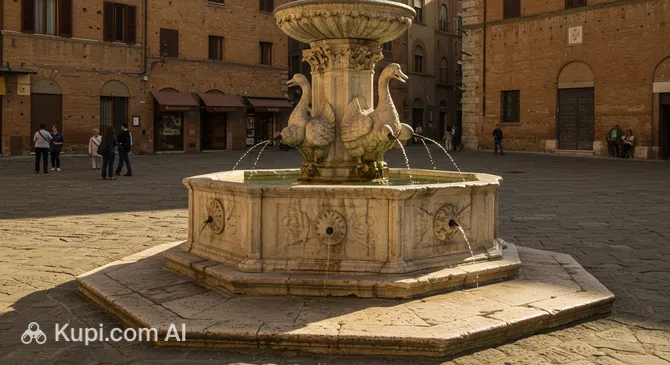
Fountain of the Goose (Fontanina Contrada dell'Oca). Illustration.
Source: Kupi.com AI
Traveler photos:
An Underground City of Water: Few know that beneath the streets of Siena lies a complex system of medieval aqueducts known as "bottini." These tunnels, totaling about 25 kilometers in length, were dug by hand over centuries and still supply water to the city's historic fountains, including the famous Fonte Gaia in Piazza del Campo.
Cradle of the World's Oldest Bank: It was in Siena in 1472 that the bank Monte dei Paschi di Siena was founded, which is considered the oldest continuously operating bank in the world. Its historic headquarters is still located in the impressive Palazzo Salimbeni.
A City of Seventeen Competing Souls: Siena is divided into 17 contrade (districts), each with its own unique symbol, flag, church, and even its own fountain, such as the charming Fountain of the Goose in the contrada of the same name. This centuries-old system is at the heart of the famous Palio horse race and permeates the city's entire social life.
Unfinished Grandeur: If you look closely at Siena Cathedral, you will see the remains of what was supposed to be its new, much larger nave. Construction was interrupted by the plague epidemic ("Black Death") in 1348, which claimed the lives of most of the city's population and forever changed its ambitions. These ruins serve as a silent reminder of former power and tragic fate.
How to Get There
There are several main ways to reach Siena, the enchanting medieval city in the heart of Tuscany. Although Siena itself does not have a major commercial airport, the nearest air gateways are in Florence and Pisa. Rail connections are also well-developed, especially when considering transfers at major hubs like Florence.
Since Siena does not have its own airport, travelers usually fly to one of the nearest major aviation hubs. The most convenient options are:
Florence Peretola Airport(FLR), also known as Amerigo Vespucci Airport, is located in the city of Florence, about 55.5 km north of Siena. This is a medium-sized international airport serving many European destinations. From Florence airport, you can reach Siena by direct bus (for example, the Tiemme company) in about 1 hour 15 minutes – 1 hour 30 minutes, or first travel to Florence's central station and from there take a train or another bus. A trip by car or taxi will take about 1 hour 15 minutes, depending on traffic.
Another popular choice is Pisa International Airport(PSA), named after Galileo Galilei. It is located in Pisa, approximately 86 km west of Siena. This large airport handles significantly more international flights, including many low-cost airlines. Direct buses also run from Pisa airport to Siena (journey time about 2 hours), or you can take a train with a transfer (for example, in Empoli or Florence). The car journey takes about 1.5 - 2 hours.
For clarity, here is a summary of the main airports through which you can reach Siena:
The railway connection is another convenient way to reach Siena. Although Siena has its own railway station (Stazione di Siena) located near the center, for many international and long-distance routes, it is more convenient to arrive at the major hub stations in neighboring Florence, from where it is easy to reach Siena by train or bus.
Florence Santa Maria Novella Station(ZMS) is the main railway station in Florence and one of the largest in Italy. It is located about 51 km from Siena. Trains to Siena depart regularly from here (journey time is between 1 hour 20 minutes and 1 hour 50 minutes, depending on the type of train) as do buses (for example, Tiemme/SITA, journey time about 1 hour 15 minutes – 1 hour 30 minutes).
Firenze Campo di Marte Station(FIR) is the second most important railway station in Florence, also located about 51 km from Siena. Some high-speed trains stop here. From Campo di Marte, you can also reach Siena, either by taking a local train to Santa Maria Novella for a transfer or by using bus services if available directly from this station or after a short trip by city transport to the bus station.
Below is information about some major railway stations in the region through which you can plan a route to Siena:
In addition, Siena is easily accessible by car, as the city has good connections to Italy's main highways. Renting a car can be a convenient option for exploring the picturesque Tuscan countryside.
Main Attractions
In addition to the world-famous Piazza del Campo and Siena Cathedral, Siena offers many other treasures that should not be overlooked. Here are some of the key attractions that will help you dive deeper into the history and culture of this amazing city:
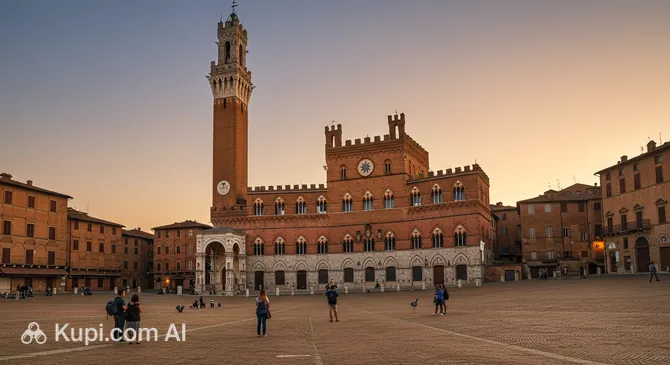
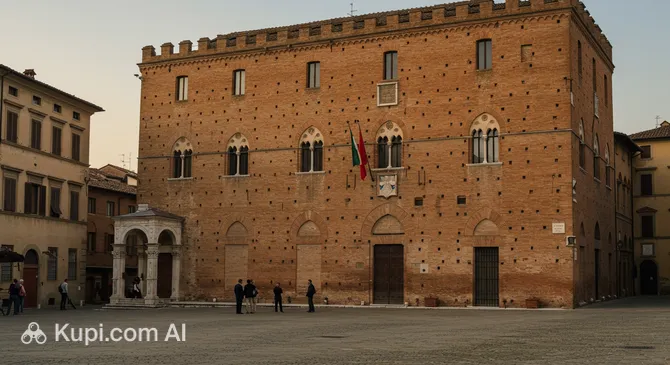
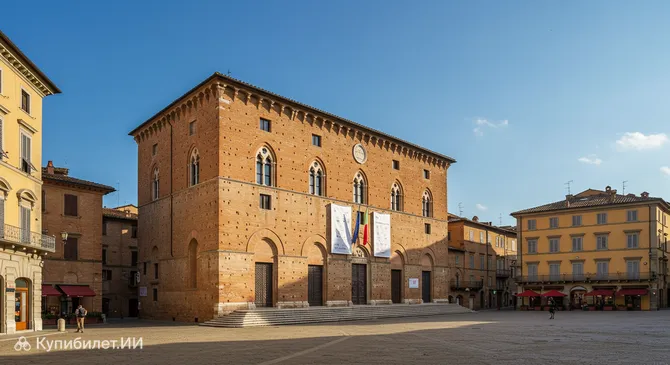
One of the city's central symbols is the Palazzo Pubblico (Town Hall), a majestic Gothic building dominating Piazza del Campo. For centuries, it served as the seat of government for the Republic of Siena. Today, it houses the Civic Museum (Museo Civico), which contains priceless frescoes by Sienese masters, including Ambrogio Lorenzetti's famous cycle "The Allegory of Good and Bad Government." Adjacent to the palace is the famous Torre del Mangia, which offers stunning views of the city.
Palazzo Pubblico. Illustration.
Source: Kupi.com AI
Traveler photos:
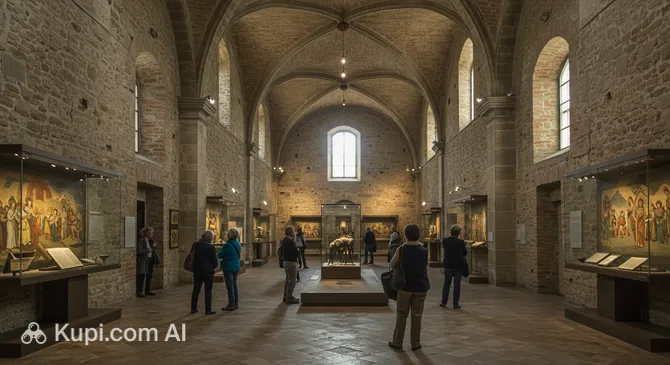
Near the cathedral is the impressive Santa Maria della Scala complex. Originally one of the oldest and largest hospitals in Europe, it welcomed pilgrims, the sick, and orphans. Today, it is a multifaceted museum center where you can see former hospital wards decorated with ancient frescoes, an archaeological museum with Etruscan and Roman artifacts, and spaces for temporary exhibitions. A visit to Santa Maria della Scala is a unique opportunity to touch centuries of Siena's history of mercy and hospitality.
Santa Maria della Scala. Illustration.
Source: Kupi.com AI
Traveler photos:
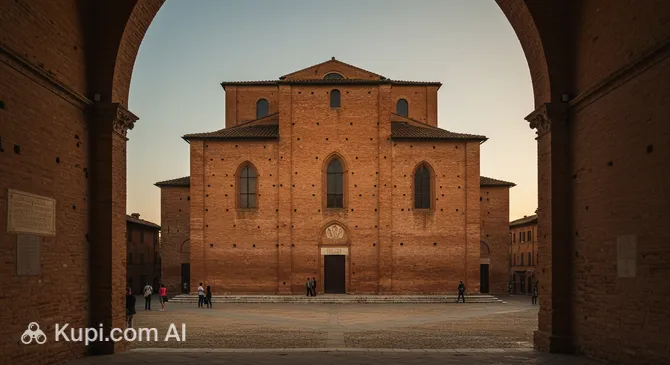
Majestically rising on a hill, the Basilica of San Domenico is another iconic site in Siena. This austere red-brick Gothic church is primarily known for housing a sacred relic—the head of Saint Catherine of Siena, one of the patron saints of Italy. Inside the basilica, you can also see beautiful frescoes, including works by Sodoma depicting scenes from the saint's life. Its powerful architecture and spiritual atmosphere make this basilica a must-visit.
Basilica of San Domenico. Illustration.
Source: Kupi.com AI
Traveler photos:
Art lovers should definitely visit the National Pinacoteca of Siena. Located in the historic Palazzo Brigidi and Palazzo Buonsignori, the gallery houses a rich collection of Sienese paintings from the 13th to 17th centuries. Here you can trace the development of the unique Sienese school and admire masterpieces by masters such as Duccio di Buoninsegna, Simone Martini, and Pietro and Ambrogio Lorenzetti. It is the perfect place for a deep dive into the golden age of Sienese art.
National Picture Gallery of Siena. Illustration.
Source: Kupi.com AI
Traveler photos:
Also interesting to visit is the Medici Fortress (Fortezza Medicea), built by order of Cosimo I de' Medici in the 16th century. Originally serving to control the city, today the fortress is a popular spot for walks, offering beautiful views of Siena. Various events and exhibitions are often held on its grounds, and there is an enoteca where you can taste Tuscan wines.
Local Cuisine
The cuisine of Siena is a true embodiment of Tuscan gastronomic traditions, where fresh local products, centuries-old recipes, and a love for simple but incredibly tasty food play the main role. The city's gastronomic scene is characterized by authenticity and a close connection to the rich history of the Italy region. Here you won't find excessive pretension, but you can enjoy dishes prepared with heart and from the highest quality ingredients, such as the famous Cinta Senese pork, pecorino sheep cheese, and fragrant olive oil.
Be sure to try pici—a thick, hand-rolled pasta typical of this area. It is often served with simple but rich sauces, such as all'aglione (with garlic and tomatoes) or with a wild boar (cinghiale) meat ragu. Another iconic dish is ribollita, a thick vegetable soup with bread that will warm you on a cool day. Don't miss the chance to taste dishes made from the aforementioned Cinta Senese pork, whether it's prosciutto, salami, or hearty sausages.
Siena is also famous for its unique desserts. The city's signature treat is panforte—a dense spiced cake with nuts, honey, and candied fruit, whose history dates back to the Middle Ages. You should also try the delicate almond cookies ricciarelli, covered in powdered sugar, and cantucci—hard almond biscuits that are traditionally dipped in dessert wine.
A meal in Siena is perfectly complemented by a glass of local wine. This region of Tuscany is famous for its red wines, such as Chianti Classico or the more full-bodied Brunello di Montalcino, although the latter is produced slightly south of Siena. Among white wines, look for Vernaccia di San Gimignano. It is customary to finish lunch or dinner with a cup of strong espresso or a glass of sweet Vin Santo wine, which pairs perfectly with cantucci. Of course, high-quality local mineral water is always available.
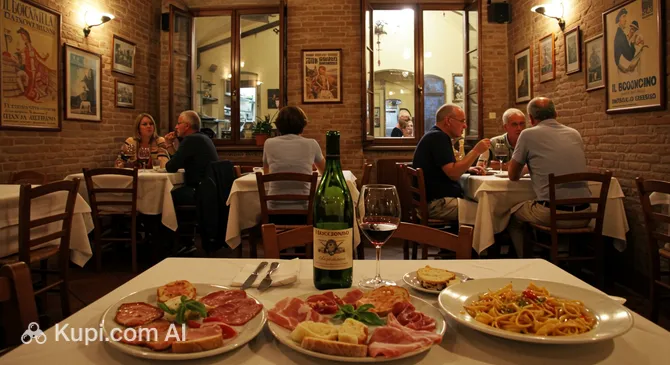
The food culture in Siena centers around cozy family trattorias and osterias, where you can enjoy authentic home cooking in a relaxed setting. Locals and tourists also love to visit enotecas (wine bars), where various snacks—cheeses, cured meats, and bruschettas—are served with a glass of excellent wine. To fully experience the hospitality and culinary traditions of Siena, stop by one of the local restaurants, such as Il Bocconcino, known for its traditional dishes. Local markets are also great places to buy fresh products and gastronomic souvenirs, allowing you to touch the everyday life of the Sienese.
Il Bocconcino. Illustration.
Source: Kupi.com AI
Traveler photos:
Travel Tips
Welcome to Siena! To make your journey to this magnificent medieval city in Italy as comfortable and memorable as possible, we have prepared some practical tips. They will help you navigate better and enjoy every moment of your stay.
Clothing and Essentials: The climate in Siena is Mediterranean. In summer (June-August), bring light, breathable clothing, sunscreen, a hat, and glasses. In spring and autumn, layered clothing and a light jacket are useful. In winter (December-February), a warm jacket, sweater, scarf, and gloves are needed. The key point is comfortable shoes for walking on cobblestones and hilly terrain. Don't forget an adapter (Italy uses Type F and L sockets). When visiting churches like the Duomo or Basilica of San Domenico, it is customary to cover shoulders and knees.
Local Transport: Siena's historic center is a pedestrian zone (ZTL), so the best way to explore it is on foot. For moving between the center and outskirts or the station, you can use local Tiemme buses. Taxis are available but can be expensive. Renting a car is impractical for getting around the city itself due to ZTL restrictions and parking difficulties, but it can be useful for trips around Tuscany.
Finance: The official currency is the Euro (EUR). You can exchange money at banks or exchange offices ("cambio"), but it's more profitable to withdraw cash from ATMs (Bancomat), which are widely available. Credit and debit cards (Visa, Mastercard) are accepted in most hotels, restaurants, and shops. However, it's always helpful to have some cash for small purchases. An approximate daily budget per person, not including accommodation, can range from €70 to €150, depending on your food preferences, attractions visited, and souvenirs. Tipping ("mancia") in restaurants is not always mandatory; often the bill already includes a service charge ("servizio incluso") or a cover charge ("coperto"). If service is not included, a tip of 5-10% of the bill will be appropriate for good service.
Health and Safety:Siena is a very safe city. Standard precautions against pickpockets in crowded places like Piazza del Campo are recommended. Pharmacies ("Farmacia") are easy to find by the green cross; the duty schedule for night and weekend pharmacies is usually posted on the doors. For emergency medical assistance, call 112. It is recommended to have travel medical insurance.
Communication: The official language is Italian. In tourist spots, many people speak English, but knowing a few basic Italian phrases (e.g., "Buongiorno" – good day, "Grazie" – thank you, "Scusi" – excuse me) will be very helpful and appreciated by locals. SIM cards from local operators (TIM, Vodafone, WindTre) can be purchased at their stores. Free Wi-Fi is available in many cafes, hotels, and some public areas. Useful local apps include Tiemme Mobile for bus schedules. Also, check app stores for current Siena guides or apps with information about local events and festivals.
Local Etiquette: Italians are hospitable and communicative. It is customary to say hello ("Buongiorno" in the morning and afternoon, "Buonasera" in the evening). "Ciao" is a more informal greeting. When entering shops or small establishments, it is customary to greet the staff. In churches, maintain silence and respectful behavior. Don't be surprised by the expressiveness of locals—it's part of their culture.
Things to Avoid: Try not to sit on the steps of historical monuments and churches to eat or drink—it is considered impolite and may be prohibited. Also, remember that many small shops may close for a lunch break ("riposo" or "pausa pranzo"), usually from 13:00 to 16:00.
Siena Special Event – The Palio: If your trip coincides with the famous Palio horse races (July 2 and August 16), be prepared for huge crowds and very high accommodation prices. Book everything well in advance. This is an incredibly important and emotional event for the Sienese; treat the traditions with respect. Also, if you are driving, watch the ZTL (Zona Traffico Limitato) signs carefully—entering the historic center without a permit is punishable by large fines.
We hope these tips make your stay in Siena even more pleasant and carefree. Enjoy the unique atmosphere of this ancient city, its art, cuisine, and hospitality!
Entertainment & Nightlife
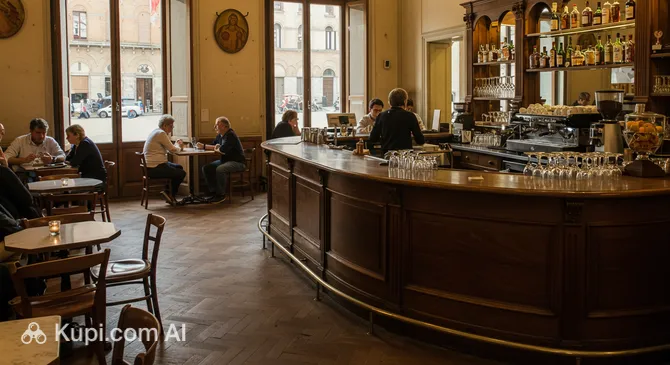
When the sun sets behind the Tuscan hills, Siena transforms, offering its guests a cozy and soulful atmosphere for evening relaxation. The nightlife here does not thunder with crowded clubs until dawn like in megacities, but rather charms with the opportunity to enjoy a glass of excellent wine in an old enoteca, dine in a traditional trattoria, or simply stroll through the illuminated medieval streets.
An evening in Siena often begins with an aperitivo—a favorite Italian tradition. Many bars offer drinks with light snacks, creating the perfect prelude to dinner. The main points of attraction in the evening are, of course, the area around Piazza del Campo and adjacent streets such as Via Banchi di Sopra and Via di Città. Many restaurants are concentrated here where you can taste local cuisine, for example, at Il Bocconcino or Certosa di Maggiano, while enjoying the atmosphere of the ancient city.
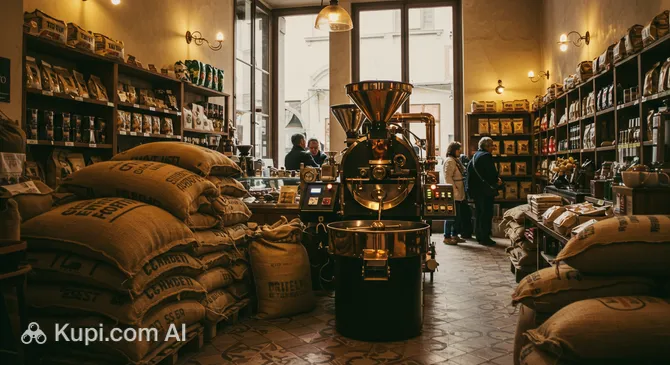
Torrefazione Fiorella. Illustration.
Source: Kupi.com AI
Traveler photos:
As night falls, bars and enotecas take over. The atmosphere in them is generally relaxed and friendly, drawing both locals and tourists. The dress code is usually casual or smart casual. Prices for drinks are moderate; a glass of good local wine will cost a reasonable amount. Popular spots include Torrefazione Fiorella, where you might enjoy freshly roasted coffee during the day and other drinks in a cozy setting in the evening. Another option is Bar Il Ceppo, which offers a more traditional Italian bar atmosphere.
Il Ceppo Bar. Illustration.
Source: Kupi.com AI
Traveler photos:
As for nightclubs, Siena is not a major clubbing hub. However, the city has several venues, mainly catering to youth and students, where you can dance. They usually come alive closer to midnight, especially on weekends. Concert venues more often offer live music in bars or during city festivals.
Practical Tips: Bars usually stay open until late at night, especially on Fridays and Saturdays. It is best to get around the historic center at night on foot, as it is compact. If you need a taxi, you can call one by phone or find them at designated stands. Siena is considered a very safe city, but standard precautions, especially in crowded places, are always a good idea.
During the day, Siena offers a rich cultural program. You can visit numerous museums, such as the famous Santa Maria della Scala complex or the National Pinacoteca of Siena. For nature lovers and those seeking peaceful relaxation, walks in the Chianti Sculpture Park or the Botanical Garden of the University of Siena are ideal. Theatrical life and large amusement parks are less characteristic of Siena, giving way to historical and cultural heritage.
Parks & Museums
Siena is a city where history comes alive at every turn, but beyond the majestic squares and cathedrals, it also offers cozy green spots for relaxation and rich museum collections preserving the cultural heritage of centuries. Here, everyone will find something for the soul: from quiet gardens to impressive art galleries.
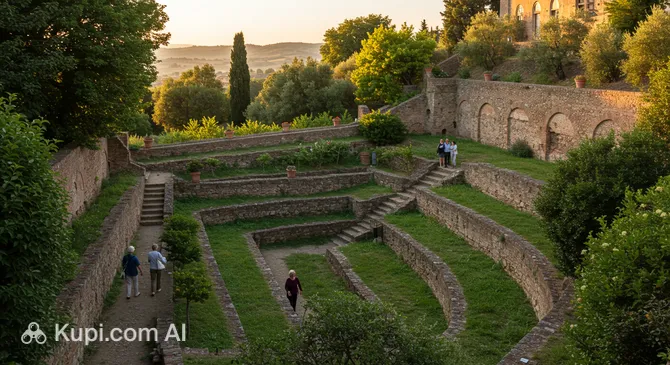
For those seeking seclusion in nature, Siena and its surroundings offer several wonderful places. The Botanical Garden of the University of Siena (Orto Botanico dell'Università di Siena) is a true oasis of tranquility within the city. Founded in the 18th century, it stretches across a hillside, offering visitors not only diverse collections of plants, including medicinal herbs and exotic species, but also beautiful views of the surrounding landscape. It is an ideal place for a leisurely walk and a break from the city bustle.
Siena University Botanical Garden. Illustration.
Source: Kupi.com AI
Traveler photos:
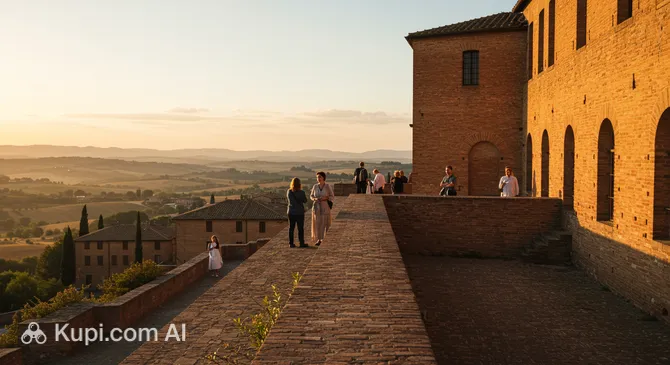
Another popular place for walking is the Medici Fortress (Fortezza Medicea). It is not only a 16th-century historical monument but also a vast public space offering magnificent panoramic views of the city. A park has been laid out within the fortress walls where locals and tourists love to walk, exercise, or simply relax on the grass. The Italian Enoteca (Enoteca Italiana) is also located here, where you can get acquainted with the region's best wines.
Medici Fortress. Illustration.
Source: Kupi.com AI
Traveler photos:
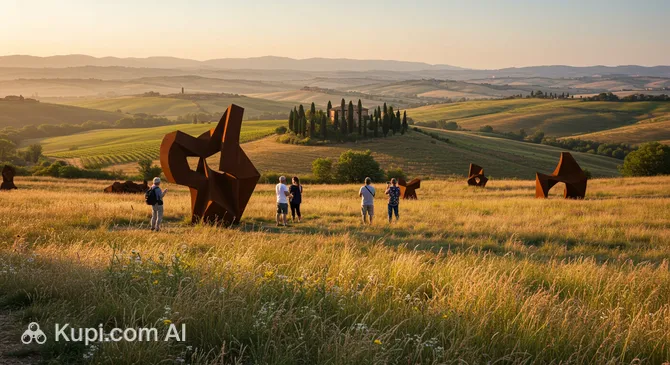
If you are ready to drive a bit from the city center, the Chianti Sculpture Park (Chianti Sculpture Park) will provide an unforgettable experience. Located in the picturesque Chianti region, this park is a unique combination of contemporary art and nature. Walking through the forest, you will discover original sculptures by artists from all over the world, harmoniously integrated into the landscape. This is a wonderful opportunity to combine a love for art with the enjoyment of Tuscan nature.
Chianti Sculpture Park. Illustration.
Source: Kupi.com AI
Traveler photos:
The cultural life of Siena is unthinkable without its many museums. One of the most important is the Santa Maria della Scala complex, a former hospital for pilgrims and now a multifaceted museum center with archaeological finds, frescoes, and temporary exhibitions. Equally significant is the National Pinacoteca of Siena, which houses a rich collection of Sienese paintings from the 13th to 17th centuries, allowing visitors to trace the development of the unique local artistic school.
For those interested in natural sciences, the Museum of the Academy of the Fisiocritici (Museo di Storia Naturale dell'Accademia dei Fisiocritici) is a must-visit. Located in an old building, it houses extensive zoological, mineralogical, and paleontological collections, including an impressive whale skeleton. This place will be interesting for both adults and children.
Speaking of cultural heritage, one cannot fail to mention the Museo dell'Opera del Duomo, located next to Siena Cathedral. It houses original sculptures and stained glass from the cathedral, as well as Duccio di Buoninsegna's famous "Maestà" altarpiece—one of the greatest masterpieces of Italian Gothic. The city's historic center is an open-air museum in itself, with its medieval palaces like Palazzo Pubblico and ancient city gates such as Porta Romana or Porta Camollia, which for centuries served as the entrance to this amazing city.
For an authentic experience, check out Orto de' Pecci—a surprising green valley with vegetable gardens and animals located right behind Piazza del Campo. This hidden gem allows you to feel the atmosphere of a medieval rural corner in the heart of the city. Also, don't be afraid to step into smaller, less well-known churches—they often hide true artistic jewels and offer a moment of silence and contemplation.
Getting Around
Getting around Siena and its immediate surroundings is quite convenient, although the historic city center is mostly a pedestrian zone (ZTL – Zona Traffico Limitato), where motor vehicle traffic is restricted. The main form of public transport here is buses.
The main bus operator in Siena and its province is Tiemme. The bus network is well-developed and connects the city center with the outskirts, the railway station (which is located a bit away from the historic center), and nearby towns. There are no metros, trams, or trolleybuses in Siena. Some routes, especially those passing through the narrow streets of the historic center, may be served by small buses, known as "pollicino."
The fare payment system is standard for many Italian cities. Tickets can be purchased in advance at tobacco shops (Tabaccheria), newsstands (Edicola), official Tiemme ticket offices, or via their mobile app. You can also buy a ticket from the driver, but it is usually more expensive and only recommended as a last resort. Various types of tickets exist: single-trip (usually valid for a certain time, e.g., 70-90 minutes, allowing transfers), multi-trip, as well as day or multi-day passes, which can be advantageous for intensive use. Ticket prices are relatively affordable. It is critically important to validate your ticket immediately after boarding the bus in a special stamping machine—without this, the ticket is considered invalid and you may be fined.
Buses in Siena run on a schedule, which can be found at stops, on the official Tiemme website, or in their app. During the day, service is quite frequent; in the evenings and on weekends, intervals may increase. For tourists arriving at the railway station, the bus is a convenient way to reach the center. One of Siena's features is several public escalators ("risalite meccanizzate"), which help you ascend from the lower parts of the city (e.g., from parking lots or bus stops) to the hilly historic center for free and without effort. This is very convenient, especially with luggage or for people with limited mobility.
As an alternative to public transport, you can use taxis in Siena. Taxi stands are usually located at the railway station and at key points in the city, such as Piazza Matteotti. However, taxis are a rather expensive form of transport. Given the compactness of the historic center, walking is not only possible but the very best way to explore it. Bike rentals exist in Siena, but the hilly terrain makes it an option for physically fit tourists. Car sharing is less common and not very practical for moving within the ZTL.
Accommodation
In Siena, travelers will find a wide range of accommodation options to suit various needs and budgets. The city offers cozy and affordable hostels and guest houses (B&Bs), as well as elegant mid-range hotels located in historical buildings. For those seeking more privacy or planning a long stay, numerous apartments and rental options are available. Luxury hotels and resorts are also present, offering high levels of service and often breathtaking views of the Tuscan landscape.
The most popular area for tourists to stay is undoubtedly the historic center of Siena. Staying here allows you to be within walking distance of the main attractions, such as Piazza del Campo, Siena Cathedral, and Palazzo Pubblico. The narrow medieval streets, filled with an atmosphere of antiquity, are an attraction in themselves. By choosing accommodation in the center, you can fully immerse yourself in the city's unique atmosphere. Areas adjacent to the main city gates or near public transport stops can also be convenient if you plan to actively explore the surroundings.
Hotel Athena. Illustration.
Source: Kupi.com AI
Traveler photos:
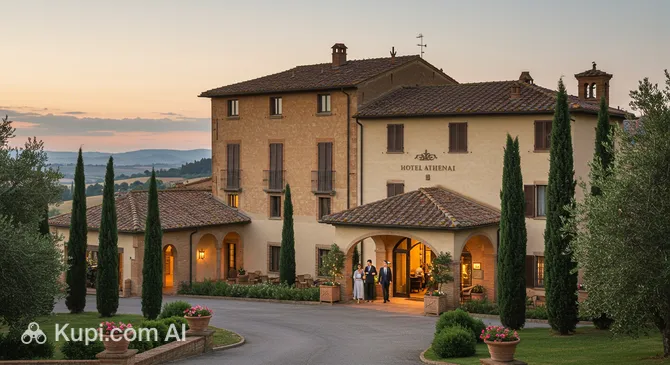
Among the well-known hotels offering comfortable accommodation is, for example, Hotel Athena, which combines a convenient location with quality service. The choice of a specific hotel depends on your preferences and budget, but there are indeed many worthy options in Siena.
As for the price range, it varies from budget (hostels, simple B&Bs) to mid-range (most hotels and apartments) and luxury. Key tip: if you are planning a trip during peak season (especially during the Palio in July and August), book your accommodation well in advance, as the best options are snapped up very quickly. The most common booking methods are popular online platforms, as well as direct booking through hotel websites, which can sometimes offer better terms or special deals.
Nearby Cities
For those who want to explore the surrounding area, Siena serves as an excellent starting point for day trips to several interesting nearby locations:
City
Population
Distance
Sovicille
10 057
10 km
Monteroni d'Arbia
9 070
12 km
Monteriggioni
9 937
12 km
Castelnuovo Berardenga
9 086
14 km
Colle di Val d'Elsa
21 651
20 km
Each of these towns offers something unique, making day trips from Siena rich and diverse. For example, Colle di Val d'Elsa, known as the "city of crystal," will charm you with the medieval atmosphere of its upper part (Colle Alta) and the opportunity to visit glass workshops. In Poggibonsi, it's worth seeing the impressive Medici fortress (Fortezza di Poggio Imperiale) and the archaeological park. A trip to San Casciano in Val di Pesa will allow you to immerse yourself in the atmosphere of the Chianti Classico region, taste local wines, and visit the house where Niccolò Machiavelli lived. Montevarchi may interest paleontology enthusiasts with its museum, while Figline Valdarno offers a stroll through its cozy historic center associated with the name of the humanist Marsilio Ficino.
These nearby destinations allow for a deeper acquaintance with the culture, history, and picturesque landscapes of the Italy region, perfectly complementing the experience of visiting Siena itself. Each such trip is a little adventure opening up new facets of Tuscany.
Shopping & Souvenirs
Shopping in Siena is a fascinating journey through the world of Tuscan traditions and craftsmanship, rather than a chase for global brands in huge shopping malls. The city is famous for its artisanal products, high-quality local foods, and unique souvenirs that preserve the spirit of the Middle Ages. Here you will find many small shops and workshops where you can purchase something truly special.
The main arteries for shopping in Siena are the streets of the historic center. Via Banchi di Sopra, which smoothly transitions into Via di Città, and the adjoining Via dei Montanini are hubs of shops for every taste. Here you will find boutiques with Italian clothing and footwear, jewelry salons, shops with leather goods, art galleries, and, of course, numerous shops offering traditional Sienese sweets and delicacies. A stroll along these streets is a pleasure in itself, allowing you to admire medieval architecture and tastefully decorated window displays.
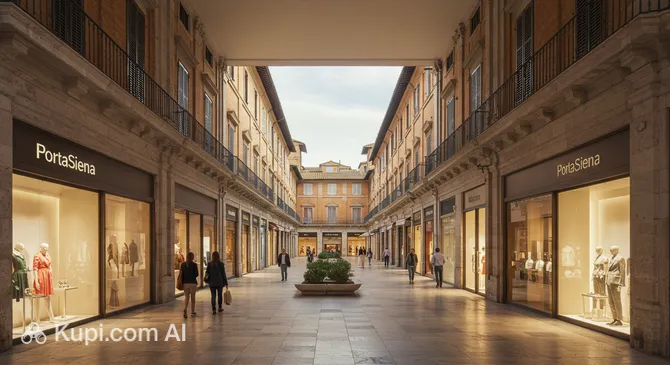
While Siena is better known for its small shops, the city also has modern shopping spaces. One such place is the PortaSiena Gallery, located near the railway station. This is a modern shopping center where you can find a supermarket, shops of well-known clothing brands, electronics, and household goods. It is a convenient place for those looking for a more familiar shopping format or in need of everyday items.
PortaSiena Gallery. Illustration.
Source: Kupi.com AI
Traveler photos:
Markets hold a special place in Siena's shopping culture. Every Wednesday morning, a large weekly market (Mercato delle Merci) unfolds near the walls of the Medici Fortress. You can find almost everything here: from clothing, shoes, and bags to household goods, fresh vegetables, fruits, cheeses, and cured meats. It's a great place to soak up the local atmosphere and find interesting items at attractive prices. Also worth noting is the indoor Mercato Coperto on Piazza del Mercato, located near Piazza del Campo, where you can buy the freshest local produce.
It's impossible to leave Siena without souvenirs that remind you of this amazing city. Look for handmade ceramics with traditional Tuscan patterns, quality leather goods (bags, belts, wallets), and local gastronomic specialties. The latter include famous Sienese sweets: panforte (a dense spiced cake with nuts and candied fruits), ricciarelli (delicate almond cookies), and cantucci (almond biscuits traditionally dipped in Vin Santo dessert wine). Of course, it's worth bringing home a bottle of excellent Tuscan wine (Chianti, Brunello di Montalcino) or fragrant olive oil. Souvenirs with the symbols of Siena's 17 contrade are also popular.
Most shops in Siena operate from approximately 9:00-10:00 to 13:00 and then, after a lunch break (riposo or pausa pranzo), from 16:00 to 19:30-20:00. Many small shops may be closed on Sunday and Monday mornings. Large stores and shopping centers like the PortaSiena Gallery may work without a lunch break and on weekends. Cash (euros) and bank cards (Visa, Mastercard) are widely accepted as payment methods. However, in small shops or at markets, cash may be preferred.
For tourists from non-EU countries, there is a possibility of a VAT refund (called IVA in Italy). Look for shops with a "Tax Free Shopping" sign. To claim a tax refund, you must make a purchase of a certain minimum amount in one store in one day and ask the seller for a special receipt (fattura) and a Tax Free form. Don't forget to present your passport during the process.