Support

Montepulciano

About

Montepulciano is a charming medieval hill town located in the heart of Tuscany, Italy. It is famous for its magnificent Renaissance architecture, centuries-old winemaking traditions, and a unique atmosphere that transports travelers back in time.
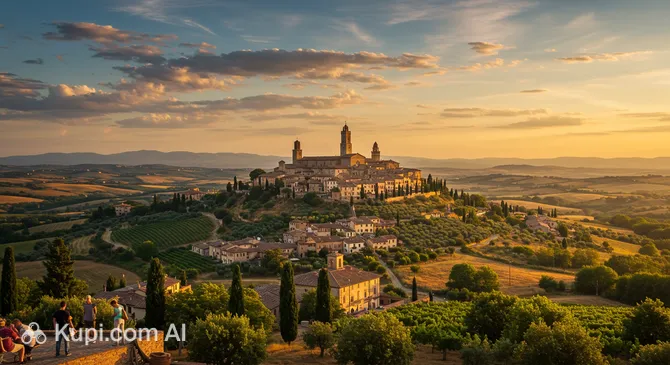
Montepulciano. Illustration.
Source: Kupi.com AI

The town stands at an elevation of about 605 meters above sea level on a limestone ridge, offering breathtaking panoramic views of the Val d'Orcia and Val di Chiana valleys. Montepulciano has a population of approximately 14,000 residents. The climate is typically Tuscan, with warm summers and mild winters, creating ideal conditions for grape cultivation and pleasant walks year-round.

Montepulciano attracts tourists primarily for its famous Vino Nobile di Montepulciano DOCG, one of Italy's oldest and most prestigious wines. A stroll through its narrow streets leading to the central square, Piazza Grande, is a must. Here, you will find the main architectural gems: the Cathedral (Duomo) and the Palazzo Comunale, whose tower offers stunning views. The town is also known for its numerous historic wine cellars, often carved directly into the rock beneath ancient buildings, where you can taste and purchase local wines.

A visit to Montepulciano is a unique opportunity to immerse yourself in the authentic atmosphere of a Tuscan town, enjoying its beauty, rich history, and, of course, excellent wine. This city will undoubtedly leave bright and warm memories for every traveler seeking the true spirit of Italy.

You can find more interesting facts on the Montepulciano city history page.
Weather Overview

The weather in Montepulciano is characterized by warm, predominantly dry summers and cool, wetter winters. In summer, especially in July and August, the average temperature stays around 25°C, while maximum values can exceed 30°C. Precipitation in the summer months is minimal, with few rainy days. In winter, from December to February, the average temperature fluctuates around 5-7°C, with night frosts and more frequent, though not heavy, rainfall. Spring and autumn are transitional seasons with moderate temperatures and changeable weather. Expect warm summers with rare rain and cool, wetter winters.

To find out a detailed forecast and current weather conditions, you can visit the Montepulciano Climate page.

Average monthly temperature

Average monthly precipitation

Interesting Facts

Beyond its world-famous wines and breathtaking panoramas, Montepulciano hides many surprising stories and little-known details. Are you ready to discover this Tuscan town from an unexpected side?

Underground City and Museum of Montepulciano. Illustration.
Source: Kupi.com AI

Traveler photos:

  • Many fans of vampire sagas will be surprised to learn that it was Montepulciano, and not Volterra, that became the filming location for some scenes in the movie "The Twilight Saga: New Moon." The city's landscapes were perfect for recreating the atmosphere of an ancient vampire city.

  • Montepulciano is famous for its noble Vino Nobile, whose history dates back centuries. The unique De' Ricci Historic Cellars, carved directly into the tuff rock beneath ancient palazzos, still hold precious barrels of this drink.

  • Every year on the last Sunday of August, the streets of Montepulciano come alive thanks to the "Bravio delle Botti"—an exciting race where representatives of the city's eight contrade (districts) push 80-kilogram wine barrels uphill. This spectacle attracts thousands of spectators!

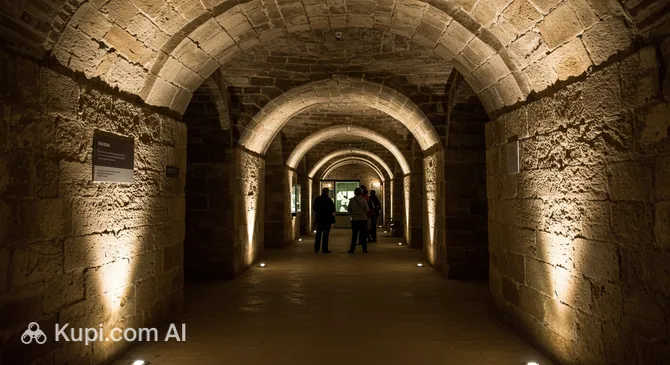
  • Hidden beneath the city's cobbled streets is an entire Underground City—an extensive network of ancient cellars, tunnels, and cisterns testifying to the rich history of Montepulciano. Parts of these underground passages are open to the public today and offer a glimpse into the secrets of the past.

How to Get There

Montepulciano, a picturesque hill town in the heart of Tuscany, attracts travelers with its medieval architecture, culture, and famous wines. You can reach this charming corner of Italy in several ways, mainly through international airports and railway hubs located in nearby major cities.

Although Montepulciano does not have its own airport, the city can be reached via several conveniently located air gates. One of the closest is Perugia San Francesco d'Assisi – Umbria International Airport (PEG) in Perugia, which is about 59 km away. A trip from there to Montepulciano by car or taxi usually takes about 1 hour 30 minutes to 1 hour 50 minutes. Another popular option is Florence Airport, Peretola (FLR), located in Florence at a distance of about 92 km. This is a larger international airport, and the journey to Montepulciano from here will take approximately 2 hours 15 minutes to 2 hours 45 minutes. You can also consider Pisa International Airport (PSA), one of the region's main airports, located in Pisa, about 130 km from Montepulciano. Traveling by car from Pisa will take approximately 3 hours to 3 hours 30 minutes.

For convenience, here is summary information on the main airports used to reach Montepulciano:

AirportPassenger trafficDistance
Sant Egidio Airport532 47459 km
Firenze-Peretola Airport3.5 mln92 km
Miramare Airport321 552122 km
Luigi Ridolfi134 000124 km
Pisa International Airport5.5 mln130 km

For those who prefer traveling by rail, the nearest major stations to Montepulciano are in Florence. Although there is no railway station in Montepulciano itself, you can travel to Firenze Campo di Marte Station (FIR) in Florence, located about 86 km away. Another option is Florence's main station, Firenze Santa Maria Novella Station (ZMS), located about 87 km away. Both stations are very large transport hubs. From Florence, you can reach Montepulciano by rental car (the trip takes about 1.5 - 2 hours) or use regional trains to Chiusi-Chianciano Terme station (the closest to Montepulciano, about 20 km, but not listed in the table below), and from there take a local bus or taxi. There is no direct rail connection to Montepulciano.

Below is information about the railway stations that can be used to plan a trip to Montepulciano:

StationPassenger trafficDistance
Firenze Campo di Marte Railway Station1.8 mln86 km
Firenze Santa Maria Novella Station59 mln87 km
Tiburtina Railway Station51 mln145 km
Roma Termini Station150 mln146 km
Ostiense Railway Station5.8 mln148 km

Upon arriving at one of these airports or railway stations, the onward journey to Montepulciano is most conveniently continued by rental car, which also allows you to explore the picturesque Tuscan surroundings. Alternatively, you can use taxi services or local bus routes that connect Montepulciano with the nearest transport hubs and cities.

Main Attractions

Montepulciano, a gem of Tuscany, is famous not only for its wines but also for its rich history reflected in its landmarks. Immerse yourself in the atmosphere of this charming town by exploring its unique sites.

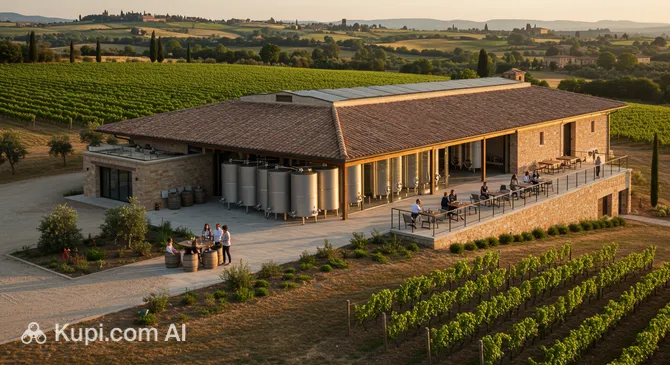
One of the iconic stops for wine and history lovers is the Gattavecchi Winery. It is not just a place where the famous Vino Nobile di Montepulciano is produced, but also a historical complex with ancient cellars. Visitors can go on a fascinating tour, learn winemaking secrets passed down through generations, and, of course, taste magnificent local wines while enjoying panoramic views of the Tuscan hills.

Gattavecchi Winery. Illustration.
Source: Kupi.com AI

Traveler photos:

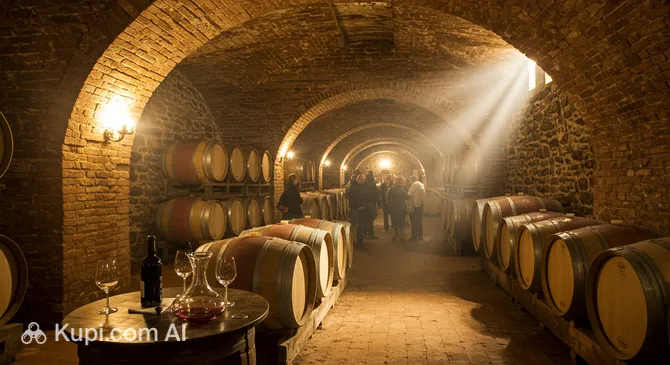
An equally impressive experience is a visit to the De' Ricci Historic Cellars. These monumental underground chambers, carved directly into the tuff rock beneath the city, resemble a Gothic cathedral with their vaulted ceilings. A walk through these cellars is a real journey into the past, allowing you to touch centuries-old traditions of wine storage and aging. The atmosphere here is truly enchanting, and the scale of the structure is staggering.

De' Ricci Historic Cellars. Illustration.
Source: Kupi.com AI

Traveler photos:

For those who want to understand the city's history more deeply, the Underground City and Museum of Montepulciano is a must-visit. This unique complex is a network of tunnels and rooms hidden beneath the streets of the historic center. A tour of the "underground city" reveals the secrets of medieval life and engineering solutions of past eras, offering a look at Montepulciano from a completely unexpected perspective. The museum section complements the experience with artifacts and stories about the history of this amazing place.

These attractions are just a small part of what Montepulciano has to offer. Every street and every building here breathes history and invites new discoveries.

Local Cuisine

The gastronomy of Montepulciano is a true immersion into the heart of Tuscan cuisine, where traditions and the quality of local products create unforgettable taste experiences. The town is famous not only for its medieval architecture but also for its rich culinary traditions. The basis of local cuisine is the freshest seasonal ingredients, extra virgin olive oil, and, of course, the famous red wine Vino Nobile di Montepulciano DOCG, which is the region's hallmark.

Be sure to try pici—thick, hand-rolled pasta served here with various sauces: from a simple "all'aglione" (garlic and tomato) to a rich meat ragù made from wild boar (ragù di cinghiale) or duck. Don't miss the chance to appreciate dishes made from local Chianina beef or Cinta Senese pork. It is also worth tasting local cheeses, especially pecorino, which pairs perfectly with local honey or jam.

Speaking of drinks, it's impossible not to mention Vino Nobile di Montepulciano DOCG again—a noble red wine with a rich history and full-bodied taste. For a lighter option, Rosso di Montepulciano DOC is suitable. You can end your meal with a glass of sweet dessert wine, Vin Santo, traditionally served with cantucci almond biscuits. Popular non-alcoholic drinks include freshly squeezed juices and, of course, aromatic Italian coffee.

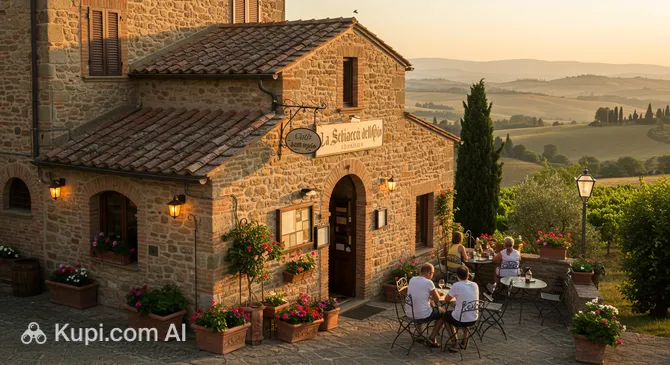
The food culture in Montepulciano centers around cozy family trattorias, osterias, and elegant restaurants where you can enjoy authentic dishes. Many establishments take pride in using local products. Enotecas (wine bars) are also popular, where you can taste local wines paired with light snacks. To fully experience the city's hospitality and culinary skill, you can visit one of the local restaurants, such as La Schiaccia dell'Opio, known for its traditional cuisine. For wine lovers, visiting historic wineries like the Gattavecchi Winery will be an interesting experience, where you can not only taste but also learn about the production of the famous drink.

La Schiaccia dell'Opio. Illustration.
Source: Kupi.com AI

Traveler photos:

The gastronomic scene in Montepulciano is not just about food; it's an entire cultural experience. The combination of excellent wines like Vino Nobile, unique local dishes like pici pasta, and the warm atmosphere of Tuscan hospitality makes this town a true paradise for gourmets. Visiting local markets, tastings at wineries, and dinners in traditional restaurants will leave the brightest and most delicious memories of your trip to Italy.

Travel Tips

Welcome to Montepulciano! To make your journey through this Tuscan gem as comfortable and memorable as possible, we have prepared some practical tips. They will help you better navigate the city and enjoy every moment of your stay.

  1. Clothing and Essentials: The climate in Montepulciano is moderate, so choose clothing according to the season. In summer, you will need light clothes, a hat, and sunscreen; in spring and autumn, layered clothing and a light jacket are best. It can be cool in winter, so warm things won't hurt. A key point is comfortable shoes! The city is located on a hill, and you will have to walk a lot on cobblestones and steep streets. Don't forget an adapter for electrical appliances (types F and L sockets are used in Italy). When visiting churches, it is customary to cover shoulders and knees.

  2. Transportation in the City: The historic center of Montepulciano is best explored on foot. It is quite compact, and the most interesting places are within walking distance. Traffic in the center is restricted (ZTL zone – Zona Traffico Limitato), so if you arrive by car, it is better to leave it in one of the parking lots outside the city walls. Public transport consists of local buses, which can be useful for trips to the surrounding area, but they are not as relevant for moving around the city itself. Taxis can be ordered, but they are not as common as in larger cities.

  3. Finance: The official currency is the Euro (€). You can exchange money at banks or exchange offices. ATMs (Bancomat) are quite common. Credit and debit cards (especially Visa and Mastercard) are accepted in most hotels, restaurants, and shops, but it is always useful to have some cash for small purchases at markets or in small shops. International cards usually work without problems. Tips in restaurants are often included in the bill (servizio incluso), but if not, 5-10% of the amount will be appropriate for good service. An approximate daily budget depends on your preferences, but aim for the average European level.

  4. Health and Safety: Pharmacies (Farmacia) are easy to find by the green cross; their working hours may vary, so check for duty pharmacies. In case of emergency, call 112. Montepulciano is a very safe city, even in the evening. Nevertheless, standard precautions, such as watching your personal belongings in crowded places, are always wise. There are no specifically "unsafe" areas here.

  5. Communication: The official language is Italian. In tourist areas, many people speak English, but knowing a few basic Italian phrases (e.g., Buongiorno – Good day, Grazie – Thank you, Prego – You're welcome/Please, Parla inglese? – Do you speak English?) will be very useful and will bring a smile to locals. Wi-Fi is available in most hotels, cafes, and restaurants. A local SIM card can be purchased in mobile stores if you plan to use mobile internet actively.

  6. Local Etiquette: Italians are open and friendly people. When entering a shop or cafe, it is customary to say hello (Buongiorno in the morning and afternoon, Buonasera in the evening). When communicating with locals, be polite and smiling. Loud conversations in public places, especially in churches, are discouraged. Respect the city's historical heritage.

  7. What to Avoid: Try not to drive into the ZTL zone without an appropriate permit—fines can be significant. Also, avoid excessively noisy behavior, especially in residential areas in the evening and at night, so as not to disturb local residents.

  8. Special Advice: Montepulciano is famous for its Vino Nobile di Montepulciano wine. Be sure to visit one of the historic wine cellars (cantina), many of which are located directly beneath ancient palazzos and offer tastings. This is a unique experience that will allow you to dive deeper into the culture and traditions of the region.

We hope these tips make your stay in Montepulciano even more pleasant and fulfilling. Enjoy its unique atmosphere, magnificent views, and, of course, the exquisite Tuscan cuisine and wine!

Entertainment & Nightlife

Montepulciano, a charming Tuscan town, offers its guests a nightlife that is not boisterous but very atmospheric. Here, you won't find noisy districts with dozens of nightclubs; instead, you can enjoy exquisite wines, delicious food, and a cozy setting in the numerous enotecas and bars that come alive after sunset.

Most evening activity is concentrated in the historic city center, along its main streets such as Via di Gracciano nel Corso, Via di Voltaia nel Corso, and around Piazza Grande. The atmosphere here is relaxed and conducive to conversation rather than wild dancing until morning. The crowd is mixed—locals enjoying an aperitif and tourists soaking up the spirit of the ancient city. Most establishments stay open until midnight or 1:00 AM. There is usually no specific dress code, but an elegant casual style is appropriate.

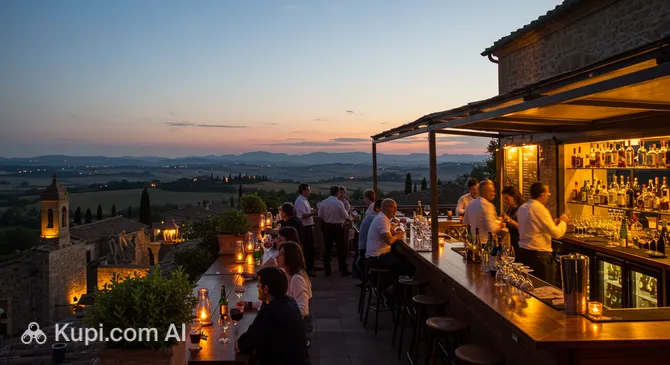
Among the places to enjoy a pleasant evening, E Lucevan le Stelle Wine Bar Bistro is worth noting. This spot is perfect for tasting local wines accompanied by light snacks and pleasant music. Here, you can truly feel Tuscan hospitality. Another option for a dinner that transitions into an evening hangout is the restaurant La Schiaccia dell'Opio, where you can try traditional regional dishes.

E Lucevan le Stelle Wine Bar Bistro. Illustration.
Source: Kupi.com AI

Traveler photos:

For a livelier atmosphere, it's best to head to the bars after 9:00–10:00 PM. Average prices for a glass of wine start from 5–7 euros, while cocktails may cost more. Montepulciano is a small town, and the center is easy to navigate on foot. If you are staying outside the historic part, it's better to use a taxi at night. You can ask for a car at a restaurant or bar, or use local taxi services, having checked their contact details beforehand.

Regarding safety, the central streets of Montepulciano are well-lit and considered safe for evening walks. However, it is always worth taking standard precautions, especially in less crowded alleys.

During the day, Montepulciano offers a rich cultural program. You can visit famous wineries such as the Gattavecchi Winery or explore the De' Ricci Historic Cellars. History buffs will find the Underground City and Museum of Montepulciano interesting. The town is also famous for its churches and palaces that hold centuries of history.

Parks & Museums

Montepulciano, the pearl of Tuscany, offers its guests not so much extensive urban parks in the traditional sense, but a deep immersion into a rich cultural heritage framed by breathtaking landscapes. Here, every stone breathes history, and museums house priceless treasures.

Instead of classical city parks, the main natural attraction surrounding Montepulciano is the Val d'Orcia valley itself. These famous Tuscan hills, a UNESCO World Heritage site, are ideal for leisurely walks, cycling trips, and, of course, photo shoots, offering endless green expanses. Within the town, you can find charming viewpoints and small public gardens that offer magnificent panoramic views, for example, near the fortress walls or by the magnificent church of Madonna di San Biagio, located at the foot of the hill.

To learn about the history and art of Montepulciano, several key museums and cultural sites are worth a visit. One of the most intriguing is the Underground City and Museum of Montepulciano. This unique site literally allows you to look back through the centuries, exploring ancient Etruscan tombs and medieval cellars transformed into a fascinating museum space. Here, you will learn about the city's multilayered history hidden beneath its cobbled streets and about winemaking traditions.

Underground City and Museum of Montepulciano. Illustration.
Source: Kupi.com AI

Traveler photos:

Equally significant is the Crociani Civic Museum and Art Gallery (Museo Civico Pinacoteca Crociani), located in the historic Palazzo Neri-Orselli. The museum houses a rich collection of paintings from the Sienese and Florentine schools dating back to the 13th century, archaeological finds from the Etruscan and Roman periods, and the famous terracotta altars by Andrea della Robbia. It is a wonderful opportunity to get acquainted with the region's artistic heritage.

A special place among the cultural attractions is held by the De' Ricci Historic Cellars. Although it is a working winery, its impressive multi-level cellars, carved into the tuff and extending deep into the hill, are a true historical monument. A tour here is an immersion not only into the world of the famous Nobile di Montepulciano wine but also into the ancient history of the city, as some parts of the cellars date back to Etruscan times and resemble a cathedral in their monumentality.

De' Ricci Historic Cellars. Illustration.
Source: Kupi.com AI

Traveler photos:

The town of Montepulciano itself is, in essence, an open-air museum. Be sure to walk through the main square, Piazza Grande, the heart of the city, admire the majestic Cathedral (Duomo), and climb the tower of the Palazzo Comunale, which offers an unforgettable panoramic view of the city and the surrounding Tuscan landscapes.

For an authentic experience, do not be afraid to turn off the main tourist routes into quiet side streets—there you will find cozy courtyards hidden from most tourists' eyes and small craft workshops. In the evening, find a wine bar or a restaurant with a terrace overlooking the sunset over the Val d'Orcia hills—this sight will become one of the most vivid memories of your trip to Italy.

Getting Around

Montepulciano is a charming medieval town that is best explored on foot, enjoying its narrow streets and historical atmosphere. However, for longer distances or connecting with the surroundings, there is a public transport system, represented mainly by buses.

The main form of public transport in Montepulciano and its surroundings is buses. Local and regional routes are operated by Autolinee Toscane. Buses connect various parts of the city, including the bus station located at the foot of the hill, with the historic center, and also provide connections to nearby towns and the Chiusi-Chianciano Terme railway station, from where you can reach major cities in Italy.

The fare payment system for buses is quite simple. Tickets can be purchased in advance at tobacco shops (Tabacchi), newsstands, or sometimes in bars marked with a special sign. It is also often possible to buy a ticket directly from the driver, but it may be slightly more expensive. Ticket prices depend on the zone and distance of the trip, but generally, travel on local routes is relatively inexpensive. Be sure to validate your ticket in a special machine inside the bus immediately after boarding.

Buses in Montepulciano run according to a schedule, which is recommended to be checked in advance, especially if you plan to travel on weekends or holidays. Schedules are usually available at bus stops, on the official Autolinee Toscane website, or at tourist information centers. The frequency of service may be low, especially on routes connecting to small villages.

In addition to buses, other methods of travel are available in Montepulciano. Taxis can be ordered by phone, but their numbers are limited, so it's better to do this in advance. Renting a car is convenient for exploring the Tuscany region, but remember that entry into the historic center of Montepulciano by car is restricted (ZTL zone), and parking can be expensive and difficult to find. Bicycle rental may be of interest for trips through the picturesque surroundings, but the town itself is located on a hill, which requires good physical fitness.

Given Montepulciano's location on a hilltop, many of its streets are quite steep. To facilitate the climb to some parts of the city, public elevators or escalators may be provided, but walking remains the primary way to move within the historic center. This allows you to fully enjoy the beauty of this unique place.

Accommodation

In Montepulciano, travelers will find various accommodation options to suit different preferences and budgets. The town offers charming guest houses (B&Bs), traditional agriturismos (farmhouses) in the picturesque surroundings, comfortable mid-range hotels, as well as apartments and holiday homes. Many tourists prefer to stay in the historic center (centro storico) to be within walking distance of the main attractions, such as the De' Ricci Historic Cellars, as well as wine cellars and restaurants. Alternatively, staying outside the city walls can offer stunning views and a more tranquil atmosphere, often with more convenient parking if you are traveling by car.

Given the popularity of Montepulciano, especially during wine festivals and in the summer months, it is highly recommended to book accommodation well in advance. This is particularly true if you have specific requests or are looking for a room with a panoramic view. Prices can vary significantly depending on the type of accommodation, its location, and the season—ranging from more budget-friendly options like B&Bs and some apartments to more prestigious hotels and agriturismos with premium amenities. Booking is usually done through popular online platforms, directly on hotel websites, or through specialized portals for agriturismos.

Nearby Cities

For those who want to explore the surroundings, Montepulciano serves as an excellent starting point for day trips to several interesting nearby locations:

Among them, Cortona stands out—a picturesque hill town known for its Etruscan roots, medieval streets, and panoramic views. No less attractive is Siena, one of Italy's most beautiful medieval cities, famous for its unique central square, Piazza del Campo, and its impressive Cathedral. You should also consider a trip to Perugia, the capital of the Umbria region, which attracts visitors with its rich history, magnificent old town, and cultural events such as the annual jazz festival.

CityPopulationDistance
Sinalunga12 57313 km
Chiusi8 55816 km
Foiano della Chiana9 47017 km
Castiglione del Lago15 47921 km
Cesa9 03924 km

These nearby destinations provide insight into the diverse culture and landscapes of the region.

Shopping & Souvenirs

Shopping in Montepulciano is, first and foremost, an immersion into the world of Tuscan delicacies and artisanal products. The town is famous for its noble Vino Nobile di Montepulciano wine, as well as other local products such as olive oil, cheeses, and leather goods. You won't find huge shopping centers here; instead, you can enjoy the atmosphere of small family shops and workshops.

The main shopping arteries of Montepulciano are its main streets, cascading up to the top of the hill: Via di Gracciano nel Corso, turning into Via di Voltaia nel Corso, Via dell'Opio nel Corso, and beyond. Numerous enotecas (wine shops), gourmet food stores, shops with handmade ceramics, leather goods, and souvenirs are concentrated along these picturesque streets. Walking through them is a pleasure in itself, allowing you to combine sightseeing with shopping.

There are no large modern shopping malls in the conventional sense in Montepulciano. The charm of shopping here lies precisely in the authentic small shops and workshops, where you can often chat with the owner or the artisan themselves.

In Montepulciano, it is worth paying attention to the local markets. Usually, on Thursdays in the lower part of the city, near Piazza Nazioni Unite, there is a weekly market where you can find clothes, shoes, household goods, and fresh food. Also, a farmers' market (Mercato di Campagna Amica) operates on Saturday mornings, where local producers offer the freshest seasonal vegetables, fruits, cheeses, honey, and other delicacies.

The main souvenir from Montepulciano is, undoubtedly, a bottle of Vino Nobile di Montepulciano DOCG or Rosso di Montepulciano DOC wine. You can buy it in numerous enotecas or directly from producers, for example, by visiting places such as the Gattavecchi Winery or the De' Ricci Historic Cellars. Also popular are local cheeses (especially pecorino), extra virgin olive oil, traditional "pici" pasta, leather goods, ceramics with Tuscan patterns, and copper products.

Shops in Montepulciano usually open in the morning, around 9:00-10:00 until 13:00, after which they close for a midday break (riposo or pausa pranzo) and reopen around 16:00 until 19:30-20:00. Many shops may be closed on Sundays, especially outside the tourist season. Large stores and some souvenir shops may operate without a break. Both cash and bank cards (Visa, Mastercard) are accepted for payment. However, it is preferable to have some cash for small shops or markets.

For tourists from non-EU countries, there is a possibility of a VAT refund (Tax Free) for purchases over a certain amount in participating shops. Look for the "Tax Free Shopping" sticker in the windows. To process the refund, you will need to present your passport at the time of purchase and receive a special receipt, which is then presented to customs when leaving the EU.

Nearby cities

Reached the end of the page?

That means the route is fully explored