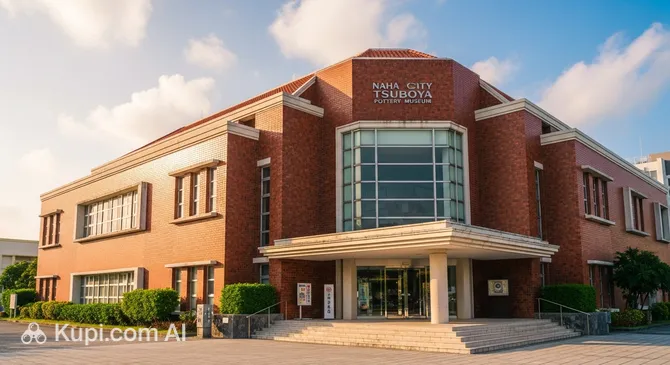
Immerse yourself in the atmosphere of ancient traditions with a visit to the Naha Municipal Tsuboya Pottery Museum. This unique site, opened in 1998, is the only specialized museum in Okinawa Prefecture entirely dedicated to the art of clay firing. Here, in the historical Tsuboya district, the legacy of Tsuboya-yaki masters is carefully preserved, whose works have made this region world-famous.
Naha City Tsuboya Pottery Museum. Illustration.
Source: Kupi.com AI
Traveler photos:
The museum is more than just an exhibition space; it is a true research center. Within its walls, Japan is revealed from a new perspective: from rugged ancient ceramics to elegant modern pieces. One of the main highlights of the collection is the Nishi-nu-kama kiln, preserved in its original form and discovered during the construction of the museum building itself.
Located on the famous Yachimun Street, the museum serves as a starting point for exploring Okinawa's pottery culture. Visitors can see rare archaeological finds and learn how the shapes and production methods of pottery have changed over centuries under the influence of various historical eras.
Contacts
For the latest information on special exhibitions or events, you can use the museum's official contact details. Please note that English language support by phone may be limited.
Your introduction to the museum in Okinawa begins on the first floor, where a large-scale permanent exhibition is laid out. It presents the chronological development of Okinawan ceramics. Pay special attention to the museum theater: documentary films are broadcast every half hour, telling the stories of the lives and work of local potters, which helps to better understand the spirit of this craft district.
On the second floor, a collection of everyday items awaits. Here, you can examine various vessels and tools in detail, while video materials demonstrate the complex production techniques of Tsuboya-yaki. For international guests visiting Japan, the museum provides convenient multilingual audio guides to make your tour through the halls as informative as possible.
Be sure to set aside time to explore the grounds around the museum. Here you can see the excavated Wakuta kiln and visit seasonal exhibitions in the gallery. The best way to conclude your visit is with a stroll along Yachimun Street, home to dozens of workshops. There, you can not only watch the creation of clay masterpieces but also try your hand at pottery in various workshops.
Getting There
Getting to the cultural heart of the pottery traditions that Okinawa is famous for is quite simple. The museum is located in the center of the historical Tsuboya district in Naha. If you are in the central part of the city, a taxi ride will take only a few minutes.
For those who prefer public transport, this part of Japan offers a well-developed network of buses and the monorail (Yui Rail). The nearest monorail stations are within walking distance, making the walk to the museum a pleasant start to your tour of the old city's narrow streets.
You can also use navigation apps by entering the exact address: 1-chōme-9-32 Tsuboya, Naha, Okinawa 902-0065. The museum is right at the entrance to the famous pottery quarter, making it hard to miss.
Nearest city: Okinawa
History & Facts
The history of Okinawan ceramics is a journey of constant transformation. Tsuboya-yaki traditions began to develop actively during the Ryukyu Kingdom era, when Japan and its southern islands were a vital trade hub. Ancient wells and unique "climbing kilns" used by masters for centuries are still preserved in the Tsuboya district.
A special place in the exhibition is dedicated to the history of "Ara-yachi" vessel production. Until the mid-20th century, these were indispensable for storing awamori — Okinawa's famous alcoholic beverage. Interestingly, after their primary use, these massive containers were often given a second life as elegant flower vases or tea canisters.
One of the most valuable historical sites on the museum grounds is the Arakaki family residence. This potter's house, built over 150 years ago, is recognized as a National Cultural Property. While here in Okinawa Prefecture, you can literally touch the past and see the conditions in which the great masters of yesteryear worked.
Time Needed
To see all the museum halls and learn about pottery techniques without rushing, most visitors need about 1 hour. This is enough time to explore the permanent exhibition and watch the informational film in the museum theater.
However, we recommend setting aside a total of 2 hours for the visit. This extra time will allow you to stroll along the adjacent Yachimun Street, peek into the active workshops of modern potters, and perhaps pick up a unique souvenir to remember your trip.
Working Hours
The museum welcomes guests from Tuesday to Sunday. The doors are open from 10:00 AM to 6:00 PM, though please note that the last entry is at 5:30 PM. This is a standard schedule for most cultural sites in the region.
Please remember that Monday is the weekly closing day. The museum is also closed during the New Year holidays, from December 28 to January 4. Before your trip, it is recommended to check the official website for information on potential schedule changes or public holidays.
Day
Opening hours
Monday
Закрыто
Tuesday
10:00–18:00
Wednesday
10:00–18:00
Thursday
10:00–18:00
Friday
10:00–18:00
Saturday
10:00–18:00
Sunday
10:00–18:00
Nearby
The Tsuboya district is perfect for walking, but if you decide to stay in this part of the island longer, many other interesting locations await. Exploring the surroundings will help you feel the region's character more deeply and diversify your leisure time.
Many of the places listed below are great for family vacations or active recreation after immersing yourself in the world of ancient ceramic art.