Support

Nakamura Residence

About

Immerse yourself in the atmosphere of ancient island culture by visiting the Nakamura Residence—a magnificently preserved mid-18th-century wealthy farmer’s home. Located in Kitanakagusuku village on the island of Okinawa, this landmark is a rare example of traditional Ryukyu Kingdom architecture, recognized as an Important Cultural Property that all of Japan takes pride in.
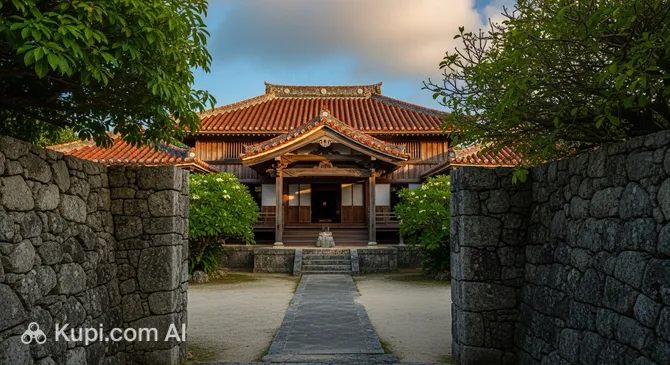
Nakamura Residence
Nakamura Residence. Иллюстрация. Источник: Kupi.com AI

The estate covers an impressive area of about 1,560 square meters and includes five main buildings. The main house (Omoya) stands out with its vibrant red tiled roof, topped with a shisa statue—a mythical lion-dog guardian that protects the home from evil spirits. The entire complex is surrounded by massive stone walls and centuries-old fukugi trees, which have served as natural protection against powerful typhoons for generations.

This site is unique because it has reached the present day in its original form, demonstrating a fascinating blend of Japanese building techniques from the Kamakura and Muromachi periods with indigenous Okinawan solutions. Nakamura Residence is not just a museum but a living testament to the lifestyle and status of wealthy landowners of a bygone era.

Contacts

For your convenience, we have gathered all the necessary contact details in one place. If you have any additional questions before your visit, you can contact the administration by phone or visit the official website. It is recommended to save the address in your navigator beforehand, as the site is located in a quiet rural area.

How to contactContact
Address106 Ōgusuku, Kitanakagusuku, Nakagami District, Okinawa 901-2314, Япония
Phone+81 98-935-3500
Websitewww.nakamurahouse.jp

What to Do

At the Nakamura Residence, visitors can literally touch history by exploring the authentic interiors of the main house. You can walk through eight living rooms, including the formal reception halls for guests (Ichiban-za) and the family living room with its altar. Be sure to look into the spacious kitchen, which still houses the ancient hearth—a place where, according to legend, the fire god resides, protecting the family's well-being.

Within the estate grounds, pay attention to the unusual outbuildings. For example, the Takakura is an elevated storehouse for crop storage, designed to keep rice dry and protected from rodents. It is also interesting to see the Asagi—a separate building for receiving high-ranking guests—and the ancient Furu pigpen, which clearly demonstrates the features of rural life in past centuries.

Don't forget to examine the home's external protective elements: look for the Hinpun—a special stone screen opposite the entrance which, according to belief, keeps evil spirits out. You will find various shisa figures on the roofs. There is an admission fee to view the entire exhibition: adult tickets cost 500 yen, with discounts available for students. A visit to the residence is best complemented by a trip to the nearby castle ruins, which are only a five-minute walk away.

Getting There

The historic estate is located at 106 Ōgusuku, Kitanakagusuku. If you are traveling by car from Naha Airport, the trip will take about 30–40 minutes via Route 329; convenient parking is provided for visitors. For those who prefer freedom of movement, renting a car on the island is the most optimal option.

If you plan to use public transport, buses run from Naha city to the Nakagusuku or Kitanakagusuku stops. After getting off the bus, you will have a short walk to the residence itself. A taxi ride from the central area of Naha will take about half an hour, which may be convenient for small groups.

An interesting feature is that the Nakagusuku Castle ruins are located just 500 meters away (about a 5-minute leisurely walk). This makes it easy to combine visits to two significant historical sites into one itinerary without spending much time traveling between them.

Ближайший город: Okinawa

History & Facts

The history of the Nakamura family dates back to the early 15th century. Their ancestor, named Gaoji, moved to these lands from Zakimi, accompanying the legendary lord Gosamaru. Despite dramatic events and the fall of the lord, Gaoji's descendants managed to strengthen their position, and by 1720, the family achieved the high status of jito-dai (village headman), becoming influential landowners.

The current building was erected in the mid-18th century, at the end of the Edo period. Initially, the house had a thatched roof, but over time, as the family's wealth grew, it was replaced with red tiles. At that time, the use of roof tiles by ordinary peasants was strictly prohibited by law, so such a roof served as a clear symbol of the owners' high social status.

The Nakamura Residence is unique in that it miraculously survived the turbulent events of the mid-20th century. In 1956, the Ryukyu government recognized it as an important cultural monument, and in 1972, this status was confirmed by the government of Japan. It was the first private residential house on the island to receive such high state protection.

The architecture of the complex is meticulously designed to withstand the tropical climate. Here you can see massive fukugi trees that protect against typhoons and special amahadji roof structures to guard against heavy rains. The estate consists of the main house (Ufuya), the kitchen (Tunguwa), a guest wing, a storehouse, and even an ancient Furu pigpen.

Time Needed

To take your time exploring all the buildings of the Nakamura Residence, peek into every room, and study the traditional farmstead layout, most tourists need about 1 to 1.5 hours. This time is quite sufficient to soak in the atmosphere of old Okinawa and take beautiful photos against the backdrop of the red tiled roofs.

If you decide to follow the popular advice and combine your visit to the estate with a walk through the nearby Nakagusuku Castle ruins, set aside about an extra hour for the trip. Thus, the total time to explore this historical area will be approximately half a day, including travel and rest.

Working Hours

The Nakamura Residence usually welcomes visitors from 09:00 to 17:00. The standard operating schedule includes Monday, Tuesday, and Friday through Sunday. However, it's worth noting that the site is generally closed to visitors on Wednesdays and Thursdays.

Since information about days off (especially regarding Tuesday) may vary in some sources, tourists are strongly recommended to check the current schedule on the official website before traveling to avoid any issues with their itinerary.

DayWorking hours
понедельник09:00–17:00
вторник09:00–17:00
средаЗакрыто
четвергЗакрыто
пятница09:00–17:00
суббота09:00–17:00
воскресенье09:00–17:00

Nearby

The area surrounding the Nakamura Residence is rich in interesting locations that will help you experience the island's character more deeply. Visiting neighboring sites will allow you to create a full day's excursion itinerary.

Below are some interesting places located within a few kilometers of the estate:

NameDistance
Nakagusuku Castle Ruins0.7 km
Okinawa Rycom Mall2.7 km
Sakima Art Museum2.9 km
Awase Bijuru Shrine4.7 km
Morning Bowls6.8 km
Urasoe Castle Ruins8.3 km
Katsuren Castle Ruins9 km

Reached the end of the page?

That means the route is fully explored