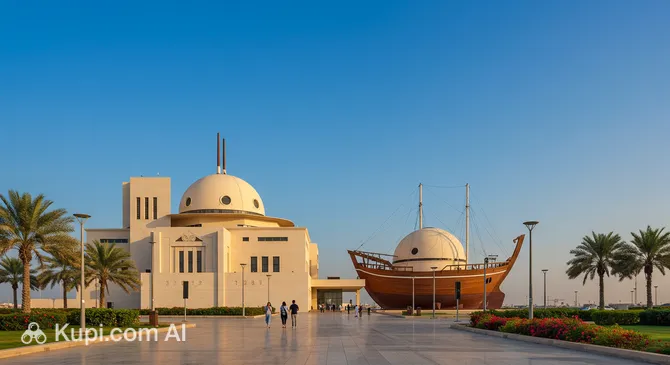
Imagine a place where the history of the Persian Gulf comes to life — from ancient civilizations to the modern era. The Kuwait National Museum, located in Kuwait City, is the country's premier cultural asset and a true treasure trove of national heritage. Founded in 1983, this complex has become a symbol of Kuwait's preservation of traditions and its pursuit of enlightenment.
Kuwait National Museum. Illustration.
Source: Kupi.com AI
Traveler photos:
The museum's architectural ensemble, created by the prominent Frenchman Michel Ecochard, consists of five interconnected pavilions. The design of the buildings skillfully combines the aesthetics of traditional mudbrick houses with modern functionalism. One of the main features is a spacious internal courtyard protected by a massive aluminum dome, which creates a comfortable coolness even during the hottest midday hours.
Inside, visitors will find unique collections: from archaeological finds from Failaka Island dating back to the Bronze Age to exquisite objects of Islamic art. Here you can see antique wooden doors, silver figurines, and even animal fossils that are millions of years old. This place is ideal for those who want to understand the true spirit of the region.
Contacts
To plan your visit, it's helpful to have the official details on hand. You can contact the museum administration or clarify details using the information below.
A stroll through the museum's halls turns into a real journey through time. Be sure to visit the ethnographic department, where the atmosphere of an old Kuwaiti souq (market) has been recreated. Here you can see reconstructions of traditional workshops: from jeweler and potter shops to areas dedicated to the art of weaving and leatherworking. This provides a unique opportunity to experience the daily life of locals in the pre-oil era.
Science and astronomy enthusiasts should visit the modern Planetarium, where exciting astronomical shows are held regularly. For those who appreciate art, the Dar Al Athar Al Islamiyyah hall is open, featuring the famous Al-Sabah dynasty collection. It houses some of the rarest items of Islamic culture, striking in their fine craftsmanship and historical value.
Don't forget to take some time to appreciate the building itself: walk through the elevated corridors connecting the pavilions and relax in the central courtyard. For families with children, the botanical corner and aquarium will be of interest. You can conclude your tour by exploring the "Kuwait Today and Tomorrow" exhibition, which vividly demonstrates the country's scientific and industrial achievements through detailed scale models.
Getting There
Finding this cultural landmark is easy, as it is located in the heart of the historical district on the bustling Arabian Gulf Street. The National Assembly building and the majestic Seif Palace, situated in the immediate vicinity, serve as excellent landmarks.
The most comfortable way to get there from anywhere in the city is by taxi or rental car. The drive from Kuwait International Airport takes approximately 20–30 minutes. For those who prefer public transport, bus routes heading to the National Assembly stop are a good option.
If you are already in the city center exploring the waterfront, a stroll along the gulf to the museum will be a pleasant addition to your route. Parking is available near the complex for those traveling by car.
Nearest city: Kuwait City
History & Facts
The idea of creating such a large-scale repository of history originated in the 1950s. During a period of rapid oil growth, Kuwait's leadership saw an urgent need to document and preserve the national identity. The project received significant support from Sheikh Jaber Al-Ahmad Al-Sabah, who envisioned the museum as a bridge between the country's past and future.
The architectural design of the complex was entrusted to the famous Frenchman Michel Ecochard. He designed the space drawing inspiration from the structure of a traditional Arab market — the souq. Main construction took place from 1977 to 1981, and the grand opening of the first halls was held in February 1983. The building became a striking example of functionalism adapted to the harsh desert climate.
Special attention was paid to sun and sand protection: a massive aluminum frame over the central courtyard creates a unique microclimate. Today, the museum is not just an exhibition of artifacts, but a symbol of architectural independence and the state's cultural revival, housing everything from treasures of the Hellenistic period to modern Islamic art.
Time Needed
To leisurely explore all five buildings of the complex, including the archaeological halls and ethnographic exhibits, it is recommended to set aside 2 to 3 hours. This will be enough time to immerse yourself in the atmosphere of old Kuwait and appreciate Michel Ecochard's architectural designs.
If you also plan to visit the Planetarium or study the Al-Sabah collection of Islamic art in detail, your visit could last half a day. The museum is perfect for a meaningful morning or afternoon activity before a walk along the promenade.
Working Hours
When planning your visit, keep in mind that the museum follows a schedule traditional for the region, with a break during the afternoon hours. You can visit the exhibitions from Monday to Saturday; however, the complex is closed to visitors on Sundays.
Exploring the cultural heritage in the heart of the capital can be complemented by visiting other interesting locations. The museum's location makes it easy to combine educational leisure with entertainment for the whole family in nearby areas.
The surrounding area offers many venues for active leisure and theme parks to diversify your trip. Below is a list of notable places located nearby: