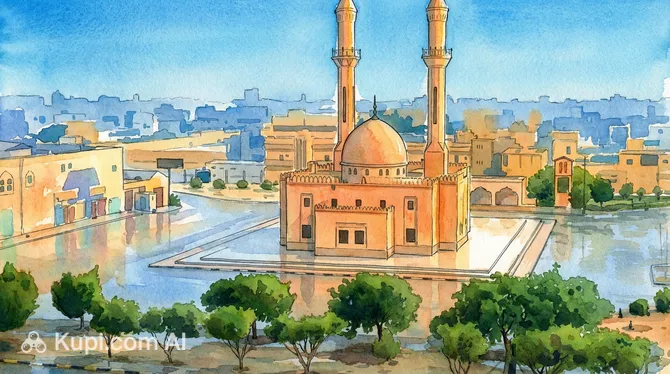
Ajdabiya is a major regional and administrative center in the northern part of Libya, located in the historic region of Cyrenaica. The city is situated just 10 kilometers from the Mediterranean coast in the Gulf of Sidra and serves as a "gateway" to the country's desert regions. With a population of approximately 416,000 people, it plays the role of a key commercial hub on the arid plain, connecting coastal territories with inland oases.
Ajdabiya. Illustration.
Source: Kupi.com AI
The city boasts a rich heritage dating back to ancient times. In various eras, it was a significant outpost of the Roman Empire and an important center during the Islamic conquests. If you are interested in the details of its formation, be sure to check the section describing the history of Ajdabiya, which includes the period when the city even served as the capital of the Cyrenaica State in the early 20th century.
For tourists, Ajdabiya is primarily interesting for its authentic oasis town atmosphere and its role as a transit hub. There is no mass tourism here, which allows visitors to see the everyday life of Libyans without embellishment: from bustling markets to administrative quarters. We recommend considering this city as an important stop on the way to exploring the deep desert landscapes and unique ecosystems of the El Wahat oases.
Weather Overview
The climate in Ajdabiya is classified as arid, which means hot summers and mild, pleasant winters. The city is located on an open plain, so winds bringing dust from the desert are often felt here. If you want to know more precise data for specific dates, we recommend checking the weather in Ajdabiya section, which provides detailed statistics.
Expect very dry and hot summers, when daytime temperatures in July and August consistently exceed +33°C, and rain is practically non-existent. Winter months, such as January and February, bring long-awaited coolness with average values around +14°C and a small amount of precipitation. The most comfortable times to visit are considered spring and autumn, when the exhausting heat recedes and the sky remains clear.
Average monthly temperature
Average monthly precipitation
Interesting Facts
The name Ajdabiya in Arabic can mean "the one who throws" or "shoots," highlighting its historical significance as a fortified military outpost at the crossroads of trade routes.
Between 1917 and 1922, the city held the honorary status of capital of the Cyrenaica State, playing a key political role in the region.
Geographically, the city is located at a strategic point—on the eastern edge of the Gulf of Sidra, just 6.4 km from the Mediterranean coastline.
The settlement's history dates back to antiquity: Ajdabiya was an important point as early as the Roman Empire and retained its status as a significant center during the era of Islamic conquests.
Administratively, the city is clearly divided into three districts: North, West, and East Ajdabiya, each having its own architectural and infrastructure characteristics.
How to Get There
Ajdabiya is Libya's most important transport hub, located at the intersection of key highways. The primary way to reach the city is by road. The city is connected by high-quality roads to Benghazi (a distance of about 150–160 km, taking 2–3 hours) and the country's capital, Tripoli, which is about 850 km away. Detailed information on routes and logistics can be found in the section how to get to Ajdabiya.
The city does not have its own airport. Travelers who prefer air travel should look to Benina International Airport in Benghazi, which handles flights from various regions and neighboring countries. From the airport, Ajdabiya can be reached by intercity buses or taxis that run regularly between the cities.
Railway communication in this region is currently not developed, so buses and shared taxis remain the main form of public transport. Desert highways leading to the city can be subject to sand drifts, so it is advisable to check road conditions with local carriers before traveling.
Station
Passenger traffic
Distance
Bengasi central railway station
2
151 km
Main Attractions
While Ajdabiya is not a classic tourist center with an abundance of museums, it attracts travelers with its role as a strategic hub and the atmosphere of a real Libyan city. The main landmarks here are the central squares and markets, which are the heart of urban life. It is here that you can feel the rhythm of the Cyrenaica region, observing the lively trade and daily affairs of local residents.
One of the city's main architectural features is its administrative buildings and mosques, reflecting a functional and austere construction style. The city serves as a crucial starting point for expeditions to the El Wahat region. This destination beckons lovers of desert ecosystems and unique oases hidden among the sands, which are most conveniently reached from this transport hub.
For those who appreciate history, the traces of the ancient and medieval past scattered around the outskirts are of interest. Although there are no large open-air museums in the city itself, its position on ancient trade routes makes every old quarter a witness to centuries of change. Visiting Ajdabiya is an opportunity to see Libya as it is, far from the standard tourist routes.
Local Cuisine
Culinary traditions in Ajdabiya are closely linked to the rich heritage of Cyrenaica and Arabic culture. The local menu is based on hearty and aromatic dishes, with couscous and various tagines leading the way—meat (most often lamb) stewed in special pots with vegetables and a wealth of spices. Thanks to the proximity of oases, fresh dates and locally grown vegetables are frequently added to the dishes.
It is definitely worth trying traditional Libyan flatbreads and Arabic coffee, which is brewed strong here and often flavored with cardamom. Tea in Ajdabiya is not just a drink but a real ritual: it is served very strong and sweet, with a thick foam. Alcohol is not officially sold in the city, so the focus is on natural juices and traditional hot drinks.
The city's gastronomic scene is represented mainly by small family-run establishments and street food stalls in the center. Locals prefer to dine in simple cafes serving freshly grilled meat and traditional soups. This is a great opportunity to get acquainted with authentic cuisine without tourist pretension, enjoying honest flavors and the hospitality of the region.
Travel Tips
A trip to Ajdabiya will be a pleasant experience if you prepare in advance for the characteristics of the local climate and culture. These practical tips will help you feel confident in this important Libyan hub.
Clothing and Essentials: Choose light clothing made from natural fabrics to better handle the heat, but remember modesty: shoulders and knees should be covered. Be sure to bring sunglasses and a hat for protection from dust and sun.
Transport: The best way to get around is by taxi. Always agree on the fare before getting into the car. For travel between cities, it is better to choose the morning hours.
Finances: Cash is king in the city. Carry a sufficient supply of Libyan Dinars, as ATMs may not accept foreign cards, and exchange offices are not very common.
Health and Safety: Always carry a supply of bottled water. Basic medications can be found in pharmacies in the center, but it is better to bring specific medicines with you.
Communication: The main language is Arabic. Not everyone understands English, so learn basic phrases: "Shukran" (thank you), "As-salamu alaykum" (hello).
Local Etiquette: Greet people with your right hand. In conversation, show patience and respect for local customs, especially during religious holidays and prayer times.
What to Avoid: Do not photograph government buildings, military sites, or local residents without their explicit consent. Avoid walking on the outskirts of the city alone at night.
Additional Tip: Plan your visit to Ajdabiya as part of a larger itinerary through Cyrenaica—the city is perfect for a short stop of one or two days.
Following these simple rules will make your visit to Ajdabiya comfortable and safe, allowing you to fully enjoy the hospitality of this region.
Entertainment & Nightlife
Nightlife in Ajdabiya is virtually non-existent, dictated by the conservative traditions of the region and its status as an administrative center. You won't find nightclubs, bars, or loud concert venues here. Evening leisure for locals and guests usually centers around traditional cafes and small restaurants, where people slowly sip coffee and socialize.
For active entertainment and a more diverse cultural program, travelers usually head to Benghazi, located 150 kilometers to the north. In Ajdabiya itself, daytime entertainment is limited to walking through local markets and visiting shopping areas, which are most lively in the first half of the day. This is a place for those seeking peace and immersion in a slow-paced provincial life.
Safety in the city is maintained at an appropriate level, especially in central districts. Evening walks are possible, but keep in mind that most establishments close quite early. For moving around after dark, it is recommended to use official taxis. Overall, the city's atmosphere is conducive to quiet family rest or a brief stop during a long journey through Libya.
Parks & Museums
In Ajdabiya, there are virtually no classic museums or galleries, due to its status as an administrative and transit hub. The city's cultural heritage lives not in museum display cases but in its architecture and traditions passed down from generation to generation. Travelers looking for historical artifacts should pay attention to the old buildings in the central part of the city.
Green zones and public parks are also rare in the city due to the harsh arid climate and proximity to the desert. Landscaping here is mainly represented by occasional oasis plantings and small squares near government buildings. Residents usually visit the natural oases of the El Wahat region, which are located outside the city limits, for outdoor recreation.
Despite the lack of typical park areas, Ajdabiya offers a unique experience of observing how people adapt the urban environment to the conditions of a hot plain. Exploring local mosques and lively market squares can easily replace a trip to an ethnographic museum, providing a vivid insight into the life and culture of modern Libya.
Getting Around
The transport system of Ajdabiya is simple and functional. The main form of public transport within the city is shared taxis and buses. They connect residential quarters, central markets, and administrative zones. The route network covers all the city's main points, although the schedule may not be very strict.
The most convenient way for tourists to get around remains the taxi. A car can easily be hailed on the street in the center or called through the administrator at your accommodation. Short-distance trips within the city are inexpensive, but it is better to agree on the price with the driver in advance. This is the most comfortable option, given the hot climate and the lack of a metro or trams.
For those planning long-distance trips to neighboring cities or oases, intercity buses departing from the main transport stands are available. Car rental is also possible but requires a certain amount of courage and experience driving in desert road conditions. Remember that during sandstorms or strong winds, traffic on the highways can be difficult, so always check the weather forecast before departing.
Accommodation
Accommodation options in Ajdabiya are primarily focused on practicality and transit travelers. It is difficult to find luxury five-star hotels or large international chains here. The core of the hotel stock consists of guesthouses and apartments, which are often rented for short terms by professionals coming to the city on business or tourists heading deeper into the country.
Most accommodation options are concentrated in the central part of the city, near the main shopping streets and transport interchanges. These are the most convenient areas to stay, as it is easiest to reach markets, cafes, and taxi stands from here. Conditions in such establishments are usually basic but quite comfortable for a few nights.
When planning a visit, keep in mind that international booking systems may operate with limitations. It is recommended to arrange accommodation in advance through local contacts or look for options on-site in the morning. Housing prices in Ajdabiya remain very affordable compared to coastal metropolises, making the city a convenient point for a budget stopover.
Nearby Cities
Ajdabiya is an excellent starting point for exploring the eastern coast of the Gulf of Sidra and nearby oases. The region is rich in small settlements, each playing its own role in the country's economy and history, offering travelers a chance to see different facets of Libyan life.
Just 24 kilometers away is the coastal town of Zuwetina, known for its port and seascapes. Another interesting destination is Marsa al-Brega, an important industrial and port center located 74 kilometers away. For those who want to get to know small agricultural communities, trips to Qaminis or Suluq are suitable.
City
Population
Distance
Zuwaytinah
21 015
24 km
Marsa Brega
27 000
74 km
Qaminis
10 713
102 km
Suluq
15 543
102 km
Uqayla
100
113 km
Exploring the surroundings of Ajdabiya allows for a deeper understanding of the contrast between the Mediterranean coast and the harsh desert plains. We recommend planning such trips by rental car or taxi to be able to see the unique natural landscapes of this region.
Shopping & Souvenirs
Shopping in Ajdabiya primarily means visiting the traditional oriental souks located in the city center. There are no massive fashion malls here, but you can find everything necessary for daily life: from quality fabrics and clothing to spices and local products. The city's markets have a life of their own, offering an authentic experience of interacting with local traders.
As souvenirs from Ajdabiya, it is worth bringing back items made by local artisans. Ceramics from the oases and traditional Libyan fabrics are especially valued. Also, don't forget to stop by the date stalls—in this region, they are of exceptional quality and taste, as they are delivered directly from the nearby El Wahat oases.
Shops in the city usually take a break during the midday heat and close during prayer times. Payment is made predominantly in cash in the local currency; bank cards are accepted very rarely and only in very large outlets. Bargaining in the markets is welcomed and is an important part of the purchasing process, allowing you not only to lower the price but also to start a friendly conversation.