Support

Arch of Marcus Aurelius

About

The Arch of Marcus Aurelius is a majestic monument of ancient architecture that stands proudly in the heart of Tripoli, the capital of Libya. This monumental structure was erected in the 2nd century AD in honor of the Roman Emperor Marcus Aurelius and his co-ruler Lucius Verus. The arch is one of the best-preserved ancient monuments in the city and represents a unique example of Roman architecture in North Africa.
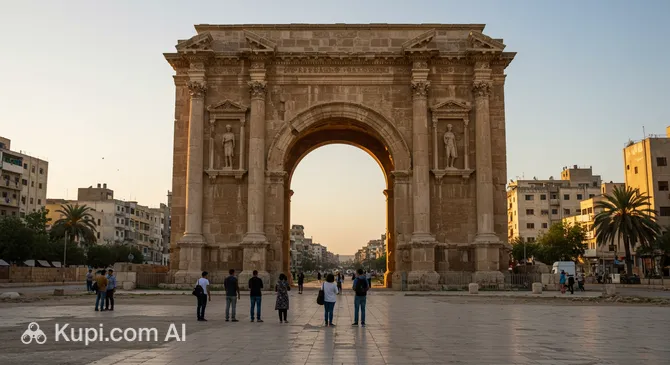
Arch of Marcus Aurelius. Illustration.
Source: Kupi.com AI

Traveler photos:

The Arch of Marcus Aurelius impresses with its elegant architecture, harmonious proportions, and rich decorative ornamentation. It is built from local stone and adorned with skillful reliefs depicting scenes from the emperor's life, military triumphs, and symbols of Roman power. It holds particular historical value as the only structure of the ancient Roman city of Oea that has survived to the present day, upon whose ruins modern Tripoli grew.

A visit to the Arch of Marcus Aurelius is a unique opportunity to touch centuries of history and feel the breath of the Roman Empire. This historical monument allows one to imagine the scale and grandeur of the ancient city, which served as an important port and trading center. For tourists interested in ancient history and architecture, the arch will be one of the most memorable sites in Tripoli, offering a rare glimpse into the past of this remarkable region.

Contacts

The Arch of Marcus Aurelius is a significant historical monument in Tripoli and is generally open to the public. As it is an ancient structure, it does not have direct contact details.

To reach the arch, you can use local transport or a taxi, heading towards the Old City where it is located. For the most accurate information on opening hours and possible tours, it is recommended to contact local tourist information centers or guides in Tripoli.

How to contactContact
AddressAl Hara Alkabir St, Tarabulus, Libya
Websitewww.facebook.com

What to Do

Visiting the Arch of Marcus Aurelius in Tripoli is a unique opportunity to connect with ancient history and experience the majesty of the Roman Empire. Standing before this monumental structure, you can examine the intricate craftsmanship of ancient artisans in detail. The well-preserved bas-reliefs, elegant decorations, and majestic columns that have stood here for nearly two millennia are particularly striking. This location is perfect for taking impressive photographs against the backdrop of one of Libya's iconic historical monuments.

Walking around the arch allows you to appreciate the scale of the structure and imagine how it looked in its prime. You can leisurely study every element, trying to decipher the stories depicted in the bas-reliefs and admiring the skill of the ancient sculptors. It’s not just a sightseeing stop, but a true immersion into the atmosphere of the ancient city of Oea, the predecessor of modern Tripoli.

The Arch of Marcus Aurelius is conveniently located in the historical part of the city, in close proximity to other interesting sites in the old medina. Therefore, a visit can easily be combined with a stroll through the narrow, authentic streets, a visit to local museums, an exploration of colorful markets, and a break in traditional cafes. This combination allows for a deeper understanding of Tripoli's rich Roman past and its significant role in the history of the Mediterranean region.

Getting There

Reaching the Arch of Marcus Aurelius in Tripoli is quite simple, as it is one of the key landmarks in the city's historical center. The arch is located in the heart of the Old City, making it easily accessible for tourists exploring this part of Tripoli.

If you are staying in one of the hotels in central Tripoli, the most pleasant way to reach the arch is on foot. It is within walking distance of the main city squares and the ancient streets of the medina. Such a walk allows you to enjoy the city's atmosphere and see other interesting sites along the way.

For those who prefer a faster way to travel or are located further from the center, taxis are always an option. Taxi drivers in Tripoli are very familiar with the location of this famous landmark. Overall, the city's transport infrastructure allows you to reach the historical center, where the arch stands, from any point in Tripoli without much difficulty. Many tourists begin their exploration of the medina with a visit to the Arch of Marcus Aurelius before continuing to nearby mosques, markets, and museums.

Nearest city: Tripoli

History & Facts

The Arch of Marcus Aurelius is more than just an ancient monument; it is a true gem of Tripoli and all of Libya. Its history dates back to 163–164 AD, when it was erected in honor of the prominent Roman emperors Marcus Aurelius and Lucius Verus. At that time, the city, known as Oea, was one of three flourishing centers that formed the historical region of Tripolitania. The arch became a majestic symbol of Roman rule and the prosperity of this region.

Beyond its memorial function, the Triumphal Arch played an important role in the urban life of ancient Oea. It was not an isolated monument but was integrated into the city's infrastructure, gracing one of the main entrances to the central district. Imagine residents and visitors passing beneath its vaults, feeling the grandeur of the Roman Empire and its influence on daily life.

The fate of many ancient structures is full of trials, and the Arch of Marcus Aurelius was no exception. However, it was fortunate: in the early 20th century, during the period of Italian colonial rule, a large-scale restoration was carried out under the guidance of Italian architects. It is thanks to this timely work that the arch was saved from destruction and has been preserved in good condition to this day. Today, it is rightfully considered one of the main tourist attractions in Tripoli, attracting travelers with its rich history and impressive architecture.

Time Needed

Generally, getting to know the Arch of Marcus Aurelius in Tripoli does not take much time. Most visitors find 30 minutes to one hour sufficient to explore this historical monument. This is enough time to carefully examine the arch itself, appreciate its architectural details, and take memorable photos.

This timeframe typically includes a short walk through the adjacent historical part of the city to better soak up the atmosphere of this ancient site. Of course, if you have a deep interest in Roman history or are a photography enthusiast wanting to capture the arch from different angles and in various lighting, your visit may take a bit longer. However, for a general introduction to the landmark, a one-hour window is usually more than enough.

Working Hours

The Arch of Marcus Aurelius in Tripoli is an open-air monument, and access is generally free at any time of day. As it is a historical site in an open area, it does not have specific operating hours like a museum. For the best viewing and photography, it is recommended to visit during daylight hours.

Typically, no advance booking or ticket purchase is required to view such monuments. Nevertheless, it is always useful to check current information with local tourist services or guides directly before your visit, especially if you plan to visit as part of an organized tour. The arch is available for viewing year-round.

Open 24 hours

Nearby

Visiting such an iconic site as the Arch of Marcus Aurelius is certainly a highlight of any trip to Tripoli. However, to get a more complete picture of the city and its atmosphere, it's worth taking the time to explore the surrounding area. Often, short walks to nearby sites reveal new facets of Libya's culture, history, and daily life.

By extending your route from the Arch of Marcus Aurelius, you can easily reach other interesting places in Tripoli. Below is a list of some of them with distances provided, which will help you plan your further exploration of the city.

NameDistance
Red Castle Museum0.6 km
Martyrs' Square0.7 km
El Forno Pizza2.3 km
Kabab Arabi4.6 km

Have you reached the end of the page?

So the route has been studied inside and out