Support

Great Mosque of Bamako

About

The Bamako Grand Mosque, also known simply as the Bamako Mosque, is the main Islamic place of worship in Bamako, the capital of Mali. It towers majestically in the very center of the city, north of the Niger River and close to the bustling central market. Due to its height, the mosque is one of the most visible buildings in Bamako and can be seen from almost any point, serving as an important landmark for both residents and visitors to the capital.
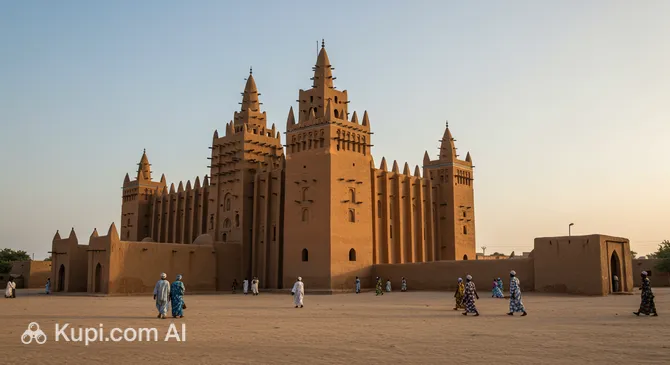
Great Mosque of Bamako. Illustration.
Source: Kupi.com AI

Traveller photos:

The mosque's architectural style is notable for its tall concrete minarets that surround the square-shaped central building. It is one of the tallest structures in the city. Its style is closer to the Saudi type of religious buildings than to the traditional style of West Africa, giving it a distinctive, monumental appearance.

The modern building of the Grand Mosque was erected in the late 1970s. It was built on the site of an older, pre-colonial brick mosque, which emphasizes the continuity of religious traditions in this location. Funding for the construction was provided by the Saudi Arabian government, which influenced the architectural features of the structure. Today, it is not only an important place for prayer but also a significant landmark in Bamako.

Contacts

To find up-to-date contact information for the Bamako Grand Mosque, such as a phone number or visiting hours, it is recommended to contact official tourist information centers in Bamako or check the details directly on-site. Sometimes major religious sites provide such information through their representative offices or on information boards.

How to contactContact
AddressBamako, Mali
Phone+223 79 13 30 50

What to Do

The Bamako Grand Mosque is one of the most prominent architectural landmarks in Bamako and a significant site for worshippers. Visitors can first and foremost appreciate the impressive exterior architecture of the building. The mosque represents an interesting blend of Saudi architectural style with traditional local elements, giving it a unique appearance. The tall minarets, which are visible from afar and serve as a landmark in the city, attract particular attention.

Although the mosque's primary function is religious, it sometimes opens its doors to tourists. If you have the opportunity, be sure to take it to explore the interior. This will allow you to gain a deeper understanding of the Islamic culture of Mali and appreciate the architectural details from the inside. The interior space generally has a calm and peaceful atmosphere, perfect for contemplation.

In addition to visiting the mosque itself, it is worth paying attention to its surroundings. The area is often buzzing with life, and the bustling central market is located nearby. A stroll through the neighborhood will give you a better sense of the city's rhythm and show how the mosque is integrated into the daily lives of local residents. Visiting this site is not just about seeing the architecture, but also about immersing yourself in the cultural environment of Bamako.

Getting There

The Bamako Grand Mosque is located in the very heart of Bamako, making it easily accessible for visitors. It is situated north of the Niger River, in close proximity to the bustling central market. Thanks to its tall and prominent minarets, the mosque serves as an excellent landmark and is visible from almost anywhere in the city, making it much easier to find.

There are several ways to reach the mosque. The most convenient option for many tourists is taxis, which are widely available throughout Bamako. A taxi ride from most hotels or central points in the city will not take much time. Additionally, you can reach the mosque by public transport, with routes passing through the central districts. Since the mosque is located near the central market, it is a very well-known spot, and any local resident will be able to point you in the right direction.

If you are visiting Bamako for the first time, it is recommended to first head to the central part of the city. Once there, simply look for the tall minarets of the Grand Mosque — they will be your main guide. Its proximity to the central market also means that the area is well-connected by transport and always lively, making the route to the mosque safe and straightforward.

Nearest city: Bamako

History & Facts

The Bamako Grand Mosque, located in the capital of Mali, is one of the most significant religious structures in West Africa. It was built on the site of an older, pre-colonial mosque made of sun-dried mud bricks. The modern building was completed in the late 1970s, thanks to funding from the Saudi Arabian government. Since its opening, the mosque has become not only a place of prayer but also an important architectural landmark in Bamako.

The architecture of the Grand Mosque differs noticeably from traditional West African places of worship, such as the famous Great Mosque of Djenné, which is built in the Sudano-Sahelian style. The design of the mosque in Bamako shows the influence of the Saudi school of architecture: this is evident in its tall concrete minarets that tower over the city and the characteristic square shape of the central building. These elements give it a monumental and modern appearance, distinguishing it from the mud-brick buildings of the region.

Today, the Bamako Grand Mosque plays a key role in the religious and cultural life of Mali, where Islam is practiced by the vast majority of the population. It is not only one of the largest mosques in the region, capable of accommodating thousands of worshippers, but also serves as an important symbol of Islamic faith and culture in the country. The mosque is open to both Muslims and tourists interested in Islamic architecture and culture, provided that the appropriate rules of conduct are followed.

Time Needed

To explore the Bamako Grand Mosque, one of the key attractions in Bamako, an average visitor will need approximately 1-2 hours. This time is usually enough to appreciate the architectural features of the building, its scale, the interior, and to take some photographs.

When planning your visit, keep in mind that the mosque is an active religious site. Therefore, visiting hours may be limited during prayers. If you want to do more than just a quick tour and wish to soak in the atmosphere, observe daily life around it, or visit the surrounding grounds, you might want to set aside a bit more time. However, for a basic introduction to the mosque itself, the indicated time will be quite sufficient.

Remember that when visiting religious sites, it is important to respect local traditions and codes of conduct, including appropriate attire. Checking for any potential entry restrictions for tourists before your visit can also be helpful for planning your time.

Working Hours

Exact information regarding the visiting hours of the Bamako Grand Mosque for non-Muslim visitors may vary. Generally, mosques are open for prayers throughout the day, but time for tourist visits may be restricted, especially during Friday prayers (Jumu'ah) and other religious events. It is recommended to check the current visiting hours on-site or, if possible, through official tourist information centers in Bamako.

Usually, no advance booking is required to visit mosques unless it is part of an organized tour. However, it is always worth showing respect for local traditions and confirming whether entry is permitted before your visit. It is best to check for seasonal variations in local sources, as access may change depending on religious holidays or other events.

5:00 – 21:00

Nearby

Visiting the Bamako Grand Mosque is certainly a highlight for any traveler in Bamako. However, to get the most complete impression of the city and its atmosphere, it is worth spending some time exploring the surrounding area. Often, it is short walks through the nearby streets and getting to know other attractions that allow you to dive deeper into the local culture and discover unexpected and interesting spots.

Near the Bamako Grand Mosque, you will find other noteworthy sites that will complement your experience of the capital of Mali. Below is a list of some of them, including distances, to help you plan your route more conveniently.

NameDistance
Ali Farka Touré Monument1.4 km
National Museum of Mali1.5 km
Sukhothai by Siam1.5 km
Bamako National Park1.6 km
Monument of Independence1.7 km
Le Byblos1.9 km
Place du Cinquantenaire2 km

Reached the bottom of the page?

Looks like you know this route inside out