Support

Baja California Sur Regional Museum

About

A journey across the Baja California Peninsula would be incomplete without a visit to the Regional Museum of Baja California Sur. This is the state's primary cultural repository, located in the heart of the city of La Paz. Under one roof, it houses a remarkable chronicle of the region, spanning a colossal period of time—from deep antiquity to the present day.
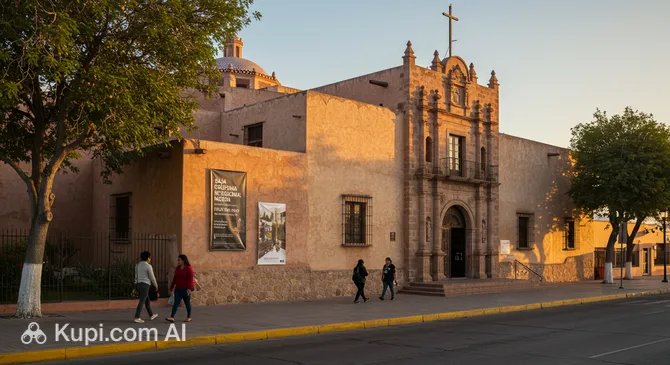
Baja California Sur Regional Museum. Source: Kupi.com AI

This museum in Mexico is considered a key center for heritage preservation. In its halls, you will find everything from archaeological finds and prehistoric fossils to ancient coins and historical flags. The exhibition is designed so that every guest can feel the spirit of the past and understand how the unique culture of this arid but incredibly eventful region was formed.

The museum is a must-visit for those who want to see the authentic history of the peninsula, captured in indigenous ceramics, colonial-era documents, and the everyday items of the first settlers. It is a place where legends and facts "come to life," making your vacation more meaningful and enriching.

Contacts

To clarify details before your visit or to organize a group tour, you can use the following contact information.

Address Calle Ignacio Altamirano s/n, Zona Central, 23000 La Paz, B.C.S., Mexico
Phone +52 612 125 6424
Google Maps Open on map

What to Do

Inside the museum, an exciting journey through time awaits you. You can see artifacts from the prehistoric period with your own eyes and learn how the indigenous peoples who inhabited these lands long before the arrival of Europeans survived and what they believed in. Special attention should be paid to the Spanish colonization section, which shows in detail how the region's character changed under the influence of a new culture.

One of the most captivating sections is the exhibition dedicated to the pearl industry. In the 19th century, it was pearl harvesting that transformed a modest fishing village into a thriving trade hub. You will learn about the lives of the divers and see items related to this "precious" industry that was once famous throughout the world.

In addition to viewing antiquities, visitors can trace the evolution of La Paz from its origins to its status as a modern capital. The museum offers an excellent opportunity for visual learning: through photographs, old maps, and restored interiors of the past, you can literally feel the pulse of the history of the state of Baja California Sur.

Getting There

The museum is conveniently located in the city's central zone at Calle Ignacio Altamirano s/n. Since it is situated in the historical heart of the state capital, finding it will be easy even for those visiting this part of the peninsula for the first time.

If you are staying downtown, the best way to get there is a leisurely walk. The museum is located just a few blocks from the famous waterfront promenade—the malecón—allowing you to combine a cultural visit with a pleasant stroll along the bay.

For those who prefer comfort or are traveling from outlying areas, taxi services or popular ride-hailing apps are always available. Travel time from most central hotels will be no more than 5-10 minutes. Public transport is also available in the city, but for tourists, a taxi is often the simplest and fastest option.

History & Facts

The history of the site where modern La Paz stands began as far back as the 16th century. The first European to land here on May 3, 1535, was the famous Hernán Cortés. Although his attempt to found a colony was unsuccessful, this event forever placed the region on the map of the great Age of Discovery.

The city received its current name, which translates to "peace", in 1596. Sebastián Vizcaíno's expedition was so impressed by the friendly welcome from the indigenous inhabitants that they decided to immortalize this tranquility in the name of the settlement. However, a permanent human presence in the modern sense of a city only took shape much later, around 1811.

In the 19th century, the region experienced a true boom thanks to pearl fever. La Paz became a global center for harvesting high-quality pearls, attracting adventurers and wealthy merchants. Interestingly, the city became the administrative capital in 1829 only after a powerful hurricane destroyed the region's former center—the city of Loreto. All these intersections of destiny and natural elements are carefully documented in the museum's halls.

Time Needed

To leisurely explore all the halls and carefully study the key artifacts, visitors are recommended to set aside about 1.5–2 hours. This is plenty of time to immerse yourself in the atmosphere of each era, from cave paintings to colonial household items.

If you are a deep history enthusiast and enjoy reading every exhibit description, your visit may last longer. However, for a standard tourist itinerary, a couple of hours is the perfect amount of time to get a complete overview of the region's heritage without feeling fatigued.

Working Hours

When planning your cultural leisure, you can be sure that the doors of the institution are open to you almost anytime. The museum operates on a daily schedule, which is very convenient for tourists with tight travel itineraries.

The operating hours are consistent throughout the week: from Monday to Sunday, visitors are welcome from 9:00 AM to 6:00 PM. This allows you to drop in either early in the morning or in the afternoon before an evening stroll through the city.

Nearby

Exploring central La Paz isn't limited to a single museum. A walk through the surrounding area will allow you to dive deeper into the city's atmosphere and see how historical heritage coexists with the modern rhythm of life.

Name Distance (km)
Centro La Paz Baja California Sur 0.5
Baja Blast 0.7
Ruinas de La Perla de La Paz 0.9
P 1 Torre Muelle Fiscal 1.0
Grupo Mahr 1.3
Molinitos del teatro de la ciudad 1.6
Pueblo Nuevo Park 2.5
Acuario Laguna 2.8
Laboratorio de peces y crustáceos 4.2
Cabo Alejandrina 4.7

Reached the end of the page?

That means the route is fully explored