Support

Museo de la Cultura Huasteca

About

Located in the colorful port city of Tampico, the Museum of Huastec Culture is a true treasure trove of the region's anthropological heritage. This specialized institution was created to introduce visitors to the fascinating history and traditions of the indigenous peoples who inhabited the eastern coast of what is now Mexico. The museum is harmoniously integrated into the modern Espacio Cultural Metropolitano Tamaulipas complex.
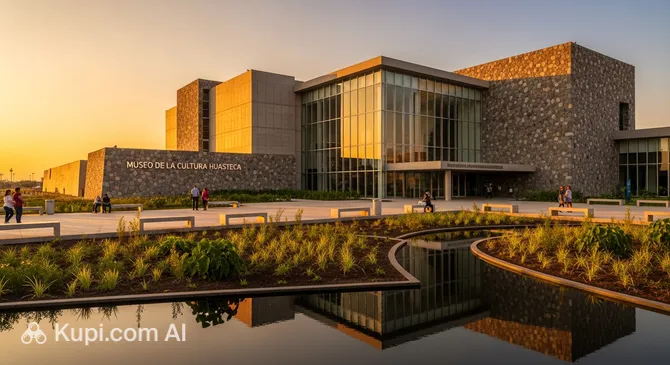
Huastec Culture Museum. Source: Kupi.com AI

Inside this cultural center are 30 unique collections that vividly illustrate the lives of ethnic groups within the Huastec culture: from the ancient Teenek tribes to modern-day Nahua and Otomi communities. The museum's exhibits masterfully cover the civilization's development from the pre-Hispanic period to the present, featuring artifacts found in the states of San Luis Potosí, Veracruz, and Tamaulipas.

Visitors will find 12 permanent exhibition halls, each revealing a specific facet of human existence: here you can learn about sacred rituals, daily labor, art, and the cosmology of ancient peoples. Thanks to its rich ethnographic foundation, the Museum of Huastec Culture is considered one of the most important stops on the state's tourist map for anyone who values history and archaeology.

Contacts

For those planning a visit and wishing to clarify details about an upcoming tour, the institution's current contact information is provided below.

AddressBlvd. A. López Mateos, Obrera, 89040 Tampico, Tamps., Mexico
Phone+52 833 210 2217, +52 834 306 0160
Emailmc_huasteca@inah.gob.mx
Official websitelugares.inah.gob.mx

What to Do

A stroll through the museum's twelve halls turns into a captivating journey through the centuries. Visitors can see rare archaeological finds and ethnographic objects that reveal the secrets of Huastec cosmology and mythology. Special attention should be paid to the "Fertility" and "Art" halls, which showcase delicate body ornaments and cult objects reflecting the sophisticated aesthetic sense of ancient craftsmen.

In the exhibits dedicated to daily life and labor, you can study traditional tools, textiles, and household items of the Teenek, Nahua, and Tepehua groups. This provides a unique opportunity to compare how traditions of exchange and sacred rituals have evolved over the centuries. The museum offers a deep educational experience that will interest both professional historians and curious travelers.

The entrance fee is 80 pesos. A nice bonus is that entry is free for many categories of visitors on Sundays, while children under 13, students, and retirees with valid ID can expect discounts. It is an excellent place for a family visit where you can not only see antiquities but also better understand the cultural diversity of modern Mexico.

Getting There

Finding this cultural center is quite simple, as it is located in the bustling Obrera neighborhood within the modern Espacio Cultural Metropolitano Tamaulipas complex. The museum is easily accessible by private car or taxi by following Adolfo López Mateos Boulevard, which is one of the city's main thoroughfares.

If you are arriving from Tampico International Airport, the journey by taxi or rental car will take about 20–30 minutes (the distance is approximately 10 km). Within the city, it is also convenient to use popular ride-sharing apps such as Uber or local buses that pass by the cultural space.

History & Facts

The history of this significant cultural institution began on January 16, 1960, when the museum first opened its doors to the general public. In those years, the exhibition was housed in the Technological Institute building in the neighboring city of Ciudad Madero. It wasn't until 2003 that the collection found its current modern home in Tampico, which allowed for a significant expansion of the exhibition space and ensured the preservation of its unique artifacts.

The Huastec culture, to which the museum is dedicated, represents a unique layer of Mesoamerican history. It developed across vast territories covering the modern states of Tamaulipas, Veracruz, and San Luis Potosí. The archaeological finds presented here span a massive timeframe—from the Preclassic period (before 300 AD) to the time of encounter with the Aztec civilization in the 15th and 16th centuries.

An important role in studying this heritage was played by the 1940s excavations conducted by the renowned archaeologist Gordon F. Ekholm in the Pánuco and Tuxpan regions. His discoveries helped scientists better understand the trade and cultural links between the Huastecs and other ancient peoples of the region. Today, the museum continues the traditions of these researchers, carefully preserving the ethnographic collections of the Nahua, Otomi, and Teenek groups.

Time Needed

To leisurely explore all 12 themed halls and delve into the details of the rich archaeological collections, the average visitor will need between 1.5 and 2.5 hours. This is usually sufficient to become acquainted with both the ancient artifacts and the ethnographic part of the exhibition.

If you plan to study the explanatory materials in detail or are visiting as part of an organized tour, it's worth setting aside half a day for your visit. Given its convenient location within the Metropolitano cultural space, a visit to the museum can easily be combined with a walk around the surrounding area.

Working Hours

The exhibition hall doors are open to guests from Tuesday to Sunday. Visitors are welcome from 10:00 AM to 5:00 PM, making it easy to plan a visit for either the morning or afternoon. Please note that Monday is a day off, and the museum is closed to the public.

As the schedule may change on public holidays, it is recommended to check the official website or call ahead before your trip to ensure your tour goes smoothly.

Nearby

Exploring the museum's collection can be perfectly complemented by a walk through the surrounding area, where many other interesting locations are situated. Discovering nearby attractions will allow you to immerse yourself deeper into the city's atmosphere and see it from different perspectives—from modern recreation areas to historical monuments.

NameTypeDistance (km)
La Rueda de TampicoAttraction0.8
Rotonda Bicentenario de TampicoAttraction0.8
Monumento a los Héroes Navales de Veracruz, 1914Monument1.3
Cristobal Colon V Centenario del Encuentro de dos MundosAttraction1.4
Casa GándaraHistorical building2
La Antigua VeterinariaAttraction2.3
Pánuco River Boat TripsOutdoor activities2.3
National Lottery BuildingArchitecture2.3
16 de Septiembre Square "Congregation Hidalgo"Square2.4
Old Customs of TampicoHistorical building2.7

Reached the end of the page?

That means the route is fully explored