Support

Muren

About

Welcome to Muren, the bustling capital of Khövsgöl Aimag and a vital hub in northern Mongolia. Often regarded as the gateway to the pristine wilderness of the region, this city offers a unique blend of urban energy and nomadic tradition. It serves as the primary starting point for travelers venturing toward the famous Lake Khövsgöl, making it a lively crossroads for adventurers and locals alike.
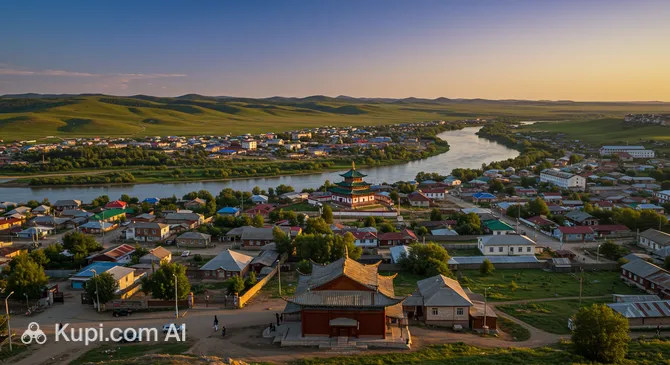
Muren. Source: Kupi.Binoculars

Geographically, Muren is situated in the valley of the Delgermörön River, surrounded by the vast steppe and distant mountains. While the climate is characteristically continental with cold winters and pleasant, mild summers, the city remains active year-round. As a major commercial center, it supports a significant population, bustling with markets, shops, and cultural institutions that reflect the vibrant life of the province.

To truly understand the local culture, one should explore the fascinating history of Muren. Originally founded as a monastic settlement, the city has evolved from a religious center into a modern administrative capital. Remnants of this past can still be felt, particularly when visiting sites like the Danzadaradjaa Khiid Monastery, which offers a glimpse into the spiritual heritage that shaped the area.

Beyond its historical roots, Muren boasts several intriguing attractions. The Khövsgöl Aimag Museum is a must-visit for history buffs, housing an impressive collection of traditional costumes, religious artifacts, and even mammoth remains. Just outside the city lies the mysterious Uushigiin Uver, a complex of ancient deer stones and burial mounds that dates back to the Bronze Age, offering a captivating look at early nomadic art and rituals.

Whether you are passing through on your way to the "Blue Pearl of Mongolia" or taking the time to explore the local sights, Muren provides a warm and authentic welcome. Its mix of history, culture, and convenient amenities makes it an essential stop on any northern Mongolian itinerary.

Weather Overview

Travelers to this northern Mongolian city should prepare for a sharp contrast between the seasons. The local climate is continental, meaning you can expect warm summers with occasional rain and cold, dry winters. To help plan your activities and packing list, it is helpful to consult the detailed guide on the weather in Muren before your arrival.

Winter is the dominant season and is known for its biting cold. In January, the average temperature hovers around -18.9°C, and nights can plummet to -24.5°C. However, this period is exceptionally dry, with virtually no precipitation recorded from November through March. The city begins to thaw in April, leading into a pleasant summer. July is typically the warmest month, featuring daily highs of 21.4°C, though it is also the wettest time of year, with about 17 days of rain. By October, the air turns crisp again as temperatures dip below freezing.

Interesting Facts

Beyond the main attractions, Muren holds many fascinating secrets that reveal the deep cultural and historical layers of this northern hub in Mongolia. Here are a few unique details that give this provincial capital its distinct character.

  • A Unique Ancient Face: Just west of the city lies the Uushigiin Uver complex, home to 14 Bronze Age deer stones. Among them stands a truly unique monument: a deer stone carved with a distinct human face at the top. This is the only known example of its kind, making it a significant archaeological mystery regarding the people who roamed these steppes thousands of years ago.

  • The Meaning of the Name: The city's name, often spelled "Mörön," literally translates to "river" in the local language. It was named after the Delgermörön River, which flows along the southern edge of the town and serves as a lifeline for the surrounding ecosystem.

  • Land of Giants: The surrounding Khövsgöl province is legendary for its wrestling heritage. Muren is considered a breeding ground for strongmen, and the region frequently produces champions (Avarga) for the National Naadam festival, a source of immense local pride.

  • A Lost City of Monks: Before modern development, the city was originally established as Möröngiin Khuree, a massive monastic complex. At its peak, it was not just a temple but a bustling religious settlement housing roughly 2,500 monks, serving as the spiritual anchor for the entire northern region.

How to Get There

Reaching this northern hub is an adventure that takes you through the heart of the Mongolian steppe. While the journey can be long depending on your mode of transport, the destination serves as the essential gateway to the Khövsgöl region. For travelers planning their logistics, you can find more about how to get to Muren and the available transport options in our detailed guide.

The most convenient and time-saving method to arrive is by air. The city is served by Moron (MXV) airport, which is a key regional transport node. It receives regular domestic flights, primarily connecting from Ulaanbaatar. Situated just 6.1 km from the city center, the airport is very accessible. Once you land, a taxi or local transfer can take you into town in approximately 15 to 20 minutes.

For clarity, here is a summary of the main airport:

Airport Name City Passenger Traffic Km from City
MoronMurenSmall6.1

As there is no railway infrastructure extending to this part of the country, trains are not an option for reaching Muren directly. The nearest railheads are hundreds of kilometers away. Consequently, if you are not flying, the primary alternative is road transport. A paved highway connects Muren to Ulaanbaatar, making the journey by intercity bus or private car a viable, albeit long, scenic experience across the rolling hills of Mongolia.

Main Attractions

While many travelers use the city primarily as a transit point, Muren possesses a distinct charm and several sites that offer a deep dive into the region's rich history and culture. From ancient archaeological wonders to vibrant local markets, the city provides a fascinating glimpse into life in northern Mongolia.

One of the most significant historical sites in the entire country is located just 20 kilometers west of the city: the Uushigiin Uver Deer Stones. This Bronze Age complex features 14 magnificently carved megaliths, which are believed to be around 3,000 years old. The stones are famous for their detailed artistic depictions of flying deer, a symbol of the soul's journey in ancient nomadic belief. Most notably, one of the stones bears a rare carving of a human face, a unique feature not found on other deer stones, making this site an archaeological treasure of global importance.

For those interested in local heritage, the Khövsgöl Aimag Museum is an essential stop in the city center. The museum houses an impressive collection of over 4,000 artifacts, ranging from traditional costumes of the region's diverse ethnic groups to shamanistic ritual items. The highlight for many visitors is the natural history section, which displays a massive tusk from a woolly mammoth that once roamed these steppes, along with exhibits dedicated to the Tsaatan reindeer herders who inhabit the northern taiga.

Spiritual life in Muren centers around the Danzandarjaa Khiid Monastery. Originally established as a massive monastic city in the 19th century, it was destroyed during the political purges of the 1930s but has since been lovingly rebuilt. Today, it stands as a functioning place of worship where visitors can observe monks performing daily rituals. The monastery is also home to a fine collection of thangkas (Buddhist scroll paintings) and offers a peaceful atmosphere on the western edge of town.

To experience the daily rhythm of the city, a visit to the Black Market (Zakh) is highly recommended. This bustling open-air market is the commercial heart of the province, where herders from the surrounding countryside come to trade. Rows of shipping containers have been converted into shops selling everything from traditional deel clothing and horse tack to pine nuts and dried curds, providing an authentic slice of modern Mongolian life.

Finally, the city's central gathering point is Chingunjav Square, named after the local hero who led an uprising against the Qing dynasty. A prominent statue of the leader on horseback dominates the square, which serves as a venue for local festivals and a popular spot for locals to meet and relax.

Local Cuisine

The culinary scene in Muren is a reflection of the harsh but beautiful northern Mongolian landscape, focusing on hearty, energy-rich foods designed to sustain locals through cold winters and active summers. While you will not find high-end gastronomy here, the city offers an authentic taste of traditional nomadic diet, heavily centered around meat, dairy, and flour-based dishes.

The most ubiquitous dish you will encounter is Buuz, steamed dumplings filled with minced mutton or beef, seasoned simply with onion, garlic, and salt. These are a staple for any meal and are particularly cherished during festivals. For a quicker, on-the-go alternative, look for Khuushuur, which are deep-fried meat pastries. They are a favorite street food, especially at the local market, where their crispy exterior and juicy filling make for a satisfying snack.

Given Muren's proximity to Lake Khövsgöl, the region offers a rarity in Mongolian cuisine: fish. While traditional nomads rarely ate fish, the influence of the lake means you can often find smoked fish (typically lenok or grayling) sold by vendors in the city or along the roads leading north. Another hearty local favorite is Tsuivan, a noodle stew prepared with mutton and vegetables, which serves as a reliable comfort food in local canteens.

To wash down these rich meals, locals primarily drink Suutei Tsai, a salty milk tea that is served hot and often accompanies every meal. In the summer months, you might have the chance to try Airag, fermented mare's milk. This slightly sour, alcoholic beverage is a cultural icon and is widely available during the warmer season. For a non-alcoholic refreshment, wild berry juices made from sea buckthorn or blueberries gathered in the nearby taiga are a sweet and healthy option.

Dining in Muren is a casual affair. Most locals eat at a Guanz, a small canteen-style eatery serving simple, affordable meals. For tourists, the best dining experiences are often found within the city's hotels or larger restaurants near the town center, which may offer a mix of Mongolian and European dishes. The bustling Black Market is also a key spot for food lovers, offering fresh dairy products like Aaruul (dried curd) and hot fried snacks directly from the vendors.

Travel Tips

Traveling to Muren is the first step into the wild beauty of northern Mongolia, but a little preparation goes a long way in this remote region. To help you navigate the local customs and logistics for a hassle-free adventure, here are some essential practical tips.

  1. Clothing and Gear: The weather here is strictly continental, so dressing in layers is crucial regardless of the season. Even in summer, evenings can be chilly, and rain is common, so bring a waterproof jacket and a warm fleece. If you visit in winter, thermal underwear and heavy down coats are non-negotiable. Sturdy, comfortable walking shoes are recommended, as sidewalks can be uneven or unpaved.

  2. Transportation: The city center is compact enough to explore on foot, which is often the best way to soak in the atmosphere. For longer distances, there is no formal public transit system like buses or trams; instead, locals rely on taxis. These are often unmarked private cars, so agree on a fare before getting in. To visit attractions outside the city, such as the Deer Stones or Lake Khövsgöl, hiring a private driver with a robust vehicle (typically a Russian UAZ van) is essential.

  3. Finances: The local currency is the Mongolian Tugrik (MNT). While larger hotels and supermarkets in Muren accept Visa or Mastercard, cash is absolute king at the Black Market, small eateries, and for paying drivers. Be sure to withdraw sufficient cash from the ATMs in the city center (banks like Khan Bank or Golomt Bank are reliable) before heading out into the countryside where facilities disappear.

  4. Health and Safety: Muren is generally safe for tourists, but it is wise to be cautious around stray dogs, which can be aggressive; keep your distance. Pharmacies are available in the town center, but they may not have specific prescription brands, so bring a personal supply of essential medicines. Always drink bottled or boiled water, as tap water may not be suitable for visitors' stomachs.

  5. Communication: English is not widely spoken outside of tour agencies and major hotels. Learning a few basic Mongolian phrases like "Sain baina uu" (Hello) and "Bayarlalaa" (Thank you) will go a long way in breaking the ice. It is highly recommended to buy a local SIM card (Unitel or Mobicom) in the city for navigation and to use offline translation apps.

  6. Local Etiquette: Local culture places high importance on respect. When handing money or receiving an item from someone, always use your right hand or both hands; never use just your left hand. If you are invited into a local home or a ger, remember not to step on the threshold when entering, as this is considered bad luck.

  7. What to Avoid: Avoid pointing your finger directly at people or religious altars, as this is considered rude; gesture with an open hand instead. Also, try not to whistle indoors or at night, as local superstition believes this calls upon bad spirits.

  8. Stock Up Here: Treat Muren as your supply base. If you are planning to head north to the taiga or the lake, this is your last chance to buy a good variety of groceries, camping gear, and batteries at reasonable prices. The selection in rural villages is extremely limited and more expensive.

By keeping these practicalities in mind, you will be well-equipped to enjoy the authentic charm of this northern hub. Muren is more than just a transit point; it is a place where a respectful and prepared attitude opens the door to genuine hospitality.

Entertainment & Nightlife

Entertainment in Muren reflects the city's character as a provincial administrative hub rather than a bustling metropolis. The nightlife scene here is modest and low-key, centered primarily around social dining, hotel bars, and the ubiquitous Mongolian love for singing. Travelers should not expect a district of pulsating nightclubs or high-end cocktail lounges; instead, the evening atmosphere is defined by casual gatherings and authentic local experiences.

The heart of the city's evening activity is situated around the central area near Chingunjav Square. Here, the nightlife is dominated by Karaoke Bars (often marked as "Karaoke" or "Vip Rooms"), which are the preferred entertainment for locals. These venues range from private rooms to open mic halls where groups of friends gather to sing traditional and pop songs late into the night. It is a loud, spirited, and welcoming environment, offering a genuine glimpse into modern Mongolian social culture.

For a more relaxed evening suitable for international visitors, hotel restaurants and bars serve as the main social hubs. The 50° 100° Hotel is a popular venue where travelers and expats often congregate. Its restaurant and bar area offer a comfortable setting to enjoy a drink, exchange travel stories, and relax after a day of exploration. Another notable spot is the restaurant at the Tenkhleg Hotel, which provides a reliable place for a late dinner and drinks in a safe, quieter environment compared to the rowdier local pubs.

Practical advice for a night out in Muren revolves around simplicity and safety. The dress code is entirely casual; practical outdoor clothing is the norm. Prices are very affordable by international standards, with beers and meals costing a fraction of what they would in the capital. Most venues close relatively early, typically by midnight or 1:00 AM, so it is best to start your evening around 7:00 PM or 8:00 PM.

Safety is an important consideration when exploring Muren after dark. Street lighting can be sparse away from the main square, and sidewalks are often uneven. It is advisable to avoid walking alone late at night, as stray dogs can be territorial and occasional intoxicated pedestrians may be unpredictable. Taxis are the best way to get around; they are inexpensive and can usually be flagged down on the main street, or arranged by your hotel reception or restaurant staff.

During the daylight hours, entertainment shifts toward cultural appreciation. The Muren Music and Drama Theatre is a striking building in the city center that occasionally hosts concerts, folk performances, and plays, particularly around national holidays. For sports enthusiasts, the local Wrestling Stadium comes alive during the Naadam festival in summer, showcasing the region's celebrated wrestling tradition, but remains a point of interest for its architecture year-round.

Parks & Museums

While Muren is primarily known as a jumping-off point for the wilderness, the city itself offers a modest but meaningful selection of cultural institutions and open spaces. Visitors will not find manicured botanical gardens here; instead, the city's green spaces are functional community hubs, and its museums serve as vital repositories for the rich history and diverse ethnography of northern Mongolia.

The most prominent open space in the city is Chingunjav Square, which functions as the central park and social heart of the town. Dominated by the statue of the local hero Chingunjav, this spacious plaza is where locals gather for evening strolls, children play, and major community events take place. While it is more paved than planted, the perimeter is lined with trees and benches, offering a great spot for people-watching and soaking in the slow-paced atmosphere of provincial life.

For a more natural escape within walking distance, the banks of the Delgermörön River serve as the city's unofficial nature park. Located on the southern edge of town, the riverbank is a favorite spot for picnics and summer swimming. The area remains largely undeveloped, providing a peaceful setting where you can watch herds of livestock drink from the water and enjoy unobstructed views of the rolling steppe and distant mountains.

Culturally, the city's crown jewel is the Khövsgöl Aimag Museum. This institution is surprisingly comprehensive for a provincial town and offers a deep dive into the region's heritage. The museum is divided into several sections, including a Natural History hall that features taxidermy of local wildlife such as elk, bears, and the famous Taimen fish. The ethnographic section is particularly fascinating, showcasing the distinct clothing, tools, and dwellings of the varied ethnic groups in the province, including the Darkhad, Buriat, and the reindeer-herding Tsaatan people.

Another significant site that bridges the gap between a museum and a living cultural venue is the Danzandarjaa Khiid Monastery. While primarily a place of worship, its grounds and temples function as a gallery of Buddhist art. Visitors can admire intricate thangkas (scroll paintings), religious statues, and traditional architectural details. The monastery courtyard also offers a serene, garden-like atmosphere, providing a quiet retreat from the dusty streets of the city center.

For an authentic local experience, try visiting the Wrestling Stadium area when there are no events. The open grassy fields around the stadium often serve as impromptu practice grounds or play areas, offering a glimpse into the importance of traditional sports in the daily life of the residents. It is a great place to see the local community at leisure, away from the commercial activity of the market.

Getting Around

The public transport system in Muren is reflective of its status as a provincial administrative center rather than a sprawling metropolis. Travelers should be aware that there is no metro, tram, or trolleybus network here. The city is compact and relatively easy to navigate, with the transport infrastructure relying primarily on road-based vehicles. For visitors, this means that getting around involves a mix of walking and utilizing local taxi services rather than deciphering complex subway maps or bus schedules.

The most common and convenient form of motorized transport is the taxi. In Muren, taxis operate somewhat informally compared to major global cities. While there are official taxi companies, many locals also operate as private drivers. You can easily hail a car by standing on the roadside and holding out your hand. These vehicles are the lifeline of the city's transit, connecting the center with the suburbs, the airport, and the nearby market areas efficiently and affordably.

Regarding the payment system, cash is the absolute standard for all local transport. There are no electronic travel cards, mobile apps, or tap-to-pay systems available for public transit in the city. You must pay the driver directly in the local currency. Fares are generally calculated based on a fixed rate per kilometer or a set price for a trip within the city limits. It is highly recommended to carry small denominations of notes, as drivers may not always have change for large bills.

For those looking for a bus service, the options are quite limited. There is no scheduled city bus network designed for tourists. Small minibuses, known locally as mikrs, do operate on fixed routes connecting the city center to outlying residential districts (gers districts). However, these are often crowded, lack clear signage in English, and run on irregular schedules. They are primarily used by local residents for commuting and are rarely a practical option for visitors trying to reach specific attractions.

Walking is a highly viable and pleasant alternative for exploring the central part of Muren. Most major points of interest, including the main square, the museum, and various hotels, are located within a reasonable distance of each other. The city center is flat and navigable on foot, allowing you to soak in the local atmosphere at your own pace without the need for any vehicle.

If you are arriving by air, transportation from the airport to the city center is almost exclusively by taxi or private transfer arranged by your accommodation. There is no shuttle bus service. Since the airport is located just a few kilometers from town, the ride is short and inexpensive. Always agree on the fare with the driver before loading your luggage to ensure a smooth start to your visit.

Accommodation

Accommodation in Muren is designed primarily to serve its role as a transit hub and administrative center. The options here are generally functional and comfortable rather than luxurious. Visitors can expect a range of choices, from simple guesthouses and budget hostels to mid-range hotels that offer modern amenities. Additionally, the city outskirts feature traditional Ger camps (yurt camps), which provide a more authentic Mongolian experience while still offering proximity to urban conveniences.

For those prioritizing convenience, the city center is the most practical area to stay. Hotels located near Chingunjav Square or the main road place you within walking distance of the Khövsgöl Aimag Museum, the Black Market, and various dining options. This area is ideal for travelers who need quick access to banks, shops, and taxi stands before heading further into the wilderness. Alternatively, the areas near the Delgermörön River offer a quieter atmosphere, where several guesthouses and camps provide a more scenic setting away from the dusty streets of the town center.

While Muren does not boast international luxury chains, there are a few well-regarded local establishments that are favorites among tourists. The 50° 100° Hotel and the Tenkhleg Hotel are often cited as reliable choices, known for providing consistent service, attached restaurants, and essential amenities like hot showers and Wi-Fi, which can be a luxury in this region.

A crucial tip for booking accommodation in Muren is to plan ahead if you are traveling during the peak summer months, especially in July. This is the season for the Naadam Festival and the prime time for visiting Lake Khövsgöl, meaning the city fills up with both international tourists and locals. During this period, the best rooms sell out weeks in advance.

In terms of pricing, Muren is quite affordable. Budget travelers can find beds in guesthouses for very reasonable rates, while mid-range hotels offer private rooms at prices that are modest by international standards. While the larger hotels are increasingly listed on major online booking platforms, many smaller guesthouses and camps still rely on direct phone bookings or walk-ins. It is also worth noting that while larger establishments accept credit cards, smaller venues often require payment in cash (Mongolian Tugrik).

Nearby Cities

For those looking to explore the surroundings, Muren serves as an excellent base for day trips to several interesting nearby locations:

The most popular excursion from the city is undoubtedly to Khatgal, located approximately 100 kilometers to the north. Connected by a paved road, this village serves as the southern gateway to the magnificent Lake Khövsgöl. Visitors can easily drive there to enjoy a few hours of boating, horse riding, or simply admiring the crystal-clear waters of the "Blue Pearl" before returning to Muren in the evening.

For a historical adventure much closer to town, the Uushigiin Uver complex is situated just 20 kilometers west. This archaeological site is an ideal destination for a quick half-day trip, offering a chance to see 14 monumental deer stones and ancient burial mounds that date back to the Bronze Age, all set against the dramatic backdrop of the open steppe.

Travelers planning their next leg of the journey might consider Erdenet. Although it is further away and better suited for a stopover than a simple day trip, it is the nearest major urban center. Known for its massive copper mine and carpet factory, it provides a stark contrast to the nomadic landscapes of the Khövsgöl province.

City Population Distance (km)
Ulaanbaatar1396288531
Erdenet106810290
Darkhan74738419
Nalaikh37659560
Khovd30500652

These nearby destinations offer a glimpse into the diverse culture and landscapes of the region.

Shopping & Souvenirs

Shopping in Muren is a functional and authentic experience, reflecting its status as the primary supply hub for the Khövsgöl province. While you will not find high-end luxury boutiques or sprawling international fashion chains here, the city offers a vital selection of goods for locals and travelers alike. It is the best place in northern Mongolia to stock up on camping gear, groceries, and warm clothing before heading out to Lake Khövsgöl or the remote taiga.

The commercial heart of the city is concentrated around Chingunjav Square and the main paved avenues radiating from it. This central district is compact and walkable, lined with a variety of small convenience stores, pharmacies, and specialty shops selling electronics and household goods. A stroll down the main street offers a glimpse into the everyday commerce of a provincial capital, where modern goods sit side-by-side with traditional nomadic necessities.

Instead of western-style shopping malls, Muren features several multi-story department stores and trading centers. The most prominent among them are the local branches of national supermarket chains, such as Nomin. These establishments serve as one-stop shops where travelers can find imported food items, toiletries, and quality outdoor equipment. On the upper floors of these buildings, you can often find clothing retailers and small counters selling jewelry and mobile accessories.

For a truly immersive shopping experience, a visit to the city's Black Market (Zakh) is essential. Located on the edge of the city center, this bustling open-air market is a maze of shipping containers turned into storefronts. It is the go-to place for everything from fresh meat and dairy to sturdy riding boots and colorful fabric for traditional deels. The market is also the best place to find horse tack, including beautifully crafted saddles and bridles, which make for fascinating, albeit bulky, keepsakes.

When it comes to souvenirs, Muren offers unique items that reflect the specific culture of the north. Look for handicrafts made from reindeer antler or bone, a craft influenced by the nearby Tsaatan reindeer herders. Hand-carved wooden items and traditional felt products are also popular. For an edible memento, local pine nuts and dried curds (aaruul) are widely available and offer a distinct taste of the Mongolian steppe.

Store hours in Muren are generally from 10:00 AM to 7:00 PM or 8:00 PM. The large supermarkets may stay open later, while the Black Market typically winds down by late afternoon and may be closed on a specific weekday (often Tuesday), so it is wise to check locally. Cash is king in Muren. While the larger department stores and supermarkets accept Visa and Mastercard, small shops and all vendors at the market deal exclusively in Mongolian Tugrik. Ensure you withdraw sufficient cash from an ATM in the city center before going shopping.

Reached the end of the page?

That means the route is fully explored