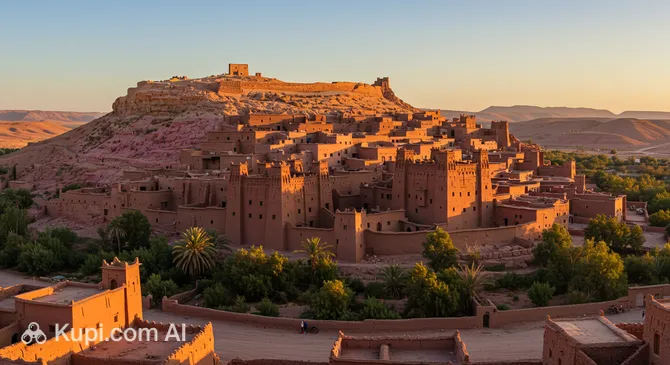
Taourirt is an authentic city in the eastern part of Morocco, serving as an important administrative and economic hub of the Oriental region. Unlike the country's popular tourist centers, Taourirt maintains the atmosphere of a genuine Moroccan province, where daily life flows at a measured pace. This is a place for those who want to see the "real" Morocco, free from bustling crowds of travelers and intrusive service.
Geographically, the city is located at an altitude of about 384 meters above sea level, approximately 100 kilometers west of the major center of Oujda. According to current data, the history and development of this region are closely linked to agriculture and regional trade. Today, the population of the city and surrounding areas exceeds 320,000 people, making it a significant center of eastern Morocco.
Taourirt. Illustration.
Source: Kupi.com AI
The main feature of Taourirt is its vibrant street atmosphere and authentic markets. Here, you can observe traditional trading practices and enjoy architecture where French colonial influences intertwine with modern residential developments. A visit to this city will be an excellent addition to a route through the east of the country, offering an honest look at local life and culture.
Weather Overview
Taourirt is in the zone of influence of a continental climate, which is characteristic of the inland regions of eastern Morocco. The city is protected from the mitigating influence of the sea, so seasonal temperature changes are quite pronounced here. To better plan your visit, it is useful to check what weather in Taourirt is expected at different times of the year.
Summer in the city is usually hot and dry: in July and August, the thermometer often rises to +37°C, and rain during this period is a great rarity. Winters, on the contrary, are quite mild, but with a noticeable cooling in the night hours. In January, the average temperature is about +11°C, while during the day it can be sunny and warm (up to +17°C), and at night the temperature can drop to +5°C.
Precipitation is distributed unevenly, reaching its peak in the spring months (March-April) and late autumn. The general character of the weather can be described as sunny and dry: for most of the year, the sky remains clear. Tourists are recommended to bring light clothing made of natural fabrics for daytime walks and warmer things for the evenings, especially if the trip is planned for the winter season.
Average monthly temperature
Average monthly precipitation
Interesting Facts
Taourirt is a city with interesting demographic and geographical features that help to better understand this region:
Population Dynamics: According to the 2024 census, the population of Taourirt province was approximately 220,157 people. Interestingly, this figure decreased by 5.6% compared to 2014, reflecting a trend of residents migrating to larger metropolitan areas.
Altitude: The city is located at an altitude of 384 meters above sea level, which significantly influences its climatic conditions, making them more continental compared to coastal areas.
Youth Potential: The demographic structure of the region is characterized by a predominance of young people. Almost two-thirds of the province's population are people of working age from 15 to 64 years old.
National Composition: Among the residents of the province, the vast majority are subjects of the Kingdom. Very few foreigners live here — fewer than 100 people for the entire region, which emphasizes the authenticity of the urban environment.
Gender Balance: The distribution of the male and female population in the city is almost perfectly balanced, with a slight predominance of females (about 51.4%).
How to Get There
The transport accessibility of Taourirt is due to its position in the eastern part of Morocco. The city is an important link on the way to regional centers. If you are planning a visit, it is useful to know the main routes and modes of transport, information about which is collected in the section on how to get to Taourirt.
Since there is no international airport directly in the city, most travelers use the air hub in neighboring Oujda. This airport receives flights from Casablanca and several European cities. It is about 100 km from Oujda to Taourirt, which can be covered by taxi or rental car in about an hour and a half to two hours via regional roads.
Railway communication is another reliable way to get to the city. An important line passes through Taourirt, connecting the east of the country with the central and northern regions. Trains in Morocco are known for their punctuality and comfort, making them an excellent choice for tourists.
Station
Passenger traffic
Distance
Nador South train station
5
85 km
Nador South train station
5
85 km
Nador South train station
5
85 km
Oujda train station
5
94 km
Tlemcen Train Station
3
156 km
For short-distance trips and between neighboring settlements, intercity buses and collective taxis ("grand taxis") are actively used. These are the most budget-friendly options, allowing you to experience the local flavor, although they may be less comfortable during the hot season.
Main Attractions
Taourirt is not a classic tourist destination with an abundance of world-famous monuments; however, its value lies in its authenticity. The main point of attraction for visitors to the city is the central markets (medinas). Strolling through the narrow streets of the commercial quarters, you can see the true life of provincial Morocco, where vendors offer spices, textiles, and products from local artisans without tourist markups.
The architectural appearance of the city is complemented by administrative buildings and residential quarters that have preserved elements of the French colonial style. A walk through the center of Taourirt allows you to trace how European influence was once layered onto the traditional Maghreb lifestyle. Of particular interest is observing everyday culture: from noisy evening gatherings in cafes to traditional farming methods in the surrounding areas.
For those looking for more large-scale attractions, the city serves as a convenient base for day trips throughout the Oriental region. From here, it is easy to set off to explore the natural beauties of eastern Morocco or visit neighboring cities, only to return in the evening to the calm and hospitable atmosphere of Taourirt, where every guest feels more like an explorer than just a tourist.
Local Cuisine
The culinary traditions of Taourirt are the quintessence of the flavors of eastern Morocco. The basis of the local cuisine consists of classic Maghreb dishes prepared with a special love for spices and fresh local products. The main dish on the table traditionally remains the tagine — a fragrant stew of meat and vegetables, which is slowly simmered in a clay pot, acquiring an incredible tenderness.
It is definitely worth trying the local couscous, which is often served with seven types of vegetables, and the hearty harira — a thick lentil and tomato soup, especially popular during the cooler months of the year. Lovers of both sweet and savory will enjoy pastilla — a multilayered pie made of thin dough with a poultry filling, sprinkled with cinnamon and powdered sugar. A gastronomic experience in Taourirt is impossible without Moroccan mint tea, which is brewed very strong and sweet here, turning every tea party into a real ceremony.
The food culture in the city is concentrated around small street cafes and eateries in the market area. Here, it is customary to eat slowly, enjoying the conversation. Local bakeries offer fresh Argan bread and a variety of sweets, such as makrout. Although there are few fine-dining restaurants in the city, the quality of products in ordinary establishments aimed at locals often exceeds expectations, offering an honest and rich taste of home-cooked Moroccan food.
Travel Tips
A trip to Taourirt will be a pleasant and comfortable adventure if you take into account a few practical nuances of life in the Moroccan province in advance.
Language Barrier: Be prepared for the fact that English is not widely spoken here. The main languages of communication are Arabic and French. Knowing a couple of basic phrases in Arabic or having a translator on your smartphone will significantly facilitate communication.
Best Time to Visit: It is recommended to plan your trip for the period from October to March. At this time, the most comfortable temperature is established, whereas summer in this region can be extremely hot.
Finances and Payment: The main currency is the Moroccan dirham (MAD). Cards are only accepted in major banks and some hotels, so always carry a supply of cash for markets, cafes, and taxis.
Etiquette and Dress Code: Taourirt is a conservative city. Tourists should choose modest clothing that covers shoulders and knees to show respect for local traditions and avoid unnecessary attention.
Transport within the City: The most convenient way to move around is small red taxis. It is better to agree on the price before boarding if a meter is not used. For trips between cities, choose trains or "grand taxis."
Communication and Internet: A SIM card from a local operator (for example, Maroc Telecom or Orange) can be bought at official kiosks. Wi-Fi is usually available in cafes in the center, but in budget hotels, its quality may be unstable.
Ramadan Specifics: If your trip falls during the holy month, keep in mind that many establishments are closed during the day, and the rhythm of city life shifts to the evening and night hours.
Drinking Water: It is recommended to consume only bottled water, which can be bought in any small shop or stall.
Following these simple rules will help you enjoy the hospitality of Taourirt and get only positive impressions from your acquaintance with eastern Morocco!
Entertainment & Nightlife
The entertainment scene in Taourirt is predominantly traditional and quiet. You won't find noisy night clubs or large-scale concert halls here. The center of social life in the evenings are the local cafes, where residents gather over a cup of mint tea to discuss the news or watch a football match. Football is the main source of passion here: local team games always draw full stands of fans and create a festive atmosphere in the city.
Evening leisure is also centered around the markets and central squares, which come to life after the daytime heat subsides. A walk through the evening medina is a form of entertainment in itself, allowing you to immerse yourself in the sounds and smells of an oriental city. For those accustomed to a more modern format of relaxation with cinemas and shopping centers, residents often recommend taking a short trip to neighboring Oujda.
Daytime entertainment in the city includes visiting sports grounds and leisurely walks through city streets, where you can watch craftsmen at work. Taourirt is an ideal place for those who appreciate a slow pace of life and the opportunity to experience local traditions in their original form, away from the standardized tourism industry.
Parks & Museums
The infrastructure of parks and museums in Taourirt is quite modestly developed, which is typical for many provincial cities in the country's arid regions. You won't find huge botanical gardens here; however, the city center is decorated with several cozy squares and plazas. These green islands serve as the main places for townspeople to rest in the shade of trees, where one can hide for a moment from the midday sun.
There are currently no specialized museums in Taourirt itself. The role of a "living museum" is played by the streets and old quarters themselves, where the architecture and lifestyle tell the story of the region's history better than any exhibits. The appearance of administrative buildings and the layout of central districts preserve the memory of the colonial past and the stages of the city's development as an important trading hub.
For those travelers whose interest in history and art requires classic museum halls, the best solution would be a trip to Oujda. There you can find galleries and historical exhibitions detailing the culture of eastern Morocco. Taourirt remains a place for contemplative relaxation and observing how history is being written right now on its busy streets.
Getting Around
The public transport system in Taourirt is simple and functional, fully meeting the needs of a small city. The main way of getting around for locals and tourists is taxis. So-called "petit taxis" (usually red) operate within the city limits. It is better to agree on the price of the trip in advance or monitor the meter if one is installed, although prices here remain very affordable by international standards.
For connections with surrounding areas and villages, minibuses and collective taxis ("grand taxis") are used. They depart as they fill up, which is a typical practice for the Moroccan province. This is a convenient and cheap way to get to neighboring settlements if you do not have a rental car.
City buses also serve the main streets, linking residential quarters with the center and markets. However, it should be noted that schedules can be flexible. In the very center of Taourirt, many prefer to move on foot — the main administrative and commercial facilities are within walking distance of each other. Also, you can often see motorcycles and bicycles on the streets, which are popular alternatives to motorized transport.
Accommodation
The hotel infrastructure in Taourirt is primarily oriented towards business travelers and transit passengers, so luxury five-star complexes should not be expected here. The bulk of the accommodation consists of small local hotels and modest guest houses offering a basic set of amenities at affordable prices.
For those who want to feel the traditional Moroccan way of life, a good option would be the few riads in the old part of the city or apartments offered by local residents. Such accommodation allows for a deeper immersion into the atmosphere of Taourirt, getting to know the daily life of the citizens and enjoying home-cooked cuisine.
When planning a trip, keep in mind that most accommodation options are concentrated in the center, near administrative buildings and markets. If you are looking for a high level of service or chain hotels, it is advisable to consider staying in Oujda and using Taourirt as a point for a day visit. It is better to book accommodation in the city itself in advance, especially if your visit coincides with local holidays or major market days.
Nearby Cities
Taourirt is located in the heart of the eastern region, making it a convenient starting point for exploring the surrounding areas, which hide many interesting and authentic places.
Just 10 kilometers away is the small town of Talwat, which you can visit to see the life of Morocco's rural communes. For those ready to drive a little further, an excellent destination is Guercif — a city known for its agricultural traditions and colorful local markets. Also worth noting is Zaio, located in a picturesque area that is especially beautiful in the spring period.
City
Population
Distance
Talwat
14 060
10 km
Oulad Khallouf
8 605
45 km
Guercif
90 880
45 km
Hassi Berkane
8 788
49 km
Zaio
35 806
61 km
If you are looking for a larger cultural center, then Oujda is a must-visit. This city is about an hour to an hour and a half's drive away and offers a rich selection of museums, parks, and the magnificent architecture of a large medina. A journey through the surrounding cities will allow you to see the full diversity of eastern Morocco, from quiet villages to bustling regional centers.
Shopping & Souvenirs
Shopping in Taourirt is, first and foremost, a visit to traditional markets, which are the heart of the city's economy. There are no huge malls with international brands here, but there is an abundance of locally produced goods. The main place for shopping is the medinas and street bazaars in the city center, where trade goes on from early morning until late evening.
From Taourirt, it is worth bringing back traditional Moroccan textiles, handmade Berber carpets, and high-quality leather goods. Local markets are also famous for a huge selection of spices, olives, and dried fruits grown in this region. Ceramics deserve special attention — eastern Morocco is known for its pottery traditions, and here you can find unique items of tableware with characteristic patterns.
Shops usually operate with a lunch break, and on the markets, the peak of activity occurs in the morning hours. It is worth remembering that in shops and at bazaars, haggling is expected — it is an integral part of local culture and a way to show respect to the seller. Most transactions are made in cash in Moroccan dirhams, although some more modern shops are starting to accept bank cards. For a wider selection of brand-name items, residents often go to neighboring Oujda, leaving Taourirt as a place to search for authentic treasures.