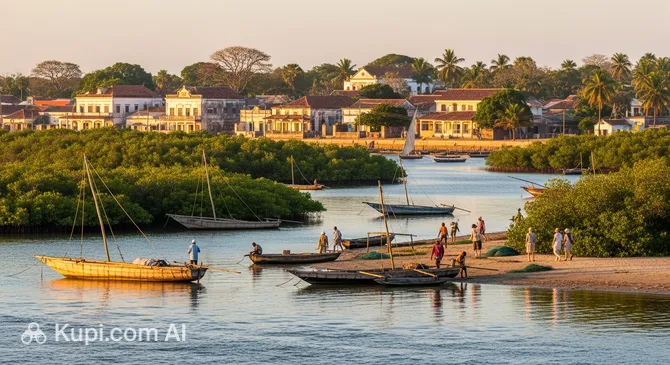
Angoche is a colorful port city located on the picturesque northeastern coast of Mozambique in Nampula Province. Unlike bustling metropolises, it boasts the atmosphere of a calm coastal center where life flows to the rhythm of ocean tides and traditional fishing. The city serves as an important regional hub, blending Swahili cultural heritage with the natural beauty of the Indian Ocean.
Angoche. Illustration.
Source: Kupi.com AI
Geographically, Angoche is nestled comfortably at the mouth of the Mluli River. The climate here is tropical and humid, which encourages lush vegetation and thriving agriculture—the region is famous for its coconut palm groves and cashew nut plantations. The population of the city and its surrounding district is over 347,000, making it a significant administrative point that still retains its provincial charm.
The city's rich historical heritage dates back to the 15th century when one of the region's influential sultanates was established here. Travelers are drawn by the opportunity to see an authentic way of life, stroll through the ancient port, and enjoy pristine coastal views untouched by mass tourism. A visit to Angoche will be a true discovery for those seeking genuine emotions and wanting to get to know the authentic, unpretentious face of East Africa.
Weather Overview
Angoche is dominated by a classic tropical monsoon climate, characteristic of the Mozambique coast. Two distinct seasons are observed here: a wet and hot period from November to March, and a drier, moderately warm season from April to October. The average annual temperature stays within a comfortable range of 25–28°C, although in the summer months, the thermometer often rises to 32°C and above.
Precipitation in the region is heavy, especially from January to March when the city is under the influence of monsoons. During this time, humidity increases significantly, and tropical downpours can be brief but very intense. If you are planning a trip, consider that the weather in Angoche is most favorable for walking from May to September, when rains are rare and a refreshing sea breeze makes being outdoors as pleasant as possible.
The water temperature in the Indian Ocean remains consistently high throughout the year, ranging from 24°C in winter to 29°C in summer, creating ideal conditions for coastal relaxation in any season. Thanks to the city's open location by the ocean, air stagnation almost never occurs, and sea winds help make the daytime heat easier to bear.
Average monthly temperature
Average monthly precipitation
Interesting Facts
Ancient Sultanate: The Sultanate of Angoche was founded around 1485 by people from Kilwa, eventually becoming a powerful independent center for gold and ivory trade.
Millennial History: Archaeological excavations confirm the presence of permanent settlements in the area as far back as 500 AD, making the region one of the oldest trading hubs on the coast.
The Return of the Name: During the colonial period, the city was named António Enes, but in 1976, shortly after Mozambique gained independence, its historical name, Angoche, was officially restored.
Air Gateway: The local airport, built in 1963, serves about 50,000 passengers annually, connecting this remote corner with the capital and other major cities in the country.
Strategic Location: Due to its position at the mouth of the Mluli River, the city historically controlled river trade routes leading inland toward the Zambezi River basin.
How to Get There
Reaching this secluded corner on the northeastern coast can be a challenging but exciting task. The primary way the city connects with the outside world is by air, though land routes also offer travelers breathtaking views of the Mozambican province. Detailed information on how to get to Angoche will help you better plan your trip logistics.
The regional Angoche Airport (IATA: ANO) is located just 5 kilometers from the city center. It handles regular flights from Maputo and Nampula. The flight time from Nampula is only about 30–40 minutes, which saves significant time compared to land transport. From the airport, the easiest way to reach the city is by taxi; the journey takes no more than 15 minutes.
If you prefer to travel by land, buses and private minibuses (chapas) run from Nampula. The distance is about 200 kilometers, but due to road conditions, including unpaved sections, the journey can take between 4 to 6 hours. During the rainy season, this time often increases. There is no direct rail connection to the city, so the main alternatives to flying remain the roads or occasional private sea vessels.
Station
Passenger traffic
Distance
Nacala railway station
1
203 km
Main Attractions
Although Angoche is not a mainstream tourist destination, the city wins you over with its authenticity. The main point of attraction remains the historical port and the adjacent center, where the breath of the ancient sultanate can still be felt. A walk among the old buildings allows you to experience the centuries-old history of a trading port that once connected the interior of Africa with the Indian Ocean.
The local market, located near the port, deserves special attention. It is the heart of city life, where you can see the full variety of local products: from freshly caught fish of bizarre shapes to vibrant Swahili fabrics. For nature lovers, the Mluli River is a must-see—its calm waters and mangroves provide the perfect backdrop for leisurely strolls and observing the lives of local fishermen.
The Indian Ocean coast around Angoche offers kilometers of wild beaches. You won't find the usual sun loungers and umbrellas here, but there is the opportunity to enjoy the silence and power of the ocean in complete solitude. This place is ideal for those who appreciate the aesthetics of "untamed" nature and want to see the life of a coastal town without embellishment.
Local Cuisine
Angoche's culinary traditions are a true hymn to the gifts of the Indian Ocean. The staple diet here consists of the freshest fish and seafood: shrimp, squid, and crabs, prepared either over an open fire or stewed in thick sauces based on coconut milk. A signature dish is peixe grelhado—fish grilled with local spices.
You must try matapa—a traditional Mozambican dish made from crushed cassava leaves, cashews, and coconut milk, which in this region often includes small shrimp. The most common side dish is xima—a thick porridge made from cornmeal—or fluffy rice. Thanks to the abundance of coconut palms and cashews around the city, these ingredients are present in almost every local recipe.
For a drink, locals will offer you refreshing young coconut juice or surula—a local palm wine with a specific taste. There are few restaurants in the traditional sense; the best and most honest food is prepared in small street eateries near the port and at the markets. The gastronomic scene in Angoche is simple but incredibly aromatic, and it is here that you can experience the true taste of the coast.
Travel Tips
A trip to Angoche requires some preparation, but the reward is a unique experience of immersion in an authentic African environment. Here are some practical tips to help make your trip comfortable and safe:
Clothing and Gear: Choose light clothing made of natural fabrics suitable for the hot tropical climate. Since Muslim traditions are strong in the city, it is recommended to dress modestly, especially when visiting residential quarters and markets. Be sure to bring sunscreen, repellents, and comfortable closed shoes for walking on unpaved roads.
Transport: For moving around the city, it is most convenient to use motorcycle taxis. If you plan to travel outside Angoche, it is better to rent a 4x4 vehicle with a driver, as road conditions can be unpredictable.
Finance: The main currency is the Mozambican metical. ATMs are extremely rare in the city and may not accept foreign cards, so be sure to carry a supply of cash with you. Cards are practically not accepted in shops and cafes.
Health: Mozambique is a malaria risk zone, so consult a doctor in advance regarding prophylaxis. Drink only bottled water and avoid ice in drinks at street cafes.
Communication: The official language is Portuguese, and English is not widely spoken. Learning a few basic phrases in Portuguese or Swahili will go a long way in winning over the locals. It is better to purchase a SIM card in advance at Nampula Airport.
Local Etiquette: Shaking hands is the standard greeting. Before photographing locals or their homes, always ask for permission—this is a sign of basic respect.
What to Avoid: Avoid walking alone after dark in remote port areas. Also, refrain from discussing political topics and photographing administrative buildings.
Seasonality: The best time to visit is the dry season from May to October, when the heat subsides and the roads remain passable.
Following these simple rules will allow you to enjoy the hospitality of Angoche and bring home only warm memories of the Indian Ocean coast.
Entertainment & Nightlife
Nightlife in Angoche is practically non-existent in its classic sense—you won't find noisy clubs or trendy bars here. The main leisure activity for locals and the few visitors centers around evening gatherings in small street cafes or right by the port to the sounds of traditional Swahili music. It is an ideal place for those who prefer meditative relaxation and early rises over the bustle of night dance floors.
In the evening, the city's pace gradually slows down. The most active areas are near the central square by the port, where small eateries operate. Daytime entertainment mainly involves exploring the life of the port town, walking along the Mluli River shoreline, or visiting local markets, which empty out by evening. For those craving more excitement, impromptu summer festivals occasionally organized on the coast by the residents themselves can be an alternative.
Travelers should note that moving around the city after dark can be difficult due to the lack of bright lighting in many areas. If you desire a more intensive cultural program or modern restaurants, you should head to the regional center, the city of Nampula. In Angoche itself, it is best to enjoy the tranquility, the starry sky, and the gentle sound of the ocean surf.
Parks & Museums
In Angoche, you won't find classic museums with glass display cases or formal city parks with manicured paths. The role of the main open-air "museum" here is played by the historical center and the old port themselves, where every building and every pier tells the story of the sultanate and the colonial era better than any tour guide.
The city's green zones are mostly natural landscapes. Luxurious palm groves and mangroves along the Mluli River take the place of city gardens. These are ideal spots for those seeking solitude and wanting to observe the local flora and fauna in their pristine state. Informal walking areas by the water are the best place to watch the sunset to the rustle of leaves.
For a deeper acquaintance with the history of the region, travelers often visit local religious sites and old trading stalls that preserve the spirit of the past. The lack of formal cultural institutions in Angoche is compensated by the living history that surrounds you at every step—from conversations at the markets to the ancient seafaring traditions that are still alive here today.
Getting Around
The public transport system in Angoche is quite underdeveloped, which is typical for small Mozambican towns. The main means of travel between districts and neighboring settlements are chapas—minibuses that depart when full. They don't have a fixed schedule, so a ride in them is always a small adventure in the company of local residents.
Within the city itself, the most popular transport options are motorcycle taxis (tuk-tuks) and bicycles, which are ideal for navigating narrow streets. Taxis are rare in the city and are best booked in advance through acquaintances or your place of accommodation. It's worth noting that many roads in Angoche are unpaved, so movement can be difficult even by car during the rainy season.
For tourists, the most convenient option is to rent a bicycle or a car with a local driver. This provides freedom of movement and allows you to reach remote beaches or picturesque spots on the banks of the Mluli River. The airport is just 5 kilometers from the center and can be reached in 10–15 minutes by taxi; there are practically no traffic jams in the city.
Accommodation
The hotel infrastructure in Angoche is quite modest and primarily aimed at transit travelers, professionals, and the occasional tourist seeking authenticity. Small private guesthouses and pensions, which locals call lodging, predominate in the city. Most of them are concentrated in the central part of the city and near the port, which is convenient for quick access to main transport points.
The level of comfort in local establishments is basic: you can expect a clean bed, a fan, and sometimes a mosquito net. There are no luxury international hotel chains here, which is more than compensated for by the hospitality of the owners and the low prices. For more demanding guests, the best option is to look for accommodation in Nampula and visit Angoche for the atmosphere of immersion in local life.
Since international online booking systems cover only a small fraction of the housing in this region, experienced travelers recommend arranging accommodation on the spot or using local contacts. During peak season or local holidays, vacancies may be scarce, so whenever possible, try to arrive in the first half of the day to ensure you find a suitable option.
Nearby Cities
Angoche serves as an excellent starting point for exploring the less-traveled routes of northern Mozambique. The city's surroundings hide both dynamic regional centers and quiet coastal villages that have preserved the spirit of olden times.
Approximately 140 kilometers away is Nampula—the bustling provincial capital, worth visiting for shopping and more modern infrastructure. Another legendary destination is the Island of Mozambique (Ilha de Moçambique), a UNESCO World Heritage site. Although the journey by land and sea takes considerable time, the unique architecture and history of this place are well worth the effort. Also of interest is the small coastal town of Moma, located to the south.
Exploring the nearby areas will allow you to see the contrast between quiet, port-side Angoche and the region's larger hubs. We recommend not limiting yourself only to city walks but heading deeper into Nampula Province to fully appreciate the hospitality and natural diversity of this land.
Shopping & Souvenirs
Shopping in Angoche is primarily about visiting the lively central market near the port. There are no glittering storefronts of shopping centers here, but instead, an abundance of true coastal treasures. The main item worth bringing from here is cashew nuts. The region is famous for their quality, and at the market, you can buy them freshly roasted and incredibly fragrant.
Fans of ethnic souvenirs should look for capulanas—brightly colored cotton fabrics with traditional African prints that local women use as clothing. You can also find wooden crafts and handmade woven baskets at the market. Don't forget to check the spice rows: local sea salt and pepper will give your dishes back home the unique flavor of East Africa.
Shops in the city center mostly sell basic necessities, while locals usually make large purchases in Nampula. When planning your shopping, keep in mind that most stalls operate from early morning until sunset, and payment is accepted exclusively in cash in the local currency (meticais). Bargaining at the market is appropriate and part of the local communication culture, so don't hesitate to discuss the price with a smile.