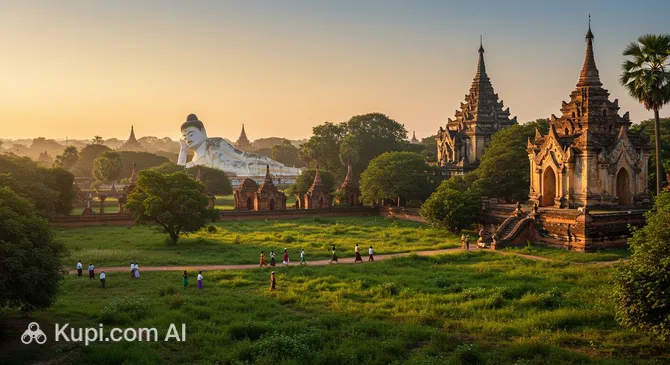
The ancient city of Bago, formerly known as Pegu, is one of the most significant historical centers in Myanmar. Located about 80 kilometers northeast of Yangon, it once served as the majestic capital of the Mon Kingdom. Today, it is the country's fourth-largest city by population, with about 284,000 residents. Despite its provincial status, Bago retains an atmosphere of former grandeur, attracting travelers with its magnificent Buddhist shrines.
Bago. Illustration.
Source: Kupi.com AI
The city was founded in 573, and its rich history of Bago is inextricably linked with the rise and fall of powerful dynasties. There is no metropolitan hustle here; life flows at a measured pace, and major events are centered around bustling markets, the railway station, and the main temple complexes. For a tourist, Bago reveals itself as a city of golden stupas and giant statues nestled in the greenery of the tropical plains.
Visiting this place is an opportunity to catch a glimpse of authentic life in the Burmese province. Among the key attractions, the Shwemawdaw Pagoda stands out, surpassing the famous Shwedagon Stupa in Yangon in height. We invite you on a journey through the ancient streets of Bago, where every stone holds legends of the kings and monks of the past.
Weather Overview
Bago is located in a tropical monsoon climate zone, characterized by high temperatures and significant humidity throughout the year. Annual averages fluctuate between 27–32°C. The hottest month is April, when the thermometer can reach 38°C, making walks in the open sun quite exhausting.
The annual cycle is clearly divided into two seasons. The rainy season lasts from June to October, bringing heavy showers—the peak of precipitation occurs in July and August (over 500 mm per month). The dry season, covering the period from November to May, is considered the most favorable for visiting. If you are planning a trip, be sure to check the current city climate to choose the right time.
Expect hot weather with occasional tropical thunderstorms in summer and warm, dry winters. It is worth considering that due to the flat terrain and dense development in the center of Bago, it can be dusty in the dry season, while humidity during the monsoon remains consistently high. It is recommended to always carry a supply of water and light, closed clothing for protection from the sun.
Average monthly temperature
Average monthly precipitation
Interesting Facts
Bago was founded in 573 by two Mon princes and has served as the capital of great Burmese empires several times throughout its history.
The Shwemawdaw Pagoda located here is the tallest in Myanmar: it stands 114 meters high, which is 19 meters taller than the famous Shwedagon in Yangon.
The first written mention of the city under the name Pegu in historical chronicles dates back to the year 850.
The city ranks fourth in population in the country and is an important administrative center of the region of the same name.
Due to its proximity to the former capital (only 80 km away), Bago is considered one of the most popular destinations for day trips from Yangon.
How to Get There
The transport accessibility of Bago makes it a convenient stop during a trip through Myanmar. The city is located at the intersection of key routes connecting the south of the country with the northern regions. Most tourists arrive here from Yangon using the railway or bus services. Detailed information about the routes is available in the section on how to get to the city.
Bago does not have its own airport, so the nearest air hub is Yangon International Airport. From there, you can reach the center of Bago by taxi in about an hour; however, possible traffic jams when leaving the capital should be taken into account, as they can increase travel time.
The Bago railway station is the heart of the city's transport system. Trains from Yangon run regularly, and the journey takes 2 to 3 hours. This is one of the most scenic and budget-friendly ways to travel, allowing you to see life in the Burmese heartland right from the carriage window. Trains heading to Mandalay and the east of the country also pass through the city.
Station
Passenger traffic
Distance
Yangon Central railway station
10
68 km
Yangon Central railway station
10
68 km
Mawlamyine Railway Station
5
156 km
Naypyitaw Central Railway Station
3
281 km
For those who prefer buses, the highway trip from Yangon takes about 1.5–2 hours. Buses depart frequently, but during the rainy season or at peak hours, travel time can be unpredictable. Taxis remain the most comfortable but also the most expensive option for individual travelers.
Main Attractions
The main magnet for travelers in Bago remains the Shwemawdaw Pagoda. This 114-meter-high golden stupa is considered the tallest in the country, soaring above the horizon and housing sacred Buddha relics within its depths. A visit here allows you to feel the scale of religious reverence that has shaped the city's appearance for centuries.
An equally impressive site is the Kyaik Pun Pagoda. It is famous for its four giant statues of sitting Buddhas, facing the four cardinal points. These majestic figures, about 30 meters high, were built in the 7th century and restored in the 15th century by King Dhammazedi, becoming a symbol of the resilience of Mon culture.
It is also worth paying attention to the Shwethalyaung Buddha statue—one of the world's largest reclining figures of the Enlightened One, reaching 55 meters in length. Bago is a city where ancient shrines are organically woven into daily life, and a walk between them allows you to touch the living heritage of the past.
Local Cuisine
The gastronomic character of Bago is classic Burmese cuisine with a strong Mon influence. The basis of the diet consists of rice and noodle dishes, heavily seasoned with local spices and herbs. Be sure to try mohinga—the famous fish noodle soup, which is served everywhere here, especially for breakfast. Thanks to its proximity to the river delta, you can always find fresh seafood and vegetables in the city.
The food culture in Bago is closely linked to markets and street stalls. In the evening, the streets are filled with the aromas of fried snacks such as samosas and crispy flatbreads. Locals often spend time in traditional tea shops, where a variety of pastries are served with sweet tea with condensed milk. For a more substantial lunch in comfortable conditions, you can go to the Kyaw Swa restaurant, which is famous for its hospitality.
If you are looking for a place with a good reputation and a wide selection of dishes, check out the Royal Taste restaurant. Here you can get acquainted with a variety of Burmese curries served with numerous small side dishes. Freshly squeezed tropical fruit juices and local coffee are popular drinks. Alcohol is limited, mainly in establishments for tourists, as the city maintains a conservative way of life.
Travel Tips
Preparing for your trip to Bago will help you make your journey as comfortable and rewarding as possible. These practical tips are based on the characteristics of the local way of life and climate.
Clothing and Dress Code: Choose light clothing made from natural fabrics, as the city is hot and humid. Remember that when visiting pagodas, your shoulders and knees must be covered. Make sure to bring shoes that are easy to remove—you must enter all temples barefoot.
City Transport: For moving between temples, it is most convenient to hire a motor rickshaw or a cycle rickshaw for the entire day. This will save you from having to look for transport under the scorching sun.
Finance: In Bago, almost everywhere accepts only cash Kyats. Exchange money in advance in Yangon or use ATMs in the city center. International payment system cards are unstable.
Health: Drink only bottled water and avoid ice in street cafes. Due to high dust levels in the dry season, a protective mask may be useful if you are traveling in an open tuk-tuk.
Communication: The main language is Burmese. In hotels and tourist spots, basic English is understood, but a few phrases in the local language ("Mingalaba" — hello) will win the favor of the residents.
Temple Etiquette: Never turn your back to a Buddha statue for a selfie and do not point your feet at shrines. This is considered a serious insult to the feelings of believers.
What to Avoid: You should not plan active walks in the middle of the day when the temperature reaches its peak. Also, avoid walking alone on the outskirts after dark.
Planning Features:Bago is ideal for a one-day visit. Most tourists manage to see the main pagodas in 5-6 hours and return to Yangon by evening.
May your acquaintance with ancient Pegu leave only the warmest memories and open new facets of amazing Myanmar for you!
Entertainment & Nightlife
Bago is primarily a spiritual and historical center, so classic nightlife in the form of noisy clubs or discos is practically non-existent here. The city lives at a quiet provincial pace, and most establishments close quite early. In the evenings, locals prefer to spend time in traditional tea houses, where they can leisurely discuss the news over a cup of fragrant tea.
Nevertheless, for those who want to spend a pleasant evening, establishments such as the Kyaw Swa restaurant or Royal Taste restaurant are open. These places are popular not only for their cuisine but also for the opportunity to relax in a comfortable setting after a busy day of visiting temples. Main evening activity is concentrated around the markets and central streets, where the lights of street food stalls are lit.
Daytime entertainment in the city is inextricably linked to cultural heritage. Be sure to visit the Kanbawzathadi Golden Palace—a reconstruction of a magnificent 16th-century royal complex. If you want a more dynamic holiday, residents often travel to Yangon, where the choice of entertainment centers and bars is much wider, but in Bago itself, the emphasis is always on peace and tranquility by the great pagodas, such as the Shwemawdaw Pagoda.
Parks & Museums
Although Bago does not boast extensive green parks in the European sense, the city offers unique spaces for walking and cultural enrichment. The main recreation areas here are concentrated around majestic religious complexes, where well-kept grounds with gardens create an atmosphere of peace away from the dusty streets.
The main site serving as a classic museum is the Kanbawzathadi Golden Palace. This is a grand reconstruction of the 16th-century palace of King Bayinnaung. Inside, you will find exhibitions dedicated to the history of Mon and Burmese rulers, and see surviving original teak columns and artifacts found during excavations. This place is a must-visit for those who want to imagine the scale of Pegu's former power.
In the absence of large city parks, residents and visitors often choose the Bago River embankment for leisurely evening walks. Cozy green corners can also be found on the territory of shrines such as the Shwemawdaw Pagoda. Although systemic landscaping in the city is insufficient, it is these spiritual centers that serve as the main points of attraction for those seeking peace and inspiration among ancient architecture.
Getting Around
The transport system of Bago is simple and oriented towards the needs of the local population and tourists moving between the main shrines. The main types of transport within the city are motorized rickshaws (tuk-tuks) and cycle rickshaws. This is the most convenient way to get from the railway station to the pagodas, as the distance to the center is about 3 kilometers.
Inner-city bus services are poorly developed, so tourists more often rely on taxis or the services of private drivers. There is usually no fixed fare for motorized rickshaws, so it is worth agreeing on a price in advance. Traveling around the city is inexpensive, but during peak hours near markets and the station, movement can be slow due to the large concentration of transport.
For those who prefer complete freedom of movement, a good option would be to rent a bicycle or walk. The main attractions, such as the Kanbawzathadi Golden Palace, are located relatively compactly, and a walk along the main streets will allow you to get a better look at the daily life of the townspeople. Infrastructure in the city is basic, so you should take care of cash in advance to pay for trips.
Accommodation
The hotel infrastructure in Bago is primarily geared towards transit travelers and pilgrims who come to see the famous shrines. Budget guesthouses and mid-range hotels predominate here. Most accommodation options are concentrated in the city center and near the railway station, which is convenient for those planning a short stop.
The level of service in local hotels is usually basic, but the hospitality of the staff compensates for the lack of luxuries. For those seeking maximum convenience, consider hotels located in the immediate vicinity of sites such as the Kanbawzathadi Golden Palace or the great Shwemawdaw Pagoda. Staying in this area will allow you to enjoy views of the golden stupas right from your windows.
The price range in Bago remains very affordable compared to Yangon. Apartments for long-term rent are rare, as the city is not a major expat hub. We recommend booking accommodation in advance, especially during Buddhist holidays and peak tourist season (November to February), when the flow of pilgrims increases significantly.
Nearby Cities
Bago is an excellent starting point for exploring the southern part of the country and the small settlements in the river delta. Thanks to its location at a crossroads, it is easy to reach interesting locations from here, each with its own unique flavor.
Just 62 kilometers away is Yangon—the largest metropolis in Myanmar. A trip there by train or bus will be a great addition to your itinerary, allowing you to compare the tranquility of the province with the energy of the former capital. Also of interest are small towns such as Thanatpin or Kawa, where you can see the life of traditional Burmese communities off the beaten tourist path.
Traveling around Bago will allow you to gain a deeper understanding of the region's diversity. Don't miss the chance to visit places like Thongwa or Thingangyun to enjoy the picturesque landscapes of farmland and the hospitality of the local people.
Shopping & Souvenirs
Shopping in Bago is predominantly traditional and local. Here you will not find huge modern shopping centers, but you can immerse yourself in the atmosphere of colorful oriental markets. Trade is concentrated in the central part of the city and around the station, where life is in full swing from early morning. The main goods are fresh fruits, spices, everyday clothing, and products of local craftsmen.
If you are looking for souvenirs, it is best to head to the main attractions. Numerous stalls operate at the foot of sites such as the Shwemawdaw Pagoda and the Kyaik Pun Pagoda. Here you can purchase Buddhist amulets, elegant Buddha figurines, teak wood products, and traditional Burmese textiles. This is a great opportunity to bring home a piece of the region's spiritual heritage.
Payment in most places is made in cash in local currency (Kyats); cards are accepted very rarely and only in large hotels or restaurants like Royal Taste. Shops usually operate from dawn to sunset, and markets close quite early. Plan your shopping for the first half of the day to find the best selection and feel the true drive of local commerce.