Support

Keetmanshoop

About

Keetmanshoop, often referred to as the "capital of the south," is the administrative center of the ǁKaras Region and a vital transit hub for travelers exploring the southern part of Namibia. Despite its relatively small population of approximately 16,800 people, the town plays a key role in the region's life and possesses a distinct charm typical of settlements surrounded by picturesque semi-desert landscapes.

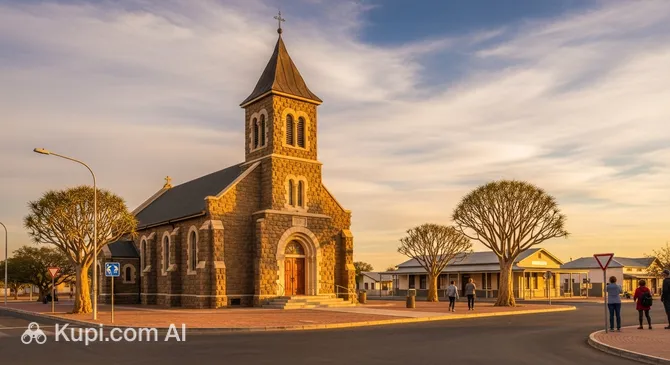
The architectural character of the town center retains clear traces of European influence. One of the most recognizable landmarks is the old Rhenish Missionary Church, built in a Neo-Gothic style, which now functions as a museum. The fascinating history of Keetmanshoop is closely intertwined with the colonial era and the development of the railway, giving its streets a unique historical atmosphere.

Keetmanshoop. Illustration.
Source: Kupi.com AI

However, the main natural treasures lie on the outskirts of the town. Just a few kilometers away is the famous Quiver Tree Forest, a national monument featuring hundreds of ancient aloes that create a surreal scene against the sunset. Nearby is the "Giant's Playground"—a labyrinth of massive dolerite boulders forming a fantastic, almost alien landscape.

Keetmanshoop is an ideal place for those wanting to pause during a long journey and enjoy the silence and majesty of African nature. The hospitality of the locals and proximity to unique geological wonders make this town a must-visit point when traveling to the south of the country.

Weather Overview

The climate of this region can be described as desert and arid, with noticeable temperature fluctuations throughout the year. The current weather in Keetmanshoop largely determines the character of your trip: from sweltering days at the height of summer to cool and clear winter evenings.

The summer season, which lasts here from December to February, is characterized by high temperatures. Average figures stay around 27–28°C, but during the day the air often heats up to 35–36°C. This time of year is also characterized by a small chance of precipitation: although rain is rare here, there may be 4 to 6 wet days in January and February.

Winter (June–August), by contrast, brings dryness and coolness. During the day, the temperature remains comfortable for excursions, reaching 22–24°C, but nights become truly cold, with the thermometer dropping to 7–8°C. Expect a hot summer with occasional precipitation and sunny, dry winters with a brisk morning freshness.

Average monthly temperature

Average monthly precipitation

Interesting Facts

Beyond its main attractions, Keetmanshoop holds many fascinating secrets that reveal the region's history from an unexpected side. Here are a few facts that might surprise even experienced travelers:

  • The Man Who Wasn't There. The town is named after German industrialist Johann Keetman, who donated funds to establish the local mission. The irony of fate is that the benefactor himself never visited Namibia and never saw the town that bears his name.

  • The "Dirty" Name. Before the arrival of Europeans and the official renaming, the area was known as "Swartmodder" or "Nu-goaes" in the Nama language. This translates to "black mud" and refers to a natural spring that was the only salvation in this arid terrain.

  • Taste of the Desert. Just a few dozen kilometers from the town, near the Naute Dam, is a unique production facility. Here, amidst harsh landscapes, dates are successfully grown for export, and award-winning gin and date liqueur are produced using crystal-clear water from underground sources.

  • Architectural Heritage. The Imperial Post Office building, constructed in 1910, is one of the oldest in the region. It was designed by the famous architect Willi Sander, author of the well-known castles in the country's capital, which is why the characteristic early 20th-century colonial style is easily recognizable in the post office's appearance.

How to Get There

Keetmanshoop is a key transport hub in the southern part of the country, located at the intersection of important highways. Thanks to its strategic position, the town serves as a popular stop for tourists heading to the Fish River Canyon or South Africa. You can explore all ways to get to the town in more detail to choose the most suitable option for your itinerary.

Since Keetmanshoop does not have a major international airport, most travelers from abroad first fly into the capital, Windhoek. Hosea Kutako International Airport receives regular flights from Europe and neighboring African countries. The distance from Windhoek to Keetmanshoop is about 500 kilometers. The most convenient way to cover this distance is by renting a car and driving along the high-quality paved B1 highway; the journey takes about 4–5 hours and allows you to enjoy the changing landscapes.

In addition to private transport, comfortable intercity buses run between cities, connecting Namibia with South Africa. As for rail connections, although a railway passes through Keetmanshoop, regular passenger services are often limited or unpredictable in schedule. Trains move slowly and are more frequently used for freight or as part of special tourist routes, so for the sake of time, it is recommended to prioritize a car or bus.

Main Attractions

Although this town is often seen as a transit point, the main attractions of Keetmanshoop deserve separate attention and can keep a curious tourist busy for a couple of days. The region is famous for its geological wonders and historical monuments that allow you to touch the ancient history of Namibia.

Quiver Tree Forest. This is perhaps the most famous landmark of the region, located about 14 kilometers from the town. It is home to around 250 specimens of Aloe dichotoma—plants that the San people used to make quivers for their arrows. This "forest" looks particularly impressive at sunrise or sunset when the silhouettes of the quirky plants with golden bark contrast against the bright sky. This location is a paradise for photographers and astrophotography enthusiasts due to minimal light pollution.

Giant's Playground. Very close to the forest is an amazing geological phenomenon. Enormous dolerite rock blocks are piled on top of each other as if a giant had scattered his toy blocks. The stones, which are millions of years old, form bizarre labyrinths and sculptures. Tourists are invited to follow marked trails to explore these stone gardens and enjoy the silence of the desert landscape.

Keetmanshoop Museum. For those interested in history, the town center is worth a visit. The museum is located in the old Rhenish Missionary Church building, constructed in 1895, which is an architectural monument in its own right. The exhibition tells the story of the region's colonial past, the culture of the Nama people, and the history of the town's founding. Here you can see antique household items, tools, and photographs that immerse you in the atmosphere of past centuries.

Mesosaurus Fossil Site. Approximately 40 kilometers from the town is a unique paleontological site. Here, among the harsh rocks, you can see well-preserved fossils of Mesosaurs—small aquatic reptiles that lived about 260 million years ago. A visit usually includes a guided tour where an expert will point out the imprints of ancient creatures directly in the stone and talk about the geological past of this territory.

Local Cuisine

The culinary scene in Keetmanshoop reflects the harsh but generous character of southern Namibia. You won't find trendy fine-dining restaurants here, but the town is famous for honest, hearty food and high-quality ingredients. The foundation of the local menu is undoubtedly meat. Since the ǁKaras Region is a center for sheep farming, tourists should definitely try the local lamb or mutton. Steaks, chops, and lamb stews are prepared excellently here, often over an open fire (a "braai"), which gives the dishes a unique aroma.

The strong German influence, which is visible not only in the architecture but also on the plates, cannot be ignored. In many of the town's establishments, you will be offered a classic schnitzel, eisbein (pork knuckle), or traditional German sausages. For dessert, apple strudel is often served, prepared here according to old recipes. Fans of the exotic should look out for game meat: oryx, kudu, or springbok steaks are common on the menus of local lodges and guest houses.

Local drinks deserve special attention, and Keetmanshoop has its own "ace up its sleeve." Thanks to the proximity to the Naute Dam and date plantations, unique alcohol is produced in the region. Travelers should sample the local gin and date liqueur, which are produced at a nearby distillery and have already won international awards. Among more familiar drinks, Namibian beer, brewed according to the German purity law, is widely available, as is the refreshing non-alcoholic "rock shandy"—a mix of lemonade, soda, and bitters, perfect for escaping the heat.

The dining culture in the town is quite relaxed and home-like. Locals and tourists most often eat at restaurants in hotels and guest houses, where the kitchen operates most consistently. Street food is not very developed, but in local supermarkets and butcher shops, you can always buy biltong—dried meat with spices. This is Namibia's main snack, ideal for a bite during long drives through the region's scenic roads.

Travel Tips

Traveling to Keetmanshoop is an immersion into the atmosphere of Southern Africa, where comfort borders on the wild. To ensure your trip goes smoothly and leaves only pleasant memories, we have prepared a list of important recommendations tailored to the local specifics of this transit town.

  1. Dress in layers. The climate here is desert-like: it can be scorching sun during the day, while at night the temperature drops sharply, especially in winter (June–August). Be sure to bring a fleece jacket or a windbreaker. For walks in the rocky "Giant's Playground," you will need comfortable closed shoes with a hard sole—flip-flops or sandals are not suitable here due to sharp rocks and thorns.

  2. Freedom of movement. Public transport in the traditional sense (metro, city buses) is absent. To see the sights in the surrounding area, you will definitely need a car, preferably a crossover or SUV, although main sites can be reached by sedan. Taxis exist, but they function more like private hires within the town and are hard to catch on the street—it's better to ask the hotel reception to call one.

  3. Cash and cards. While large supermarkets (SPAR, Shoprite) and hotels accept Visa and Mastercard, small shops, souvenir kiosks, or remote gas stations will require cash. The official currency is the Namibian dollar, but the South African rand is also accepted everywhere at a 1:1 rate. ATMs are available in the town center and at large gas stations.

  4. Health and protection. The air in the ǁKaras Region is very dry. Always have a supply of drinking water and use sunscreen with high SPF, even if it's cloudy. Pharmacies exist in town, but they close quite early (usually 17:00–18:00) and may not be open on Sundays, so it's better to assemble a basic first-aid kit in advance.

  5. Language matters. The official language is English, and it is understood in the service sector. However, historically, German and Afrikaans have strong positions here. Locals will appreciate it if you learn a few greeting words, but English will suffice for everyday issues. For internet access, it's best to buy a local SIM card (MTC) immediately upon arrival in Namibia.

  6. Politeness and rhythm of life. In communication culture, it is customary to say hello and ask "how are you" before getting to the point. The local rhythm of life is unhurried, so service in restaurants might be slower than in megacities—approach this with understanding and patience; it's part of the local character.

  7. What to avoid: night driving. It is categorically not recommended to drive a car outside the town after sunset. At this time, wild animals (kudu, warthogs, oryx) come out to the warm roads, creating a huge risk of serious accidents. Plan your route to arrive at your hotel before dark.

  8. "Sunday Silence." Keep in mind that Keetmanshoop is a town with traditional ways. After Saturday lunchtime and all day Sunday, life practically stops: most shops, including groceries, and many services are closed. Plan your purchase of water, food, and fuel in advance, don't leave it for the weekend.

Keetmanshoop is a hospitable and quiet town that will be a great base for your adventures in the south. By following these simple rules, you will avoid minor inconveniences and can focus on the main thing—the incredible landscapes and unique atmosphere of this region.

Entertainment & Nightlife

Nightlife in Keetmanshoop has its own distinct, intimate character, dictated by the town's size and history. You won't find noisy metropolitan nightclubs with neon signs or red-light districts here. Evening leisure in the "capital of the south" is primarily about cozy gatherings in bars, a delicious dinner in good company, and enjoying the desert's silence under an incredibly starry sky.

Social life in the evenings traditionally centers around the restaurants and bars of major guest houses and hotels. This is where tourists and locals (often farmers from the surrounding areas) gather to discuss the news, enjoy a cold beer, and have a hearty dinner. The atmosphere in such establishments is very democratic and relaxed, with no dress code—casual or travel wear is perfectly appropriate.

If you are looking for specific places to spend your evening, consider the following establishments:

Schützenhaus Guesthouse. This is a place with history, founded as the oldest German club in Southern Africa in the early 20th century. The bar here is famous for its authentic, old-school atmosphere. You can try excellent draught beer and soak in the character that recalls the town's German roots. It is one of the most popular spots for evening socializing.

Canyon Hotel Bar. Located in the heart of the town, this hotel is a local landmark. Its bar is a classic meeting point for travelers. They serve cocktails, local drinks, and light snacks. The setting is slightly more formal than in guest houses but still very friendly.

Special mention should be made of an alternative type of "nightlife" for which many travel to Namibia. We are talking about night trips to the Quiver Tree Forest. Many tourists head there after sunset not for dancing, but for astrophotography. In the absence of light pollution, the Milky Way is so clearly visible here that the sight replaces any light show in a nightclub.

Practical Tips and Safety:

Town life winds down quite early. Most restaurant kitchens close by 9:00 PM or 10:00 PM, while bars may stay open a bit longer, until midnight, especially on Fridays. Prices for alcohol and food are quite moderate; the average check for dinner with drinks will be significantly lower than in Europe.

In terms of safety, Keetmanshoop is a quiet town, but tourists are advised not to walk on dark streets outside the central part of town or hotel grounds after dark. There is no public transport or ride-sharing services like Uber here. If you have been drinking and need to get back to your lodge, arrange a transfer at your hotel reception in advance or ask the bartender to call a trusted local driver.

During the day, the town offers calmer entertainment. Between desert trips, it's worth visiting the town museum, located in the historic church, to better understand the region's culture, or simply stroll through the center, admiring the colonial architecture made of local stone.

Parks & Museums

The cultural and natural heritage of the ǁKaras Region surprisingly combines man-made monuments of the colonial era with majestic landscapes created by nature millions of years ago. In the town of Keetmanshoop and its surroundings, the concept of a "museum" often extends beyond buildings, and "parks" are not typical alleys with benches but protected zones with unique flora characteristic of Namibia.

Naute Recreation Resort. If you are looking for an oasis in the semi-desert, head to the Naute Dam, located about 50 km from the town. This is the third-largest dam in the country, surrounded by a conservation area. For tourists, it is an ideal spot for a picnic by the water and birdwatching: pelicans, flamingos, and many waterfowl species live here. The contrast between the blue water surface and the surrounding rugged rocks creates a peaceful atmosphere, rare for this arid land.

Quiver Tree Forest National Monument. Although this place is often mentioned as the main attraction, it functions specifically as a nature park with established hiking trails. The territory is state-protected, which helps preserve the unique ecosystem of Aloe dichotoma. A walk here feels like a visit to a Jurassic period botanical garden, where you can see ancient plants and encounter Cape hyraxes living in the rock crevices.

Keetmanshoop Museum. The main keeper of the town's history is located in the Rhenish Missionary Church building, built in 1895. It is an architectural gem of the town: the church is built from local stone and represents a unique blend of Neo-Gothic and African practicality. Inside, a rich exhibition is gathered, telling about the daily life of the first settlers, the culture of the Nama people, and the development of agriculture in the region. You can see old wagons, household utensils, and historical photographs here.

Open-Air Paleontological Museum. The Mesosaurus Fossil Site can confidently be categorized as a natural museum. The owners of the farm where the fossils are located conduct fascinating tours, showing perfectly preserved skeletons of ancient reptiles in the stone. This is not a boring lecture behind a glass display but a chance to touch the geological history of the Earth in its natural environment.

The Historic Center as an Architectural Museum. Strolling through the central streets, take note of the Imperial Post Office (Kaiserliches Postamt) building. Built in 1910, it is currently used by the tourist information center but is an exhibit in its own right. Its stonework, high tower, and strict lines make it a fine example of early 20th-century German colonial architecture, available for viewing at any time.

Insider tip: If you are a history enthusiast, try to find the old Jewish cemetery of Keetmanshoop. It is a quiet and atmospheric place rarely visited by ordinary tourists, but the inscriptions on the headstones can tell a lot about the multinational past of this trading hub and the lives of the people who built the town in the middle of the desert.

Getting Around

The public transport system in Keetmanshoop differs significantly from the usual infrastructure of large metropolises. Due to the town's compact size and population, there are no metros, trams, trolleybuses, or even regular urban bus routes. Movement around the town is simple and conservative, which, however, spares tourists the need to study complex transit maps or fare zones.

The primary and practically only form of public transport is taxis. Visually, these are ordinary passenger cars (sedans) that can be identified by special stickers or license plates. A peculiarity of local taxis is that they often operate on a "shared taxi" principle. The driver may pick up other passengers along the way if they are heading in your direction. This makes the trip cheaper but may slightly increase travel time.

The payment system is as simple as possible: only cash is accepted. There are no transit cards, validators, or mobile payment apps here. The cost of a trip within the town limits is usually fixed and very affordable. It is recommended to always carry small bills and coins, as drivers often do not have change for large banknotes. It is better to agree on the price (or clarify the standard fare) before getting into the car.

Practical tips for tourists:

Taxis can be hailed by raising a hand on the street or found at ranks near large supermarkets and gas stations. It is important to remember that ride-hailing apps (like Uber) do not work here. If you need to ensure a departure at a specific time (for example, early morning), it is most reliable to ask your hotel or guest house receptionist to call a trusted driver by phone.

As an alternative, many travelers choose walking. The historic town center is compact, and the main architectural landmarks, shops, and cafes are within walking distance of each other. This is a safe and pleasant way to see the town during daylight hours.

However, considering that the main tourist sites (Quiver Tree Forest, Giant's Playground) are located outside the town, the most popular option remains car rental. There is no car-sharing in the town, but there are offices of rental agencies. Having your own car provides complete freedom of movement and eliminates dependence on the schedule of local taxi drivers, who rarely drive beyond the town limits.

Accommodation

The choice of accommodation in Keetmanshoop fully matches its status as the main transit hub of the south. You won't find massive chain resorts or ultra-luxury five-star complexes here; however, the town offers an excellent assortment of functional and cozy accommodation. The core of the room stock consists of small private B&Bs, guest houses with a homey atmosphere, campsites for nature lovers, and several classic middle-class hotels.

In terms of location, accommodation options can be roughly divided into two categories. The first is the town center and the vicinity of the B1 highway. Staying here is convenient for those planning an early departure or who want to be closer to shops, gas stations, and the few restaurants in the area. The second category is lodges and farms on the outskirts, located closer to the Quiver Tree Forest. This option is perfect for those seeking peace, wishing to admire the starry sky, and wanting to feel a connection with the desert without sacrificing comfort.

The pricing policy in the region remains quite democratic compared to the capital or popular tourist zones like Etosha. Most offers fall into the budget and mid-range price segments. For a reasonable price, you will get a clean room with air conditioning (which is critical in summer), secure parking, and a hearty breakfast. Many guest houses are managed by local families, ensuring a warm welcome and a personal touch.

Booking Tip: Although Keetmanshoop is often seen as a place for an overnight stay "en route," demand for quality accommodation rises sharply during the high tourist season (July to October). Travelers heading to Namibia during this period are strongly advised to book rooms in advance. This can be done through popular international online platforms, though many small guest houses prefer direct booking through their websites or via email.

Nearby Cities

For those who want to explore the surrounding area, Keetmanshoop serves as an excellent starting point for day trips to several interesting nearby locations:

The undisputed leader for a day trip is the majestic Fish River Canyon, located about two hours' drive to the south. It is the second-largest canyon in the world and one of the main natural attractions of Namibia. Tourists can visit the main viewpoint at Hobas, which offers a breathtaking view of the river bends and giant rocky cliffs, and stop by the Ai-Ais Hot Springs on the way back.

History buffs should head west to the small settlement of Bethanie. It is one of the oldest settlements in the country, founded in the early 19th century. Here you will find the famous Schmelenhaus, built in 1814, which is considered the oldest stone building in Namibia. The quiet atmosphere and historical architecture make Bethanie a wonderful place for a short cultural visit.

CityPopulationDistance
Bethanie10 36398 km
Ai Ais162 km
Karasburg6 054171 km
Rosh Pinah3 000205 km
Mariental12 478217 km

These nearby destinations provide an insight into the diverse culture and landscapes of the region.

Shopping & Souvenirs

Shopping in Keetmanshoop is more practical than recreational. As an important transit hub in the south of Namibia, the town is oriented toward providing travelers with everything they need before a long journey. You won't find high-fashion boutiques or huge shopping and entertainment complexes here, but you will be able to restock provisions, buy quality camping equipment, and purchase unique local souvenirs that are hard to find in other regions.

Main shopping areas are concentrated in the town center, along the main streets that cross the settlement. Here you will find pharmacies, banks, clothing stores, and hardware shops. A walk through the central block will allow you to visit most necessary points in one go. The atmosphere here is quiet and provincial, without the bustle typical of capital districts.

Shopping centers in Keetmanshoop are presented in the format of small complexes (strip malls), anchored by large chain supermarkets. The most popular spots for shopping are the centers housing SPAR and Shoprite. Here you can find a wide range of products, fresh baked goods, drinks, firewood for barbecues, and basic household goods. These are the most reliable points for restocking before a trip to the Fish River Canyon.

While there is no large centralized market in town, the role of trading platforms is filled by small souvenir shops and street vendors. Local artisans can often be found near the tourist information center (in the old post office building) or at the town exits. They sell handmade items by the Nama people, which are distinguished by their authenticity and simplicity.

Regarding souvenirs, there are several specific things worth bringing back from Keetmanshoop. Firstly, products made from karakul (lambskin), as the region is a sheep-farming center; you can find quality shoes or accessories here. Secondly, pay attention to gastronomic souvenirs: the local biltong (dried meat) is considered some of the best. A unique gift would be a bottle of date liqueur or gin from the Naute Kristall producer, whose distillery is located nearby at the Naute Dam.

Opening hours of shops are quite conservative. On weekdays, trade takes place from 08:00 to 17:00 or 18:00. On Saturdays, most shops close as early as 13:00, and Sunday is traditionally a day off, with only duty supermarkets and gas stations operating. Plan your shopping in advance so as not to be left without necessities over the weekend.

As for payment, large supermarkets, hotels, and branded gas stations accept credit cards (Visa, Mastercard) without issues. However, for purchases in small souvenir kiosks, paying for small services, or at markets, you will definitely need cash (Namibian dollars or South African rands). There are ATMs in the town, usually located near shopping centers.

The Tax Free system in Namibia applies to foreign tourists. When purchasing goods for an amount exceeding the set minimum (usually 250 NAD) on a single receipt, you can claim a VAT refund (15%) upon leaving the country. Be sure to ask the shop for a special Tax Invoice and keep the goods sealed until you pass through customs at the airport or border post.
Nearby cities

Reached the end of the page?

That means the route is fully explored