Support

Oranjemund

About

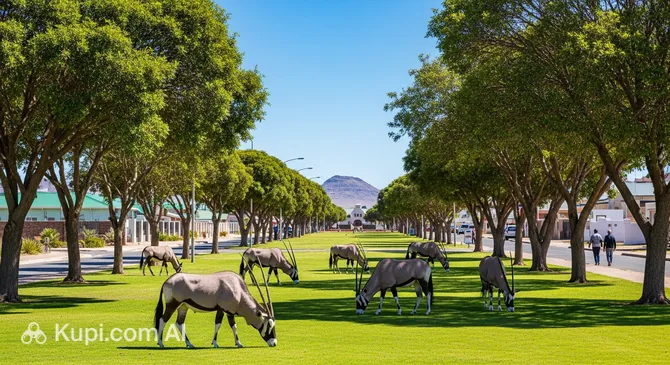
Nestled in the far southwestern corner of Namibia, Oranjemund is a town quite unlike any other. Situated on the northern bank of the Orange River mouth, which forms the natural border with South Africa, this unique settlement appears as a lush, green oasis amidst the arid desert landscape of the //Karas Region.

For decades, the town was a closed community, accessible only to those employed in the diamond mining industry. Exploring the history of Oranjemund reveals its fascinating transformation from a strictly restricted private town established in 1936 to a welcoming destination that opened its gates to the general public in 2017.

Oranjemund. Source: Kupi.Binoculars

One of the most surreal and charming features of the city is the presence of wild gemsbok (oryx) wandering freely through the streets. It is not uncommon to see these majestic desert antelopes grazing on well-maintained lawns or resting in local parks, creating a truly distinctive atmosphere. With a population of approximately 3,900 residents, the town maintains a quiet, friendly, and safe environment for visitors.

Oranjemund serves as an excellent gateway for exploring the mysterious Tsau //Khaeb National Park (formerly the Sperrgebiet) and offers spectacular birdwatching opportunities at the Orange River mouth, a designated Ramsar site. Whether you are intrigued by its diamond-mining heritage or simply want to experience the novelty of wildlife in an urban setting, this hidden jewel offers a memorable stop on your journey.

Weather Overview

Oranjemund benefits from a mild desert climate that remains relatively temperate throughout the year, largely due to its proximity to the Atlantic Ocean. Unlike inland areas that experience scorching heat, this coastal town enjoys comfortable conditions with average temperatures rarely exceeding 21.5°C, even during the warmest months of January and February.

The winter season is cool but manageable, with August typically being the coldest month, seeing average temperatures around 13.9°C and lows near 10°C. Rainfall is exceptionally scarce in this region, with most months recording negligible precipitation, although a few wet days may occur between January and June.

For a more detailed forecast to help you pack, you can check the current weather in Oranjemund. Generally, you can expect mild, pleasant temperatures year-round with very little rainfall to disrupt your travel plans.

Interesting Facts

Beyond the main attractions, Oranjemund holds many fascinating secrets rooted in its exclusive past as a private diamond stronghold. This isolated community developed a unique culture and history that remained hidden from the outside world for nearly a century.

  • The 500-Year-Old Treasure: In 2008, diamond miners working near the town accidentally discovered the wreck of the Bom Jesus, a Portuguese trading ship that vanished in 1533. Laden with gold coins, copper ingots, and ivory, it is considered one of the most significant archaeological finds in sub-Saharan Africa, unearthed from a drained lagoon rather than the ocean floor.

  • A One-Way Ticket for Machines: For decades, strict anti-smuggling regulations meant that any vehicle or piece of heavy machinery that entered the high-security mining areas was never allowed to leave. This created massive "vehicle graveyards" in the desert, where trucks and excavators were permanently parked to ensure no diamonds could be smuggled out in their tires or engines.

  • A Town Without Keys: Because Oranjemund was a closed town accessible only by permit until 2017, it existed as a virtually crime-free bubble. For generations, residents famously left their front doors unlocked and keys in their car ignitions, a unique social habit that persisted for decades due to the strictly controlled environment.

How to Get There

Reaching this remote gem in the southwestern corner of Namibia requires a bit of planning, but the journey offers a unique introduction to the region's dramatic landscapes. For a comprehensive guide on routes, border crossings, and transport tips, you can read more about how to get to Oranjemund on our detailed page.

Most international travelers typically arrive first at Hosea Kutako International Airport (WDH) in Windhoek or Cape Town International Airport (CPT) in neighboring South Africa. From Windhoek, the most convenient option is to take a domestic flight to Oranjemund Airport (OMD). These flights usually depart from the smaller Eros Airport in the capital and take approximately one hour and 45 minutes, offering stunning aerial views of the Namib Desert.

If you prefer a road trip, Oranjemund is accessible via the scenic C13 road from Rosh Pinah, which winds along the banks of the Orange River. For those entering from South Africa, you can cross the border at Alexander Bay via the Ernest Oppenheimer Bridge. It is important to note that there are no passenger railway services to Oranjemund, so renting a car or arranging a shuttle transfer are the primary alternatives to flying.

Main Attractions

Oranjemund may be small, but its unique history and location offer several fascinating sites for visitors. As a town that was closed to the public for decades, its attractions are deeply rooted in its diamond-mining heritage and its pristine natural surroundings at the edge of the desert.

Jasper House Heritage Centre is the town's premier cultural landmark, housed in the original residence of the first mine manager. This museum offers a captivating journey through the history of Oranjemund and the Sperrgebiet, featuring displays on the diamond industry, local social history, and the region's natural wonders. It serves as the perfect starting point to understand the mysterious past of this once-forbidden community.

Nature enthusiasts should not miss the Orange River Mouth, a designated Ramsar wetland site of international importance. Located where the mighty Orange River meets the Atlantic Ocean, this estuary is a haven for birdwatchers, hosting huge flocks of flamingos, pelicans, and other waterfowl. The area offers a tranquil escape with scenic views of the dunes and the river, making it an ideal spot for photography and peaceful walks.

For a sporting experience like no other, the Oranjemund Golf Club offers a lush 18-hole course that stands in stark contrast to the surrounding desert. It is famous not just for its green fairways, but for the local wildlife that frequently roams the course. It is quite common to play a round while gemsbok (oryx) and springbok graze nearby, adding a uniquely Namibian twist to the game.

The town also serves as the southern gateway to the Tsau //Khaeb National Park (formerly the Sperrgebiet). While access to the park is strictly controlled to protect its biodiversity and diamond areas, guided tours can sometimes be arranged to explore this untouched wilderness. The park is renowned for its succulent flora and dramatic desert landscapes that have remained virtually undisturbed by human presence for a century.

Local Cuisine

The culinary scene in Oranjemund is a reflection of its unique history and location: hearty, unpretentious, and deeply influenced by both South African traditions and German heritage. While you will not find an abundance of high-end fine dining establishments in this small community, the food culture is warm and welcoming, centered around high-quality ingredients and social gatherings.

Meat is the undisputed cornerstone of the local diet. A visit to Oranjemund would be incomplete without experiencing a traditional braai (barbecue). This is more than just a meal; it is a social event where locals gather around open fires to grill boerewors (a spiced farmer's sausage) and succulent lamb chops. Given the town's desert surroundings, game meat is also a local specialty. You can expect to find flavorful steaks of oryx (gemsbok), springbok, or kudu on restaurant menus, offering a lean and organic alternative to beef that is characteristic of Namibian cuisine.

Thanks to its proximity to the Atlantic Ocean and the Orange River, seafood also finds its way onto local plates. When in season, West Coast rock lobster (crayfish) is a celebrated delicacy in the region, often prepared simply on the grill with garlic butter to highlight its natural sweetness. For a comforting, slow-cooked meal, look for potjiekos, a traditional stew containing meat and vegetables cooked for hours in a round, three-legged cast-iron pot over an open fire.

To quench your thirst, the local choice is almost invariably beer. Namibia is famous for its brewing tradition, adhering to the German Reinheitsgebot (purity law). Enjoying a cold Windhoek Lager or Tafel Lager is the standard way to cool down after a day in the desert sun. For a refreshing non-alcoholic option, try a Rock Shandy, a popular local mix of lemonade, soda water, and a few dashes of aromatic bitters, perfect for the arid climate.

Dining out in Oranjemund is a relaxed affair. Most eateries are casual, ranging from cozy coffee shops serving German-style pastries and brötchen (bread rolls) to pub-style restaurants where the portions are generous. The town's social clubs, such as the previously mentioned golf club, often serve as hubs for dining, offering good food in a friendly, community-focused atmosphere.

Travel Tips

Visiting Oranjemund is a unique experience, offering a blend of small-town hospitality, fascinating history, and surreal encounters with wildlife in an urban setting. To help you make the most of your trip to this hidden gem on the edge of the Namib Desert, here are some practical tips for a smooth and enjoyable journey.

  1. Clothing and Gear: While Oranjemund is in a desert region, its coastal location means the weather is often mild and can be misty or windy. Bring layers—a warm jacket or windbreaker is essential for cool mornings and evenings, even in summer. Comfortable, closed walking shoes are recommended, especially if you plan to explore the sandy river mouth or the desert fringes. Sun protection (hat, sunglasses, and sunscreen) is crucial due to the high UV index.

  2. Transportation: There is no public transport system like buses or trains within the town. The town center is compact and walkable, but to explore the surroundings, the river mouth, or the golf course, a rental car is highly recommended. Taxis are limited and not always readily available for tourists. If you are driving, keep a sharp lookout for wildlife, particularly the gemsbok that wander the streets.

  3. Finances: The local currency is the Namibian Dollar (NAD), which is pegged 1:1 with the South African Rand (ZAR); both currencies are accepted freely. Major credit and debit cards (Visa, Mastercard) are widely accepted in supermarkets, restaurants, and hotels. However, it is wise to carry some cash for smaller shops or craft markets. ATMs are available in the town center. Tipping around 10% at restaurants is customary for good service.

  4. Health and Safety: Oranjemund is considered one of the safest towns in Namibia, with very low crime rates. However, standard precautions regarding valuables should still be taken. Medical facilities include a private hospital and state clinic, but for serious emergencies, evacuation to Windhoek or Cape Town might be necessary. Pharmacies are available but check their opening hours, as they are not open 24/7. Tap water is generally safe to drink, but bottled water is readily available if you prefer.

  5. Communication: English is the official language and is widely understood, making communication easy for most travelers. However, Afrikaans is the most commonly spoken language among locals in this region; learning a friendly "Goeie more" (Good morning) will be appreciated. Mobile coverage (MTC) is good within the town, and you can buy a SIM card at local supermarkets. Wi-Fi is standard in most guesthouses and hotels.

  6. Local Etiquette: The community is close-knit and friendly. It is polite to greet people when entering a shop or passing them on the street. Life here moves at a relaxed pace, so patience is a virtue—service might be slower than in big cities, but it is usually delivered with a smile. Respect the environment; littering is frowned upon in this pristine setting.

  7. What to Avoid: Do not feed or approach the wild gemsbok (oryx) in town. While they may seem tame and graze on lawns, they are powerful wild animals with sharp horns and can be dangerous if startled or provoked. Also, strictly avoid entering any fenced-off mining areas or the restricted zones of the Tsau //Khaeb National Park without a valid permit and guide, as security is tight.

  8. Additional Tip: Be mindful of opening hours. Oranjemund retains a traditional rhythm, and many shops may close for a lunch break between 1:00 PM and 2:00 PM, and on Saturday afternoons and Sundays. Plan your grocery shopping and errands accordingly to avoid being caught out.

By keeping these simple tips in mind, you will be well-prepared to relax and immerse yourself in the tranquil atmosphere of Oranjemund. Whether you are photographing the resident oryx or enjoying the cool Atlantic breeze, this town promises a travel experience unlike any other.

Entertainment & Nightlife

Nightlife in Oranjemund is a reflection of its close-knit community spirit: relaxed, welcoming, and centered around socializing rather than high-energy partying. You will not find sprawling nightclub districts or neon-lit strips here. Instead, the evening entertainment revolves around cozy local pubs, restaurant bars, and social clubs where residents and visitors gather to unwind after a day in the desert.

The atmosphere is distinctly casual and unpretentious. Most venues operate as hybrids, serving hearty meals in the early evening before transitioning into laid-back spots for drinks and conversation. Op My Stoep is one of the most popular local hangouts. Situated at a lodge, its bar and restaurant area often buzzes with activity, offering a friendly environment where you can enjoy a cold beer, watch sports, or chat with locals about life in this unique corner of Namibia.

Another key fixture in the town's social scene is the Oranjemund Golf Club. While famous for its course, the clubhouse bar is a central meeting point for the community. It is an excellent place to experience the local culture, with reasonably priced drinks and a terrace that offers a peaceful setting as the sun goes down. For a quiet dinner that might extend into evening drinks, The Kitchen is another well-regarded spot, known for its warm ambiance and good food.

When planning your evening, keep in mind that Oranjemund is an early-to-bed town. Most kitchens close by 9:00 PM or 10:00 PM, and bars typically wind down around midnight, especially on weekdays. The dress code is almost universally casual; jeans and a t-shirt are perfectly acceptable everywhere. Prices are generally affordable compared to larger cities, with beer and wine costing significantly less than in international tourist hubs.

Safety is one of Oranjemund's greatest assets, and you can generally walk around at night without the worry of crime that plagues larger cities. However, a unique nocturnal hazard exists: the resident gemsbok (oryx). These large antelopes roam the streets freely and can be difficult to see in poorly lit areas. If you are walking or driving after dark, remain vigilant to avoid accidentally startling these powerful animals. There are no ride-hailing apps like Uber here, so if you need to travel far, it is best to drive your rental car or arrange a lift with your accommodation host.

For daytime entertainment, the pace remains leisurely. Cultural enthusiasts should visit the Jasper House Heritage Centre to delve into the town's mining history. While there are no large amusement parks or commercial theaters, the town offers plenty of outdoor recreational spaces, including public swimming pools and well-maintained parks that are perfect for a family picnic before the evening sets in.

Parks & Museums

Despite its isolation in the vast Namib Desert, Oranjemund is a surprisingly verdant town, often described as an emerald oasis. Thanks to the waters of the Orange River, the town boasts well-maintained public gardens and green spaces that stand in stark contrast to the surrounding arid dunes. For culture enthusiasts, the town offers a deep dive into the secretive history of diamond mining and the unique social fabric that developed in this closed community.

Orange River Mouth is the crown jewel of the area's natural attractions. Recognized as a Ramsar site of international importance, this wetland is not a traditional manicured park but a sprawling natural sanctuary where the river meets the Atlantic Ocean. It is a paradise for nature lovers and birdwatchers, often teeming with flamingos, pelicans, and other waterfowl. Visitors can enjoy peaceful walks along the riverbanks, taking in the dramatic scenery where the freshwater lagoon merges with the rugged coastline.

For a true desert experience, the Dunes of the Namib surrounding the town serve as a vast, natural playground. While not a park in the conventional sense, these towering sand formations offer a spectacular setting for sunset walks and photography. The juxtaposition of the endless sand against the town's green lawns creates a surreal landscape. It is here that you can truly appreciate the isolation of the town, with the forbidden territory of the Tsau //Khaeb National Park stretching out beyond the horizon.

Jasper House Heritage Centre is the primary custodian of the town's history. Housed in a charming 1930s building that was once the residence of the first mine manager, the museum offers an intimate look at life in a "company town." Inside, you will find fascinating displays ranging from the geological history of diamond formation to the social history of the families who lived here. It also houses a collection of fossils and artifacts discovered during mining operations, providing a glimpse into the prehistoric past of the Sperrgebiet.

While not a single building, the town itself functions as an Open-Air Industrial Museum. Scattered throughout Oranjemund are preserved pieces of massive mining machinery and old vehicles that date back to the early days of diamond exploration. These "monuments" to industry offer a tangible connection to the colossal efforts required to extract diamonds from the desert sands. Wandering past these mechanical giants gives visitors a sense of the scale and ingenuity that built this remote settlement.

For an authentic local experience, keep an eye out for the wildlife in the parks. Unlike in other cities where you might see pigeons or squirrels, Oranjemund's public green spaces are the preferred grazing grounds for wild gemsbok (oryx). Seeing these majestic desert antelopes resting under a tree in a town park is a quintessential Oranjemund moment that you won't find anywhere else in the world.

Getting Around

Navigating Oranjemund is a unique experience compared to most other destinations, primarily because the city does not have a formal public transport system. There are no subways, trams, or municipal bus networks operating within the town. Due to its history as a closed mining community and its relatively small size, the infrastructure was designed with private vehicle ownership and company transport in mind, rather than public transit for tourists.

For visitors, the most practical and common way to get around is by rental car. Having your own vehicle is highly recommended, not only for moving between your accommodation and local shops but also for accessing the surrounding attractions like the river mouth or the golf course, which are spread out. Car rental agencies are limited, so it is essential to book your vehicle well in advance, ideally arranging for pickup upon your arrival at the local airport.

While there are no hailed taxis or ride-sharing apps like Uber or Bolt available, a few local private taxi operators and shuttle services do exist. These are not typically found cruising the streets for passengers; instead, you must have their contact numbers to arrange a pick-up. Your hotel or guesthouse reception is the best place to ask for reliable recommendations and to help you book a ride. Payment for these services is almost exclusively in cash, so ensure you have small denominations of the local currency on hand.

Given the town's compact nature and flat terrain, walking is a viable and pleasant option for getting around the central area. The streets are quiet, well-paved, and generally safe. Cycling is also a popular alternative, and some accommodations may offer bicycles for guests to use. Riding a bike allows you to enjoy the town's relaxed pace and green surroundings while easily covering the distances between the town center and the museum or nearby parks.

A distinct feature of driving or walking in Oranjemund is the "traffic" you will encounter. You must always be vigilant for wild gemsbok (oryx) that roam freely through the streets. These large animals have the right of way, and drivers are advised to drive slowly and cautiously, especially at night when street lighting may be limited in certain areas. Sharing the road with wildlife is a charming but serious aspect of local transport that every visitor should respect.

Accommodation

Where to Stay:

Accommodation in Oranjemund is characterized by its home-style comfort and friendly hospitality rather than large-scale commercial tourism. Visitors will not find international hotel chains or sprawling luxury resorts here. Instead, the town offers a selection of cozy guesthouses, lodges, and bed-and-breakfast establishments. Many of these are converted family homes from the mining era, offering a unique glimpse into the local lifestyle with lush gardens and personalized service.

Since the town is relatively small and easy to navigate, location is rarely an issue. Most accommodation options are situated within the leafy residential areas, placing you within walking distance or a short drive of the town center, the museum, and local shops. Staying in the heart of the town allows you to easily access the few restaurants and social clubs, while still enjoying the quiet, safe streets where gemsbok frequently roam right past your window.

For those planning a trip, it is highly advisable to book your accommodation well in advance. Because Oranjemund is a working town with a steady flow of contractors and business travelers, the limited number of rooms can fill up quickly, especially during the week. While some establishments are listed on major online booking platforms, others may require direct contact via phone or email to secure a reservation.

In terms of cost, the options generally fall into the mid-range price bracket. You can expect clean, comfortable, and functional facilities without the premium price tags found in Namibia's more tourist-heavy destinations. Whether you choose a self-catering unit for more independence or a full-service lodge, you will likely find the atmosphere relaxed and the hosts eager to share stories about their unique town.

Nearby Cities

For those looking to explore the surroundings, Oranjemund serves as an excellent base for day trips to several interesting nearby locations. While the town is geographically isolated by the vast Namib Desert and the Atlantic Ocean, a few settlements and scenic routes within a reasonable driving distance offer rewarding experiences for visitors.

Rosh Pinah is the most popular destination for a day excursion, located approximately 100 kilometers east of Oranjemund. The journey itself is a highlight, as the C13 road winds along the banks of the Orange River, offering breathtaking views of the arid mountains contrasting with the lush river vegetation. Rosh Pinah is another mining town, known for its zinc and lead operations, and features the Geo Center, which displays an impressive collection of minerals and rocks from the region.

Just across the Ernest Oppenheimer Bridge lies Alexander Bay, Oranjemund’s twin town in South Africa. Historically linked by the diamond trade, this town offers a different perspective on the region's mining heritage. Visitors can explore the Living Museum to learn about the local culture and history. Crossing the border is relatively easy for pedestrians and vehicles, making it a convenient spot for a quick international visit, provided you have your passport ready.

City Population Distance (km)
Windhoek 322500 666
Walvis Bay 85000 649
Swakopmund 34300 678
Rehoboth 28843 583
Otjiwarongo 28249 896

These nearby destinations offer a glimpse into the diverse culture and landscapes of the region, ranging from the stark beauty of the mining towns to the scenic wonders of the Orange River valley.

Shopping & Souvenirs

Shopping in Oranjemund is a low-key and relaxed affair, reflecting the town's small population and remote location. Visitors should not expect sprawling shopping malls, high-end fashion boutiques, or bustling commercial districts found in larger cities. Instead, the retail scene is functional and community-oriented, designed primarily to serve the daily needs of residents and the mining workforce. While the options are limited, you will find everything necessary for a comfortable stay, from groceries and camping supplies to basic clothing and pharmacy items.

The Town Center (CBD) serves as the primary commercial hub where almost all retail activity is concentrated. This compact area is easily navigable on foot and houses the town's main supermarkets, banks, and smaller specialty stores. The atmosphere is unhurried, often serving as a social gathering point where locals catch up with one another while running errands. The lush green surroundings and the occasional appearance of an oryx grazing near the parking lots make for a shopping experience quite unlike any other.

There are no large shopping malls in the traditional sense. The retail infrastructure revolves around a central shopping complex that hosts a major supermarket chain (typically SPAR), which is well-stocked with fresh produce, bakery items, and a surprisingly good selection of wines and beers. Adjacent to this, you may find a few clothing retailers like Pep, a hardware store, and a bottle store. These outlets are sufficient for restocking supplies if you are on a road trip or preparing for a self-catering barbecue.

Markets are not a permanent fixture of the town's daily life, but community events do occur. Occasionally, local fundraisers or church fetes act as pop-up markets where you can buy homemade goods, cakes, and crafts. For fresh food, the supermarkets are the reliable option, as there is no dedicated daily fresh produce market. If you are lucky enough to visit during a town festival or holiday event, you might find stalls selling local handicrafts, but these are not year-round attractions.

When it comes to souvenirs, options within the town itself can be scarce. However, given Namibia's reputation, you might look for locally produced biltong (dried cured meat) and droëwors (dried sausage) at the local butchery or supermarket; these are high-quality and make for excellent savory snacks. While Oranjemund is famous for diamonds, you cannot buy rough diamonds here, and there are no specialized jewelry tourist shops in the town. For authentic keepsakes, consider visiting the Jasper House Heritage Centre, which may offer small books or memorabilia related to the town's unique mining history.

Opening hours in Oranjemund follow a traditional Namibian rhythm. Most shops open around 8:00 AM or 9:00 AM and close by 5:00 PM or 6:00 PM on weekdays. A crucial detail for travelers to remember is the lunch break: smaller independent shops often close between 1:00 PM and 2:00 PM. On Saturdays, trading hours are usually shorter, closing by 1:00 PM, and most shops (except for the main supermarket) are closed on Sundays. It is wise to plan your shopping for weekday mornings to ensure everything is open.

Regarding payment methods, major credit and debit cards (Visa and Mastercard) are widely accepted at supermarkets, petrol stations, and larger establishments. However, for smaller transactions or informal purchases, cash is preferred. The accepted currency is the Namibian Dollar (NAD), which is pegged 1:1 with the South African Rand (ZAR); both currencies are used interchangeably. ATMs are available in the town center for withdrawing cash.

Tax-Free shopping is generally available to international tourists in Namibia, allowing for a VAT refund on goods exceeding a certain value. However, this process is typically handled at the international airport in Windhoek or major border posts upon departure, rather than in Oranjemund shops. If you purchase significant items (like expensive electronics or jewelry elsewhere in the country), be sure to keep your tax invoices to present them at the customs office when you leave the country.
Nearby cities

Reached the end of the page?

That means the route is fully explored