Support

Nationaal Fietsmuseum Velorama

About

Imagine a place where the history of the world's most popular transport comes to life. The Velorama National Bicycle Museum is a unique official institution in the Netherlands entirely dedicated to the evolution of two-wheeled machines. Located in a historic building on the Waal river embankment, this museum is a real treasure trove for anyone who appreciates engineering and retro aesthetics.
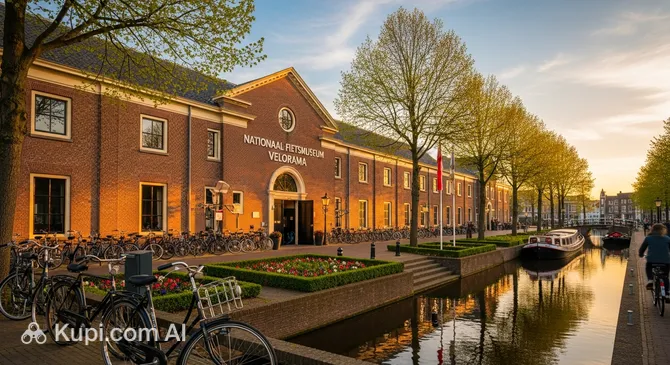
Velorama National Bicycle Museum
Velorama National Bicycle Museum. Иллюстрация. Источник: Kupi.com AI

In the heart of Nijmegen, visitors gain access to an incredible collection of more than 500 historical exhibits. You can see rare early 19th-century wooden draisines, the famous "penny-farthings" with huge front wheels, and even bicycles that belonged to members of the royal family. Racing models and unusual American designs from the 1950s are of particular interest.

The exhibition is spread over three floors and organized so that every guest can trace the bicycle's journey from a simple scooter to a complex technical device. Carefully restored exhibits combined with the atmosphere of the old embankment make a visit to Velorama a must-see during a trip to this region.

Contacts

For more information about special exhibitions or group visits, you can use the following contact details:

How to contactContact
AddressWaalkade 107, 6511 XR Nijmegen, Нидерланды
Phone+31 24 322 5851
Websitewww.velorama.nl

What to Do

The main reason to visit the museum is the opportunity to see unique artifacts from the bicycle era up close. On the lower floor, the earliest prototypes created between 1817 and 1870 await you, including the legendary "boneshakers." As you head upstairs, you will notice how shapes and materials changed, evolving into the elegant bicycles of the late 19th century.

Be sure to find Queen Juliana's tandem in the collection and the bicycle of the famous racer Wim van Est—the very one whose crash in the Tour de France went down in sporting history. Fans of unusual design will certainly be impressed by the American "fantasy" models of the 1950s, which look more like spacecraft than a means of transport.

While the museum does not have classic interactive panels, photography is allowed, which lets you capture the amazing details of the mechanisms. A close study of the collection provides an understanding of how lighting, braking, and gearing technologies developed. Many visitors note that chatting with the museum's curators helps uncover even more fascinating details about rare Dutch and foreign models.

Getting There

The museum is conveniently located at Waalkade 107, right on the picturesque Waal river embankment. If you arrive in the city by train, the walk from Nijmegen Centraal station takes about 15–20 minutes. The route passes through the historic center, which is a pleasant addition to the journey in itself.

For those who prefer public transport, buses run regularly from the station to the Waalkade stop. If you are in another part of the city, you can use a taxi or bicycle rental services. Given the nature of the country, arriving here by bike is perhaps the most authentic way; there are designated parking spots for two-wheeled transport near the entrance.

Drivers should keep in mind that the city center is a restricted traffic zone. You can leave your car in one of the paid parking lots along the embankment or in nearby underground parking garages, and then walk to the museum, enjoying the views of the river port and modern bridges.

Ближайший город: Nijmegen

History & Facts

The history of this unique place began in 1969, when passionate collector G. J. Moed purchased his first vintage bicycle—a Michaux model. The hobby quickly grew into a large-scale project: by the early eighties, the collection numbered more than 200 items, and a separate building was required to house them. In 1981, Velorama opened its doors in a restored historic house on the embankment.

A milestone in the museum's history was 1998. That was when the collection, which by then exceeded 500 units, was granted national museum status. Princess Margriet of the Netherlands performed the solemn opening ceremony of the renovated exhibition, highlighting the importance of the bicycle as a cultural symbol of the country.

The museum's display clearly demonstrates technological progress: from Baron von Drais's first wooden "running machines" to the elegant, streamlined models of the 1930s. Here, you can trace how braking, lighting, and transmission systems changed, turning bulky designs into the modern transport we know today.

Time Needed

To leisurely explore all three floors of the exhibition and study the information plaques, most visitors need between 1 and 2 hours. This is plenty of time to examine the details of the ancient mechanisms and take commemorative photos.

If you are a true connoisseur of engineering or transport history, we recommend setting aside about 1.5 hours. A quick introductory tour of the collection without diving deep into the details will take approximately 45–60 minutes.

Working Hours

The museum is open to visitors daily. Standard opening hours are from 10:00 to 17:00, including weekends and public holidays. This makes Velorama an excellent option to visit on any day of the week during your stay in the city.

Please note that the schedule may change slightly depending on Dutch public holidays or special events. Before your visit, we strongly recommend checking the museum's official website to confirm the latest information for a specific date.

10:00–17:00

Nearby

A stroll around the Waalkade embankment will allow you to further immerse yourself in the atmosphere of the country's oldest city. Historic monuments and cozy park areas are located right next to the museum, making them a perfect addition to your day's cultural program.

NameDistance
De Bastei0.1 km
Valkhof Park0.1 km
Pancake Boat Nijmegen0.2 km
Hunner Park0.3 km
Waal Bridge0.3 km
St. Stephen's Church0.5 km
Pets Place Aquarium0.6 km

Reached the end of the page?

That means the route is fully explored