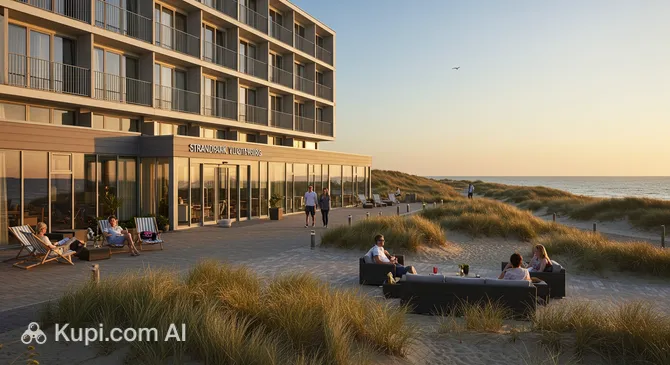
"Strandpark Vlugtenburg," located in the famous resort town of Scheveningen, is part of the rich history of this coastal region of the Netherlands. Although specific historical details directly related to the founding of Strandpark Vlugtenburg itself may not be as widely documented, its emergence and development are inextricably linked to the transformation of Scheveningen into a popular destination for seaside holidays.
Scheveningen has a long history as a fishing village that eventually transformed into a lively seaside resort, especially starting from the 19th century. The development of resort infrastructure, including hotels, promenades, and park areas by the beach (as reflected in the name "strandpark" – beach park), was a characteristic feature of that period. Such places were created to ensure a comfortable and pleasant stay for holidaymakers, offering them not only proximity to the sea but also well-maintained leisure spaces.
The historical background of Scheveningen adds a special atmosphere to this place. The city has preserved significant landmarks such as the Old Church (Oude Kerk), which dates back to the 15th century, and the impressive lighthouse built in 1875. These attractions serve as a reminder of the city's centuries-old past and its connection to the sea. Strandpark Vlugtenburg, as a modern facility, exists within the context of this rich history and maritime traditions.
Thus, Strandpark Vlugtenburg can be seen as a continuation of the traditions of hospitality and coastal leisure organization that have been shaped in Scheveningen over many years. It offers visitors the opportunity to enjoy all the charms of a seaside resort, fitting into the overall picture of Scheveningen as a place where history meets modernity to create an unforgettable holiday experience by the North Sea.